High Desert Tree Care in Nevada: A Practical Guide for 2026
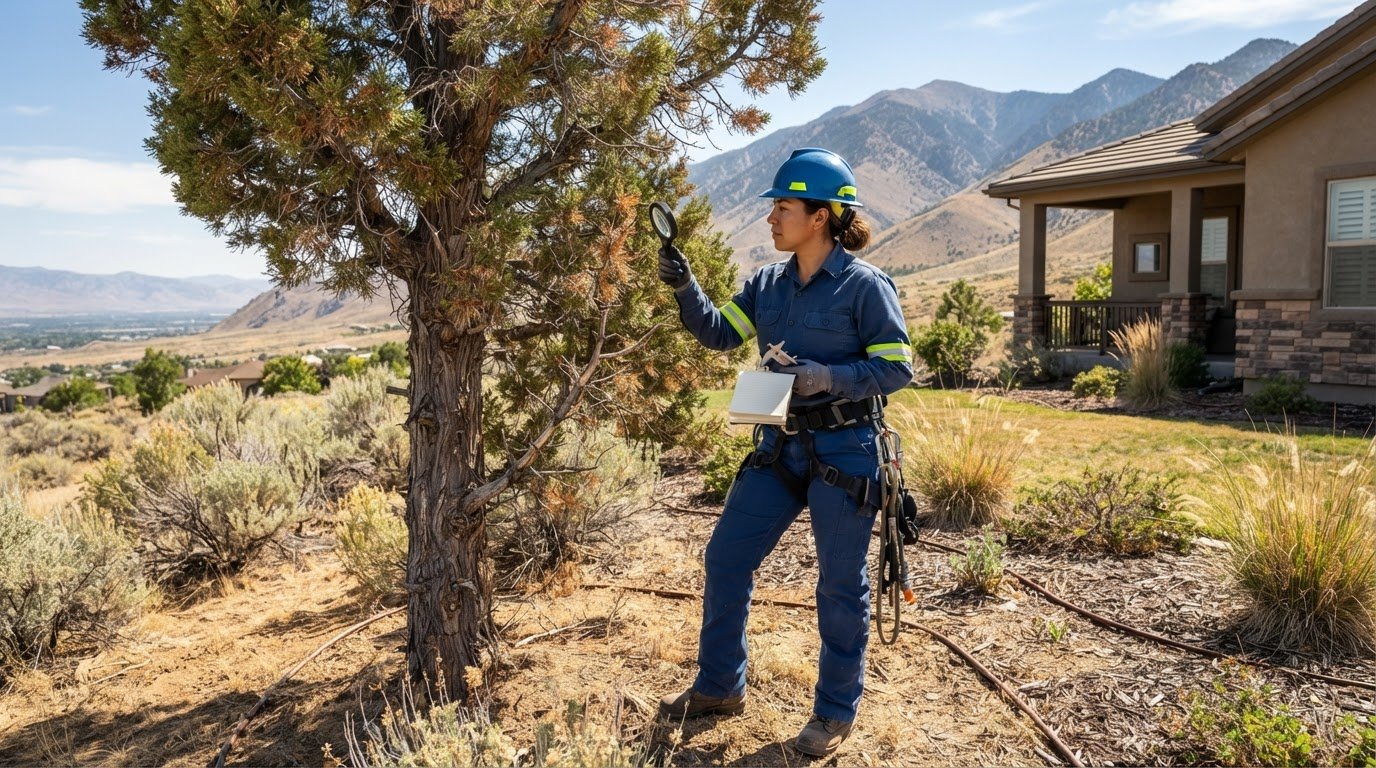
Browning leaves or a few dead branches don’t always tell the whole story. In Northern Nevada, dry summers, shifting temperatures, and local growing conditions can affect trees in different ways. That makes it hard to tell whether a change is seasonal or a sign of deeper stress. Thoughtful high desert tree care Nevada homeowners can rely on starts with understanding the tree and its site, not guessing at a fix.
It’s understandable to feel uncertain when foliage thins, leaves curl, or branches begin to die back. These signs can have several causes, including drought stress, pests, or disease. Acting too quickly with extra watering or pruning may not address the underlying issue. A careful, season-aware approach can help protect a tree’s health and the safety of the property around it.
This guide covers common environmental stressors and early warning signs, then outlines practical seasonal care for Northern Nevada’s high desert climate. You’ll also learn when a tree health assessment may help replace guesswork with property-specific advice, and how suspected pest or disease concerns can be evaluated.
Key Takeaways
- Good high desert tree care Nevada starts with the tree’s species, site conditions, and seasonal weather, not a one-size-fits-all routine.
- Wilting, sparse foliage, dieback, or unusual discoloration can signal stress, but one symptom alone may not reveal the cause.
- Base watering and pruning decisions on the tree’s needs and site conditions rather than guesswork.
- Use seasonal check-ins to observe changes, document symptoms, assess the surrounding site, and decide whether expert advice would help.
- Consider a tree health assessment for persistent decline, unclear symptoms, or concerns about branches near structures. An arborist can help evaluate possible causes.
How Nevada’s high desert climate shapes tree care
High-desert tree care means matching maintenance to local climate, property conditions, and the needs of the tree species growing there. Dry air, limited rainfall, strong sun, and seasonal temperature shifts can affect how trees use water and respond to stress, but these pressures vary by site. Effective high desert tree care Nevada residents can use begins with observing the tree and its surroundings rather than following a fixed routine.
Northern Nevada lies within the broader Great Basin, a region with varied terrain and ecological conditions. The Great Basin climate overview offers regional context, but it can’t describe the exact conditions in an individual yard. Elevation, landform, and exposure influence how much sun and wind reach a tree and how quickly soil dries.
What makes Northern Nevada a high-desert setting?
Dry conditions and limited precipitation make water availability an important consideration. Summer sun and seasonal temperature changes add to the demands on trees, while winter conditions also matter. A tree needs to suit the local climate, not just tolerate summer heat. Conditions can vary within and around Reno, Sparks, Carson City, and Dayton, so a regional description is a starting point, not a property-specific care plan.
Elevation and terrain shape local exposure, and neighboring properties may differ. A tree in an open, sunny area may face different stresses from one sheltered by buildings or other vegetation. Assess the growing environment around each tree instead of assuming that conditions are identical across a community.
Why the same tree-care advice may not fit every property
Site conditions influence what care is appropriate. Sun exposure and wind affect how quickly a tree loses moisture. Soil drainage determines whether water moves through the root zone or remains around it, and available growing space affects how roots and branches develop. A sloped, exposed site may behave differently from a sheltered yard, even within the same neighborhood.
Species and establishment stage matter, too. Trees differ in their climate tolerance and water needs, and a recently planted or young tree may need different attention from a mature, established one. Avoid applying a blanket watering or maintenance schedule without considering these factors. If a tree’s needs are unclear, a property-specific tree health assessment can help inform decisions without assuming one approach fits every tree.
Recognize drought, heat, and other tree stress in Nevada
Wilting leaves, sparse foliage, early or unusual discoloration, and branches with little or no growth are useful observations, but they don’t point to one cause on their own. A visible symptom is a clue, not a diagnosis. The same change can reflect environmental stress, root problems, pests, disease, or several factors at once. Looking for patterns over time is more useful than reacting to a single leaf or branch.
Which visible changes deserve closer attention?
Notice whether a change is limited to a few leaves or affects a large part of the canopy. Record whether dieback involves one branch, several branches, or a particular side of the tree. Look for damaged bark or deadwood, but don’t assume what caused it. Recurring decline or a pattern that continues to spread deserves closer attention than an isolated change.
Keep a simple record of when you first noticed symptoms, which parts of the tree are affected, recent weather, and any changes to watering or activity around the root area. These details can help you see whether a change began after heat, dry conditions, or a recent disturbance. For watering context, the University of Nevada, Reno Extension offers guidance on proper irrigation for desert trees.
When could pests or disease contribute to tree stress?
Environmental stress and biological problems can overlap. A tree affected by heat or limited soil moisture may also show symptoms associated with pests or disease, while root disturbance can complicate the picture. Don’t treat a single visual sign as proof of an infestation or infection. Note where the change appears and whether it’s progressing, then seek an assessment if you can’t confidently identify what’s happening.
For additional local context, see this tree disease management guide for Sparks. If decline persists, symptoms spread, or you’re unsure whether a concern involves pests or disease, a property-specific tree health assessment can help clarify possible causes and appropriate next steps. For homeowners considering high desert tree care Nevada, careful observation and a clear record are sensible first steps, not substitutes for an expert diagnosis.
Choose tree-care responses that fit Northern Nevada conditions
A measured response matches the action to the concern. Routine observation helps you spot changes early. Maintenance addresses known needs, such as appropriate pruning, while a professional assessment can help when symptoms persist, the cause is unclear, or a branch may be a concern near a structure. More water or aggressive pruning isn’t automatically the answer. Either may be unsuitable if it doesn’t address the underlying issue.
Water needs vary with species, soil, tree age, root conditions, and current weather. Before changing your routine, check soil moisture and drainage near the root area rather than relying on a fixed calendar. Soil that stays wet may call for a different response than soil that dries quickly. The University of Nevada, Reno Extension offers further guidance on how to properly water your landscape trees.
How to think about watering, mulch, and site conditions
Check whether water is reaching the root area and whether the soil drains as expected. Mulch can help moderate soil conditions, but keep it away from direct contact with the trunk. Piled against bark, it can hold moisture where it isn’t needed. Consider the tree’s species and establishment stage before adjusting care, and check local watering guidance rather than assuming one schedule fits every property.
When is pruning helpful, and when is assessment wiser?
Pruning is a purposeful maintenance choice, not a cure for every stressed tree. The decision depends on the tree’s condition, the reason for pruning, and the branch’s location and size. Removing foliage indiscriminately can add stress, so a thinning canopy isn’t an automatic signal to cut back branches. For large limbs, uncertain defects, or branches near structures, seek qualified help instead of attempting the work yourself.
If you’re unsure whether a tree needs pruning or a closer evaluation, a tree health assessment can help clarify its condition and inform next steps. Removal is a separate decision, not a substitute for assessment. Consider it when the tree’s condition and circumstances support it. For more context on that distinction, read the Carson City hazardous tree removal guide. Battle Born Pest Control’s certified arborists provide tree health assessments tailored to the property.
Use a seasonal high-desert tree-care checklist
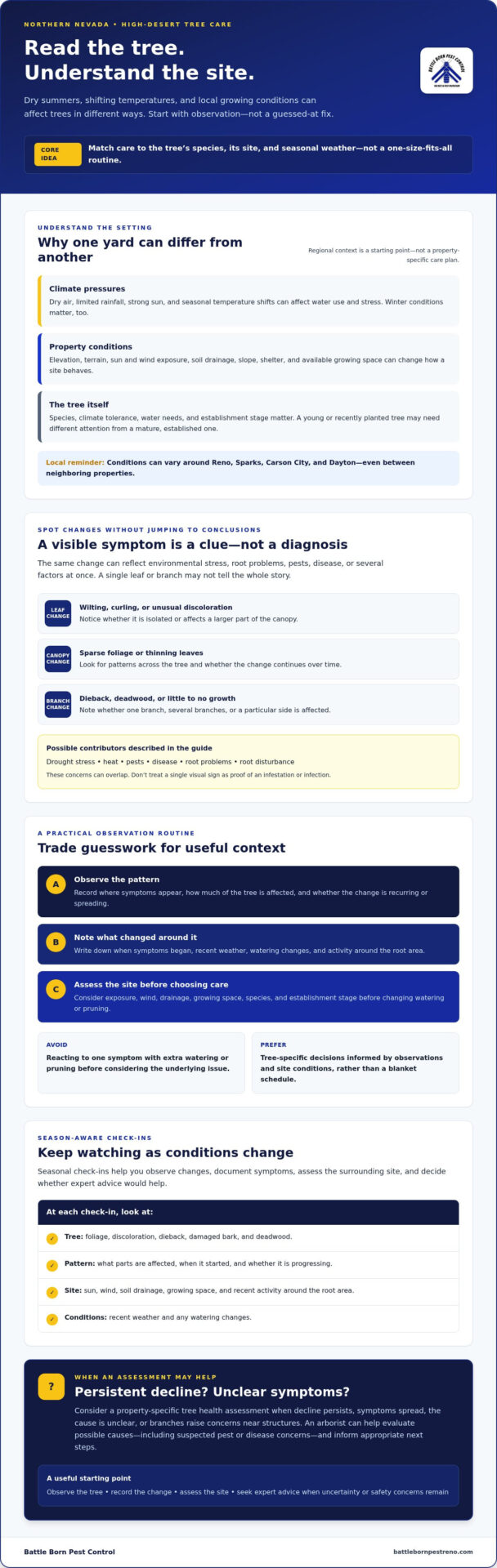
Repeated observation builds a useful seasonal record, helping you notice patterns and make measured decisions rather than react to one change. Use this sequence throughout the year, adjusting it to local weather and the tree’s condition instead of relying on fixed dates or a schedule that may not suit your property.
What to check through the growing season
As foliage develops and conditions change, look at the tree from the ground and note what differs from your previous check. Use the same viewing points where possible so changes are easier to compare.
- Observe: Look for changes in foliage density or color, wilting, branch dieback, visible damage, or an uneven canopy. Check soil moisture at the surface and around the root area without digging into roots.
- Document: Record when you noticed a change and which branches or areas are affected. Take photographs from consistent viewpoints so you can compare the tree over time.
- Check site conditions: Consider recent heat, wind, rainfall, watering changes, and any disturbance around the tree. Note whether the soil drains or dries differently than expected.
- Decide: Continue observing if the change is limited and doesn’t progress. Seek advice if decline persists, spreads, or involves branches that concern you.
What to review during cooler months
When leaves have fallen or growth has slowed, inspect the visible branch structure, trunk, and surrounding area from a safe position. A dormant appearance alone doesn’t prove a tree is unhealthy. Compare what you see with earlier notes and consider the species and season. Cooler months can also be a useful time to plan professional pruning or an assessment if the tree’s condition, branch location, or proximity to structures warrants a closer look.
Keep the same observe, document, check, and decide sequence year-round. Don’t climb trees, attempt hazardous cutting, or work near utility lines. For large limbs or uncertain defects, leave the evaluation and work to qualified professionals. If your notes show a persistent concern, a tree health assessment can help clarify what may be happening and what response is appropriate. This steady approach supports high desert tree care Nevada homeowners can adapt to their trees and changing conditions.
When to call a Northern Nevada arborist for tree care
Routine observation is useful, but a professional assessment can help when a tree’s condition remains unclear or a concern could affect nearby people or property. Consider asking an arborist to evaluate a tree if decline continues across repeated checks, symptoms spread to more branches, or you’re unsure whether changes relate to site conditions, pests, or disease. Damaged branches or limbs hanging near a roof, walkway, or other structure also deserve careful attention. Don’t climb or attempt hazardous cutting to investigate.
What an arborist assessment can help clarify
An arborist can examine the tree, its growing conditions, and visible symptoms together, adding context that may be difficult to get from a single leaf or photograph. An assessment can help distinguish possible causes and explain which options may suit the tree and property. Recommendations depend on the findings and may involve monitoring, pruning, or pest and disease management where appropriate. Removal is one possible service, not the default conclusion, and should be considered in light of the assessment and site conditions.
Bring your notes and photographs if you’ve been tracking changes. Details such as when symptoms began, which areas are affected, and any recent changes around the tree can support a more informed discussion. An assessment can clarify possible next steps, but it can’t promise that a tree will recover.
How local tree-care support can make the next step clearer
High desert tree care Nevada homeowners choose should account for the specific tree and property, rather than assume the same response fits every yard. Battle Born Pest Control serves Reno, Sparks, Carson City, Dayton, and surrounding Northern Nevada communities. Its certified arborists provide tree health assessments, tree pruning, and pest and disease management, with recommendations tailored to each property.
If a tree’s decline persists, symptoms are uncertain, or branches raise concerns near structures, discussing the situation with an arborist can help replace guesswork with a clearer understanding of the options. For property-specific tree-care support in the service area, contact Battle Born Pest Control.
Make thoughtful care part of your tree’s future
Healthy tree care in Northern Nevada begins with paying attention to local conditions and the tree in front of you. Dry weather, sun exposure, soil, species, and establishment stage all influence what care may be appropriate. Avoid treating every sign of stress with extra water or pruning. Observe changes over time, keep notes, and seek an assessment when decline persists, symptoms are unclear, or branches raise concerns near structures. That’s a practical foundation for high desert tree care Nevada homeowners can follow without relying on guesswork.
Battle Born Pest Control’s certified arborists provide tree health assessments, pruning, pest and disease management, and tree removal when appropriate. Service coverage includes Reno, Sparks, Carson City, Dayton, and surrounding communities, with recommendations tailored to each property.
If you have a tree-care concern and would value a property-specific perspective, discuss your tree-care concerns with Battle Born Pest Control. Contact the team to talk through your tree-care needs and possible next steps.
Frequently Asked Questions
What trees grow well in Nevada’s high desert?
Cold-hardy, drought-tolerant species are often suitable for Northern Nevada’s high-desert conditions. Options include singleleaf pinyon, Utah juniper, limber pine, and curlleaf mountain mahogany. The best fit still depends on the planting site, available space, soil drainage, sun exposure, and the tree’s water needs. Before choosing a species, consider your yard’s conditions and seek local planting guidance if you’re unsure how a tree may perform there.
How often should I water trees in Northern Nevada?
There isn’t one watering frequency that fits every tree in Northern Nevada. Needs vary with species, soil, age, establishment stage, drainage, and current weather. Rather than following a fixed weekly schedule, check soil moisture near the root area and adjust based on how quickly it dries. Deep, less frequent watering is generally recommended to encourage deeper roots, but avoid adding water if the soil is already staying wet.
How can I tell if a tree is dying or just stressed?
Look for patterns and whether changes continue, rather than relying on one symptom. Wilting, sparse foliage, unusual discoloration, and branch dieback can indicate stress, but they don’t prove a tree is dying. Note when changes began, which branches or canopy areas are affected, and whether symptoms are spreading. If decline persists or you can’t determine the cause, a tree health assessment can help clarify possible explanations without promising recovery.
Can drought and heat make trees more vulnerable to pests?
Drought and heat can put added stress on trees, and environmental stress may occur alongside pest or disease problems. That overlap can make symptoms harder to interpret. Thinning foliage or dieback alone doesn’t confirm an infestation. Watch for changes over time and record visible signs, recent weather, and watering changes. If you suspect pests or disease, a professional assessment can help distinguish possible causes and determine whether management is appropriate.
When is the best time to prune trees in Nevada?
Late winter or early spring is generally a suitable period for light pruning, but timing depends on the tree species, its condition, and the purpose of the work. Don’t prune automatically just because a tree looks stressed. Removing branches may not address the underlying cause. Large limbs, uncertain defects, or branches near structures call for qualified help. A local arborist can assess the tree and recommend whether pruning is appropriate.
Should I remove a tree with dead branches?
Not necessarily. Dead branches may warrant attention, but their presence alone doesn’t establish that the entire tree should be removed. The number and location of affected branches, the tree’s overall condition, and nearby structures all matter. Don’t climb or attempt hazardous cutting to investigate. An arborist can assess the tree and discuss whether pruning, monitoring, or, if supported by the findings, removal is an appropriate next step.
When should I call an arborist for a tree in Reno or Sparks?
Consider an assessment if a tree’s decline persists, symptoms are unclear or spreading, or branches raise concerns near a home, walkway, or other structure. High desert tree care Nevada often calls for property-specific judgment because symptoms can have overlapping causes. Battle Born Pest Control’s certified arborists serve Reno, Sparks, Carson City, Dayton, and surrounding communities, offering tree health assessments, pruning, and pest and disease management to help clarify appropriate next steps.