Pine Bark Beetle Treatment in Reno: A Homeowner’s Guide to Saving Your Trees

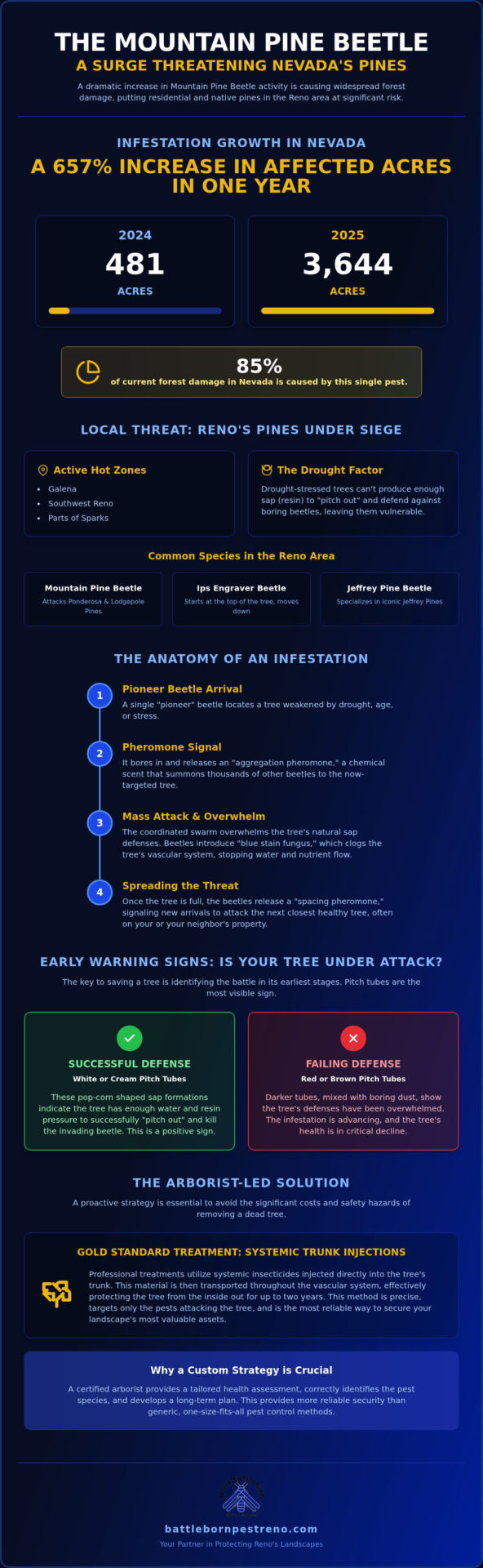
Did you know that Mountain Pine Beetle activity in Nevada surged from 481 acres in 2024 to 3,644 acres in 2025? This dramatic increase means that 85% of the forest damage currently recorded in our state is caused by this single pest. If you’ve noticed your once-vibrant pines turning a brittle brown or showing mysterious sap tubes on the trunk, you aren’t alone in your concern. It’s natural to feel anxious about the fire hazards these dead trees create or the potential costs of removing a mature pine that has reached the point of no return.
Our guide to pine bark beetle treatment Reno is designed to replace that uncertainty with a clear, professional plan to protect your landscape’s most valuable natural assets. We understand that your trees are more than just part of the scenery; they’re vital to your home’s safety and value. In the following sections, we’ll walk you through the specific signs of an infestation, explain why our local climate is fueling this growth, and show you how dedicated health assessments can help you save your trees. By focusing on long-term vitality rather than quick fixes, you can find the peace of mind that comes from knowing your property is prepared for the seasons ahead.
Key Takeaways
- Learn to identify the difference between red and white pitch tubes to determine if your tree is successfully defending itself or if the infestation is advancing.
- Understand how pheromone-driven mass attacks and blue stain fungus work together to rapidly compromise a pine’s vascular system.
- Discover why professional pine bark beetle treatment Reno utilizes systemic trunk injections as the gold standard for direct and effective protection.
- Find out how proactive health assessments and preventative maintenance can save you from the significant safety hazards and costs of tree removal.
- See why a customized strategy led by a certified arborist provides more reliable long-term security for your landscape than generic pest control methods.
The Pine Bark Beetle Threat in Northern Nevada’s High Desert
Reno’s high desert offers a unique beauty, but it also presents specific challenges for our native pines. Small, native bark beetles are currently boring into the cambium layer of trees across the Truckee Meadows, disrupting the essential flow of nutrients and water. Neighborhoods in Galena, southwest Reno, and parts of Sparks have become active hot zones for these pests. Because Mountain Pine Beetle activity in Nevada jumped from 481 acres in 2024 to 3,644 acres in 2025, 2026 has become a pivotal year for local pine health monitoring. If the current trend continues, many more residential trees will be at risk.
Understanding the nature of these insects is the first step toward long-term protection. These beetles don’t just eat the wood; they live and reproduce in the delicate tissue just beneath the bark. While a single beetle cannot kill a tree, they work in coordinated numbers that can quickly overwhelm even a mature, established pine. Seeking a professional health assessment or investigating options for pine bark beetle treatment Reno can help determine if your trees are currently under threat before the damage becomes irreversible. Early detection is often the only way to avoid the high costs and safety hazards associated with tree removal.
Common Species in the Reno Area
Our region is home to several distinct species that target different types of pines. The Mountain pine beetle remains the primary driver of the recent surge in forest damage, frequently attacking Ponderosa and Lodgepole pines. In residential settings, we often see Ips engraver beetles, which tend to start their work at the very top of the tree and move downward. We also carefully monitor for the Jeffrey pine beetle, a specialist insect that focuses specifically on the iconic Jeffrey pines that define much of our local skyline. Identifying which species is present is vital for creating a tailored management plan.
The Link Between Drought and Infestation
A tree’s primary defense against an invader is its resin, or sap. When a beetle bores into the bark, a healthy tree will attempt to “pitch out” the insect by flooding the entry hole with sticky resin. However, Reno’s low humidity and recent multi-year drought cycles have left many trees severely dehydrated. Without adequate moisture, a pine simply cannot produce the sap pressure needed to fight back. This high desert factor means that even a tree that looks healthy on the outside might be internally defenseless. Integrating proper hydration with a targeted strategy for pine bark beetle treatment Reno is often the most effective way to restore the natural resilience of your landscape.
How Bark Beetles Attack: The Science of Tree Decline
The decline of a pine tree doesn’t happen by accident. It’s a calculated, biological process that begins with a single pioneer beetle. This initial scout locates a tree that is likely already weakened by drought or age. Once the beetle bores into the bark, it releases a specific chemical scent known as an aggregation pheromone. This signal acts as a biological invitation, calling thousands of other beetles to the same location to overwhelm the tree’s natural defenses.
Effective pine bark beetle treatment Reno focuses on breaking this cycle of attraction and attack. When you understand the science behind how these pests operate, it becomes clear why waiting for a tree to look sick is often too late. The timeline from the first entry to total mortality can be surprisingly short, frequently occurring within a single growing season.
The Pheromone Signal
These chemical signals are incredibly potent. As more beetles arrive and begin to tunnel, the scent intensifies, drawing even more invaders from the surrounding area. However, there is a limit to how many beetles can inhabit a single tree. When a tree reaches its capacity, the beetles release a spacing pheromone. This is the switch phenomenon. It tells the incoming swarm that the current tree is full, prompting them to move to the next closest host, which is often your neighbor’s healthy pine or another tree in your own yard. While some homeowners consider using pheromone traps to capture these pests, placing them in a small residential yard can often do more harm than good by drawing beetles directly toward your most valued trees.
Vascular System Collapse
The real damage happens just beneath the bark in the cambium layer. Think of this layer as the tree’s highway. It’s responsible for moving water from the roots to the needles and sending nutrients back down to the roots. As the beetles tunnel, they create larval galleries that physically girdle the tree, effectively cutting off these vital supply lines. This is compounded by the blue stain fungus that beetles carry on their bodies. This fungus spreads into the sapwood, clogging the tree’s vascular tissues and accelerating the dehydration process. This dual attack is why a tree can go from looking healthy to being completely dead in just a few months. If you’re concerned about a tree on your property, a professional tree health assessment can identify these subtle early warning signs before the damage is permanent.
Identifying Infestation: Signs Your Reno Pines Need Help
Recognizing the early warning signs of an infestation is the most effective way to protect your property from the risks of falling limbs and fire hazards. While many homeowners only notice a problem once a tree has turned completely brown, there are subtle indicators that appear much earlier. If you can spot these signs while the tree is still green, your options for pine bark beetle treatment Reno remain far more viable. Early intervention is the key to preventing a single infested tree from becoming a neighborhood-wide problem.
The most common sign is the appearance of “pitch tubes” on the trunk. These small, popcorn-like globs of sap are the tree’s attempt to push the beetles out. If the tubes are creamy white or clear, the tree is successfully defending itself. However, if the tubes are reddish-brown, it means the beetle has successfully bored into the cambium and mixed its boring dust with the sap. You should also look for “frass,” which is a fine, reddish-brown sawdust that collects in bark crevices or around the base of the tree. Frass is a definitive sign of active boring.
Additionally, pay attention to increased woodpecker activity. These birds flake off patches of bark to reach the beetle larvae beneath, often leaving light-colored patches on the trunk that are visible from a distance. As the infestation progresses, the needles will begin to change color in a predictable pattern:
- Faded Green: The first sign of moisture stress as the vascular system begins to fail.
- Yellow-Straw: A clear indicator that the tree is no longer successfully transporting nutrients.
- Sorrel Red: The final stage, signifying total tree mortality and a significant fire risk.
Early vs. Late Stage Symptoms
Early detection often involves looking high into the canopy where Ips beetles typically start their work. By the time you see needles transitioning to a sorrel red, the tree is often in the “ghost” stage. At this point, the vascular system has likely collapsed, and the tree is already dead. If you see tiny “exit holes” about the size of a buckshot, it means the next generation of beetles has already matured and left to find a new host. A proactive strategy for pine bark beetle treatment Reno must be implemented before these exit holes appear to be truly effective.
Distinguishing Beetle Damage from Other Issues
It is easy to confuse beetle damage with other common local issues. For instance, pine needle scale appears as small white flecks on the needles themselves, whereas bark beetles focus on the trunk. Drought scorch often causes a more uniform browning across the entire tree, while beetle fade usually begins on specific branches or at the top. Because a mistake in diagnosis can lead to unnecessary tree removal or missed treatment windows, calling for a tree health assessment in Reno is the best way to get a definitive answer for your landscape.
Effective Treatment Options: Saving Savable Trees
Choosing the right approach for pine bark beetle treatment Reno depends entirely on the current health of your trees and the level of pressure from nearby infestations. While some homeowners hope a simple spray will solve the problem, effective management in our high desert climate requires a more integrated strategy. We focus on solutions that prioritize the long-term health of the tree while ensuring the safety of your family and the surrounding environment.
Trunk Injections: The Professional Choice
Systemic trunk injections have become the gold standard for protecting high-value pines in Northern Nevada. This method involves delivering a precise dose of emamectin benzoate directly into the tree’s vascular system. Because the treatment is contained within the tree, it’s a closed system that eliminates the risk of chemical drift, making it exceptionally safe for families, pets, and local pollinators. Once absorbed, the treatment circulates through the cambium layer, killing beetles before they can establish their galleries. A single professional application can provide high-level protection for up to two years, offering significant peace of mind for property owners.
The Role of Proper Irrigation
In Reno’s arid environment, cultural management is just as important as chemical intervention. Deep-root watering is the most effective way to help a tree produce the resin it needs to defend itself naturally. During our dry winters, many homeowners turn off their irrigation entirely, but pines still require moisture to maintain their internal pressure. Periodic winter watering during dry spells can be the difference between a tree that survives a mass attack and one that succumbs. However, it’s vital to avoid constant saturation; over-watering can lead to root rot, which adds another layer of stress to an already vulnerable tree.
Sanitation and Removal
When a tree has already reached the point of total mortality, the focus must shift to protecting the remaining healthy pines on your property. Infested wood should never be kept as firewood near healthy trees, as the beetles will simply emerge and find a new host nearby. Proper sanitation involves hauling the wood away or using solarization techniques to kill the larvae under clear plastic. For trees that have become structural hazards or are beyond the help of pine bark beetle treatment Reno, professional hazardous tree removal in Carson City and Reno is necessary to maintain property safety. If you’re unsure if your tree can still be saved, we recommend a professional pest and disease management consultation to evaluate your options and protect your landscape.
Why an Arborist-Led Approach is Essential for Reno Homeowners
Not all pine bark beetle treatment Reno is created equal. While a standard technician might focus on a quick topical application, a certified arborist views your trees as a vital, living system. We don’t just look for bugs; we examine soil health, local climate patterns, and the specific biological vulnerabilities of each tree species on your property. This professional perspective ensures that we aren’t simply treating a temporary symptom. Instead, we’re protecting the long-term environmental health of your landscape and the safety of your family.
At Battle Born Pest Control, we rely on Integrated Pest Management (IPM). This methodical approach combines biological insights with Reno’s specific weather data and precise chemical applications. By understanding how our high desert environment stresses native pines, we can time our interventions for the highest possible success rate. Our commitment is rooted in the well-being of the community. We act as a dedicated local guardian, prioritizing tree longevity and property safety over aggressive sales tactics or temporary fixes.
The Value of a Certified Health Assessment
A professional health assessment is the foundation of any reliable defensive strategy. We identify high-risk “target” trees that are most likely to be attacked during an outbreak, allowing you to take action before the first beetle arrives. This process also includes evaluating the structural integrity of trees already impacted by beetles, which is a critical step for protecting homes from falling limbs. Rather than offering a one-size-fits-all solution, we develop a customized, multi-year maintenance calendar. This structured plan provides the transparency and clarity you need to manage your property’s natural assets with confidence.
Protecting Your Reno Investment
Healthy pines are significant financial assets. They increase overall property value and help reduce cooling costs during our intense Nevada summers by providing essential shade. When you look at the cost-benefit analysis, the choice is clear. The investment in preventative pine bark beetle treatment Reno is a small fraction of the high price associated with emergency tree removal and the loss of mature landscape features. By choosing an honest, experience-backed professional, you gain lasting peace of mind. Schedule your professional tree health assessment with Battle Born Pest Control today to ensure your property remains a safe, beautiful sanctuary for years to come.
Secure the Future of Your Northern Nevada Landscape
Protecting your property from the recent surge in beetle activity requires a proactive mindset and a clear understanding of your trees’ unique needs. We have explored how early detection of pitch tubes and proper winter irrigation can significantly improve a tree’s natural defenses. When these cultural practices are combined with professional pine bark beetle treatment Reno, you create a robust shield that preserves the beauty and safety of your home for years to come. By prioritizing health assessments today, you avoid the high costs and safety risks of emergency tree removals tomorrow.
As a locally owned and Northern Nevada licensed business, Battle Born Pest Control is committed to providing stable, long-term solutions for our community. Our certified arborist-led services prioritize family and pet-safe treatment options that deliver lasting results without compromising your peace of mind. We are here to act as your dedicated guardian in the high desert, ensuring your pines remain strong and vibrant. Protect Your Pines: Request a Professional Tree Health Assessment today. Your landscape is a valuable legacy, and we are honored to help you protect it.
Frequently Asked Questions
Can a pine tree survive a bark beetle attack if caught early?
Yes, a pine tree can often survive a bark beetle attack if the infestation is detected before the beetles have successfully girdled the trunk. While the presence of pitch tubes indicates an attack, a tree with high resin pressure can sometimes “pitch out” the invaders. Professional intervention at this early stage focuses on supporting the tree’s natural defenses. We use targeted treatments to stop the spread before the needles begin to fade.
How much does pine bark beetle treatment cost in Reno?
The cost of tree care depends on several factors, including the height of the tree, its current health, and the specific application method required. Systemic injections involve a different investment than topical sprays because they provide longer-lasting protection. When considering pine bark beetle treatment Reno, a professional health assessment is the best way to get an accurate estimate tailored to your property while avoiding the much higher expenses of removing a dead, hazardous tree.
Are the chemicals used for tree injections safe for my pets and family?
Systemic trunk injections are among the safest options for residential landscapes because the treatment is contained entirely within the tree. Unlike traditional sprays that can drift in the wind, injections deliver the product directly into the vascular system. This closed-delivery method ensures there is no chemical exposure for your family or pets. It’s a precise way to protect your trees without affecting the surrounding environment or local pollinators.
When is the best time of year to treat for bark beetles in Northern Nevada?
Timing is critical for effective prevention, and treatments should ideally be applied in early spring before the adult beetles begin their flight season. In Northern Nevada, this usually means having your plan in place by early April. Applying a preventative barrier or systemic treatment before the mass attack begins ensures the tree is protected throughout the warmest months. This is when beetle activity and drought stress are at their highest.
How do I know if my pine tree is just thirsty or has beetles?
While both drought and beetles cause needle discoloration, bark beetles leave distinct physical evidence like popcorn-shaped pitch tubes and fine sawdust known as frass. A thirsty tree might show uniform drooping or browning across all needles, whereas beetle damage often starts at the top or on specific branches. Because these symptoms often overlap, a professional diagnosis is the only way to ensure you are applying the correct pine bark beetle treatment Reno strategy.
Does the city of Reno provide assistance for beetle-infested trees on private property?
Local municipalities typically don’t provide financial assistance or removal services for infested trees located on private property. Homeowners are responsible for the health and safety of the trees within their boundaries. However, the Nevada Division of Forestry offers excellent educational resources to help residents understand regional threats. Managing your trees privately ensures you can choose a tailored plan that prioritizes the specific long-term health of your unique landscape and family.
Can bark beetles spread from my neighbor’s dead tree to my healthy ones?
Bark beetles are highly mobile and will readily move from an infested brood tree to the next closest healthy host once the original tree is exhausted. This is why a dead pine on a neighboring property represents a significant risk to your own landscape. If you see a nearby tree turning red or showing exit holes, it’s a clear signal that the beetles are looking for a new home and your trees require immediate defensive monitoring.
What should I do with the wood if I have to cut down an infested tree?
Infested wood must be managed carefully to prevent the next generation of beetles from emerging and attacking nearby pines. You should never stack “beetle wood” near healthy trees. The larvae inside can still mature and fly to new hosts. The safest practice is to have the wood hauled away or chipped immediately. You can also solarize it under clear plastic in direct sunlight to ensure the insects are destroyed.