Arborist for Sick Pine Trees in Reno: Signs, Causes, and Next Steps
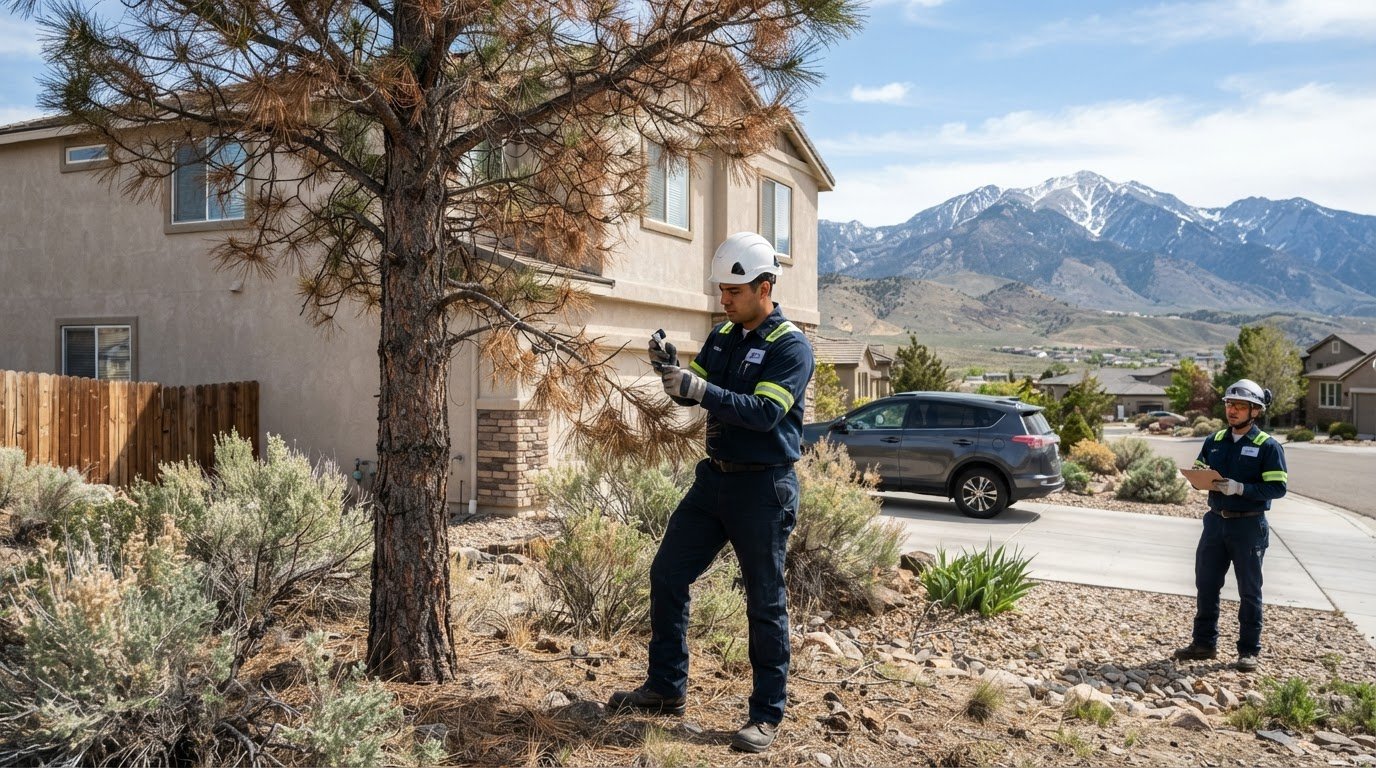
A pine with brown needles isn’t automatically beyond saving, and a declining tree isn’t always a candidate for immediate removal. If you’re looking for an arborist for sick pine trees Reno homeowners can rely on, a tree-specific assessment is a practical place to start. Changes in needle color, thinning branches, or unusual trunk signs can point to different concerns, from pests and disease to environmental stress.
It’s understandable to worry that a sick pine could become a safety risk, especially when it stands near your home, driveway, or a place your family uses. Symptoms alone don’t tell the whole story. A certified arborist can assess the tree’s condition and location, consider what may be affecting it, and explain whether management, pruning, or removal makes sense.
This guide covers signs to observe and share, potential causes of pine decline in Reno and nearby communities such as Sparks, Carson City, and Dayton, and what an arborist evaluates during a health assessment. You’ll also learn how assessment findings can guide a practical next step, so decisions about your tree are based on its condition and setting rather than guesswork.
Key Takeaways
- Notice changes such as unusual needle discoloration, a sparse canopy, dead branch tips, or visible trunk changes, and share when they began.
- An arborist for sick pine trees Reno homeowners consult should assess the whole tree, its history, and the surrounding site rather than relying on one symptom.
- Needle changes and other visible signs can offer clues, but disease, pests, and environmental stress may overlap.
- Prepare for an assessment by noting recent changes and site conditions that may help explain the pine’s decline.
- Assessment findings can help clarify whether management, pruning, continued observation, or removal is the practical next step.
Sick Pine Trees in Reno: Which Warning Signs Deserve Attention?
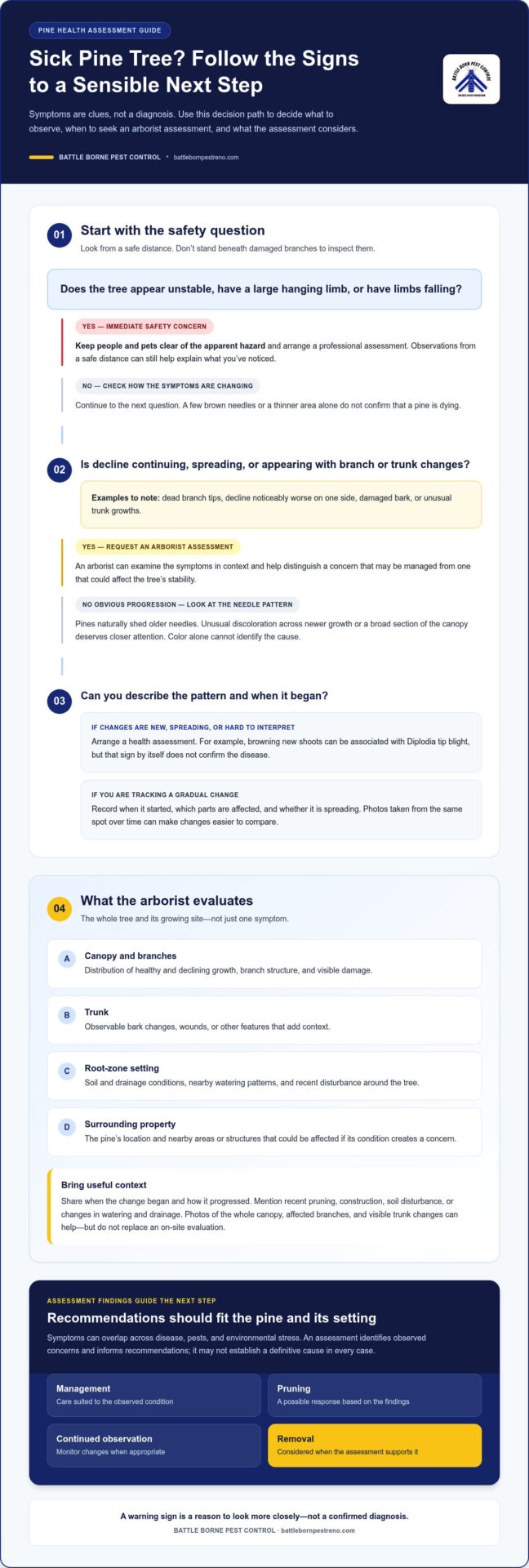
Visible changes in a pine can be unsettling, but a few brown needles or a thinning area don’t automatically mean the tree is dying. Pines naturally shed older needles, and symptoms can have several possible causes. Look at the pattern: which parts are changing, how quickly the change is happening, and whether new signs are appearing.
A warning sign is a reason to look more closely, not a confirmed diagnosis. A tree health assessment considers the tree as a whole and its surroundings, rather than drawing conclusions from one symptom.
What changes in a pine’s needles and branches can signal trouble?
Seasonal shedding generally affects older needles in a way that may be expected for the tree. Unusual discoloration across newer growth or a broad section of the canopy deserves closer attention. Color alone can’t identify the cause: browning may relate to disease, pests, or environmental stress. For example, Diplodia tip blight is associated with browning new shoots, but that sign by itself doesn’t confirm the disease.
Look for a canopy that appears thinner than before, dead branch tips, or decline that is noticeably worse on one side. Visible trunk changes, such as damaged bark or unusual growths, are also useful to record. Note when you first saw each change and whether it is spreading, limited to one section, or affecting the whole tree. Photos taken from the same spot over time can make changes easier to compare.
When should a Reno homeowner request an arborist assessment?
Consider an assessment when decline continues, spreads, or appears alongside changes to branches or the trunk. An arborist for sick pine trees Reno homeowners consult can examine symptoms in context and help distinguish a health concern that may be managed from a condition that could affect the tree’s stability.
A gradual change without an apparent structural concern may call for a routine health assessment. A visibly unstable tree, a large hanging limb, or falling limbs presents a more immediate safety concern. Keep people and pets clear of the apparent hazard, and arrange a professional assessment. Don’t stand beneath damaged branches to inspect them. Observations from a safe distance can still help explain what you’ve noticed.
Sharing when symptoms began, where they appear, and whether they are spreading gives the arborist useful context. These details help guide a closer inspection and support recommendations tailored to the pine and the property.
How an Arborist Assesses a Sick Pine Tree in Reno
A useful assessment is more than a quick look at discolored needles. A certified arborist considers the pine’s history, overall condition, and growing site, then explains what the observations may mean for the tree and nearby property. The assessment identifies concerns and guides practical recommendations based on the conditions observed.
Symptoms, tree history, and site conditions belong together because each can change how the same visible sign should be interpreted. A gradual decline after a change in watering, for example, gives different context than symptoms that appear suddenly or alongside recent work near the tree.
What should you tell the arborist about the pine’s decline?
Before the assessment, write down when you first noticed a change and how it has progressed. Include recent pruning, construction, soil disturbance, or changes you’ve observed in watering and drainage. You don’t need to identify the cause; a clear timeline helps focus the inspection.
Photos can add context. If available, take clear views of the whole canopy, affected branches, and visible trunk changes. Your observations and photos help the arborist understand what has changed, but they don’t replace an on-site evaluation.
What does an on-site tree health assessment consider?
The arborist examines the tree and its setting rather than focusing on one symptom. The assessment may include:
- Canopy and branches: The distribution of healthy and declining growth, branch structure, and visible damage.
- Trunk: Observable bark changes, wounds, or other features that may add context.
- Root-zone setting: Soil and drainage conditions, nearby watering patterns, and recent disturbance around the tree.
- Surrounding property: The pine’s location and the areas or structures that could be affected if its condition creates a concern.
Species identification and the pattern of symptoms help narrow possible explanations, but signs can overlap. The assessment identifies observed concerns and informs recommendations; it may not establish a definitive cause in every case. The arborist can explain what the findings show and what remains uncertain.
After the inspection, the findings should be discussed in plain language, including the tree’s condition, relevant safety considerations, and appropriate care or monitoring options. Recommendations should fit the pine and its setting, rather than rely on a one-size-fits-all response. A tree health assessment provides a starting point for understanding what the tree needs.
Pine Disease, Pests, or Environmental Stress: How to Think Through Possible Causes
Needle discoloration, thinning growth, or declining branch tips can have more than one explanation. Disease, pest activity, and site stress may produce similar symptoms, so treat a single sign as a clue, not a conclusion. An arborist for sick pine trees Reno homeowners consult can consider how the signs fit together and what’s happening around the tree.
The comparison below can help organize observations, but it can’t diagnose a pine. Even a symptom that resembles a photo online may have a different cause on your property.
| Possible factor | Clues an arborist may consider | Why the clue isn’t a diagnosis |
|---|---|---|
| Disease | Unusual needle or shoot changes, damaged areas, or abnormal growth | Similar changes can follow pest damage or environmental stress. |
| Pest activity | Signs of insects, bark damage, or changes in the affected parts of the tree | Evidence needs professional identification and must be considered with the tree’s overall condition. |
| Environmental stress | Decline near areas with changed watering, drainage, or disturbed soil | Site conditions can contribute to symptoms that also occur with disease or pests. |
What clues may point toward pests or disease?
During an inspection, an arborist may look for damaged bark, unusual growth, or visible evidence of insect activity, then consider where those signs appear and whether they align with changes in the canopy. Bark beetles and dwarf mistletoe are among the possible concerns for some pines, but their presence shouldn’t be assumed from browning needles or thinning branches alone. Identification depends on examining the tree and its symptoms in context.
How can site conditions contribute to pine stress?
Reno’s high-desert setting makes the tree’s particular growing conditions important to consider, but it doesn’t point to one cause by itself. The arborist may ask about watering patterns, inspect drainage and the root-zone area, and consider whether nearby construction or soil disturbance could be relevant. Weather and soil conditions may influence a pine’s stress, though their effects vary by tree and site.
Copying a treatment or changing watering based only on a symptom match can miss the underlying issue. A careful assessment helps connect possible causes with the tree’s specific condition before care is recommended. For related local information, see this tree disease management guide for Sparks.
Before and After a Reno Arborist Assesses Your Pine
A little preparation can make a tree health assessment more useful. You don’t need to diagnose the pine yourself. Your timeline, photos, and knowledge of the property can help the arborist focus on what has changed and what may need closer attention.
How to prepare for an arborist visit
Before the visit, gather a few details and note any areas of concern:
- Document symptoms: Bring photos of the full tree, affected branches, and visible trunk changes, along with approximate dates showing when you first noticed them.
- Recall recent changes: Note nearby construction, pruning, soil disturbance, or changes to watering and drainage.
- Identify property considerations: Point out access routes and nearby structures, walkways, vehicles, or other features that may be relevant to the assessment.
Avoid cutting affected limbs or applying treatments before the assessment unless action is needed for safety. Changes made beforehand can remove useful evidence or make it harder to understand how the symptoms developed. If a limb appears hazardous, keep people clear and share that concern with the arborist.
How to understand the arborist’s recommendations
After inspecting the pine, ask the arborist to connect each recommendation to observed findings and the tree’s condition. Understanding the purpose of a proposed step helps distinguish work intended to manage a health concern, pruning to address specific branches, monitoring for changes, or action related to a safety risk.
Useful questions include:
- What did you observe, and what does it suggest about the pine’s condition?
- Which recommended actions address tree health, and which address structural or property concerns?
- What changes should I watch for, and when would reassessment be appropriate, if needed?
Write down the answers and any suggested follow-up observations. Recommendations from an arborist for sick pine trees Reno residents consult should reflect the individual tree and its setting, with clear distinctions between management, pruning, monitoring, and removal when those options apply.
A tree health assessment can help clarify the pine’s condition and the practical next steps for your property.
Arborist Care for Sick Pine Trees in Reno: Choosing the Right Next Step
A declining pine doesn’t automatically need to be removed. The appropriate response depends on what the assessment finds, the tree’s condition, and how its location relates to the home and surrounding property. An arborist for sick pine trees Reno homeowners consult can explain the findings and how they inform care options, so the next step is based on the tree rather than one visible symptom.
Recommendations may include pest and disease management, pruning, continued observation, or removal. These options serve different purposes: management addresses an identified concern, pruning targets branches for a clear health or safety reason, and observation allows changes to be monitored when immediate work isn’t indicated. Care recommendations should reflect the conditions observed and cannot guarantee recovery.
When may management or pruning be part of the plan?
Pest and disease management may be considered when assessment findings point to a concern that can be addressed through appropriate management. It isn’t a universal treatment for every pine that looks unhealthy. Pruning may be recommended when particular branches need attention for tree health or safety, rather than simply because some needles have changed color. The arborist should explain what each action is intended to address and tailor recommendations to the tree and property.
If the findings don’t call for immediate work, continued observation may be appropriate. Ask what changes to watch for and what would warrant another assessment, so monitoring has a clear purpose.
When might an arborist recommend tree removal?
Removal may be considered if the assessment finds that the pine’s condition or risk makes keeping it unsuitable. A sick tree isn’t automatically unsafe, and removal shouldn’t be assumed from symptoms alone. The recommendation should connect to the observed condition, the tree’s stability, and the possible effects on nearby people or property.
For additional context about removal concerns, see this hazardous tree removal guide for Carson City. A clear explanation of why removal is being considered can help you understand how that option compares with management, pruning, or monitoring.
For Reno-area homeowners, an arborist assessment can clarify the pine’s condition and support care recommendations suited to the tree and its setting.
Take the Next Step Toward a Healthier, Safer Pine
Changes in needles, branches, or bark can point to a concern, but they don’t reveal the cause on their own. A careful assessment brings together the tree’s symptoms, history, and site conditions to guide a practical response. Depending on what’s found, that may mean pest and disease management, pruning, monitoring, or removal when there’s a clear health or safety reason.
If you’re looking for an arborist for sick pine trees Reno homeowners can turn to for a thoughtful evaluation, Battle Born Pest Control’s certified arborists provide tree health assessments and care tailored to the tree and property. The locally owned, licensed Northern Nevada business offers pruning, pest and disease management, and tree removal based on assessment findings for customers in Reno, Sparks, Carson City, Dayton, and surrounding areas.
Get a clearer understanding of your pine’s condition and possible next steps with a tree health assessment in Reno from Battle Born Pest Control.
Frequently Asked Questions
What are the signs of a sick pine tree?
Possible signs include unusual needle discoloration, a thinning canopy, dead branch tips, or visible changes to the trunk. Notice where symptoms appear and whether they’re spreading, affecting one side, or showing across the tree. Older needles may shed naturally, so color alone doesn’t confirm a problem. In Reno, note when the changes began and share clear photos with an arborist to help guide a tree-specific assessment.
Can a sick pine tree in Reno be saved?
Sometimes a declining pine can be managed, but whether that’s appropriate depends on its condition and the cause of the symptoms. An assessment helps determine whether pest and disease management, pruning, or continued observation may be suitable, or whether removal should be considered for health or safety reasons. No particular outcome can be promised from symptoms alone. A certified arborist can explain the findings and outline practical options for your Reno property.
How does an arborist diagnose a sick pine tree?
An arborist evaluates the whole tree and its setting rather than relying on one discolored needle. The process may include discussing when symptoms began, inspecting the canopy, branches, and trunk, and considering root-zone conditions, watering, drainage, and nearby disturbance. These observations help identify concerns and shape recommendations, though a definitive cause isn’t always established from an assessment alone. Photos and a timeline from the homeowner can provide useful context during the inspection.
Should I remove a pine tree with brown needles?
Not based on brown needles alone. Needle discoloration can have several possible causes, and pines may shed older needles as part of their growth cycle. Before deciding on removal, consider whether symptoms are spreading, new growth is affected, or structural concerns are also present. A tree health assessment can help distinguish a condition that may be managed or monitored from one where removal is appropriate for the tree’s condition or a safety concern.
Can pests or disease make a Reno pine tree look sick?
Yes, pests and diseases can affect pine needles, shoots, branches, or bark, but their signs may resemble environmental stress. An arborist may inspect for insect activity, bark damage, or unusual growth and consider how symptoms are distributed throughout the tree. Bark beetles and dwarf mistletoe are possible concerns for some pines, but a single symptom doesn’t confirm either. Professional identification and a site-specific assessment help guide appropriate pest and disease management.
When should I call an arborist for a sick pine tree?
Arrange an assessment if decline continues, spreads, or appears alongside trunk or branch changes. An arborist for sick pine trees Reno homeowners rely on can evaluate the tree’s health and its context on the property. If the tree appears unstable or limbs are falling, keep people and pets clear of the apparent hazard while arranging a professional assessment. For less urgent symptoms, recording when they began and how they change can help inform the evaluation.
What happens during a pine tree health assessment?
A pine tree health assessment typically begins with a conversation about the tree’s history and observed changes, followed by an inspection of its canopy, branches, trunk, and surroundings. The arborist may consider the root-zone context and nearby site conditions, then discuss findings and appropriate options. Recommendations could involve management, pruning, monitoring, or removal depending on the tree and property. Battle Born Pest Control’s certified arborists provide tree care in Reno, Sparks, Carson City, Dayton, and surrounding Northern Nevada communities.