Brown Recluse Identification in Nevada: Myth vs. Reality for Homeowners
The spider you just discovered in your Reno garage is almost certainly not a brown recluse. While the internet is full of alarming photos and stories about necrotic bites, the reality of brown recluse identification in Nevada is far less frightening for those of us living in the High Desert. It’s completely understandable to feel a sense of anxiety when you spot a fast-moving, brown spider near your family or pets. You want to ensure your home remains a safe sanctuary, and the conflicting information found online often does more to fuel fear than provide clarity.
This guide will help you move past the myths by providing a clear, local framework for identifying the spiders actually native to Northern Nevada. You’ll learn the specific physical markers that distinguish a true recluse from the common, harmless look-alikes that frequently take up residence in our local homes. We’ll also outline a sensible, family-friendly plan to manage spider populations effectively, providing the definitive proof you need to replace worry with peace of mind and a practical path forward for your household.
Key Takeaways
- Understand that the brown recluse is not native to Northern Nevada, meaning most local sightings are actually harmless species that play a role in our ecosystem.
- Master the specific physical markers, including the unique three-pair eye arrangement, necessary for definitive brown recluse identification nevada.
- Identify common High Desert look-alikes, such as wolf spiders and cellar spiders, to help reduce unnecessary anxiety regarding your family’s safety.
- Locate the primary hiding spots in Reno homes, including crawl spaces and outdoor woodpiles, where spiders are most likely to seek shelter.
- Discover how a professional, family-safe management plan can provide a tailored solution for your property while maintaining your peace of mind.
Brown Recluses in Nevada: Separating Fact from Fiction
The belief that dangerous spiders are lurking in every dark corner of Reno is one of the most persistent myths we encounter. In reality, the brown recluse spider (Loxosceles reclusa) is not native to Northern Nevada. Its established territory is actually confined to the South-Central United States, stretching from Nebraska and Texas over to Georgia. While it’s true that a spider can occasionally hitch a ride in a moving box or a shipment of furniture from the Midwest, these “hitchhikers” rarely survive long enough to establish a population. Our High Desert climate acts as a natural barrier. The combination of freezing winter temperatures and extremely low humidity creates an environment where these spiders cannot easily thrive or reproduce outside of their native range.
The Southern Nevada vs. Northern Nevada Difference
Nevada’s diverse geography often leads to confusion during the process of brown recluse identification nevada. While the brown recluse is absent, its cousin, the Desert Recluse (Loxosceles deserta), does live in the Mojave Desert of Southern Nevada. However, even these spiders are rarely found as far north as Reno or Sparks. The Desert Recluse prefers the consistent heat and lower elevations found near Las Vegas. Northern Nevada’s temperature thresholds are a significant factor; recluses generally require stable, warmer environments to survive the winter. Most brown spiders you see in your Washoe County home are local species that have adapted to our specific alpine-desert transition zone over thousands of years. It’s a common misconception that every brown spider with long legs is a threat, but local biology tells a different story.
Why Identification Errors are So Common
Most homeowners rely on a quick internet search when they find a spider, but this often leads to false positives. Generic search results frequently prioritize national data over local biological facts, leading to unnecessary anxiety. The famous “violin” or “fiddle” mark on the cephalothorax is the most common source of error. Many harmless local spiders possess similar dark markings on their backs that look like a violin to the untrained eye. Relying on this single feature often leads people to misidentify common cellar spiders or wolf spiders as dangerous recluses. Accurate brown recluse identification nevada requires looking at more than just a pattern; it involves understanding the spider’s eye arrangement and the specific geographical range where it naturally lives. True brown recluses are native only to the South-Central United States and are not established residents of the Truckee Meadows.
Anatomy of a Recluse: How to Spot a True Brown Recluse
Identifying a spider requires a methodical look at specific biological traits rather than relying on a general impression. While the previous section established that these spiders aren’t native to the Reno area, knowing their physical anatomy is the best way to gain peace of mind. A true brown recluse is typically small, with a body length between 1/4 and 1/2 inch. Their color ranges from a light tan to a deep, chocolate brown, but their most distinguishing features are found in the fine details of their eyes and legs.
The Three Pairs of Eyes: The Definitive Marker
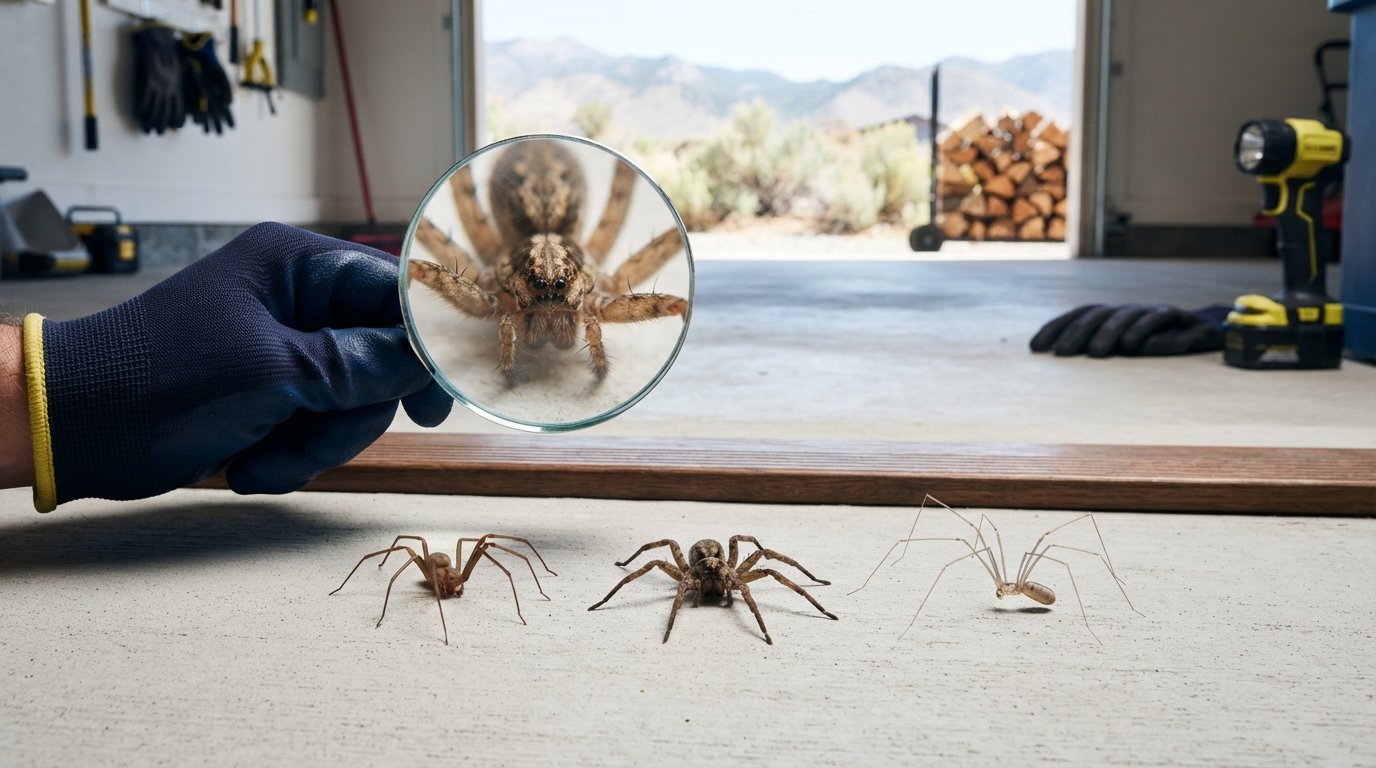
The most reliable method for brown recluse identification nevada homeowners can use is the eye test. While the vast majority of spiders possess eight eyes, members of the recluse family have only six. These are arranged in three distinct pairs, known as dyads, which form a semi-circle or U-shape on the front of the head. One pair is located in the center, with the other two pairs situated on either side. Because these spiders are small, you don’t need to get dangerously close to see this. Using the zoom feature on a smartphone camera or a simple magnifying glass allows you to verify this pattern from a safe distance.
Body Texture and Leg Appearance
The physical texture of a recluse is often described as velvety. This appearance comes from a coat of incredibly fine, short hairs that cover both the body and the legs. Unlike many local spiders that look “spiny” or “bristly,” a recluse has legs that appear smooth and uniform. Looking closely at the legs provides another layer of evidence; they are always a solid color. If you see stripes, bands, or distinct spots on the legs, you are looking at a different species entirely. Additionally, the legs of a recluse are quite long in proportion to their body, giving them a delicate but agile look.
The famous violin-shaped mark on the cephalothorax is often cited as the primary identification tool, but it can be misleading. Many harmless spiders in Northern Nevada possess dark markings that mimic this shape. The mark is usually darker than the rest of the body, with the “neck” of the violin pointing toward the spider’s abdomen. However, this mark can be faint or even absent in younger spiders. Because so many other species have similar patterns, the eye arrangement remains the only foolproof biological marker. If you find a spider in your home and the physical traits don’t quite match up, a professional spider control inspection can provide the definitive identification you need to keep your family safe.
Northern Nevada Look-Alikes: Who is Actually in Your Home?
When residents attempt brown recluse identification nevada, they usually encounter a local species that poses no significant threat to humans. Our High Desert ecosystem is home to several brown spiders that share superficial similarities with the recluse, leading to common cases of mistaken identity. Understanding these local residents is the first step toward reducing household anxiety and recognizing the beneficial role many of these arachnids play in controlling other pests around your property.
Wolf Spiders vs. Brown Recluses
The wolf spider is perhaps the most frequent source of “recluse sightings” in Reno basements and gardens. These spiders are notably larger and much hairier than a true recluse. While a recluse has a uniform color on its front section, wolf spiders feature distinct, dark longitudinal stripes on their “head” area. Their behavior is also a major giveaway. While a recluse is shy and prefers to hide in undisturbed boxes or crevices, wolf spiders are active hunters that often run across open floors in search of prey. Because they consume smaller insects, they are actually quite beneficial to have around your home’s exterior, acting as a natural form of pest management.
Hobo Spiders: The Common Northern Nevada Culprit
If you find a brown spider in a low-lying area like a crawl space or a window well, it’s likely a hobo spider. This species is very common in Northern Nevada and is often confused with the recluse because of its similar size and brownish hue. You can identify them by the funnel-shaped webs they build in dark, moist corners. Looking closely at their abdomen reveals a series of chevron or V-shaped patterns, which a true brown recluse never possesses. While their appearance can be startling, they are not considered a major medical threat. For homeowners concerned about other local risks, comparing these traits with the information in our guide on Professional Black Widow Control in Reno, NV can help you distinguish between harmless neighbors and spiders that require more careful management.
Two other common residents are the cellar spider and the giant house spider. Cellar spiders, often called “daddy long legs,” have extremely thin, delicate legs and are frequently found hanging upside down in ceiling corners. They are completely harmless and often eat other spiders. The giant house spider, while intimidating due to its impressive leg span and incredible speed, is another harmless look-alike. These spiders are much faster than a recluse and lack the specific eye arrangement needed for a positive brown recluse identification nevada. Recognizing these subtle differences allows you to maintain a calm, safe environment for your family without the stress of unnecessary fear.

High Desert Spider Habitats: Where They Hide in Reno
Living in the High Desert presents unique challenges for pest management, as our local climate dictates exactly where spiders congregate. While many homeowners begin their journey into brown recluse identification nevada after spotting a spider in a dark corner, these sightings are rarely random. Spiders in Reno and the surrounding areas gravitate toward undisturbed zones like garages, crawl spaces, and attics where they can hunt without being bothered by human activity. These areas provide the perfect sanctuary during our intense seasonal shifts.
As temperatures drop during Reno’s cold winters, many local species naturally migrate indoors to find warmth. During the heat of the summer, the lack of atmospheric humidity in our region drives them to seek out moisture inside your home. This is why you often discover spiders in bathtubs, sinks, or laundry rooms. They aren’t there to bother you; they’re simply following the water. Understanding these biological needs helps you predict where activity might occur before it becomes a concern for your family.
The Role of Clutter and Storage
Cardboard boxes are a primary attractant for spiders because they mimic the tight, dry crevices found in nature. If you’re storing seasonal decorations or old documents in the garage, consider switching to airtight plastic bins. This simple change removes the nesting sites that local spiders find so appealing. It’s also worth remembering that a high spider population often indicates an abundance of prey. Utilizing rodent control services in Carson City can indirectly reduce spider numbers by eliminating the other pests that serve as their primary food source.
Landscaping and Perimeter Risks
The area immediately surrounding your foundation acts as the first line of defense for your home. In communities like Sparks and Dayton, yard debris such as woodpiles or dense sagebrush provides an ideal habitat for spiders to thrive. When vegetation or tree branches touch your siding, they act as a physical bridge that allows spiders to bypass your home’s exterior defenses. Keeping a clear perimeter and removing leaf litter from your foundation significantly reduces the likelihood of accidental indoor encounters. Because Reno’s extremely low humidity levels can be lethal to many insects, spiders will always prioritize these shaded, slightly more humid micro-climates near your home’s entry points. If you’ve noticed an increase in activity around your property, our team can provide a professional spider control assessment to identify and secure these vulnerable areas.
Professional Spider Management and Peace of Mind
Even with a solid understanding of brown recluse identification nevada, spotting a brown spider in your home can still cause a moment of hesitation. It’s one thing to look at a diagram and quite another to find an active arachnid in your child’s playroom or a dark closet. Professional spider control is about more than just identification; it’s about creating a comprehensive barrier that ensures these unwanted guests stay where they belong. A professional eye can spot the subtle entry points and nesting habits that an untrained observer might miss, providing a level of certainty that a DIY approach simply cannot offer.
Why Local Expertise Matters in Northern Nevada
Battle Born Pest Control brings a level of local insight that national franchises often lack. We live and work in the Reno area, so we know the specific behaviors of Northern Nevada species. Instead of relying on aggressive, broad-spectrum applications, we focus on customized treatment plans that address the unique architecture of your home and the realities of our High Desert climate. By establishing durable perimeter barriers, we stop spiders before they ever cross your threshold. If you’re unsure about a recent sighting or want to secure your property, we encourage you to contact Battle Born Pest Control for a tailored spider assessment.
Our Safety-Oriented Process
Our methodology follows a clear, methodical path: Inspect, Protect, and Fortify. This process begins with a thorough evaluation of your property to identify high-traffic zones and potential entry points like foundation cracks or gaps in window seals. We then apply treatments that are specifically chosen for their effectiveness and safety around your loved ones. As a locally owned business, we prioritize the health of your pets and children. We use products that provide long-term protection without compromising the safety of your home’s environment.
Real protection isn’t found in a one-time spray. It comes from a commitment to long-term environmental health and recurring maintenance. Our service plans are designed to adapt to Reno’s changing seasons. This ensures that as spiders move to seek warmth in the winter or moisture in the summer, your home remains a fortified sanctuary. This proactive approach allows you to enjoy your property with total confidence, knowing that a dedicated local guardian is looking out for your family’s well-being. By focusing on stability and careful application, we provide a lasting solution that replaces anxiety with peace of mind.
Securing Your Reno Home with Confidence
Understanding the difference between high desert myths and biological reality is the first step toward a worry-free home. While the fear of dangerous spiders is natural, the process of brown recluse identification nevada usually reveals that our local residents are harmless look-alikes like wolf or hobo spiders. By focusing on the specific anatomical markers and typical habitats we’ve discussed, you can move past the confusion caused by generic internet photos and focus on practical, long-term prevention strategies.
As a locally owned and licensed business with decades of Northern Nevada experience, we’re dedicated to the well-being of our community. We provide tailored, family and pet-safe treatment plans that prioritize safety without using alarmist tactics. If you’ve spotted a spider and want definitive proof of what it is, we’re here to act as your seasoned guide. Get a Professional Spider Inspection in Reno Today and enjoy the lasting peace of mind that comes from expert care. You don’t have to manage these concerns alone; we’re ready to help you protect your loved ones and your property.
Frequently Asked Questions
Are there actually Brown Recluse spiders in Reno, NV?
No, the brown recluse is not native to Reno or Northern Nevada. While they are occasionally transported here in moving boxes from the South-Central United States, our high desert climate is too dry and cold for them to establish permanent colonies. For accurate brown recluse identification nevada residents should remember that sightings are extremely rare. Most brown spiders found locally are actually harmless native species that have adapted to our specific mountain environment.
What does a Brown Recluse bite look like compared to other spiders?
A brown recluse bite typically develops a distinct bullseye appearance over several hours. This usually includes a central blister surrounded by a pale ring and a larger red, inflamed area. In contrast, bites from common Reno spiders like the wolf spider usually result in minor redness, localized swelling, or itching similar to a bee sting. If you suspect a necrotic bite, it’s vital to seek medical attention immediately for a professional diagnosis.
How can I tell the difference between a Wolf Spider and a Brown Recluse?
The easiest way to distinguish them is by looking at their body texture and markings. Wolf spiders are large, noticeably hairy, and feature dark longitudinal stripes on their heads. A brown recluse has a smooth, velvety appearance and lacks any stripes or spots on its legs. While the wolf spider is an active hunter often seen in the open, the recluse is shy and prefers to stay hidden in dark, undisturbed areas.
Is the Desert Recluse dangerous to humans in Nevada?
The desert recluse possesses necrotic venom similar to its famous cousin, making it potentially dangerous to humans. However, this species is primarily restricted to the Mojave Desert in Southern Nevada and is rarely encountered in the Reno or Carson City areas. Because their habitats are so different, Northern Nevada homeowners are much more likely to encounter harmless look-alikes rather than any member of the recluse family during their daily routines.
What should I do if I find a suspicious spider in my home?
If you encounter a spider you can’t identify, the safest action is to take a clear photograph from a distance using your phone’s zoom feature. Do not attempt to handle or crush the spider, as this can make identification more difficult. You can then share the image with a local expert to assist with brown recluse identification nevada. Securing the area and scheduling a professional inspection ensures your home remains a safe environment.
Can Brown Recluses survive Northern Nevada winters?
True brown recluses struggle to survive the harsh winters of Northern Nevada. They are biologically adapted to the warmer, more humid climates of the Midwest and Southeast. The combination of our freezing temperatures and extremely low indoor humidity makes it nearly impossible for them to thrive or reproduce here. Most spiders you see indoors during the winter are local species that have found a temporary way to escape the cold.
Why do I keep finding brown spiders in my garage?
Garages are ideal habitats for local spiders because they offer plenty of hiding spots and a steady supply of prey. Spiders are naturally drawn to the dark, quiet crevices found behind storage bins and inside cardboard boxes. Additionally, garages often provide a slightly more humid micro-climate than the open desert. Reducing clutter and switching to airtight plastic containers can significantly decrease the number of spiders that choose your garage as a home.
Are spider treatments safe for my dogs and cats?
Yes, modern professional treatments are designed with the safety of your pets in mind. At Battle Born Pest Control, we utilize family and pet-safe methods that target spiders effectively without putting your dogs or cats at risk. We focus on careful, strategic application in areas where pets don’t typically roam. Once the treatment has dried, it’s perfectly safe for your furry companions to return to their favorite spots in the house.