How Much Rodent Control Costs in Reno
Rodent control cost in Reno depends on the work a property needs, not a single standard rate. The rodent control cost in Reno is influenced by the type of rodent, where activity and entry points are located, how accessible those areas are, and whether the property is a home or business. Battle Born Pest Control provides a quote based on the specific property and scope of service.
It’s understandable to want a clear estimate after finding droppings, hearing movement, or noticing damage. The location and extent of activity affect the work involved, and a home and a business may need different approaches to control and prevention.
This guide explains the factors that can shape a rodent-control estimate, including access, rodent type, and property use. Understanding the likely scope can help you prepare for an assessment and discuss the right next step for a Reno-area home or business.
Key Takeaways
- Compare one-time and recurring treatment schedules to understand how service frequency shapes the overall budget.
- Consider where rodents are active and how accessible those areas are, since difficult-to-reach spaces can affect the work involved.
- Identify the rodent type before planning removal, because different species may call for different control approaches.
- Account for whether the property is a home or a commercial space, as its layout and use can influence the scope of treatment.
- Use signs such as droppings, noises, or chew marks to help pinpoint activity and guide the next steps.
Rodent Control Cost: How Much Does Rodent Control Cost?
Rodent-control pricing depends on the areas covered, the work required, and whether service is one-time or ongoing. To compare estimates, distinguish treatment for active rodent activity from recurring pest maintenance and exterior coverage.
Treatment Frequency Options
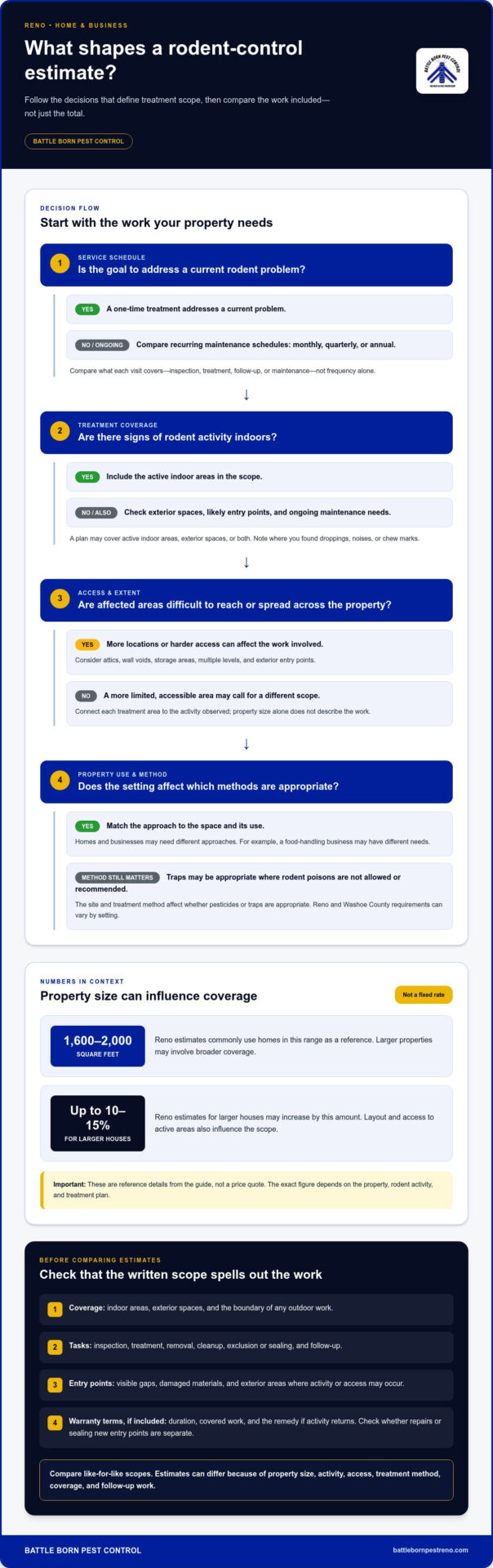
A one-time treatment addresses a current problem, while monthly, quarterly, and annual schedules represent different service intervals. Compare what each visit covers, such as inspection, treatment, follow-up, or maintenance, rather than looking at frequency alone. Reno pest control estimates commonly use homes measuring 1,600-2,000 square feet as a reference, so a larger property may involve broader coverage. The exact figure for your case depends on the property, the rodent activity, and the treatment plan, and is provided in a quote.
Professional treatment can help address rodent activity before it reaches more rooms or nesting areas. Droppings, unusual noises, and chew marks on walls or furniture are useful signs to report during an assessment. Sharing where you noticed them helps identify areas needing attention and whether a one-time treatment or ongoing prevention better fits the situation.
Treatment Type and Coverage
Treatment scope depends on where rodents travel and enter. A plan may cover active indoor areas, exterior spaces, or both. For outdoor coverage, clarify the boundary and whether the work addresses active signs, likely entry points, or ongoing maintenance. The site and treatment method also affect whether pesticides or traps are appropriate. Reno and Washoe County requirements can vary by setting.
No single treatment method suits every property. A home and a food-handling business, for example, may need different approaches. Traps can be appropriate where rodent poisons aren’t allowed or recommended. The goal is to match the method to the space and its use, focusing treatment on relevant areas. Ask for a scope that distinguishes indoor, outdoor, and follow-up work.
Exclusion and Sealing Costs
Rodent exclusion means closing openings rodents use to enter a building. The work depends on where gaps occur, how accessible they are, and how many parts of the structure need attention. Exclusion differs from trapping: traps address rodents already inside, while sealing openings helps reduce access. A quote reflects the property’s conditions and the work included.
For a clearer assessment, note visible gaps, damaged materials, and places where you’ve seen rodent activity. Include exterior areas, such as the building’s perimeter. Sealing entry points may be part of a broader plan alongside inspection and prevention. Addressing active signs and possible access routes gives the work a more complete focus than removal alone.
Factors that determine rodent control costs
The estimate reflects the property’s size, the extent of activity, and the work included. Comparing these details helps explain why quotes may differ.
Home Size and Service Costs
Property size affects how much space pest control treatments must cover. Reno estimates for larger houses may increase by up to 10-15%, while the layout also influences access to active areas. A compact home with activity limited to one room differs from a larger house with signs across several levels. Compare the treatment areas and follow-up work included, not just the square footage.
Size is only one factor. Attics, wall voids, storage areas, and exterior entry points can add work even in a smaller home. A useful assessment connects each treatment area to observed activity, so the scope addresses the problem rather than just the property’s footprint.
Mouse Extermination Costs
Mouse exterminator costs in Reno depend on where activity occurs, how accessible affected spaces are, and the treatment plan. A few signs in an accessible area may require different work from activity spread through cabinets, walls, or storage spaces. Note where you see droppings or chew marks and share those locations during an assessment. This helps clarify what the estimate covers.
Check whether the estimate separates removal from prevention. Trapping can address mice inside, while sealing potential entry points helps reduce future access. A plan may also include inspection and ongoing maintenance. Compare these elements alongside the treatment method rather than relying on the total alone.
Comparing Quotes and Warranties
Compare Reno estimates using the same details: inspection, treatment areas, removal, cleanup, exclusion work, and follow-up. If a written estimate includes warranty terms, review the duration, covered work, and remedy if activity returns. Treatment coverage differs from repairs or sealing new entry points. Comparing like-for-like scopes makes estimates easier to evaluate.
Keep the estimate and any warranty terms together, then check that each stated task appears in the written scope. A clear comparison shows what is included and what is separate. That is more useful than comparing totals for different services.
The amount depends on the affected area and the cleanup required. Deodorizing needs can also vary with the location and extent of contamination. Check whether cleanup is listed separately, particularly if activity involved insulation, stored belongings, or food areas.
Access to nesting areas and activity in multiple parts of a building can also affect the work. Cleaning thoroughly and disposing of food scraps where rodents nested can help address the infestation and prevent future activity. Spiders may also be present, but their treatment is a separate pest-control concern, not a measure of mouse-control work.
For an assessment focused on the activity and access points in your property, explore professional rodent control.
Infestation location and accessibility
Where rodents nest and travel affects the work needed to locate and control them. Activity in an open pantry differs from signs inside a wall void or an inaccessible attic. The spread matters too: isolated evidence calls for a different inspection focus from signs across several rooms.
Look for droppings, unusual noises, and chew marks on walls or furniture. Record where each sign appears, such as droppings beneath a kitchen sink or scratching near a ceiling. These details can help distinguish a travel route from a possible nesting area and focus an inspection on connected spaces, rather than treating a visible sign as the whole problem.
Accessibility can affect how a space is inspected and treated. A clear floor along a wall is easier to examine than a packed closet, while rodents in wall cavities may be harder to reach directly. Trapping can help avoid rodents dying in inaccessible places and causing an odor problem. Where access is limited, identifying the route rodents use helps determine where to place control measures.
Rodent activity also raises health concerns. Rodents can carry and spread plague, rat-bite fever, and salmonellosis. Young children and seniors are particularly vulnerable to diseases rodents can spread, so droppings or nesting materials in shared living areas deserve prompt attention. Avoid disturbing contaminated areas while identifying signs, and keep children away from places where rodent activity is visible.
In Reno, rats and mice are the two main rodents that invade homes, and species can affect where activity appears. Rats have naked tails and small ears, while mice have furry tails and larger ears. A rat’s legs appear shorter than a mouse’s. These visible differences can help describe what you’ve seen, alongside droppings, noise, and damage that indicate the likely extent of an infestation.
Severity depends on more than the number of visible droppings. Repeated signs in separate areas, damaged materials, and activity near food storage can point to wider movement through a property. Rodents reproduce quickly, allowing an infestation to take over a home in a short time. Chewed electrical wires can start a fire, so report damage near wiring promptly during an assessment.
To prepare useful details, note the room, surface, and time of day for each sound or sign. Include whether evidence appears near food, wiring, storage, or an attic entrance. In Nevada, roof rats may travel over 50 yards to reach food or water, so activity in one location can connect to a distant food or water source. Sharing these observations helps trace movement and target control where it matters.
Mice, gophers, moles, packrats, squirrels, and voles
Correct identification helps distinguish an indoor rodent problem from activity around a yard or structure. In Reno homes, rats and mice are the main rodent invaders.
Rodents Around Reno Homes
Reno homes typically have either rats or mice, rather than both. Physical clues can help narrow down what you’ve seen: rats have naked tails and small ears, while mice have furry tails and larger ears. A rat’s legs also appear shorter than a mouse’s. During an inspection, consider these features alongside the location of droppings, sounds, or damage.
Packrats and squirrels may raise concern when activity appears near a roofline, attic, or yard. An outdoor sighting alone, however, doesn’t establish an indoor infestation. Note whether you’ve found signs inside, such as droppings or damaged materials, and where they occur. This helps focus the assessment on the building, grounds, or both.
Mice, Voles, and Gophers
Mice and rats are the main indoor concerns in Reno, while voles and gophers may prompt investigation of outdoor activity. Moles may also be relevant in a yard-focused inspection. First identify where you found evidence: indoor droppings differ from disturbed landscaping, and each calls for a different assessment.
For house mice in Nevada, nests are usually within 10 to 30 feet of activity. Traps for house mice should be set 6 to 10 feet apart. Roof rats, by contrast, may travel over 50 yards to reach food or water. These travel patterns help explain why an inspection should consider routes and nearby resources, not just the first spot where signs appear.
Make a brief note before arranging an inspection. Record whether signs are indoors or outdoors, the room or yard area, and whether you saw a rodent or only evidence. A mouse seen inside a pantry, for example, differs from a gopher concern in a garden bed. These observations help clarify which animal and area need attention.
Rats and mice can damage materials, and rodents that chew electrical wires could start a fire. If you find chew marks near wiring, include the location when describing the problem. Note whether activity appears in one area or several. Rodents reproduce quickly, so signs across rooms can indicate a more extensive infestation.
Don’t assume every outdoor rodent sighting calls for indoor treatment. Separate signs inside the home from those in the landscaping, then share both during an inspection. Clear details about species and locations help determine whether the concern involves rats, mice, or other rodents around the property.
Rodent removal for homes and commercial properties
Rodent removal follows the signs, access points, and daily use of each property. A Reno home and a food-handling business may need different control methods, treatment areas, and follow-up plans. The practical takeaway: identify where rodents are active and how the space is used before comparing the work involved.
In a home, activity may center on a pantry, attic, garage, or wall void. A technician can inspect these areas, assess likely entry points, and use traps or bait as appropriate. The plan may also include removing dead rodents and sealing entry points. Each task has a different purpose: removal addresses current activity, while exclusion helps reduce future access.
Commercial properties have additional considerations, including food storage, staff movement, and customer-facing areas. A restaurant’s kitchen and receiving area, for example, require control measures suited to the work environment. The scope may differ from a home because activity can extend across storage, service, and back-of-house spaces. An inspection should connect observed signs with areas needing treatment.
The method matters, too. Traps can be used where poisons aren’t allowed or recommended, such as food-handling establishments. In homes and businesses alike, control measures should reflect the space and rodent activity. Fumigation may be necessary in some cases, but it is a last resort because it involves toxic chemicals.
Before treatment, note where you found droppings, heard movement, or saw damaged materials. At home, record activity near a kitchen cabinet or attic access point. At a business, note signs near food storage or a delivery entrance. These details help identify which rooms or work areas need inspection.
After removal, cleaning and disposing of food scraps where rodents nested can help address the infestation and prevent future activity. Sealing entry points and maintaining suitable sanitation also support prevention. At a business, include affected storage or food-preparation areas in the cleanup plan. At home, consider the rooms and nesting locations where you found signs.
Choose a control plan that clearly separates inspection, trapping or baiting, removal, and entry-point sealing. For rodent activity affecting your home or business, schedule rodent control.
Battle Born Pest Control: Ant Control
Battle Born Pest Control provides rodent control for homes and businesses, with treatment plans tailored to each property. If you’ve noticed droppings, chew marks, or activity near an entry point, an assessment can help identify affected areas and shape a practical response. The plan can address current rodent activity and conditions that allow access, with attention to protecting your space.
At home, you may be concerned about living areas, food storage, and the safety of family and pets. At a business, activity near storage or customer spaces may call for a plan suited to how the property is used. Battle Born Pest Control also provides ant, wasp, and spider control when those pests are a separate concern.
Contact Battle Born Pest Control to discuss rodent control for your property.
Take the Next Step Toward a Rodent-Free Property
Use your observations to make the next conversation more productive. Note where activity appears, what has changed, and which areas matter most to your household or business. This gives you a clear starting point for discussing rodent control cost in Reno and the work your property may need.
Think beyond immediate removal, too. Consider what you want addressed now and what could help reduce future access, so the proposed work reflects your priorities. Battle Born Pest Control tailors treatment plans to each property, with the safety of families, pets, and property in mind.
If you’re ready to discuss the signs you’ve noticed and possible next steps, contact Battle Born Pest Control. A thoughtful plan can help you move forward with greater clarity and care.
Frequently Asked Questions
Why seal the house instead of just baiting?
Sealing helps block future entry, while baiting targets rodents already using the property. If baiting is the only measure, an accessible gap may remain a route indoors. Sealing around a pipe opening, for example, addresses a different part of the problem than placing bait near activity. A complete approach considers both current rodent presence and openings that may let more rodents enter.
What is the average cost of rodent control in Reno, Nevada?
There isn’t one standard price for every Reno property. Rodent control cost in Reno depends on the treatment scope, rodent activity, access to affected areas, and whether the property is residential or commercial. A useful estimate reflects the work planned for the specific site, rather than assuming a citywide average. Battle Born Pest Control provides a quote based on your property’s needs.
How much does a rodent inspection cost in Reno?
The inspection scope depends on what the assessment needs to cover, including the property layout and areas showing signs of activity. An assessment may focus on a single room or trace signs across storage, attic, and exterior access areas. Ask for inspection work to be distinguished from treatment, removal, and sealing in the written scope. This helps clarify what the estimate includes.
What do Reno pest control companies charge for mice or rat removal?
Removal work varies with the rodent, the location of activity, and the services included. A mouse issue limited to an accessible cupboard may require a different scope from rat activity across an attic and garage. Compare whether the estimate covers inspection, control measures, removing dead rodents, and sealing entry points. These details show what the quoted work addresses beyond the total.
Do Reno rodent control companies offer one-time treatments or service plans, and what do they cost?
Battle Born Pest Control offers one-time treatments and recurring pest-maintenance plans. A one-time treatment targets active infestations, while an ongoing plan includes regular inspections and preventative treatments tailored to the property. The scope and frequency of work affect the estimate, so compare what each service covers. Battle Born Pest Control provides a quote based on your needs.
What factors affect rodent control prices in Reno, such as infestation size and property type?
The estimate depends on the extent of activity, where rodents nest or travel, access to those areas, and how the property is used. A business with food-storage areas, for example, may need a plan suited to those spaces, while a home’s scope may reflect the rooms and entry points involved. The treatment method and whether removal, cleanup, or sealing is included also shape the work.
Are there Reno or Washoe County rules for rodent control, trapping, or pesticide use?
Reno and Washoe County requirements can vary by setting and method. In Nevada, rodent poisons are generally reserved for large or inaccessible infestations, while traps can be used where poisons aren’t allowed or recommended, such as food-handling establishments.