How to Get Rid of Mice in an Attic in Sparks, NV
If you’re searching “how to get rid of mice in attic sparks,” you may be hearing noises, spotting droppings, or worrying about damage to wiring and insulation. Those concerns are understandable, but attic sounds alone don’t confirm mice. Disturbing contaminated nesting material can also create avoidable risks.
Lasting control starts with understanding where mice may be getting in and what could be attracting them, not just addressing the activity you can see. This guide covers common signs of attic mice, potential access points, and ways to reduce food and shelter conditions around your home. You’ll also learn how to approach cleanup more safely, why sealing openings matters alongside trapping, and when tailored rodent control can help. For Sparks homes, a property-specific response can complement prevention steps and address an active problem without relying on a quick fix alone.
Key Takeaways
- Attic noises can be concerning, but look for several clues before concluding mice are present.
- Learn how to get rid of mice in attic sparks by considering both possible access points and conditions that may attract them.
- Choose cleanup and control steps carefully, and don’t treat traps as a guaranteed fix on their own.
- Use a practical prevention checklist to guide safe inspection, reduce attractants, and plan follow-up.
- One-time rodent treatment and recurring prevention can support different needs in Sparks homes.
How to Tell If Mice Are Living in Your Sparks Attic
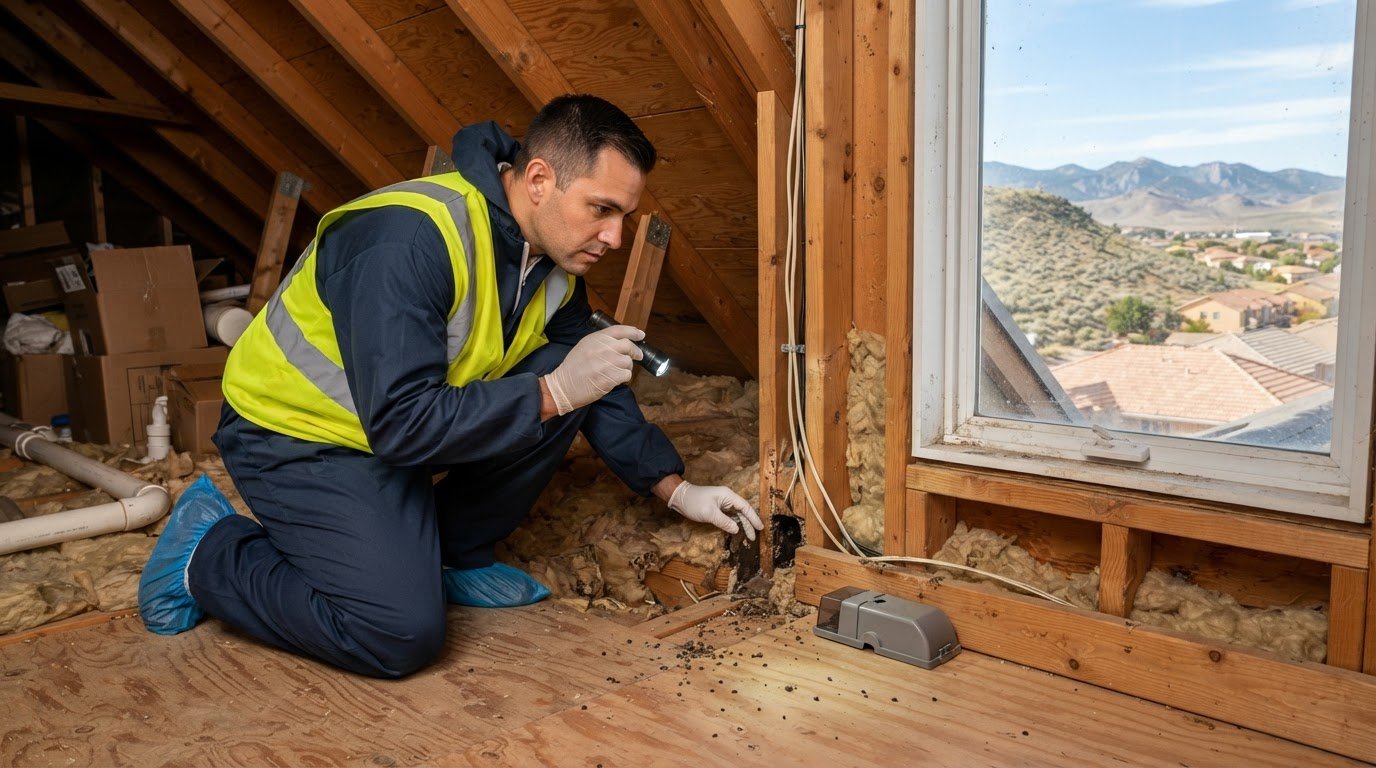
Scratching overhead can be unsettling, especially at night, but a sound by itself doesn’t confirm mice are in the attic. Look for several clues in the same area, such as droppings, gnaw marks, shredded nesting material, and repeated movement sounds. The pattern, location, and freshness of the evidence can help you decide whether to keep observing or arrange a closer assessment.
Mouse activity is more likely when repeated sounds occur alongside droppings, fresh gnaw marks, or nesting material in a nearby sheltered spot. Even then, these signs suggest a possibility rather than confirming the source or whether activity is ongoing. A measured check is more useful than treating every creak or rustle as proof, since homes can make noises for reasons unrelated to rodents.
What mouse droppings, gnaw marks, and nesting material can indicate
Small, dark droppings, damage to stored materials, and scraps of paper or fabric gathered in a tucked-away area can each be clues. Gnawing may leave rough or chipped edges on accessible materials. Nesting material may look like loose, shredded pieces rather than a neatly formed nest. For general background on the behavior and features of house mice, see House mouse characteristics. Visible signs alone don’t identify a species or establish that mice are still present.
Avoid touching droppings, nesting material, or surfaces that may be contaminated. Don’t disturb a suspected nest just to get a better look. Note where you saw each sign and whether similar evidence appears in more than one spot. A single old-looking mark may mean something different from several clues clustered together, so the location and combination can guide a more focused inspection.
When attic noises may point to rodent activity
Scratching, light scurrying, or movement in one part of the ceiling can support other evidence, especially if the sound returns in the same place. But sound is difficult to identify from below. Building materials shifting, plumbing or ventilation, and activity outside the attic can also create noises. Pay attention to timing, duration, and location, then record what you notice rather than relying on memory or diagnosing the cause from one episode.
- Write down when the sound happens and which room or attic area it seems to come from.
- Look for visible clues only in areas you can reach safely. Don’t handle debris or climb into an unsafe space.
- Notice whether new evidence appears in the same location over time.
If observations remain unclear or several clues appear together, a professional inspection can help distinguish rodent activity from other causes and assess the situation. Starting with evidence helps you decide how to get rid of mice in attic sparks without rushing into treatment based on noise alone.
How Mice Reach Attics and What Keeps Them There
Mice don’t need a wide-open doorway to get into a home. A small gap around a vent, utility line, roof edge, or building joint may provide a route toward an attic, where mice can move out of sight. Finding a possible opening doesn’t prove it’s being used, but it gives you a useful place to observe and record as you consider how to get rid of mice in attic sparks.
Removing mice addresses activity, while finding and managing access points helps reduce the chance that the same route will remain available. Both parts matter. A suspected gap can guide a closer inspection, but sealing it without understanding whether rodents are entering or already inside may leave the underlying issue unresolved.
Common access points to inspect around a home
Start outdoors at ground level and work your view upward, checking only areas you can reach safely. Look around roof edges, vents, utility penetrations, and places where siding or other building materials meet. From inside, note visible gaps near attic edges or around lines entering the home. Don’t climb onto a roof or reach into concealed spaces to investigate. Record concerns for safe follow-up.
- Scan accessible exterior walls for visible gaps around pipes, cables, and vents.
- Look for openings or separated materials around eaves and roof edges from the ground.
- Record each suspected opening and its location, especially if it’s near signs of activity.
A visual check can help you organize what you’ve noticed, but it may not reveal the full route. Avoid sealing a suspected entry while activity remains unassessed. If mice may be moving through a gap, a property-specific inspection can help connect the opening to signs in the attic and inform the next step.
Conditions that can make an attic appealing to mice
An attic may offer quiet shelter, and loose paper, fabric, or other stored material can provide potential nesting material. Clutter can make activity harder to spot and provide undisturbed places to nest, though it doesn’t mean every attic will attract mice. Nearby household conditions matter too. Accessible food, poorly secured waste, or storage that allows food to spill can make a home more inviting.
Keep food in secure containers, manage household waste, and store belongings in a way that makes areas easier to inspect. These steps won’t close an exterior opening, just as sealing a gap won’t remove attractants. They address different parts of the problem. A careful inspection from outdoors to indoors can help you understand how possible access, shelter, and nearby resources may relate without assuming one clue tells the whole story.
If you’ve found several possible entry points or can’t safely assess the attic, tailored rodent control for your property can help connect the signs and access concerns into a practical response.
Which Mouse-Control Steps Help, and Which Shortcuts Fall Short?
Once you’ve gathered clues, choose a response that fits what you’ve observed instead of reaching for the fastest-looking fix. Prevention can reduce conditions that attract mice. Traps may help address active rodent movement, while professional rodent control brings inspection and treatment into a plan tailored to the property. Each has a different role. None should be treated as a stand-alone answer if possible access points or repeat activity remain unaddressed.
Effective mouse management considers the evidence, possible access routes, and prevention together. If you’re asking how to get rid of mice in attic sparks, consider more than whether a trap catches a mouse. Look at what the signs suggest, where activity may be occurring, and what could allow it to continue.
What homeowners can do before choosing a control method
Begin with observations, not direct contact. Record where you’ve seen signs and any suspected exterior openings, but don’t touch droppings, nesting material, or surfaces that may be contaminated. Secure food and household waste in appropriate containers, and reduce accessible clutter where practical. If attic access is difficult or cleanup would disturb droppings, avoid entering or sweeping the area and plan for safer follow-up.
For a limited, clearly understood situation, a carefully selected trap may be one part of a response. Follow its label and placement instructions, and consider household safety, including keeping devices away from children and pets. Traps can address mice that encounter them, but they don’t identify every access point or prevent another mouse from entering. Follow the label exactly for any pest-control product. Don’t improvise with poison or use a product in a way the label doesn’t direct.
Why a quick fix may not resolve repeat attic activity
A trap may catch a mouse, yet signs can recur if another route remains open or activity continues elsewhere. Prevention, trapping, and professional rodent control serve different purposes. Storage and sanitation changes reduce attractants, traps address specific activity, and a property-specific inspection can connect evidence with access concerns and appropriate next steps. A broader overview of rodent control services in Carson City also explains how rodent management can involve more than one measure.
Professional control can help when evidence keeps appearing, the attic is unsafe to access, or the extent of activity is difficult to assess. A tailored response guides treatment and prevention without assuming one method suits every home. One-time treatment and recurring preventative service are distinct options. The right fit depends on the situation and the homeowner’s needs.
Shortcuts fall short when they address only the visible sign. Pair careful observations with sensible prevention, and seek a closer assessment if activity persists or cleanup and access work feel unsafe. This measured approach helps you act on evidence rather than disturb potentially contaminated material or rely on an unverified home remedy.

A Practical Mouse-Prevention Checklist for Sparks Homeowners
A simple routine can help you track possible mouse activity without turning an uncertain situation into a risky attic project. Start with what you can observe safely, make practical changes to household storage, and keep notes so you can tell whether anything is changing. If you’re researching how to get rid of mice in attic sparks, use this checklist as a measured starting point, not a substitute for help with unsafe access or persistent activity.
A step-by-step inspection and prevention routine
Follow these steps in order, staying in accessible areas. Don’t climb onto the roof or disturb droppings, nesting material, or other potentially contaminated debris. The goal is to gather useful information and reduce attractants while leaving hazardous inspection and cleanup to qualified help.
- Observe and record. Note where sounds recur and where you see signs from a safe vantage point. Include the date and location, and avoid touching anything that may be contaminated.
- Check reachable exterior areas. From the ground, look around accessible edges, vents, utility openings, and gaps in building materials. Photograph or record suspected openings rather than climbing or reaching into concealed spaces.
- Review food and waste storage. Keep food and household waste in suitable, closed containers, and tidy storage areas so they’re easier to monitor. This reduces access to potential attractants without requiring you to enter the attic.
- Plan a follow-up observation. Recheck the same safe areas and compare notes. One quiet night doesn’t establish that activity has ended. Look for whether signs or sounds recur or appear elsewhere.
Keep your notes together, especially if you observe a suspected opening alongside repeated activity. A record can make follow-up more focused and clarify whether the situation appears isolated or ongoing. Don’t seal a suspected route or attempt attic cleanup if doing so would mean disturbing materials or working somewhere unsafe.
When to move from DIY steps to professional rodent control
Consider professional assessment if activity continues, signs appear in several locations, or attic access is difficult. Droppings or nesting material that can’t be avoided, along with suspected damage to wiring or insulation, are also reasons to leave the area undisturbed and seek careful support. No single sign calls for the same response in every home, so the pattern and access conditions matter.
Battle Born Pest Control tailors rodent-control service to the property and observed needs. One-time treatment addresses an active problem, while recurring service plans include inspections and preventative treatments. These options serve different purposes. Homeowner prevention can complement a tailored response, but it doesn’t replace an assessment when activity persists.
For a closer, property-specific response, learn about Battle Born Pest Control and its rodent-control approach for Sparks homes.
How Battle Born Pest Control Helps Address Mice in Sparks Attics
Recognizing possible mouse activity is a useful first step, but deciding what to do next can be harder when the attic is difficult to reach or signs keep returning. Battle Born Pest Control provides rodent control for Sparks homes, with a response tailored to the property and the activity observed. A professional assessment can put the clues in context and support a more informed plan, with care for the home, family, and pets in mind.
Your observations can help inform the assessment. Note where sounds recur and where signs appear. A property-specific approach considers the needs of your home rather than relying on one response for every situation.
What a tailored rodent-control response can address
For an active concern, one-time treatment is an option for addressing the immediate problem. A tailored plan responds to the property and observed rodent activity, helping homeowners understand appropriate next steps. No treatment should be viewed as a guarantee that mice can never return. Ongoing prevention and attention to changing signs remain useful parts of home care.
A professional assessment can help you make decisions without entering an unsafe attic or disturbing potentially contaminated material. If you’ve noticed recurring activity, several signs, or possible damage, share those observations as part of the discussion. Clear information about where and when evidence appears can help focus attention on your property’s specific needs.
Ongoing prevention for continued peace of mind
Some homeowners prefer ongoing support after addressing an active issue. Recurring service plans include regular inspections and preventative treatments tailored to the property. Follow-up keeps prevention in view as conditions change, rather than assuming a single treatment will resolve every future concern. It can work alongside household habits such as secure food and waste storage and keeping areas easier to monitor.
One-time treatment and recurring service are different choices: one addresses an active problem, while the other supports continued inspection and prevention. The right approach depends on the property and the homeowner’s needs. Battle Born Pest Control serves Sparks and nearby Northern Nevada communities, including Reno, Carson City, and Dayton.
If you’re weighing next steps for an attic mouse concern, contact Battle Born Pest Control to discuss rodent control for your Sparks property. A calm, property-specific conversation can help you understand the approach and choose a next step suited to your home.
Choose a Clear Next Step for Your Sparks Home
A mouse concern doesn’t have to turn into a rushed attic project. Use what you’ve observed to decide whether a safe check around accessible areas is enough for now or whether activity calls for a closer assessment. If you’re still weighing how to get rid of mice in attic sparks, make a measured decision that protects your home and avoids disturbing materials you’re unsure how to handle.
Battle Born Pest Control is a locally owned, licensed Northern Nevada business serving Sparks with rodent control. Discuss the activity you’ve noticed and consider a practical next step without assuming every home needs the same approach. Discuss rodent control for your Sparks home.
Frequently Asked Questions
Is mouse activity in an attic dangerous?
It can involve more than noise, since droppings may contaminate surfaces and rodents may damage stored materials or wiring. Keep children and pets away from areas with suspected activity, and don’t touch droppings or nesting material. If you see exposed wires or suspect damage, stay clear and arrange an assessment by a qualified electrician. A careful pest inspection can help clarify the rodent concern and guide appropriate next steps.
How quickly can mice multiply in an attic?
Mice can reproduce quickly when conditions support them, so repeated signs shouldn’t be ignored indefinitely. The pace depends on factors such as access to shelter and food, and it can’t be judged from one sound or dropping. Note where evidence appears, secure accessible food, and consider possible entry routes. If activity continues or seems to spread, a professional assessment can help determine how to proceed.
Is it safe to clean mouse droppings from an attic?
Don’t sweep or vacuum mouse droppings, because disturbing contaminated material can spread particles. Keep children and pets out of the affected area, and follow current public-health guidance for cleanup methods and protective equipment. If droppings are widespread, nesting material is present, or you’re unsure how to clean safely, leave the material undisturbed and seek professional guidance appropriate to the situation.
Can mice chew through attic electrical wires?
Rodents may gnaw on materials, including wiring, which makes persistent attic activity worth taking seriously. If you notice exposed wires, scorch marks, or another possible electrical hazard, don’t touch or inspect the components yourself. Keep clear and arrange an assessment by a qualified electrician. Pest control can address the rodent concern, while electrical repairs should be handled by the appropriate specialist.
Will mice return after they have been removed from an attic?
They may return if openings remain accessible or conditions around the home continue to attract them. After addressing an active concern, keep food and waste secured and monitor areas where signs appeared before. Don’t assume that a period without noise proves the issue is resolved. If signs reappear, an assessment tailored to your property can help identify what may still be contributing to the activity.
Do cats keep mice out of an attic?
No, a cat shouldn’t be relied on as a complete mouse-control plan, particularly when the attic is inaccessible. A pet may not reach where mice are entering or nesting, and activity can go unnoticed. Keep pets away from droppings and other potentially contaminated areas, secure household food, and track any recurring signs. If movement or evidence continues, a pest inspection can help clarify the next step.