How to Keep Wasps Away From Your Carson City Home Safely
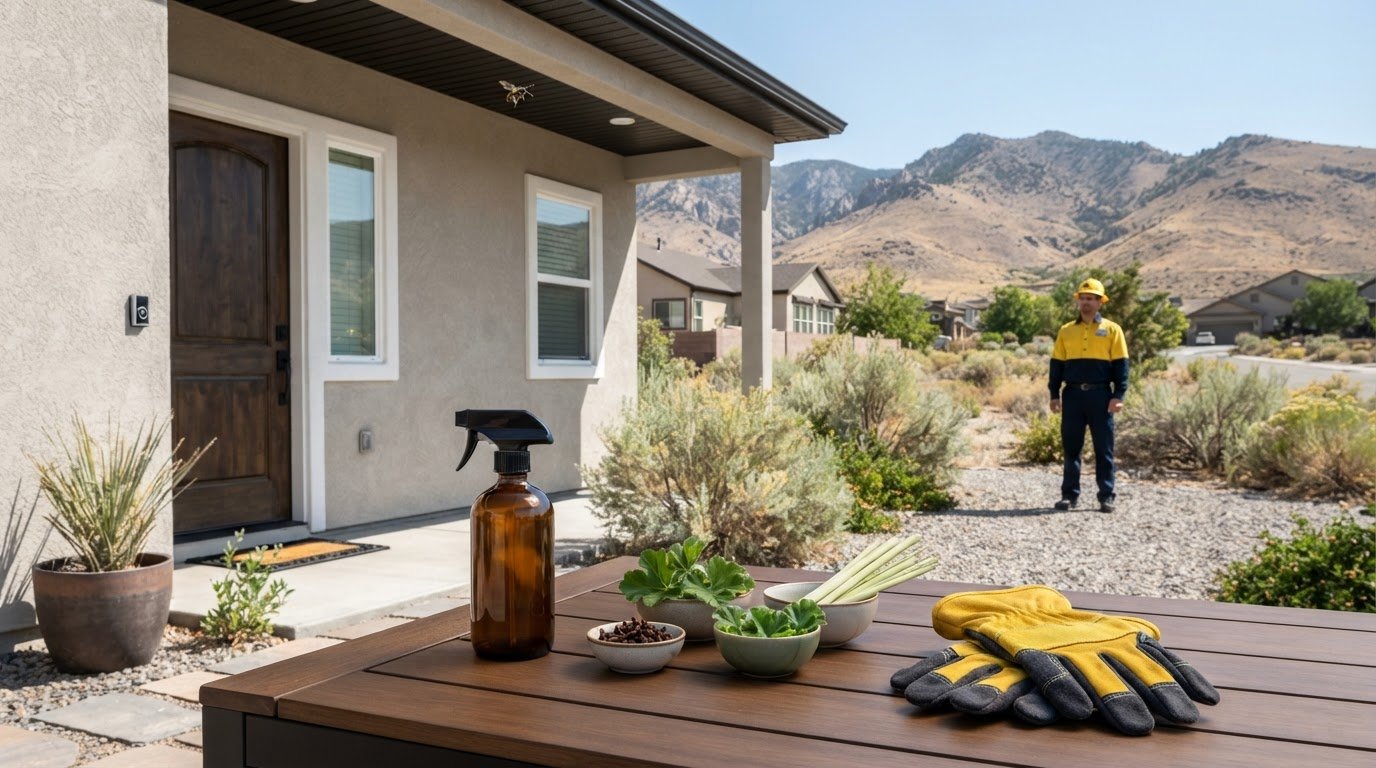
A growing nest is harder to manage than wasps searching for food or shelter. To learn how to keep wasps away from your house in Carson City, start by identifying the insect, clearing outdoor food and drink, sealing gaps, and using a scent-based deterrent around likely nesting spots. A simple blend combines 2 cups of water, 5 drops each of clove, geranium, and lemongrass essential oils, and 1 teaspoon of mild dish soap.
It’s understandable to want a quick, safe way to keep wasps away from your house in Carson City. The right response depends on whether you’re seeing wasps, bees, hornets, or yellowjackets. Their nesting habits and behavior differ, so identifying the insect can help you choose sensible prevention steps and avoid disturbing a nest.
This guide explains how to recognize common stinging insects, reduce what attracts them, use scent-based deterrents, and seal suitable nesting gaps. It also covers when a nest calls for professional help, so you can protect your household without taking unnecessary risks.
Key Takeaways
- Learn to distinguish wasps and yellowjackets from bees so you can choose a safer, more suitable response.
- Reduce wasp activity by covering trash, cleaning outdoor food and drink spills, and putting pet food away.
- Explore a clove, geranium, and lemongrass deterrent blend, and where to apply it around likely nesting spots.
- Seal gaps around doors, windows, and vents, and watch sheltered areas where nests may develop.
- Avoid disturbing a nest, especially if it’s concealed or there are many wasps; Battle Born Pest Control offers Wasp Control for these concerns.
1. Clove, geranium, and lemongrass deterrent recipe
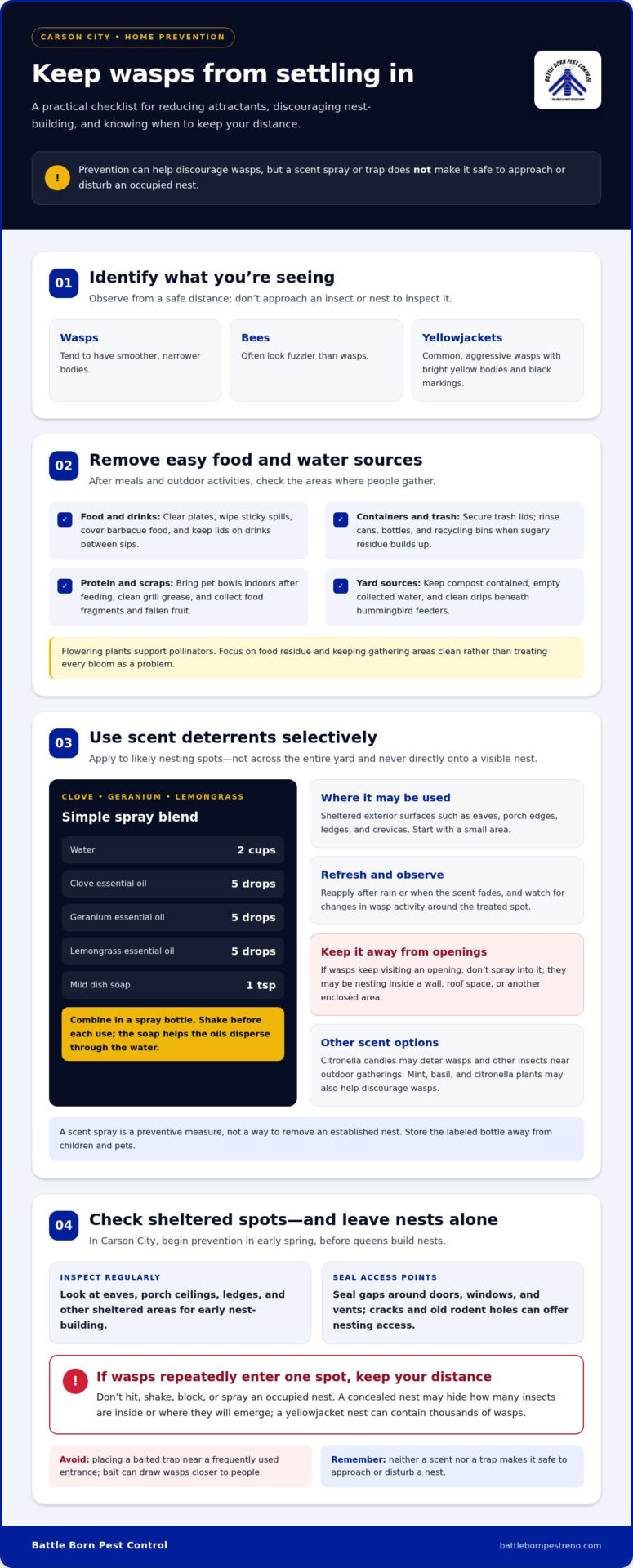
A clove, geranium, and lemongrass spray can help discourage wasps from settling around sheltered spots. Mix 2 cups of water with 5 drops of clove essential oil, 5 drops of geranium essential oil, and 5 drops of lemongrass essential oil. Add 1 teaspoon of mild dish soap, then combine the ingredients in a spray bottle. The soap helps the oils disperse through the water, so shake the bottle before each use.
Apply the mixture to likely nesting places, such as eaves, porch edges, ledges, and crevices. Start with a small area, and don’t spray directly onto a visible nest. Social wasps can become territorial when a nest is threatened, so keep your distance if you see wasps entering and leaving one spot. A scent spray is a preventive measure, not a safe way to remove an established nest.
Use the blend on sheltered exterior surfaces where wasps might investigate, rather than misting the entire yard. Reapply after rain or when the scent fades, and watch for changes in wasp activity around the treated spot. If wasps keep visiting a particular opening, don’t spray into it; they may be nesting inside a wall, roof space, or other enclosed area. Label the bottle clearly and store it away from children and pets.
Essential oils offer another scent-based option. Lemongrass oil may repel wasps, while citronella candles may deter them and other insects near outdoor gatherings. Place a candle where people can enjoy its scent, away from food, drinks, and likely nesting sites. Mint, basil, and citronella plants may also help discourage wasps and can be grown near patios or seating areas. These scents may help with prevention, but they won’t remove food sources or resolve nesting activity.
For home prevention, a localized scent spray is more appropriate than relying on a trap to protect a doorway or patio. Baited traps can draw wasps toward the bait, so placing one near a frequently used entrance may bring insect activity closer to people. Neither a scent nor a trap makes it safe to approach or disturb a nest; territorial wasps can defend it.
Choose a method to suit the location: use the clove, geranium, and lemongrass blend on quiet, exposed surfaces where wasps might nest, and use citronella candles near outdoor seating. Mint and basil offer another planting option, while removing other attractants remains an important part of prevention. Check eaves, porch ceilings, and ledges regularly for early nest-building, and leave any occupied nest undisturbed.
2. First: Are They Wasps, Bees, Hornets, or Yellowjackets?
Identifying the insect helps explain why it’s visiting and what to do next. Yellowjackets are common, aggressive wasps with bright yellow bodies and black markings. Bees often look fuzzier, while wasps tend to have smoother, narrower bodies. Observe from a safe distance rather than approaching an insect or nest to inspect it.
Food is a major reason wasps visit patios, decks, and outdoor dining areas. Sweet foods, fermented food, soda, and sticky spills can attract them, so clear plates and wipe tables promptly after meals. Rinse drink cans and bottles before recycling, especially when sugary residue remains around the opening. Keep lids on drinks between sips during outdoor gatherings.
Wasps also seek meat and pet food because these provide protein for developing larvae. Bring pet bowls indoors after feeding, and cover food set out for a barbecue. Clean grill grease and food fragments after cooking, then check nearby counters and seating for scraps. These small routines reduce easy access to food around your house.
Check these common attractants while tidying your yard:
- Open trash cans, loose garbage, and sticky recycling containers.
- Compost piles, fallen fruit, and food scraps near outdoor seating.
- Pet food, grill grease, and uncovered food or drinks.
- Hummingbird feeders, flowering plants, and standing water.
- Cracks, gaps, and old rodent holes that can offer nesting access.
Close trash lids securely and take out garbage regularly. Keep compost contained, collect fallen fruit, and rinse recycling bins when sugary residue builds up. After a barbecue, clean the grill and eating area before food odors and grease linger. If you use a hummingbird feeder, clean drips beneath it and check whether wasps are gathering nearby.
Water can also draw wasps, so empty water collecting in trays or containers and address standing water around the yard. Flowering plants support pollinators, so focus on removing food residue and keeping gathering areas clean rather than treating every bloom as a problem. If a damaged tree repeatedly drops fruit over a walkway, tree removal may be a longer-term property option when the tree itself needs removal.
Consistent cleanup makes your yard less inviting without disturbing a nest. If wasps keep returning to one location, note where they gather and whether they enter a gap. That pattern can help distinguish a food source from possible nesting activity.
3. What Attracts Wasps to Your Yard?
In Carson City, start wasp prevention in early spring, before queens build nests. Activity changes as nests develop, so watch for increased wasp traffic and small starter nests rather than relying on a calendar date.
Removing an occupied nest yourself can provoke defensive behavior. Social wasps may become territorial when their nest is threatened, and a yellowjacket nest can contain thousands of wasps. A hidden nest raises the risk because you may not see how many insects are inside or where they’ll emerge.
Keep your distance when wasps repeatedly enter a specific opening or gather around one sheltered spot. Don’t hit, shake, block, or spray an occupied nest. Disturbing it may send wasps toward people nearby, especially around a doorway, patio, or walkway.
Not every wasp requires removal. Mud daubers are solitary and less aggressive than other wasp species. Wasps can also act as pollinators when left alone in nature, so an insect passing through the yard doesn’t necessarily signal a nest problem.
Location and insect behavior help guide your response. Paper wasps may build nests under roofs, in tree branches, and beneath shed, attic, or garage overhangs. European hornet nests are commonly found in tree cavities or other raised, empty spaces at least six feet above ground. Avoid climbing or reaching into these areas to inspect them.
In Carson City, early spring is a good time to start prevention, before queens build nests. If you find a small starter nest or notice wasps repeatedly entering a gap, keep people away and don’t disturb the site. Early observation can reveal whether activity is increasing without putting anyone close to a nest.
If someone is stung, move away from the nest to reduce the chance of further stings. A sting can be life-threatening when a person is stung by dozens of wasps. Treat a suspected allergic reaction as urgent and contact emergency services rather than approaching the nest or delaying for removal.
Professional pest control is appropriate when wasps are extremely numerous or a nest is embedded in a structure. A nest behind a wall or deck can be difficult to reach safely, and opening the structure without a plan may expose wasps indoors. Keep the area clear while the nest’s location and access are assessed.
Leave a nest alone if it isn’t creating a safety concern, and avoid disturbing wasps that are simply passing through. If activity concentrates near a home entrance, play area, or enclosed wall, treat it differently from an occasional visitor. The safest response depends on the nest’s location, wasp traffic, and how close it is to people.
4. Sealing cracks, gaps, and nesting spots around buildings
Wasps can use dark, secluded spaces around a home as nesting sites, including eaves, attics, and wall voids. A careful exterior inspection can help identify gaps before they become regular entry points. Walk around the house and look at window frames, door edges, vents, rooflines, and places where pipes or cables pass through walls.
Seal suitable gaps around windows, doors, and vents with caulk or weatherstripping. A door sweep can close the space beneath an exterior door, while repairing loose screens helps keep insects out of open windows. Make sure vents remain functional, and don’t cover an opening that serves a necessary purpose. Focus on small cracks and loose fittings that can be repaired without blocking airflow.
Look for signs of active wasp traffic before sealing an opening. If wasps repeatedly fly into a crack, wall gap, or roof edge, don’t close it yourself; a nest may be concealed inside. Use the same caution around gaps in a deck or shed. Nests embedded in structures may need professional pest control, so keep people away from the entrance until the nest can be addressed safely.
Outdoor structures also offer sheltered nesting spots. Paper wasps may build nests beneath roof overhangs, in tree branches, and around sheds, attics, or garages. Check porch ceilings and door frames from the ground instead of reaching into a corner or climbing toward a nest. Mud dauber nests, made from soil mixed with the wasp’s saliva, may appear on building sides or in ground holes.
Clear loose debris that creates hidden spaces beside the house. Move unused containers, scrap wood, and clutter away from walls, then keep storage areas orderly enough to inspect. Trim vegetation touching the siding if it blocks a clear view of the building. These steps reduce secluded nesting opportunities and make new activity easier to spot.
Use a simple inspection routine after storms or exterior repairs, when loose trim or damaged screens may expose new gaps. Look over the following areas:
- Window and door frames, including worn weatherstripping.
- Vent edges, roof eaves, and spaces around utility lines.
- Porch ceilings, shed overhangs, and garage corners.
- Deck edges, wall openings, and debris close to the foundation.
Repair inactive gaps once you’ve established that wasps aren’t using them. If traffic continues at a concealed opening, sealing it could hide the problem rather than resolve it. Note where insects enter, keep the area clear, and prioritize addressing the nest before completing the repair.
5. Local wasp removal and prevention services
Local help is useful when a nest is concealed, wasps are extremely numerous, or activity creates a risk near a busy entrance. Describe the exact location, such as a roof edge, wall opening, deck, or tree cavity. Note where wasps enter and leave, then keep people away from that route while arranging treatment.
A nest behind a wall or deck may require access through the structure. Treatment can involve drilling holes and applying dust insecticide through them, rather than spraying only the visible entrance. For homeowners looking into how to keep wasps away from a house in Carson City, addressing the hidden nest is essential before sealing its access point. Otherwise, wasps may seek another route indoors.
With an exposed nest, treatment timing and access matter. Wasp spray is recommended early in the morning, when activity is minimal and most wasps remain inside. Anyone applying spray should wear gloves, protective eyewear, long pants, and long sleeves. After treatment, leave the area undisturbed for a day or two before checking for lingering wasps.
Before help arrives, prepare useful details without approaching the nest. Note its location, the route wasps use, and whether the nest appears exposed or enclosed. A photo taken from a safe distance can help explain the situation. Keep children and pets away, and don’t block an entrance where wasps are actively flying.
Removal and prevention work together. Once the active nest is addressed, inspect the surrounding area for conditions that may draw wasps back, such as an unrepaired opening or sheltered debris. The practical next steps depend on whether the nest was in an eave, wall void, shed, deck, or tree cavity. Following up at the specific site helps homeowners plan how to keep wasps away from a house in Carson City over time.
Professional help is the safer choice when a nest sits inside a wall or deck, when wasp numbers are high, or when reaching it requires climbing or opening a structure. Don’t use a scent deterrent or household insecticide as a substitute for dealing with an established nest. Keep the area clear while the problem is addressed.
For an active nest that needs attention, get help with an active wasp nest. Share where you’ve seen wasps entering, and leave the area undisturbed while planning the next step.
Battle Born Pest Control: Ant Control
Battle Born Pest Control provides Wasp Control for homeowners dealing with an active nest or recurring wasp activity around their property. Turn to professional help when wasps are entering a wall or deck, gathering near a frequently used doorway, or appearing in numbers that make the area difficult to use safely. Avoid disturbing the nest, and share its location and the wasps’ flight path when arranging treatment.
Battle Born Pest Control tailors treatment plans to the property, with attention to the safety of families, pets, and the home. After the immediate concern is addressed, ongoing prevention can focus on the nesting site and conditions that may draw wasps back. For related concerns, the company also offers Tree Pruning, Spider Control, and Ant Control.
Contact Battle Born Pest Control to discuss wasp activity at your home in Carson City and take the next practical step.
Make Prevention Part of Home Care
A lasting approach to keeping wasps away from your house in Carson City is to make prevention part of ordinary home care. Notice changes around eaves, outdoor gathering spaces, and entry points as you maintain the property. Small observations can help you respond before wasp activity disrupts your use of the yard.
If wasps keep returning to one location or a nest is difficult to reach, professional treatment can address the concern with the structure and household in mind. Battle Born Pest Control provides Wasp Control, along with Ant Control and Tree Pruning for other pest and property needs. The right next step depends on what you’re seeing and where the activity is occurring.
For wasp concerns at your home, contact Battle Born Pest Control to discuss a practical way forward. With careful attention and a suitable plan, you can make your outdoor spaces more comfortable for your household.
Frequently Asked Questions
First: Are They Wasps, Bees, Hornets, or Yellowjackets?
Bright yellow bodies with black markings identify yellowjackets, a common, aggressive type of wasp. Mud daubers are solitary wasps and are less aggressive than social species. European hornet nests are often in tree cavities or other raised, empty spaces at least six feet above ground. Observe insect movement from a safe distance, and avoid approaching a nest to identify its occupants.
What Attracts Wasps to Your Yard?
Food, water, and sheltered nesting sites draw wasps into yards. Check less obvious sources, such as sticky residue in recycling bins, fallen fruit beneath a tree, grill grease, hummingbird feeder drips, and water left in containers. Wasps also seek meat or pet food for their larvae. Looking at the specific place insects repeatedly visit can help you find an attractant without disturbing a nest.
What Smells Do Wasps Hate?
Clove, geranium, and lemongrass scents may deter wasps, and lemongrass oil is another natural option. Mint, basil, and citronella plants may also help, while citronella candles can deter wasps near outdoor seating. Use scent as a preventive measure around likely nesting areas, not as a way to force wasps out of an occupied nest. Keep people away from any active nest.
What Attracts Wasps to Homes in Carson City, Nevada?
At homes in Carson City, accessible sweets, soda, fermented foods, meat, and pet food can attract wasps. Open garbage, sticky recycling bins, compost, fallen fruit, grill residue, hummingbird feeders, and standing water also give them reasons to visit. Inspect outdoor eating and waste areas for residue or uncovered food. Wasps repeatedly entering a wall gap or roof edge could indicate nesting, rather than simple foraging.
How Can I Prevent Wasps from Nesting Around My House?
Begin prevention in early spring, before queens build nests, and keep sheltered areas visible and maintained. Close inactive gaps around windows, doors, and vents with caulk or weatherstripping, and fit door sweeps where needed. Clear stored debris beside the house, then inspect eaves, porch ceilings, and shed overhangs from the ground. Don’t seal a gap while wasps are actively entering it.
How Do I Safely Remove a Wasp Nest Near My Home?
Don’t disturb an occupied nest yourself; social wasps can become territorial when threatened. Keep people away and note the nest’s location from a safe distance. A nest hidden behind a wall or deck can require access through the structure and treatment inside the cavity, so spraying the visible opening or sealing it may leave the nest unresolved. Contact a pest professional for removal.
When Should I Call a Pest Control Professional for Wasps?
Call a pest control professional when wasps are extremely numerous or the nest is embedded in a structure. A concealed nest behind a wall or deck presents a different challenge from an exposed nest because the colony’s location and access are less visible. Keep the area clear, note where wasps enter and exit, and share those observations so the nest can be assessed without disturbing it.
How Can I Keep Wasps Away from Outdoor Dining Areas and Garbage?
At outdoor meals, cover food between servings, close drink containers, and promptly clean sugary spills and grill residue. Afterward, remove scraps and rinse cans or bottles with sticky residue before recycling. Keep garbage in cans with tight-fitting lids and take it out regularly. Move pet food indoors after feeding, and check beneath tables and bins for fallen food or drips.