
How to Seal Mouse Entry Points in Sparks Homes
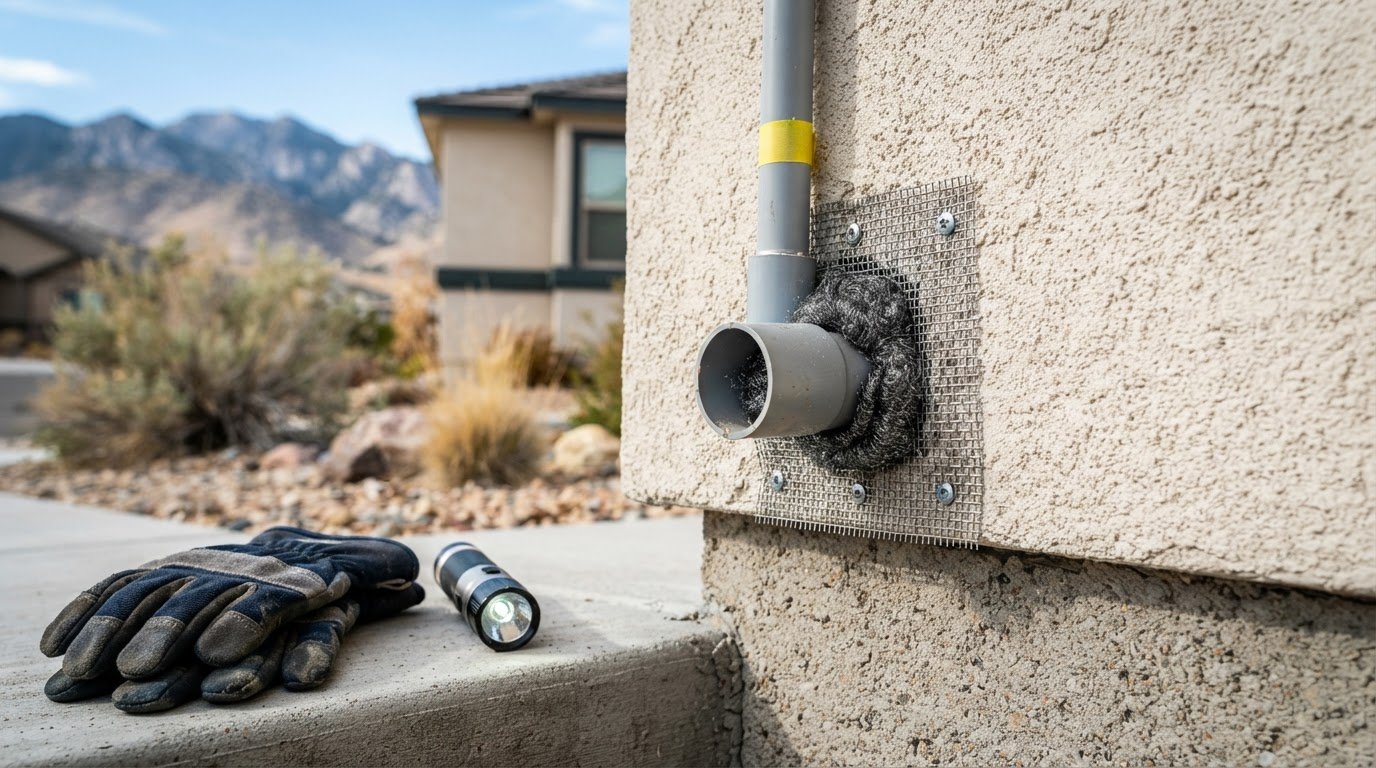
A mouse can squeeze through an opening as small as ¼ inch, while a rat can fit through a gap about the size of a quarter. For Sparks homeowners, sealing entry points for mice starts with treating small gaps as real access routes, especially around utility lines, vents, doors, and rooflines. Close them with chew-resistant materials rather than relying on foam alone.
A narrow crack near a pipe or a worn seal beneath a door is easy to overlook, but either can give rodents a way indoors. A careful inspection can reveal signs of current activity as well as gaps that could become entry points.
This guide to sealing entry points for mice in Sparks explains how to spot mouse activity, inspect your home inside and out, and choose suitable materials and tools for gaps around pipes, cables, vents, and other vulnerable areas. You’ll also learn how to assess repairs so your home’s barriers stay in good condition through changing seasons.
Key Takeaways
- Inspect rooflines, vents, chimneys, basements, and crawl spaces to find overlooked routes into the home.
- Treat openings as small as ¼ inch as possible mouse access points, and consider repeated sightings in one area a clue to nearby entry.
- Use chew-resistant barriers, such as steel wool for small holes and hardware cloth for larger openings, rather than relying on expanding foam alone.
- Check exterior door gaps and worn seals, then inspect repairs seasonally for new cracks or weathering.
- Keep nearby hiding places and food sources in mind as you make the home less inviting to rodents.
Inspecting a home’s interior and exterior for rodent entry points
Inspect the home as a connected route, from the foundation and utility openings to the attic and roofline. A mouse can squeeze through an opening as small as ¼ inch, so include narrow gaps in your walkthrough.
For a Sparks home, follow applicable local building requirements if repairs alter structural components or protected assemblies; routine sealing should avoid changing them. To avoid trapping mice inside walls, look for signs on both sides before closing a gap, and leave an active route open until the animal is removed.
To help prevent mice from returning, seal identified gaps and inspect for new ones seasonally. Each fall, check sealed gaps for cracks or weathered material.
-
Inspect Doors, Windows, Foundations, and Walls
Walk around the exterior first, then repeat the inspection indoors. Check door edges, window frames, foundation joints, and wall openings where pipes or cables pass through. Note cracks in concrete, gaps around trim, and other openings so you can keep track of each possible route. Look for daylight below exterior doors, then examine the same area from inside. Pay special attention to corners and places where materials meet, since movement or wear can open narrow seams.
-
Look for Runways and Nests
Inspect along walls, behind stored items, and near utility lines for rodent runways and nesting material. Droppings, gnaw marks, shredded paper, and greasy rub marks can help distinguish a used route from an old crack. Look around attic vents, chimneys, and rooflines, then check accessible basement and crawl-space edges. Record signs and their locations before disturbing them so you can connect indoor evidence with exterior openings.
- Continue into the attic and any accessible crawl space, checking vents, chimneys, roof edges, and pipe openings. Outside, note where bushes or tree branches meet the house, since trimming them back can reduce access routes. Debris piles and firewood close to walls can provide rodents with hiding places near potential openings. If signs cluster in one area, inspect nearby walls, floors, and utility openings closely.
- Map each suspected gap before making repairs. Professional rodent exclusion begins with a detailed inspection for active and potential entry points, runways, and nesting areas; it then addresses openings before trapping and monitoring. A professional pest control inspection can help connect evidence inside the home with an exterior access point, particularly when a route disappears behind a wall or into a roof space. Don’t seal a suspected active passage until you’ve checked for activity on both sides.
- Repeat the inspection seasonally and when you notice fresh signs, since building materials can shift and expose new gaps. Each fall, check previous seals for cracks or weathering, then review doors, windows, foundation joints, and utility openings. Keep a location list or marked sketch so you can compare the same areas during the next inspection. If you catch more than a few mice in one area, look for a nearby, frequently used entry point rather than treating each sighting as unrelated.
Sealing gaps around pipes, cables, and utility lines
When sealing entry points for mice in Sparks, choose a repair that suits the opening’s size and location, especially around pipes, crawl spaces, and garages. The barrier should close the full gap without interfering with a utility or door.
-
Pack Small Gaps with Steel Wool and Caulk
Pack small openings around pipes or cables with steel wool, taking care not to damage the utility. Apply caulk over the exposed edge to hold the barrier and close remaining crevices. Check behind pipe collars, where an unfilled section can leave an entry route. Expanding foam alone is unreliable because mice can chew through it.
-
Seal Larger Gaps with Concrete or Hardware Cloth
Use concrete for suitable masonry gaps, or cover larger openings with quarter-inch-mesh hardware cloth. For openings larger than 1 inch, hardware cloth or sheet metal backed by mortar provides a sturdier barrier. Overlap the cloth onto solid material by at least 1 inch on every side, then secure it firmly. Keep vents clear so the repair doesn’t block airflow.
- Seal utility openings carefully. Identify the pipe, cable, or line and allow room for its intended movement. Fit the barrier tightly around the opening, not over the utility itself. A basement pipe gap and a cable opening in a garage wall may need different repairs depending on the surrounding materials. Where accessible, inspect both sides to catch hidden spaces behind the outer patch.
- Inspect exterior doors and thresholds visually, and use a piece of paper to check the seal. Light beneath a closed exterior door signals a gap rodents may enter. If paper moves freely under the door, replace the door sweep. Fit it along the bottom edge so it meets the threshold without preventing the door from closing, then check contact across the full width and at both corners.
- Inspect the garage door’s bottom and side seals while it’s closed. Look for gaps where the bottom seal meets the floor or the side edges meet the frame. Replace worn seals, close the door, and check the contact line again. For concrete or caulk repairs, allow the material to cure fully; many exterior caulks cure within 24 hours in dry conditions.
For recurring rodent activity or difficult openings, rodent control support can help address the broader entry problem alongside repairs. A careful plan for sealing entry points for mice in Sparks can then focus on durable repairs suited to your home.
Rodent entry points in Reno and Sparks homes
In Reno and Sparks, inspect utility openings, basements, crawl spaces, and exterior walls for access routes. Mice can squeeze through ¼-inch gaps, while rats can fit through openings about the size of a quarter.
To find mouse entry points in a Sparks home, trace signs indoors toward nearby gaps and inspect the matching exterior surfaces. Check openings larger than 1/4 inch, especially around pipes, vents, and foundations.
Expanding foam alone won’t stop mice because they can chew through it. Use a chew-resistant barrier instead, and close the opening with suitable material.
-
Locate Mouse Entry Points
Start in the basement and crawl spaces, then follow walls toward utility lines, vents, and exterior openings. Look for droppings, gnaw marks, or repeated activity near a gap. Mice can enter through spaces as small as ¼ inch, so don’t dismiss a narrow crack. If you catch more than a few mice in one area, inspect nearby routes closely, as repeated captures may point to a frequently used entry.
-
Account for Cold-Weather Entry
Inspect exterior gaps before fall and winter, when mouse and rat activity peaks in northern Nevada. Seasonal expansion and contraction can create or widen openings during winter, including seams around pipes and wall joints. Recheck vulnerable spots after cold-weather changes and seal any fresh gaps. A small mouse problem can grow into a full infestation within a few weeks, so address signs promptly.
- Review previous DIY patches before relying on them. Mice can chew through expanding foam, plastic mesh, caulk, and unreinforced rubber seals, leaving an opening behind the visible repair. Gently press around patch edges and look for new gnawing or separated material. Replace a weak patch with a barrier suited to the gap, such as steel wool for a small opening or metal mesh for a larger one.
- Protect stored food and inspect accessible wiring as you check indoor routes. Keep food in airtight containers to help avoid attracting pests, and look for gnaw marks near cable runs or appliances. Rodent damage to wiring can create a property concern, so don’t conceal damaged cables behind a patch. Traps or poisonous bait may remove individual rodents without solving the entry problem; include sealing the route in your control plan.
- Remove nearby hiding places as you complete the inspection. Clear debris piles and keep firewood away from the home to reduce cover near possible entrances. Trim bushes and tree branches back from the structure, then revisit the foundation, vents, and utility openings. Effective rodent control addresses access points and conditions around the home rather than relying on a foam patch alone.

Identifying signs of active mouse entry
Look for repeated evidence, not just one unexplained mark, and trace it toward possible openings. Droppings, gnawing, and runways can help distinguish active mouse traffic from an old entry route.
-
Check for Common Mouse and Rat Signs
Inspect baseboards, corners, and storage areas for droppings, gnaw marks, and dark rub marks along travel paths. Shredded paper or fabric can indicate nesting material, while repeated sounds near a wall may help narrow your search. Note each sign and its location, then compare it with nearby gaps. Several clues in one area can point to a frequently used route.
-
Look for Signs of Mice Indoors
Start in the kitchen, including cupboards, pantry edges, and spaces behind appliances. Look for droppings near stored food, chewed packaging, or gnaw marks along cabinet corners. Then inspect windows, utility openings, and the wall edges beside those signs. A trail from a food-storage area toward an exterior gap gives you a practical place to investigate next.
- Compare each sign with its surroundings before deciding a route is active. A fresh-looking mark beside an accessible opening, together with other nearby evidence, deserves closer inspection. Photograph the area and record its location so you can compare it during a later walkthrough. If evidence appears in several rooms, map the locations instead of focusing only on the first visible droppings.
- Use traps along walls and around a room’s perimeter to help identify overlooked routes. Place them near signs, such as a runway beside a baseboard, rather than in the middle of an open floor. Check the same locations regularly and record where activity occurs. Repeated catches in one area can help direct attention to a nearby entry point, but traps alone won’t close that route.
- Inspect surfaces around activity, including the foundation, wall joints, and openings near pipes or cables. Follow a runway toward the nearest possible gap, then examine both indoor and outdoor sides where accessible. Don’t seal a suspected active passage until you’ve considered whether mice remain inside the wall. First connect the signs with the opening, then plan a repair that closes the route without leaving another gap.
- Review your notes after the inspection and prioritize locations with several clues. For example, droppings beneath a kitchen cabinet and gnaw marks near a neighboring pipe opening point to an area worth investigating. Recheck windows, doors, and utility openings during seasonal inspections, since new evidence can reveal a route missed earlier. A clear record helps distinguish recurring activity from a single, isolated sign.
Materials and tools for sealing mouse entry points
Match each repair material to the opening and surrounding surface. A small gap beside a cable needs a different barrier than a broad crack in concrete, so gather tools only after identifying the repair area.
- Measure the opening with a tape measure, then note whether it is in wood, masonry, metal, or a utility fitting. A flashlight helps reveal gaps behind cabinets and along floor edges. Wear work gloves when handling steel wool or cut hardware cloth, and use a notepad to record which material suits each location.
- Use steel wool for small holes, such as spaces around a pipe, and press it into the opening. Apply caulk over the exposed edge to secure the fill and close remaining cracks. Don’t let caulk cover or restrict the pipe or cable. A caulk gun gives steadier control around narrow spaces than squeezing a tube by hand.
- For larger openings, use quarter-inch-mesh hardware cloth or sheet metal as the rodent-resistant barrier. Cut hardware cloth with wire cutters, leaving enough material to overlap solid surfaces by at least 1 inch on every side. Secure the edges firmly so rodents can’t push behind the patch. Openings larger than 1 inch can use hardware cloth or sheet metal backed by mortar.
- Use concrete or mortar for appropriate gaps in masonry, following the product’s application directions and allowing the repair to cure. Mortar repairs should cure for at least 24 hours before you check for shrinkage cracks. Keep expanding foam, plastic mesh, caulk alone, and unreinforced rubber seals out of the role of a stand-alone rodent barrier; mice can chew through these materials.
- Prepare a repair kit with a tape measure, flashlight, gloves, wire cutters, caulk gun, steel wool, caulk, hardware cloth, and masonry repair material. Select only what the mapped openings require. After each patch cures, inspect its edges and the surrounding surface for missed spaces or new cracks. A complete seal should leave no visible route beside the repair.
For recurring activity or difficult openings, get help with rodent control while you plan durable repairs.
Battle Born Pest Control: Ant Control
Battle Born Pest Control provides Ant Control for homes where an inspection reveals ant activity alongside entry gaps. Ant treatment addresses a separate pest concern. Sealing mouse openings is a distinct repair, and the right response depends on the signs around the home. Keeping these issues separate helps you focus on the cause of each problem rather than expecting one measure to solve both.
If you’re seeing ants around kitchen cabinets, food storage, or elsewhere in your home, Battle Born Pest Control can address the concern with care tailored to your property. Contact Battle Born Pest Control to discuss Ant Control for your home.
Keep Your Home’s Protective Barriers in Good Shape
Make home maintenance a continuing habit, not a one-time response. A seasonal walkthrough can help you notice changes around the house before small openings become a recurring problem. When sealing entry points for mice in Sparks, keep a record of repairs and revisit areas where materials or building surfaces have shifted.
Some concerns call for a different kind of support. Battle Born Pest Control provides Ant Control and Wasp Control for those pest issues, while Tree Pruning can help manage branches close to a home. Matching the next step to the problem keeps attention on the repair or service that fits.
If you’d like help with a pest concern or want to discuss the next step for your home, contact Battle Born Pest Control. A steady, informed approach can help you care for your home with confidence.
Frequently Asked Questions
What Size Opening Can a Mouse or Rat Fit Through?
A mouse can squeeze through an opening as small as ¼ inch, while a rat can fit through a gap about the size of a quarter. A narrow opening around a pipe or beneath a garage door can matter, even if it looks too small for a rodent. In Sparks, assess small openings as potential access routes, then match the repair to the surrounding material.
What materials are best for sealing mouse holes and gaps?
For small holes, pack steel wool into the opening. For larger access points, quarter-inch-mesh hardware cloth or sheet metal can form a stronger barrier. Concrete or mortar can suit appropriate gaps in masonry. Choose a material based on the opening’s shape and surrounding surface, and avoid relying on expanding foam alone because mice can chew through it. The patch should cover the entire opening, including its edges.
How to seal gaps around pipes, vents, doors, and foundations against mice?
First identify what the opening surrounds, since a pipe, vent, and door need different repairs. Pack a small pipe gap with steel wool and secure it with caulk; cover larger openings with suitable metal mesh while keeping vents clear. Use an appropriate concrete repair for a masonry foundation gap. At an exterior door, replace a worn sweep so it meets the threshold when closed.
What size hole can a mouse squeeze through?
A mouse can squeeze through a hole as small as ¼ inch. Use that as a practical inspection threshold around a cable pass-through, foundation joint, or wall opening. Gaps can be hard to judge by sight, so compare them with a ruler or tape measure before choosing a repair. Examine the full perimeter too, as an opening may widen where a pipe or cable meets the wall.
Are there licensed pest control companies in Sparks that provide rodent exclusion?
Battle Born Pest Control is a locally licensed pest control business serving Sparks and provides Rodent Control. Rodent exclusion means identifying and closing access points, so distinguish that repair work from pest treatment when considering your next step. If activity continues after you’ve addressed visible gaps, a rodent control assessment can help determine what is happening around the property and which response fits.
Does Sparks weather or local construction create common mouse entry points?
Seasonal movement in building materials can create or widen openings during winter, including around joints and utility openings. Fall and winter are peak periods for mouse and rat activity in northern Nevada, making these useful times to inspect. In Sparks homes, pay attention to where materials meet, such as a pipe passing through masonry or a door meeting its threshold, and revisit repairs after seasonal changes.
What Nevada rules or building codes apply to sealing rodent entry points?
Follow applicable local building requirements if repairs alter structural components or protected assemblies. Routine sealing should avoid changing them.