Prevent Ants in Kitchen Reno by Sealing Gaps and Cleaning Trails
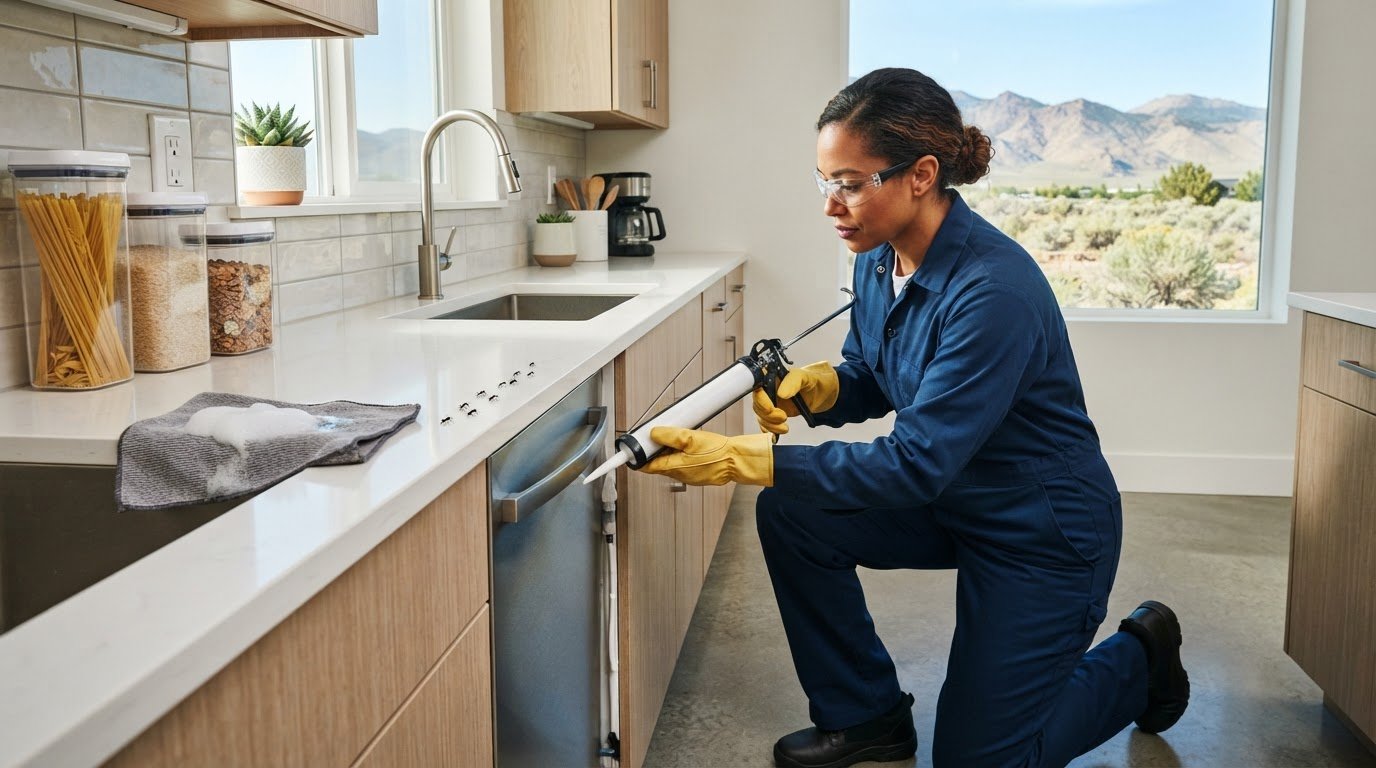
Ants often enter a Reno kitchen through small gaps around cabinets, windows, doors, or pipes, then follow food and water cues indoors. To prevent ants in a Reno kitchen, seal visible entry points, wipe scent trails with soapy water, and store food in tightly closed containers. Clean counters and keep the sink area dry to make the room less inviting.
Finding ants on a counter can be frustrating, especially when a trail returns after cleaning. The practical goal isn’t to make a home completely ant-proof. It’s to remove what attracts ants and close the routes they use. This guide explains how to trace likely entry points, seal kitchen gaps, clear trails and exposed food, and maintain realistic prevention habits.
Key Takeaways
- Seal visible cabinet cracks and gaps, and pay attention to openings around pipes, windows, and doors.
- Store pantry staples in airtight containers so crumbs and food odors are less accessible to ants.
- Wipe ant trails with warm, soapy water, then remove exposed food and clean nearby surfaces.
- Follow ant activity to identify likely entry routes, and address outdoor features that can lead ants toward the home.
- Keep up with practical kitchen habits, including drying the sink area, cleaning spills, and keeping trash covered.
1. Sealing cabinet cracks and gaps
During a kitchen remodel, removing cabinets, opening walls, or exposing plumbing can reveal routes ants use. Inspect the empty cabinet area before new units go in, especially where pipes pass through walls and cabinet backs meet the wall. Check visible cracks around window and door frames, outlets, and the foundation. Sealing these openings helps block entry while renovation work changes the room.
Caulk or silicone sealant can close narrow cracks and gaps ants use as passageways. Choose a product labeled for the surface and location, then apply it to clean, dry gaps according to its directions. Pay particular attention to seams around cabinet backs and pipe openings. Tape can temporarily cover a visible entry point during construction, but it is not a lasting seal. Chemical deterrents do not close gaps, so use physical barriers to block openings.
To prevent ants from entering during a kitchen renovation, inspect exposed edges as each stage of work is completed and seal accessible gaps before cabinets conceal them. Check around plumbing openings, along cabinet-wall seams, and near window or door frames. If an opening is too large for a neat bead of sealant, use a suitable gap-filling material, such as foam, where appropriate. Keep temporary tape in place only until you can properly seal the opening.
Protect food from renovation dust and ants by transferring pantry items such as cereal, flour, and sugar into airtight containers. Store fruit and leftovers covered or sealed, and promptly remove food scraps, packaging, and sawdust from work surfaces. Sweep the floor and wipe counters after meals or construction cleanup. This keeps food residue from collecting near cabinets while workers and household members move items around.
Before installation, inspect cabinet interiors, countertop edges, and spaces where appliances will sit. Wipe away crumbs and residue, then cover these surfaces during dusty work without blocking gaps that still need sealing. Once appliances are in place, check around their edges and nearby pipe or cable openings for visible spaces. Close suitable cracks before they become difficult to reach. Sealed food and cleared debris make newly finished areas less attractive to ants.
Use caulk or silicone sealant labeled for the surface and location. Apply it to clean, dry gaps according to the product directions.
Ants may already be present behind cabinets or appliances, particularly if the home was vacant or previous owners did not manage pest problems.
2. What About Borax, Baking Soda, and Other Homemade Remedies?
Homemade remedies do not replace removing the conditions that attract ants. During a remodel, food, water, and sheltered spaces can all support ant activity. Start with pantry staples: transfer cereal, flour, sugar, and pet food into airtight containers. Wipe jars and packages before storing them, since sticky residue can attract ants even when the contents are protected. Cover fruit, seal leftovers, and avoid leaving open snack bags behind temporary appliances or renovation supplies.
Crumbs collect in places that are easy to miss during construction. Sweep beneath movable appliances, check cabinet corners, and wipe counters after meals or food preparation. Pick up pet food when it is no longer being eaten, clear dishes, and rinse recyclable containers before setting them aside. These steps remove food traces that could keep ants exploring the kitchen. If crews use the room, repeat cleanup after cutting, unpacking, or moving materials that can hide crumbs.
The sink area can provide both water and food residue. Remove scraps from the sink strainer, clean around the drain, and dry the basin after use. Wipe splashes behind the faucet and check beneath the sink for dampness. Repair a leaking faucet or pipe so water does not collect. A clean drain and dry counter reduce the food and moisture available to ants without relying on scents or powders to solve the underlying issue.
Borax and baking soda are often suggested as home remedies, but they do not replace food storage and cleaning. Use boric acid or borax only in a pesticide product labeled for that use and containing an attractant. Keep bait away from food, utensils, children, and pets, and follow its label. Peppermint oil mixed with water is another suggested deterrent for suspected entry areas, but it will not remove crumbs, standing water, or a gap behind a cabinet.
During a kitchen renovation, pesticide residue can remain on counters, shelves, utensils, or exposed food if those items are not protected. Keep food and food-contact items away from treatment areas, and clean surfaces before using them for food preparation or storage. Follow the pesticide label for where and how the product may be used. Do not apply a homemade mixture or pesticide to a surface simply because ants appeared nearby.
Keep trash in a clean bin with a tight-fitting lid, and empty it regularly so food odors and scraps do not accumulate. Sealed pantry containers, cleared crumbs, and a dry sink address the main practical attractants. Homemade remedies should remain secondary to routine kitchen care.
3. Wiping trails and removing exposed food
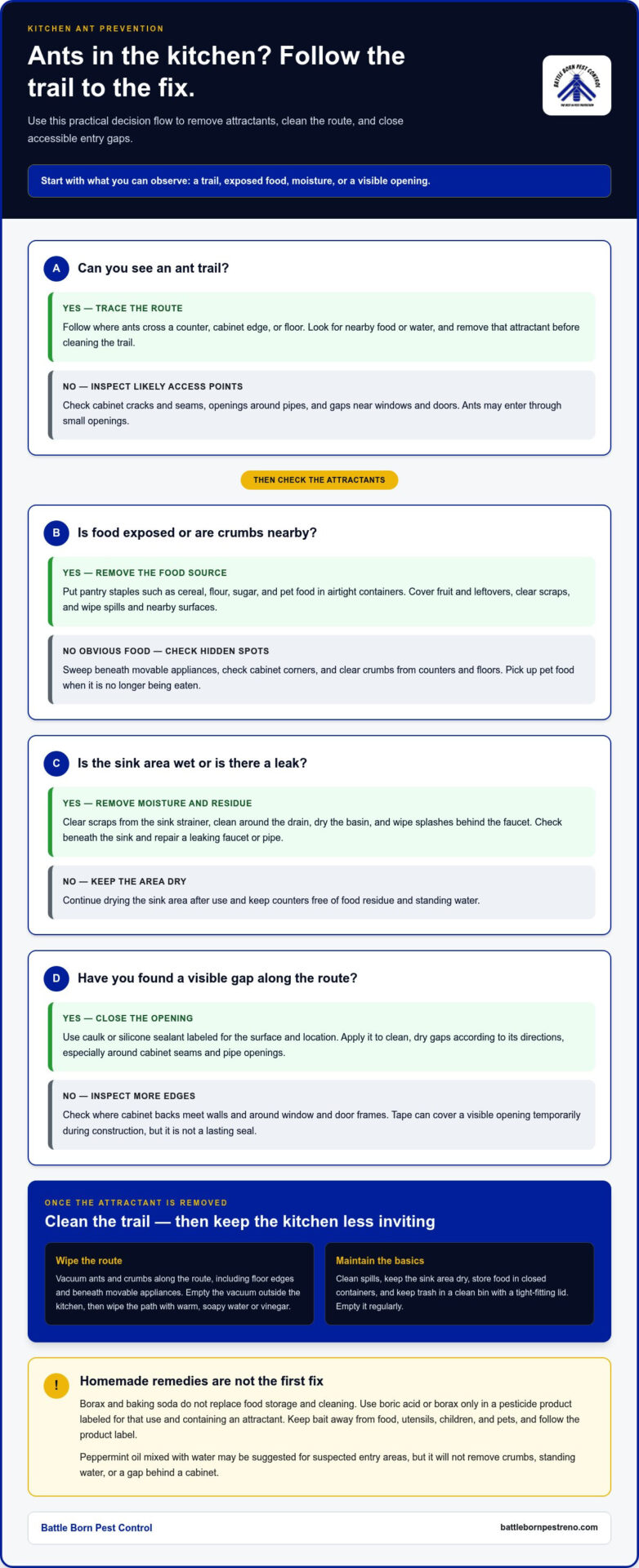
An ant trail shows a route and can point to nearby food or water. Follow it to see where ants cross a counter, cabinet edge, or floor, then remove the attractant before cleaning. If exposed food remains nearby, ants may resume searching after you wipe the trail. Cover or put away the food first so cleaning does not leave the original source available.
Vacuum ants and crumbs along the route, including floor edges and the space beneath movable appliances. Empty the vacuum outside the kitchen, then wipe the path with warm, soapy water or vinegar. Either can disrupt the scent trail ants use to follow a familiar route. Use a clean cloth and wipe beyond the visible line, including the counter edge or cabinet surface where ants turned.
A white vinegar-and-water solution mixed in a 1-to-1 ratio can be used on hard surfaces such as countertops and kitchen floors. Test it on a small, inconspicuous area first if the finish is delicate, and follow the surface manufacturer’s care directions. For food-preparation areas, clean away residues afterward as appropriate for the surface. Don’t rely on fragrance alone; the aim is to remove food traces and the ants’ route.
Check common food sources after cooking or eating. Wipe crumbs and sticky spills from the table, countertop, stovetop, and floor, then sweep beneath chairs and around the toaster. Put leftovers away promptly, clear dirty dishes, and pick up pet food that is no longer being eaten. Rinse cans and jars before recycling them, since sweet or oily residue can attract foraging ants.
Water matters too. Dry splashes around the sink, wipe the counter behind the faucet, and empty standing water from dishes or trays. Check beneath the sink for dampness and repair a leaking pipe or faucet, since a steady moisture source can keep ants returning even after food is removed. Clean food residue from the sink strainer and drain area, where scraps can collect out of sight.
During a kitchen remodel, repeat cleanup after meals and whenever food is unpacked or served in the work area. Follow a simple routine: remove food, vacuum crumbs, wipe the trail, and dry wet surfaces. If ants reappear, note whether activity returns near the same appliance, sink, or cabinet. This pattern can help distinguish missed residue from a persistent entry route, which calls for the gap inspection described elsewhere in this guide.
4. Tracing ants to their entry point and colony
Watch the direction ants travel before cleaning a route or sealing a gap. A line crossing a countertop may continue behind a cabinet, along a pipe, or toward a window frame. Follow it as far as you can without pulling apart finished surfaces. A trail can reveal a likely entrance, but it does not always lead directly to the colony. Ants may travel between food and a nest hidden outside or within a wall void.
Check common access points in a steady sequence. Look under and around window and door frames, where trim meets the wall, and around plumbing openings. Inspect foundation cracks and openings near electrical outlets, but do not put sealant inside an outlet. During renovation, exposed cabinet backs and appliance spaces make routes easier to see. Note where ants disappear, then inspect the nearest seam, pipe opening, or wall edge.
To track ant movement, observe the route at different points rather than following a single ant. A trail that turns behind a cabinet may continue along the floor edge or reappear near a window. Mark the likely entry point with removable tape, then watch whether ants use that spot again. Once you understand the route, remove accessible food residue and wipe away the scent trail with soapy water or vinegar on a suitable surface.
Close visible openings with material suited to the gap and surface. Caulk or silicone sealant can fill narrow cracks around cabinet edges and frames. Steel wool or foam may block other gaps, such as openings around pipes, where appropriate. Seal around, not inside, electrical components, and keep vents and drainage paths clear. Temporary tape can cover an obvious opening until you can make a durable repair.
Check outdoors where an indoor trail appears to meet the exterior. Tree branches and shrubs touching the house can provide ants a route to siding, windows, or roof edges. Cut back contact where practical. Avoid piling mulch against the foundation, since ants can burrow through it. If ants keep appearing from a difficult-to-reach void, surface wiping may miss the nest. Use the trail’s direction and recurring exit point to guide inspection rather than sealing at random.
When focusing on the kitchen, check gaps under and around window and door frames, foundation cracks, and electrical outlets. A line of essential oil near potential entry points is another suggested barrier to deter ants. Keep mulch from accumulating against the home’s foundation, since ants can burrow in it; this exterior boundary may help explain a recurring indoor route. Consider these measures alongside observations of where ants appear, so you focus on likely access points rather than unrelated surfaces.
5. Kitchen sanitation and realistic prevention
A clean kitchen reduces the food and water cues that attract ants, but no home can be made completely ant-proof. Focus on habits that interrupt access: wipe countertops after cooking, sweep crumbs from floor edges, and keep pantry food sealed. During renovation, repeat these tasks after meals and after workers unpack materials. Dust and debris can hide food scraps, especially beneath temporary storage or appliances.
Build a simple daily routine around the kitchen’s busiest areas. Clear dishes, put leftovers away promptly, pick up pet food, and wipe spills as they happen. Transfer cereal, sugar, flour, and similar pantry staples into airtight containers. Clean the sink strainer, remove food residue near the drain, and dry the basin and surrounding counter. Fix a leaky faucet or pipe, since moisture can keep an otherwise clean area attractive to ants.
Give trash regular attention too. Use a bin with a tight-fitting lid, empty it before food scraps accumulate, and clean the inside if residue or odors remain. Keep outdoor garbage cans tightly sealed and remove outdoor trash so food waste near the house does not encourage ants to forage toward the kitchen. Rinse recyclables before storing them; sweet drink residue inside a can can attract ants even when the countertop looks clean.
Use a 1-to-1 mixture of white vinegar and water on suitable hard surfaces, such as floors and countertops. Follow the surface manufacturer’s care guidance, especially for stone or delicate finishes. Wiping helps remove food residue and scent trails, but it won’t correct an opening or a continuing source of moisture. Treat sanitation as one part of prevention, alongside sealing accessible gaps and observing where ants travel.
Schedule pest control before renovation begins if ants are already active in the kitchen, so the issue can be addressed before cabinets and appliances obstruct access. If activity appears after work starts, arrange help when trails or entry points become visible, and keep food-contact items protected during any treatment. A professional assessment is especially useful when ants repeatedly emerge from behind finished surfaces or return despite routine cleaning. For recurring kitchen activity, get help addressing ant activity.
Set realistic expectations: regular cleaning, sealed food, a dry sink, covered trash, and closed gaps can reduce the conditions that attract ants. They cannot guarantee that another ant will never enter, particularly if an outdoor route remains accessible. After installation, keep watching cabinet edges, the sink area, and appliance spaces. If activity returns in the same location, that pattern can help pinpoint what needs attention next.
Battle Born Pest Control: Ant Control
Battle Born Pest Control provides Ant Control for persistent kitchen activity, including trails that return after food is stored, surfaces are cleaned, and accessible gaps are sealed. Treatment plans are tailored to the home, with attention to family, pets, and property. This can be a practical next step when ants keep appearing from behind cabinets or around appliance spaces, where renovation can make the entry route difficult to reach.
Share where you’ve seen ants and what you’ve already done to reduce food and water sources. That context helps guide a suitable approach to the problem. For help with recurring ant activity, contact Battle Born Pest Control.
Carry Prevention Through the Final Installation
A renovation changes the kitchen in stages, so make ant prevention part of the project handoff, not just a one-time cleanup. Before a new cabinet or appliance blocks access, note recurring ant activity and tell the person managing the work. After installation, keep a simple record of where ants appear and whether activity shifts as the kitchen is used again. These observations can help distinguish a temporary disruption from an ongoing issue.
If you’re working to prevent ants in a Reno kitchen and activity continues despite your maintenance efforts, consider bringing in professional support. Battle Born Pest Control can help you determine a practical next step for your home. Contact Battle Born Pest Control to discuss the ant activity you’re seeing and move forward with greater confidence.
Frequently Asked Questions
How Do Ants Get Inside Your Home?
Ants enter through small openings around utility lines, door and window frames, foundation cracks, and gaps behind fixtures. In Reno, a kitchen renovation can expose routes previously hidden by cabinets or trim. Ants may also arrive in boxes or potted plants brought indoors. Watch where they disappear instead of assuming the nearest visible crack is the only entrance; their path may continue through a wall or beneath flooring.
Can You Get Rid of Ants Permanently?
A single treatment or cleanup cannot permanently prevent ants from entering a home. Ants can return if an outdoor route remains accessible or food and moisture become available again. Bait may take days or weeks to work because worker ants carry it back to the colony. For lasting control in a Reno kitchen, address recurring activity and maintain prevention habits rather than relying on one application.
What About Borax, Baking Soda, and Other Homemade Remedies?
Use borax only in a pesticide product labeled for that purpose and containing an attractant. Baking soda, cinnamon, and peppermint oil are commonly suggested home remedies, but they should not replace identifying the ant route or addressing the colony. Keep any mixture away from food, utensils, children, and pets, and follow product directions. If ants keep returning after a remedy, reassess the entry route instead of adding more substances.
Are ant baits or sprays safe to use during kitchen renovation?
Use ant bait or spray only according to its product label, including instructions about placement and treated surfaces. During renovation, keep food, dishes, and utensils away from application areas, and keep products out of reach of children and pets. Tell workers about treated locations before they resume work. For food-preparation surfaces, follow the label’s cleaning directions before using them again.
What construction materials or details help prevent ants in a renovated kitchen?
Caulk or silicone sealant can close narrow cracks at cabinet edges and wall joints, while suitable foam or steel wool can block some larger openings around pipes. The key is continuity: inspect where plumbing, trim, and cabinet backs meet rather than focusing only on visible surfaces. Keep vents and drainage paths open, and use materials suited to each location so repairs do not create moisture or access problems.
Which caulk or sealant is best for closing gaps against ants
Use caulk or silicone sealant labeled for the surface and location. Apply it to clean, dry gaps according to the product directions.