Protecting Property Value from Pests in Sparks, NV
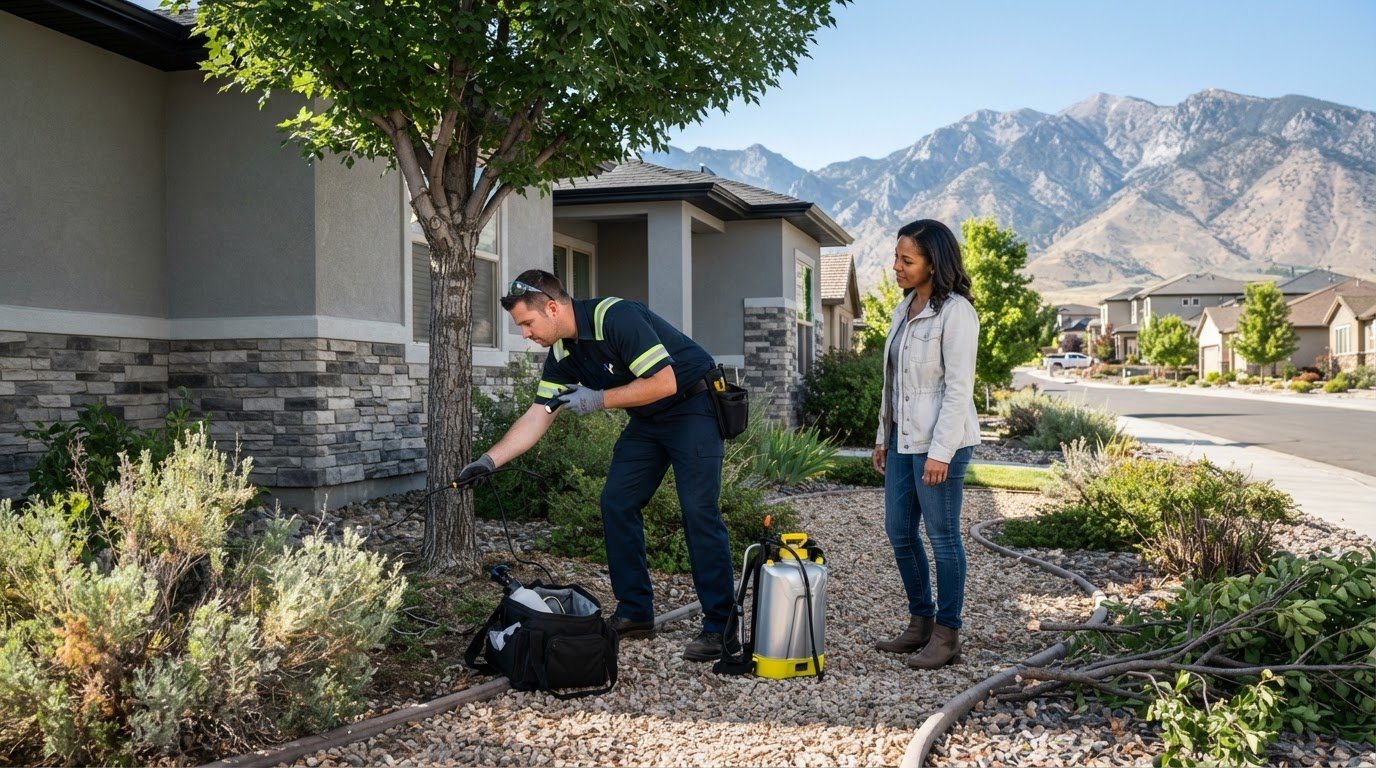
Could the earliest clue that pests are putting your home at risk be a yard condition rather than an insect indoors? For Sparks homeowners searching “protecting property value from pests sparks,” a practical starting point is to look for conditions that may invite recurring activity, from gaps around the home to landscape areas that need attention. Ants, spiders, rodents, and wasps can affect a property’s condition and appeal, but a single sighting doesn’t call for the same response as a recurring problem.
It’s understandable to wonder when a do-it-yourself fix is enough and when a more consistent plan makes sense. This guide explains which signs deserve attention, how to build a manageable inspection and prevention routine, and when tailored pest care or an arborist’s assessment can help. Battle Born Pest Control serves Sparks and Northern Nevada with targeted pest treatments, recurring prevention, and professional tree care, including tree health assessments and pruning. These steps support home and landscape maintenance without promising a particular resale value.
Key Takeaways
- Protecting property value from pests in Sparks means maintaining your home’s condition and appeal, not expecting a guaranteed resale price.
- Look beyond indoor sightings: vegetation, irrigation, stored items, and building edges can all influence pest activity around your property.
- Match your response to what you observe, addressing active concerns and considering ongoing prevention when problems recur.
- Use a simple inspection routine to observe, record, reduce attractants, assess problem areas, and follow up.
- Tailored pest care and arborist-led tree assessments address different concerns affecting your home and landscape.
How Pest Activity Can Affect Property Value in Sparks
Protecting property value means caring for a home’s condition and appeal over time, not expecting a particular resale price. Visible pest activity, signs of damage, or recurring concerns can influence how a prospective buyer views a property, especially if they suggest that maintenance needs attention. One ant trail or spider web doesn’t establish a serious problem, but repeated activity is a reason to take a closer look.
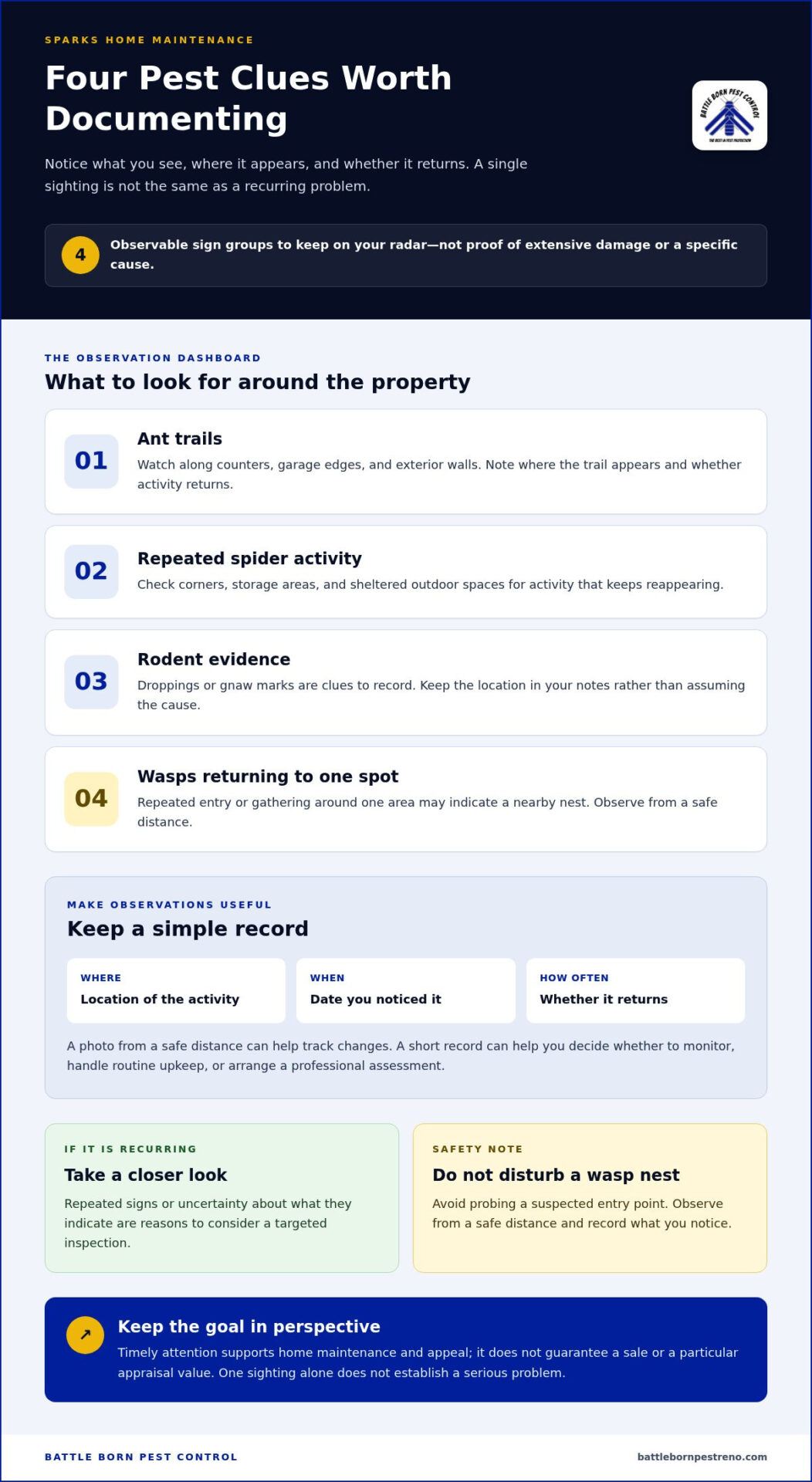
If you’re focused on protecting property value from pests in Sparks, start by separating what you can observe from what you suspect. Note the location, date, and frequency of activity, and take a photo from a safe distance if it helps you track changes. A short record makes it easier to decide whether to monitor the issue, handle routine upkeep, or arrange a professional assessment.
Early attention turns pest observations into better-informed property maintenance decisions. General approaches to managing pests vary by setting and concern; the overview of Pest control provides context on methods used in homes and urban environments.
Which pest signs deserve a closer look?
Watch for ant trails along counters, garage edges, or exterior walls; repeated spider activity in corners, storage areas, and sheltered outdoor spaces; and rodent evidence such as droppings or gnaw marks. Wasps repeatedly entering or gathering around one spot may indicate a nearby nest. These are observable clues, not proof of extensive damage or a specific cause.
Record where and when you see activity, and note whether it returns. Don’t disturb a wasp nest or probe a suspected entry point. Observing from a safe distance helps you gather useful information without adding risk. If signs recur or you’re unsure what they indicate, a targeted inspection can help clarify next steps.
Why appearance and property condition matter
A clean, usable garage, clear entryway, and cared-for patio make everyday maintenance visible. By contrast, accumulated storage, pest evidence, or neglected outdoor areas can distract from the home’s overall condition during a visit. Buyers may notice activity, nests, or damage while viewing the property or during an inspection, and recurring signs may prompt questions about how the issue has been managed.
That doesn’t mean every sighting changes a buyer’s decision or determines an appraisal. The goal is to address the underlying concern where appropriate and keep the property in sound, presentable condition. Pest treatment alone can’t guarantee a sale or raise an appraisal value, but timely attention and clear maintenance records can help explain what you observed and what steps you took.
How Sparks’ Landscape and High-Desert Conditions Can Shape Pest Pressure
Pest activity around a Sparks home can reflect more than what’s happening indoors. Irrigation, vegetation, outdoor storage, and the condition of building edges all shape the environment around a property. A damp patch near a patio, clutter beside a shed, or plant growth close to an exterior wall may provide shelter or make activity harder to spot. None of these conditions alone proves an infestation.
Weather and seasonal changes can also shift where pests are noticed. Activity may move between outdoor areas and sheltered spaces as conditions change, but timing varies by pest and property. If you see signs inside, consider what’s happening just outside that part of the home, too. A pattern offers context, but doesn’t identify a definite cause. Pest pressure often reflects several property conditions interacting, rather than one isolated issue.
Check irrigation, vegetation, and exterior areas
Look for persistently damp areas, vegetation touching or crowding the home, and gaps or clutter along foundation edges. Include patios, sheds, and outdoor storage in your observations, since stacked items can conceal webs, trails, nests, or rodent evidence. Keep access clear enough to inspect these areas safely. Don’t change irrigation just to address a suspected pest concern; consider your landscaping needs and note where moisture or activity appears first.
Compare outdoor observations with indoor patterns. For example, activity near a garage entrance and signs inside the garage are worth documenting together, but their proximity doesn’t prove that one caused the other. Record the locations and conditions, then look for changes over time. This property-wide view can help distinguish a recurring pattern from an isolated sighting and clarify what kind of attention may be useful.
Include tree condition in the property picture
Trees are part of a home’s landscape condition, and visible decline, damaged limbs, or other concerns can warrant an assessment. A tree health assessment focuses on the tree and its care needs; it isn’t a substitute for pest identification inside the home or an inspection of the building itself. For a closer look at landscape health, explore tree disease management in Sparks.
Keep observations distinct while considering them together: note tree concerns, exterior pest signs, and indoor activity separately, then share the pattern with the appropriate professional. This helps you address landscape maintenance without assuming a tree issue explains every pest sighting. For property-specific guidance on pest activity and tree condition, Battle Born’s tailored pest and tree care can help you plan practical next steps.
Reactive Treatment or Prevention: Which Approach Better Protects a Sparks Property?
Neither a one-time response nor recurring maintenance is right for every home. Targeted treatment addresses a concern that’s already visible, while ongoing pest maintenance provides regular inspections and preventative treatments tailored to the property. For homeowners focused on protecting property value from pests in Sparks, the right fit depends on pest history, property conditions, and what you’re observing, not on a promise that any approach will prevent every future problem.
Prevention can be useful even when severe damage isn’t visible. It creates a routine for monitoring potential concerns, but it can’t guarantee a pest-free home or a particular resale outcome. Use this comparison to decide where to start:
| Consideration | Targeted treatment | Recurring maintenance |
|---|---|---|
| Timing | After a pest is observed or activity is clearly identified | Scheduled as ongoing property care |
| Homeowner effort | Record the signs and provide access to the affected area | Share changes and observations between visits |
| Inspection cadence | Focused on the current concern | Repeat inspections based on the property’s needs |
| May suit | A distinct ant, spider, rodent, or wasp concern | Recurring activity or a desire to monitor property conditions over time |
For another perspective on responding to rodent concerns, see this guide to rodent control services in Carson City. Its principles can help frame questions about observed activity, while the right response for a Sparks property should reflect its own conditions.
When targeted pest treatment may make sense
A visible ant trail, repeated spiders in an area, rodent evidence, or wasp activity can justify a focused response. The pest and location matter: activity near stored items, an entryway, or an outdoor structure may need different attention. Identifying the concern and considering its property context helps shape a suitable treatment plan. Targeted treatment addresses the observed issue; it isn’t a guarantee against every future pest concern.
When recurring pest maintenance may fit better
If activity has returned or you want regular oversight, recurring inspections and preventative treatments tailored to your property may be a practical option. Repeat visits create opportunities to notice changing conditions and review new observations, rather than relying only on a response after signs appear. This doesn’t replace homeowner monitoring, but it can make prevention part of a steady maintenance routine.
Battle Born Pest Control serves Sparks with property-specific pest prevention and treatment, with plans that emphasize family, pet, and property safety. Explore tailored pest maintenance for your property as one way to build a consistent approach around your home’s needs.
A Practical Sparks Homeowner Checklist for Protecting Property Condition
A repeatable inspection routine helps you notice changes without jumping to conclusions. If you’re focused on protecting property value from pests in Sparks, keep useful records, reduce easy-to-reach attractants, and choose next steps based on what you actually observe.
- Observe. Check kitchens, garages, storage areas, entryways, foundation edges, patios, and landscape areas. Look for visible trails, webs, droppings, nests, or changes in tree and vegetation condition. Stay at a safe distance from nests or unfamiliar pests, and don’t touch or disturb them.
- Record. Note the date, precise location, visible sign, and whether you’ve seen it before. Take a photo only when you can do so safely. Describe what you observed rather than guessing at a pest’s identity or where it came from.
- Reduce accessible attractants. Keep food in the kitchen and stored goods in garages or other storage areas protected and orderly. Clear clutter where practical so you can see along walls and edges, and keep outdoor areas accessible enough to check for activity. Avoid changing irrigation without considering your landscaping needs.
- Assess the pattern. Compare notes from different areas and visits. A single sign may be isolated; repeated evidence, activity in more than one location, or signs in an inaccessible area may warrant a closer professional assessment.
- Follow up. Recheck the areas where you noticed activity and record whether it has changed. Add actions already taken, such as clearing stored items or arranging a pest inspection, so you can track what happened next.
Create a simple observation and maintenance record
A notebook or phone note is enough. For each entry, include the date, location, visible sign, and whether activity recurred; attach a safe photo if it adds useful detail. Keep confirmed observations separate from assumptions about the pest or its source. This record helps you explain patterns clearly during a professional inspection instead of relying on memory alone.
Know when to bring in a professional
Repeated activity, rodent evidence, or a nest that can’t be safely accessed are good reasons to seek professional pest assessment rather than investigate further yourself. A pest professional can use your observations to guide targeted treatment or tailored prevention. For landscape concerns, an arborist can assess tree health, pruning needs, or whether removal should be considered. Tree care and pest assessment address different parts of property condition.
A steady routine makes it easier to recognize what’s changing and decide when expert guidance is appropriate. Arrange tailored pest or tree care for your property with Battle Born Pest Control.
How Battle Born Pest Control Helps Sparks Owners Maintain Their Property
Protecting property value from pests in Sparks is part of ongoing care for a home and its surroundings. Battle Born Pest Control is a locally owned, licensed Northern Nevada business serving Sparks and nearby communities, with pest services and professional tree care that address different aspects of property condition. The focus is practical, property-specific care, not a promise of a pest-free home or a particular resale price.
Recurring inspections and preventative treatments help homeowners keep track of changing conditions over time. If you’ve noticed recurring activity, a new sign in a garage, or an area that’s difficult to monitor, sharing those observations helps shape an approach around your property. Regular attention supports maintenance, while results depend on the pest and conditions around the home.
A tailored approach to pest maintenance
Properties differ, so pest care should reflect the signs observed, the areas involved, and the homeowner’s concerns. Battle Born provides targeted treatment for ants, spiders, rodents, and wasps, as well as recurring inspections and preventative treatments tailored to property needs. This distinguishes a response to observed activity from a maintenance plan for monitoring conditions and addressing recurrence. Neither guarantees pests won’t return.
Careful planning also considers family, pets, and the property when determining how to approach pest management. You can make the process more useful by noting where activity appears, when it recurs, and what steps you’ve already taken. Those details provide context for recommendations and help avoid a one-size-fits-all response.
Pest care and arborist services for Northern Nevada properties
A pest concern and a tree concern call for different kinds of assessment. Ant, spider, rodent, or wasp activity may call for targeted pest treatment, while a declining tree, damaged limbs, or questions about pruning relate to landscape health and care. Battle Born’s tree services include assessments by certified arborists, tree pruning, and tree removal. Keeping these needs distinct helps you address the concern you’ve actually observed while considering the broader condition of your property.
Battle Born serves Sparks, Reno, Carson City, and Dayton, bringing local Northern Nevada experience to pest management and tree care. Whether you’re dealing with repeated pest activity or want an arborist to assess a tree, start with the observations you’ve gathered and the areas you want reviewed.
To discuss a property-specific plan, reach out to Battle Born Pest Control about your pest or tree-care needs. A focused conversation can help clarify which kind of maintenance makes sense for your home, without treating prevention as a guarantee of resale value.
Make Property Care a Consistent Habit
Protecting property value from pests in Sparks isn’t a one-time task. Treat your observations as a useful starting point, then revisit them as your home, landscape, and maintenance needs change. A simple record of what you’ve noticed and addressed can help you make calmer, more informed decisions rather than waiting until uncertainty builds.
You don’t need to diagnose every sign yourself. If a concern keeps returning or you’re unsure whether it relates to pest activity or tree health, a conversation about the specific areas you’ve observed can help clarify a practical next step. Aim for steady care that fits your property, with attention to the people, pets, and landscape around it.
Discuss a tailored pest or tree-care plan for your property with Battle Born Pest Control. A thoughtful plan can help you move forward with greater confidence and keep property care manageable.
Frequently Asked Questions
Can pests lower my home’s value in Sparks?
Pest activity can affect how buyers perceive a home’s condition, particularly if there’s visible damage, recurring activity, or evidence that maintenance concerns remain unresolved. The impact depends on the issue and the property, so a sighting alone doesn’t establish a change in market value. In Sparks, document what you observe and address confirmed concerns thoughtfully. Pest care supports property maintenance, but it can’t guarantee a sale price or appraisal outcome.
What pest signs should I look for before selling my home?
Before listing, look for repeated ant activity, webs or spiders in less-used spaces, rodent droppings or gnaw marks, and wasp activity around eaves or outdoor structures. Also check stored belongings and areas where signs may be easy to overlook, such as behind garage storage. Don’t disturb nests or handle unknown pests. If you find evidence, record its location and consider an assessment so you can make informed decisions before showings.
Are pest treatment records useful when selling a property?
Yes. Records can help explain what concern was observed, when it was addressed, and whether activity appeared again. Keep service documents alongside dated notes and photos, if safely taken. For example, a record of rodent evidence in a garage and the steps taken afterward can provide useful context if questions arise. Documentation doesn’t guarantee a buyer’s response or replace any required disclosures, but it can make your maintenance history clearer.
Can pest damage be hidden behind walls or in an attic?
Yes, some pest activity or damage may be out of view, including in wall cavities, attics, or other spaces that aren’t regularly accessed. Clues such as recurring sounds, droppings, gnaw marks, or unexplained material can justify further assessment, but they don’t identify a pest or confirm hidden damage on their own. Avoid opening enclosed areas or disturbing suspected nests yourself. Share the signs and their locations during a professional inspection.
Does homeowners insurance cover pest damage?
Coverage depends on the policy and circumstances, so don’t assume pest-related damage is covered. Some homeowners policies exclude damage associated with infestation, neglect, or ongoing maintenance issues, while policy terms vary. Review your policy’s specific wording and contact your insurer with questions about a particular loss. Keep records of pest observations and treatment or repair documentation, as these may help describe the timeline and condition of the property.
How often should I inspect my Sparks property for pests?
Make pest checks part of your regular home-maintenance routine, then take another look after noticing activity or a change around the property, such as new storage, landscaping work, or altered moisture conditions. Include indoor and outdoor areas rather than checking only where you saw a pest. The right frequency depends on the property and its history; recurring signs may call for tailored inspections or ongoing maintenance rather than occasional observation alone.
Can tree problems affect a property’s curb appeal?
Yes. A declining tree, damaged limbs, or an overgrown canopy can affect the appearance and usability of outdoor spaces, even when the issue isn’t related to pests inside the home. Tree concerns are best assessed as landscape-health or safety matters, separately from a building pest inspection. A certified arborist can assess tree health and recommend whether pruning or removal is appropriate, helping you make a considered plan for the landscape.