Tree Pruning Services in Dayton, NV: How to Choose

A tree that looks overgrown may not need a routine trim, and a tree that appears healthy can still benefit from an arborist’s assessment. A search for “tree pruning services dayton nv” should lead to more than a quote for a quick cut: the right recommendation depends on the tree, its condition, and what’s around it.
It’s reasonable to want clear answers before work begins. Improper cuts could affect a tree’s health or put nearby structures at risk. In Dayton, wind exposure and temperature extremes also make property-specific care important. Pruning is one option, but an assessment may point to another type of tree care or show that no work is needed right now.
This guide explains when an arborist assessment may help, how to compare providers’ methods and project scopes, and what to ask about access, safety, and cleanup before agreeing to work. You’ll also learn how Battle Born Pest Control’s locally informed approach and tree care performed by certified arborists can help you consider a careful next step without pressure to choose unnecessary services.
Key Takeaways
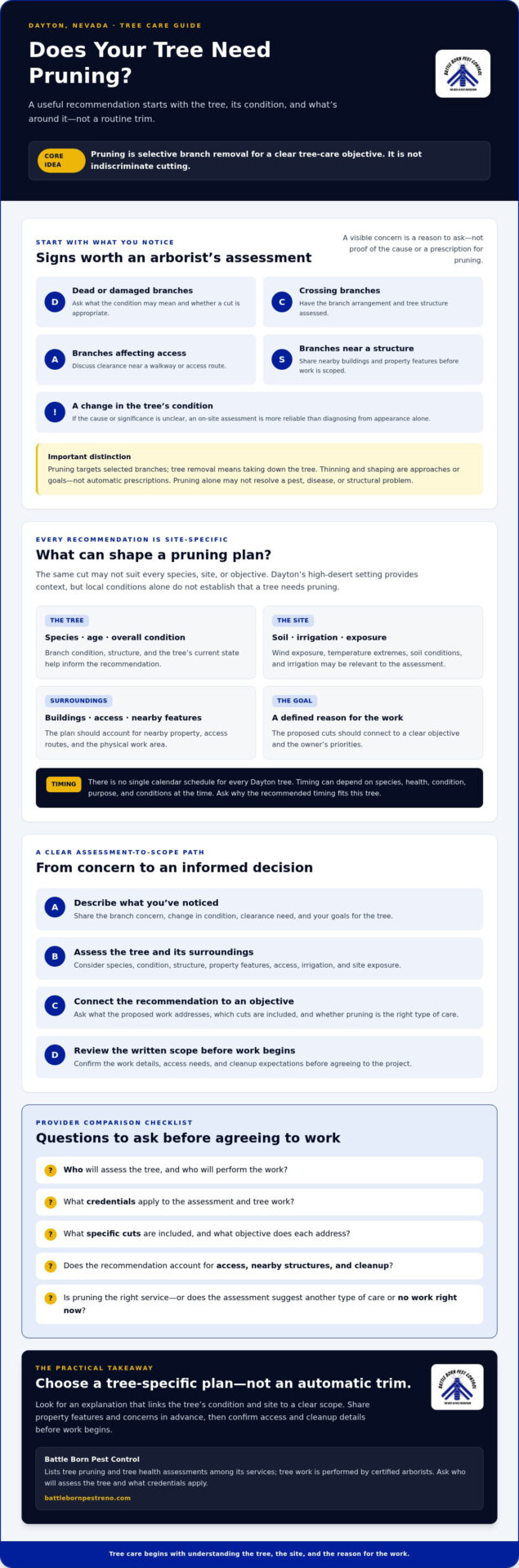
- Look for specific concerns, such as dead, damaged, crossing, or obstructive branches, and connect any proposed pruning to a clear tree-care objective.
- Species, tree condition, soil, irrigation, and site exposure can all shape a pruning plan. Don’t assume every Dayton tree needs the same treatment.
- When comparing tree pruning services dayton nv, ask who will assess and perform the work, what credentials apply, and which cuts are included.
- Request a written scope that explains access needs and cleanup, then confirm the details before work begins.
- Share property features and concerns in advance so the provider can assess the site and recommend a suitable next step.
When Do Dayton Trees Need Professional Tree Pruning?
Professional pruning is the selective removal of branches to meet a specific tree-care objective while considering the tree’s condition, structure, and surroundings. It isn’t indiscriminate cutting, and a broad request to “trim everything back” may not reflect what a particular tree needs. The goal might be to address a dead limb or improve clearance, but an arborist should first assess which cuts, if any, fit the situation. For a foundational overview of pruning techniques, consider how selective cuts differ from general cutting back.
What problems can pruning address?
An arborist considers the condition and arrangement of branches alongside the property owner’s goals. Dead, crossing, damaged, or obstructive branches can be reasons to request an assessment, especially if they affect access or are close to a structure. These signs don’t establish why a branch is unhealthy or whether removing it is the right response.
Pruning targets selected branches; removal means taking down the tree. Thinning and shaping describe approaches or goals that may involve pruning, but they shouldn’t be treated as automatic prescriptions. Disease management addresses a different concern, and pruning alone may not resolve a pest, disease, or structural problem. An assessment can help clarify which type of care is appropriate.
When should a Dayton property owner request an assessment?
Consider requesting an on-site assessment if you notice a damaged limb, need more clearance near a walkway or building, or see a change in the tree’s condition. If the cause or significance of a symptom isn’t clear, an assessment is a more reliable next step than diagnosing the tree from appearance alone.
Recommendations can vary with species, age, overall condition, and location. A concern on one tree may call for a different response on another, even when the visible signs seem similar. Site context and the owner’s goals matter, too. A useful plan should explain what the proposed cuts are intended to address and whether pruning is the right service.
If you’re comparing tree pruning services dayton nv, look for a provider who can explain the tree-specific reason for the work rather than offering the same trim for every property. Battle Born Pest Control lists tree pruning and tree health assessments among its services, with tree work performed by certified arborists. Ask who will assess the tree, what credentials apply, and whether the recommendation involves pruning or another type of care.
How Dayton’s Conditions Shape a Tree Pruning Plan
A sound pruning plan reflects both the individual tree and the conditions of the property, because the same cut may not suit every species, site, or objective. Dayton’s high-desert setting is useful context, not a diagnosis. Wind exposure, temperature extremes, and soil conditions may all be relevant, but they don’t automatically mean a tree needs pruning. An arborist’s recommendation should come from examining the tree and its surroundings.
What should an arborist assess on a Dayton property?
A site assessment can consider the tree’s overall structure and branch condition, as well as nearby buildings, access routes, irrigation, and the owner’s priorities. A tree exposed to wind or growing in alkaline soil may warrant closer attention to its site and condition, but those factors alone don’t establish a problem or dictate treatment.
Good observations should lead to a defined scope, not automatic cutting. Ask which parts of the tree need attention, what the proposed work is meant to address, and whether the plan accounts for access and nearby property features. The University of Nevada, Reno Extension’s guidance on the reasons for pruning can provide helpful background. An on-site assessment applies that general information to a specific tree.
Why does pruning timing depend on the tree?
There isn’t one calendar schedule that fits every Dayton tree. Suitable timing can depend on the species, its health and current condition, the purpose of the work, and conditions at the time. A recommendation should explain why the timing makes sense for the tree in question instead of relying on a universal season or routine schedule.
If a provider suggests a particular pruning window, ask how the tree’s species, condition, and care objective informed that advice. Ask whether local conditions or the reason for pruning affect the recommended timing, and avoid assuming that a general rule applies to every tree on your property.
When comparing tree pruning services dayton nv, look for a provider who connects the assessment to a clear, tree-specific scope and explains why the proposed work suits the site. Battle Born Pest Control lists tree pruning and tree health assessments among its services. To discuss whether an assessment may help, visit Battle Born Pest Control’s tree care services.
How to Compare Tree Pruning Services in Dayton, NV
Comparing providers for “tree pruning services dayton nv” is easier when you look beyond a broad service label and ask what the work will involve. A useful proposal connects the assessment to a specific tree, a clear objective, and defined limits. Purdue University Extension’s Tree Pruning Essentials offers background on pruning practices, but a provider should explain how its recommendations apply to your property.
| What to compare | Questions to ask |
|---|---|
| Assessment | Who will inspect the tree, and what condition or concern did they identify? |
| Proposed cuts | Which branches are included, what is the objective, and what work is excluded? |
| Cleanup | Does the written scope describe debris handling and site cleanup? |
| Access | What access is needed, and are there structures, landscaping, or other property features the crew should know about? |
| Written scope | Does the proposal identify the tree, work limits, and any items not included? |
What should a written pruning proposal explain?
Look for enough detail to distinguish a tree-specific plan from a generic offer to “trim” or “clean up” a tree. The scope should identify the tree and branches involved, the objective, and any exclusions. It should also address cleanup, debris handling, and access arrangements. If key terms are vague, ask for clarification before approving the work so both sides understand what is included.
Which safety and credential questions should you ask?
Ask who will assess the tree and who will perform the pruning, then ask what relevant training or credentials apply to each role. Confirm how the crew plans to protect people, nearby structures, and landscaping. You can also ask the provider to explain its insurance coverage and independently verify any applicable local requirements. Clear answers help you compare proposals without relying on assumptions or unverified claims.
Battle Born Pest Control states that its tree work is performed by certified arborists. Ask which credentials apply to the person assessing your tree and the crew carrying out the work. To discuss a property-specific assessment or pruning scope, contact Battle Born Pest Control.
What to Expect Before, During, and After Tree Pruning
A clear process helps you understand why pruning is recommended, what the crew plans to do, and how your property will be handled. Before scheduling tree pruning services in Dayton, NV, review the assessment and scope with the provider, then agree on access and cleanup expectations. That preparation can help prevent surprises on the workday.
What should you prepare for an arborist visit?
You don’t need special preparation to request an assessment. Point out the trees you’re concerned about and describe what you’ve noticed, such as a change in condition, a damaged limb, or a branch that interferes with access. Mention nearby structures, fences, landscaping, narrow gates, or other access restrictions, along with any areas that need extra care.
If you have observations or records that could help explain a change, ask whether the arborist would find them useful. Share your priorities, too, such as improving clearance or understanding a tree’s health. The assessment should clarify the concern and possible next steps, not assume that pruning is necessary.
What should you confirm before work starts?
Before approving the work, review the written scope and confirm that it identifies the trees, objectives, proposed work, and any exclusions. Discuss timing and access, including how the crew will reach the work area and whether you need to move or protect anything beforehand. Agree on cleanup and debris handling, and clarify what the site should look like when the work is complete.
Ask how proposed changes will be explained and approved before the crew does work beyond the agreed scope. It’s also reasonable to ask what changes in the tree’s condition after pruning might warrant another assessment. Clear answers keep decisions with you and make the plan easier to follow.
During the work, follow any access or safety instructions the provider gives you, and direct questions about the agreed scope to the project contact. Afterward, review the completed work and site with the provider if possible, noting any questions about cleanup or recommended next steps. These simple check-ins help confirm that the work matches what you approved.
- Identify the trees and concerns you want assessed.
- Share property features, access limits, and areas that need care.
- Confirm the work, timing, access, cleanup, and approval process before it begins.
For a property-specific discussion about pruning or tree health assessments, Discuss your Dayton tree-care needs.
Choosing Tree Pruning Services in Dayton: A Clear Next Step
A careful choice starts with a recommendation tied to your specific tree, not a routine trim offered without explanation. For tree pruning services dayton nv, look for an individual assessment, a clear written scope, relevant credentials you can verify, and agreement on access and cleanup before work begins. Battle Born Pest Control lists tree pruning and tree health assessments among its services, with tree work performed by certified arborists.
When is pruning different from tree disease management?
Pruning may involve removing selected branches for a defined reason, while signs of disease may call for a separate assessment and management plan. Cutting branches alone shouldn’t be presented as a cure or a guarantee against future problems. If disease is a concern, learn more about tree disease management in Sparks and ask what evaluation is appropriate for your tree. If removal is genuinely being considered, review this hazardous tree removal guidance for Carson City as a separate decision, not an automatic alternative to pruning.
What makes a service recommendation trustworthy?
A useful recommendation explains what the arborist observed, how the property and your goals shape the plan, and what the proposed work will and won’t address. Local experience can inform that judgment, but it doesn’t replace an assessment of the individual tree. If the objective, scope, credentials, or cleanup expectations aren’t clear, ask for clarification before approving the work.
Before choosing, make sure you understand which tree is included, why pruning is proposed, who will assess and perform the work, and what happens to debris afterward. A measured explanation helps you decide whether the plan fits your needs without committing to unnecessary work.
For a low-pressure discussion about pruning or a tree health assessment, Contact Battle Born Pest Control about tree pruning.
Choose Tree Care That Fits Your Property
The right pruning plan starts with the tree, not a standard trim. Look for an assessment that explains the tree’s needs and site conditions, a written scope that identifies the intended work, and clear agreements about access and cleanup. If a provider recommends pruning, disease management, or another option, ask how that recommendation follows from what they observed.
As you compare tree pruning services dayton nv, credentials and local knowledge can help inform your choice, but the recommendation should still be specific to your property. Battle Born Pest Control is a locally owned and licensed Northern Nevada business serving Dayton and surrounding communities. Its tree care is performed by certified arborists.
If you have a tree you’re unsure about, a conversation can help you understand whether an assessment may be a useful next step. Contact Battle Born Pest Control to discuss tree pruning for your Dayton property. A clear, thoughtful plan can help you move forward with greater confidence.
Frequently Asked Questions
How do I know if a tree in Dayton, NV needs pruning?
Dead, damaged, crossing, or obstructive branches are reasons to request an assessment, but they don’t prove that pruning is the right treatment. A professional can examine the tree’s structure, branch condition, and surroundings before recommending specific work. If you’re comparing tree pruning services dayton nv, ask the provider to explain the purpose of each proposed cut. When a tree’s condition is unclear, seek an assessment rather than relying on appearance alone.
When is the best time of year to prune trees in Northern Nevada?
The best timing depends on the tree species, its condition, the pruning objective, and current conditions. For many deciduous trees, pruning during dormancy, from late fall through early spring, is often recommended; January through March is commonly cited as a suitable window. That timing isn’t a rule for every tree. Ask the arborist why the proposed schedule fits your particular tree and whether its health or the work’s purpose affects timing.
How often should trees be professionally pruned?
There isn’t one pruning interval that suits every tree. Species, age, condition, growth, location, and the purpose of the work can all affect whether another visit is appropriate. Rather than scheduling routine cuts by the calendar, ask an arborist to assess the tree and explain whether work is needed now or when it may be useful to reassess. A healthy-looking tree may not need pruning simply because a set period has passed.
What should I ask before hiring a tree pruning service in Dayton?
Ask who will assess the tree and perform the pruning, and what relevant credentials apply to those individuals. Request a written scope that identifies the tree, proposed cuts, objectives, exclusions, access needs, and cleanup expectations. Ask how the crew will protect nearby structures and landscaping, and verify insurance and any applicable local requirements rather than assuming they’re covered. Clear answers help you compare proposals based on the work, not broad service descriptions.
Can pruning save a diseased or damaged tree?
Pruning may remove selected damaged or affected branches, but it can’t be assumed to cure a disease or resolve every structural concern. The right response depends on the cause and extent of the problem, along with the tree’s overall condition. An arborist assessment can help determine whether pruning, disease management, another approach, or further evaluation is appropriate. Ask what the recommended work can address and what concerns may remain after it’s completed.
Is tree pruning different from tree trimming?
The terms are often used interchangeably, though “pruning” commonly describes selective branch removal for a specific tree-care objective. “Trimming” may be used more broadly, so the word alone doesn’t tell you what a provider plans to do. Ask which branches are included, why they’re being cut, and what the work is meant to achieve. A clear scope is more useful than relying on a service label to define the job.
How much do tree pruning services cost in Dayton, NV?
The cost depends on the individual project, so request a written estimate based on the tree and proposed scope rather than relying on a general price range. Ask the provider to clarify which trees and cuts are included, how access and site conditions affect the work, and whether cleanup is covered in the proposal. These questions can help you compare estimates from providers serving Dayton and nearby Northern Nevada communities, including Reno, Sparks, and Carson City.