Why DIY Pest Control Fails, and What Works Better
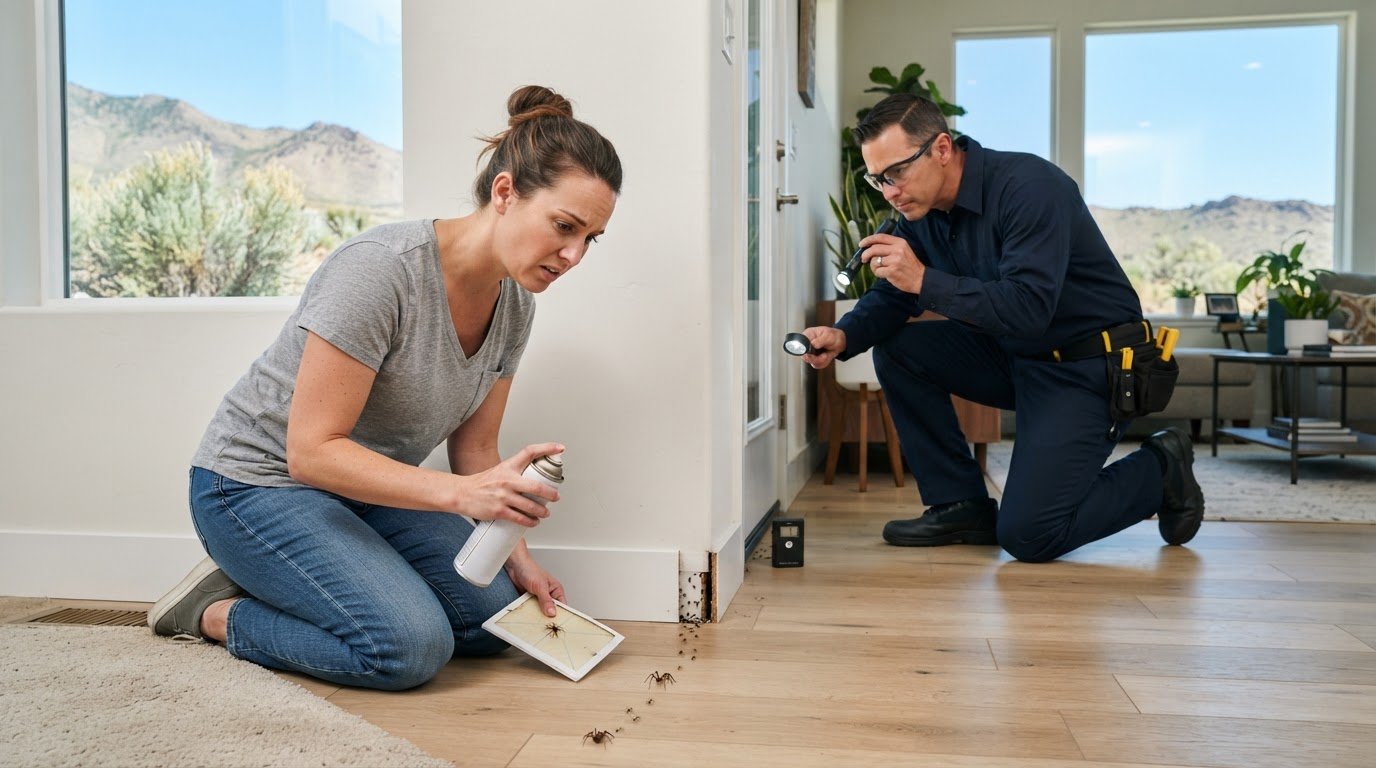
The spray may kill pests you can see without reaching the source of the problem. That’s one reason why DIY pest control fails: the treatment may not match the pest, its hiding place, or the conditions drawing it indoors. If ants, spiders, or rodents keep appearing after sprays, traps, or home remedies, it’s understandable to wonder what you’re missing.
Repeated sightings don’t automatically mean you need more product. A wrong identification, missed entry point, or poorly targeted application can leave the underlying issue untouched. Careless pesticide use can also create concerns around children, pets, and property. Recognizing when an approach isn’t working can help you avoid repeating it without a clear plan.
Here, you’ll learn why common DIY methods fall short, what signs suggest it’s time to change course, and how a targeted approach can address pest activity and possible contributing conditions. We’ll also explain how an inspection and a treatment plan tailored to your property can support prevention, including recurring maintenance when it suits the situation.
Key Takeaways
- Why DIY pest control fails often comes down to a mismatch between the pest, the product, and where or how it’s applied.
- Use pest activity and signs around the home to reassess whether your approach is addressing the source, not just visible pests.
- DIY methods can suit limited, clearly identified situations, but following product-label directions is essential.
- If pests return, pause before repeating or increasing applications. Document what you see and review the product label.
- A property-specific treatment plan can address active ant, spider, rodent, or wasp concerns, with ongoing maintenance considered when appropriate.
Why DIY Pest Control Fails: The Problem Is Often Bigger Than What You See
You spray, set a trap, and stop seeing pests for a few days. Then an ant appears near the kitchen, or a spider turns up in the same room again. It’s frustrating, but a return sighting doesn’t necessarily mean the first treatment failed on contact. If you’re asking why DIY pest control fails, a more useful question is whether the treatment addressed why pests were showing up in the first place.
Here, failure means activity remains unresolved or returns, not necessarily that a product had no effect. A treatment may affect pests in an exposed area while leaving a possible access point, hiding place, or contributing condition unchanged. A glimpse of one insect or rodent rarely tells you the species, how it got inside, or whether there’s more activity out of view.
Visible pest activity is a clue, not a complete picture of the pest’s identity, source, or extent. A general overview of pest control methods shows that management can involve different approaches. Choosing among them depends on understanding the issue rather than responding to a sighting alone.
Why killing visible pests may not stop recurring activity
A spray or trap can address a pest that crosses its path, but it may not reach concealed activity or resolve an opening pests use to enter. For example, ants along a counter could be following an accessible food source, entering through a gap, or simply passing through. Their presence alone doesn’t prove there’s a colony inside the home. The same applies to a spider: one sighting doesn’t establish where it came from or whether others are present.
Repeated sightings are more useful than a single encounter because they reveal a pattern. Note whether pests appear in the same place, whether activity continues after treatment, and whether food, moisture, clutter, or an opening might be relevant. These observations don’t confirm a cause, but they can help you reassess the identification and conditions around the home instead of treating every visible pest as an isolated target.
When one pest sighting does, and does not, signal a problem
A single pest may have entered accidentally, so it isn’t enough on its own to establish an infestation or indicate its severity. Recurring sightings, activity in several areas, or a repeated pattern may be a reason to investigate further, but no single sign provides a complete diagnosis. The type of pest and the setting matter, too: a product or method intended for one pest or location may not suit another.
Keep a simple record before choosing a response. Note the date, room or outdoor location, time, and whether the pest appeared once or repeatedly. If possible, take a clear photo from a safe distance rather than handling it. This record can help distinguish an isolated encounter from ongoing activity and make it easier to explain what’s happening during an inspection. A measured assessment is more useful than assuming every sighting signals a major problem or that recurring pests will disappear on their own.
Four Reasons DIY Pest Control Often Misses the Source
A treatment can be easy to buy and still be a poor fit for the pest or the place it’s being used. That mismatch helps explain why DIY pest control fails: the issue may involve more than choosing a spray or trap. In Reno and across Northern Nevada, seasonal changes can affect when pest activity is noticed, but they don’t explain every sighting or identify the pest on their own.
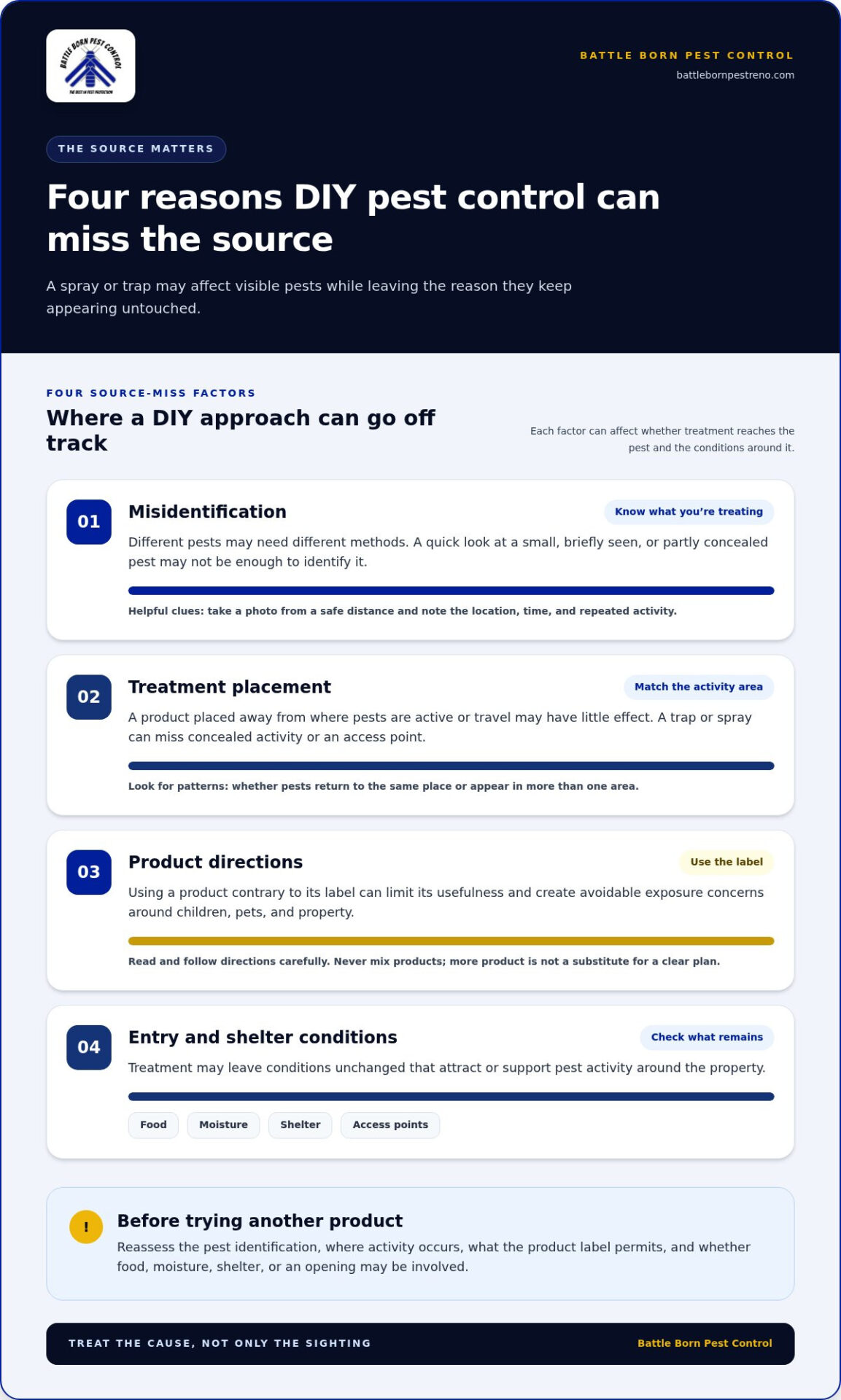
A DIY plan can miss its target through misidentification, poor placement, incorrect product use, or unaddressed conditions that let pests enter or remain. Consider each factor before deciding what to try next:
- Identification: Different pests may call for different control methods, and a quick look may not be enough to tell them apart.
- Treatment placement: A product used away from the pest’s activity or travel area may have little effect.
- Product directions: Applying a product contrary to its label can limit its usefulness and create avoidable exposure concerns.
- Entry and shelter conditions: Food, moisture, shelter, and access points may continue to attract or support pests after treatment.
Misidentification and mismatched treatment
Appearance alone can be misleading, especially if a pest is small, seen briefly, or partly concealed. A household product meant for one pest or setting may not suit another, so choosing based on a guess can send treatment in the wrong direction. Instead, take a photo from a safe distance, note the location and time, and describe any repeated activity. These details are more useful than assuming a species or source.
Identification also guides what to inspect and where a treatment might belong. If your observations are unclear or activity continues, reassess before buying another product. A plan tailored to the pest and property can be more useful than trying unrelated methods in succession.
Application, timing, and conditions around the property
Even a product intended for the pest in question may be ineffective if it’s placed in the wrong area or used contrary to its label. Read the directions before use, follow them carefully, and never mix products. More product or a different combination isn’t a reliable substitute for understanding where activity occurs and what the label permits.
Conditions around the property matter, too. Unsealed openings, available food, moisture, and sheltered spaces can contribute to ongoing pest activity. Weather and seasonal changes may be relevant, but they aren’t a diagnosis. Note whether activity shifts indoors or outdoors and whether it appears in the same spots. If those observations point to a persistent concern, a property-specific pest inspection can help connect the activity with an appropriate treatment and prevention plan.
DIY vs. Professional Pest Control: What Changes the Outcome?
DIY and professional pest control aren’t simply two versions of the same treatment. The difference is often the process: how the pest is identified, what gets inspected, how the response fits the property, and whether activity is reassessed afterward. A limited, clearly understood issue may be manageable with a careful DIY approach. If sightings keep returning or the cause remains unclear, another round of the same treatment may not add useful information.
This distinction helps explain why DIY pest control fails without assuming every household problem requires professional service. The right choice depends on what you know about the pest, how contained the activity appears, and whether your response is changing anything.
When a careful DIY response may be reasonable
A DIY response may suit a limited situation when you can identify the pest with reasonable confidence and activity appears confined to a specific, manageable area. Before using a product, read its full label, including where it can be applied, how to use it, and any precautions. Follow those directions exactly. Don’t mix products or assume using more will improve results.
Set a clear point to reassess. After following the label’s directions, observe whether activity decreases, stays in the same place, or appears elsewhere. If the pest’s identity is uncertain, sightings continue, or the issue seems to extend beyond the original area, pause before applying more. A new observation or closer inspection is more useful than repeating a treatment without a reason to expect a different result.
What a property-specific professional approach adds
A professional approach starts with assessment rather than treating every pest concern the same way. An inspection can help connect signs of activity with the likely pest and conditions around the property, such as potential access points or other contributing features. That context informs treatment selection and helps avoid relying only on the most visible sign.
The response can then be tailored to the pest and property, with prevention considered alongside treatment. Battle Born Pest Control provides targeted treatments for active concerns such as ants, spiders, rodents, and wasps. A one-time treatment may suit a specific problem, while ongoing maintenance with inspections and preventative treatments can be considered when it fits the property and circumstances. Recurring service isn’t automatically necessary for every issue; the goal is a proportionate plan based on the assessment.
With DIY, identification, inspection, treatment choice, and monitoring are in the homeowner’s hands. A tailored professional plan brings those steps together, which can help when repeated attempts haven’t clarified or resolved the concern. Explore Battle Born Pest Control services for information about property-specific pest treatment and prevention.
What to Do When DIY Pest Control Is Not Working
Repeated sightings don’t always mean you need a stronger product or another application. They do mean it’s worth pausing to review what you know, what you’ve tried, and whether conditions around the property may still be contributing to activity. A calm reassessment can help you avoid repeating a step that hasn’t changed the pattern.
A practical reassessment sequence for homeowners
Work through these steps before choosing another treatment. Keep the product label available, and don’t use a product in a way that conflicts with its directions.
- Pause further applications. Don’t increase the amount, frequency, or mix of products in response to continued sightings.
- Document the activity. Note what the pest looks like, where and when you see it, and whether sightings continue or appear in new locations. A photo taken from a safe distance may help with identification.
- Review the label. Check that the product is intended for the pest and setting, and follow its application and safety directions. If you used it contrary to the label, discontinue that use.
- Reassess the surroundings. Look for accessible food, moisture, sheltered areas, and potential entry points. These observations may help explain why activity continues, but they don’t prove a particular cause.
- Choose the next step based on evidence. If the pest is clearly identified and activity is limited, decide whether a label-directed approach remains appropriate. If not, seek a more informed assessment.
Repeatedly applying more product without reassessing isn’t a sound troubleshooting plan. It may add unnecessary exposure concerns without addressing an identification error, poor treatment fit, or conditions sustaining activity. Keep people and pets away from treated areas as directed on the label, and follow any other precautions it specifies. If someone may have been exposed and you’re concerned, seek urgent medical or veterinary advice; don’t rely on another pest treatment to address an exposure concern.
Signs it is time to change the approach
Consider changing course if sightings continue after you’ve followed product directions, activity appears in multiple areas, or you’re still unsure what pest you’re dealing with. Those signs don’t establish the extent or cause of a problem, but they can make another unverified treatment a poor next step. A professional inspection can help assess pest signs and property conditions when DIY decisions no longer feel clear, safe, or effective.
For example, recurring ant activity may call for a closer look at where ants are appearing and what may be attracting them. Effective ant control in Reno starts with a response suited to the concern. If wasps are repeatedly active around a home, wasp control for homes in Reno is another situation where a tailored assessment can inform next steps.
When repeated DIY attempts leave you uncertain, a targeted pest assessment can help identify a suitable path forward.
How Battle Born Pest Control Builds a More Targeted Plan
A considered approach starts with understanding the pest concern, not applying the same treatment everywhere. That distinction matters when considering why DIY pest control fails: the product or method may not address the specific pest, where activity is occurring, or the conditions around the property. Battle Born Pest Control tailors treatment plans to the pest issue and property, helping homeowners move from repeated guesswork toward informed next steps.
The process is practical: understand the reported activity, assess the property, then select a treatment and prevention approach suited to what’s found. This keeps the response focused on the concern at hand rather than assuming every home needs the same product or ongoing service.
Targeted treatment for active pest concerns
For an active pest concern, the treatment plan is tailored to the issue and property. Ants around a kitchen, spiders in a particular area, rodent activity, and wasps around a home are different concerns, so the response should reflect what’s happening rather than rely on a generic application.
Battle Born Pest Control provides one-time treatments for active pest concerns, including ants, spiders, rodents, and wasps. A property-specific assessment helps inform which treatment is appropriate and where prevention may be useful. Treatment isn’t a promise that pests will never return; it’s a considered response based on the concern and the conditions observed.
Prevention through ongoing pest maintenance
For some properties, ongoing maintenance can be a useful prevention option. Plans include inspections and preventative treatments tailored to the property, so the approach reflects its needs rather than defaulting to the same treatment for every home.
Recurring maintenance isn’t necessary for every pest issue. A one-time treatment may suit a specific active concern, while ongoing care may make sense when inspection and property conditions indicate prevention would be helpful. The choice should follow the situation, not pressure to sign up for a routine service.
Battle Born Pest Control serves homes and businesses in Reno, Sparks, Carson City, Dayton, and surrounding Northern Nevada communities. Whether you’re dealing with a current pest concern or considering prevention, a tailored plan can help clarify next steps for your property. Learn about a tailored pest control plan.
Choose a Clear Next Step for Your Home
When pest activity returns, it can be tempting to keep trying products in the hope that one will finally work. Understanding why DIY pest control fails can help you choose a more thoughtful next step: pause, consider what the signs may be telling you, and seek a tailored assessment if the issue remains unclear. You don’t have to keep guessing.
Battle Born Pest Control is locally owned and licensed in Northern Nevada, serving Reno, Sparks, Carson City, Dayton, and surrounding communities. A tailored one-time treatment may suit an active pest concern, while ongoing maintenance is an option when inspections and property conditions suggest prevention would help. The aim is a considered response that fits your home, not a one-size-fits-all plan.
If you’re ready to discuss a practical approach for your property, talk with Battle Born Pest Control about a tailored pest control plan.
Frequently Asked Questions
Is DIY pest control effective?
DIY pest control can help with a limited, correctly identified issue when you choose a product intended for that pest and follow its label. It may be less suitable when activity recurs or appears across several areas, since the original source or contributing conditions may still be present. Understanding why DIY pest control fails can help you decide when to stop and reassess rather than assume DIY or professional treatment works in every situation.
Can DIY pest control make an infestation worse?
It can complicate the situation, but not every DIY attempt makes pest activity worse. Misidentifying a pest, placing treatment poorly, or using a product contrary to its label may make the response ineffective and leave you with less clarity about what changed. If activity continues, pause further applications and review the label alongside your observations. Note where pests appear and whether the pattern has changed before choosing another step.
How long should I wait before deciding a DIY pest treatment failed?
There isn’t one reliable waiting period; timing depends on the product, the pest, and the label’s instructions. Follow the label’s guidance on use and any stated timing, and track whether sightings become less frequent, remain steady, or shift to another area. Don’t apply the product more often than directed. If activity continues after the labeled process, reassess the pest identification and conditions rather than guessing at a new schedule.
Can I use an indoor pesticide outdoors?
Only use a pesticide in settings allowed by its label. A product intended for indoor use shouldn’t be applied outdoors unless the label specifically permits it. This matters around Reno homes, where products used indoors and outdoors may have different directions and precautions. Read the full label before applying anything, and don’t assume products with similar names or purposes have the same approved settings.
Are ultrasonic pest repellers a reliable solution?
An ultrasonic repeller shouldn’t be treated as a dependable stand-alone answer to an unidentified or recurring pest problem. Before relying on a device, identify what pest you’re seeing and look for evidence of continuing activity, such as repeated sightings in the same area. Consider whether food, moisture, shelter, or access points may also be contributing. A device alone may not address those conditions, so use your observations to guide the next step.
How should I store leftover pest control products?
Follow the product label for storage and disposal, and keep leftover material in its original container with the label intact. Store it away from children, pets, food, and materials the label identifies as incompatible. Never transfer it to an unlabelled bottle or jar. For disposal, follow the label and relevant local waste instructions. Don’t pour unused product down a drain, where it could enter wastewater or the environment.