Tree Health Inspection in Carson City: A Homeowner’s Guide to High-Desert Tree Care
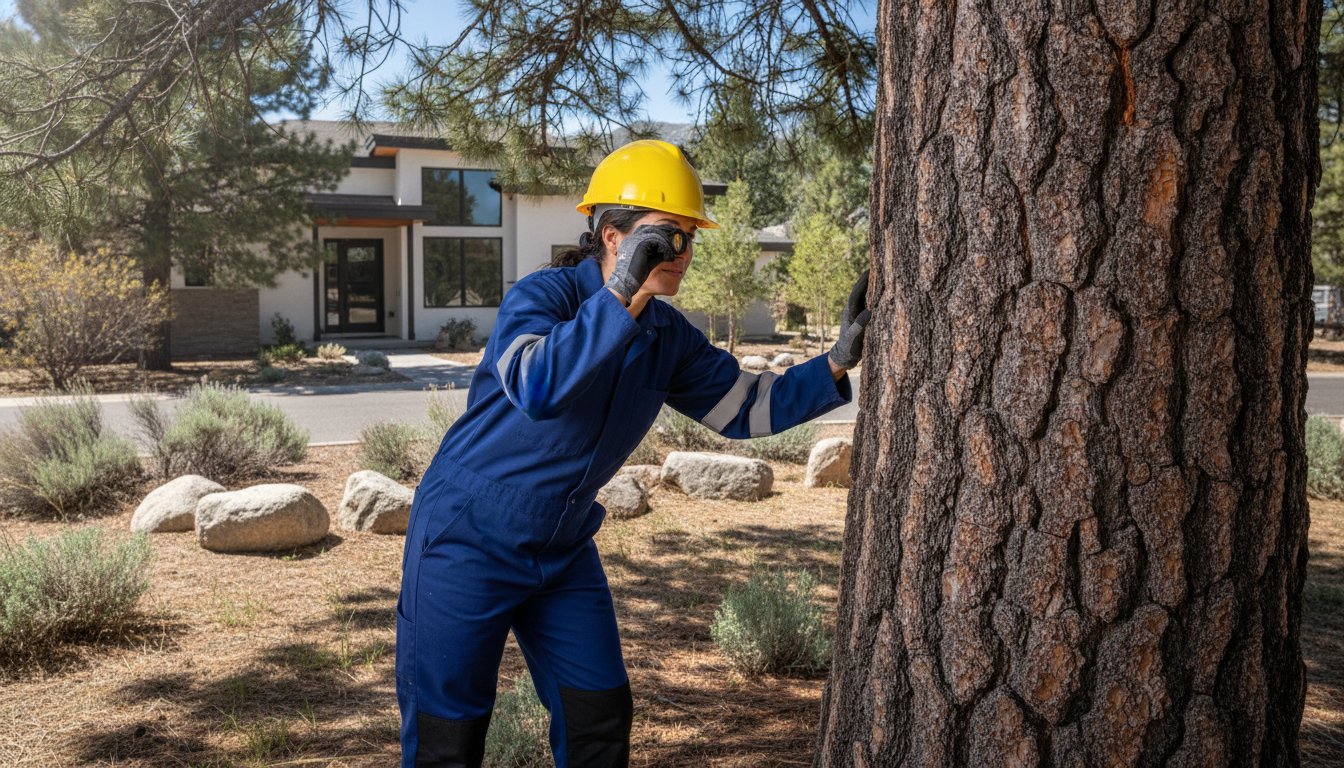
In Carson City’s high-desert climate, a tree’s outward appearance is often a lagging indicator of its true internal health. You likely value the shade and beauty your landscape provides, but it’s natural to feel anxious when you notice thinning canopies or mysterious brown needles on your pines. You want to protect your home from falling limbs during high winds without spending thousands on removals that might not be necessary. It’s a balancing act between safety and preservation that every Northern Nevada homeowner faces.
This guide explains how a professional tree health inspection carson city provides the clarity you need to save your landscape from local pests and climate stress. You’ll learn exactly what a professional looks for during an assessment, from identifying bark beetle infestations to diagnosing root disease. We’ll also cover actionable steps to improve your trees’ vigor, helping you move from uncertainty to a clear, experience-backed plan for your property’s safety and long-term health.
Key Takeaways
- Understand why Carson City’s extreme temperature shifts and high-desert environment require a more nuanced approach to tree maintenance than other regions.
- Discover how a comprehensive tree health inspection carson city identifies hidden structural issues and internal diseases before they lead to costly property damage.
- Learn to spot early warning signs of local threats like bark beetle infestations and aphid outbreaks that can quickly compromise the integrity of your evergreens.
- Find out how regular assessments help mitigate risks from winter snow loads and contribute to essential wildfire defensible space around your home.
- Gain actionable insights on transitioning from reactive tree removal to proactive care that preserves the long-term health and beauty of your landscape.
The High-Desert Challenge: Why Carson City Trees Need Regular Inspections
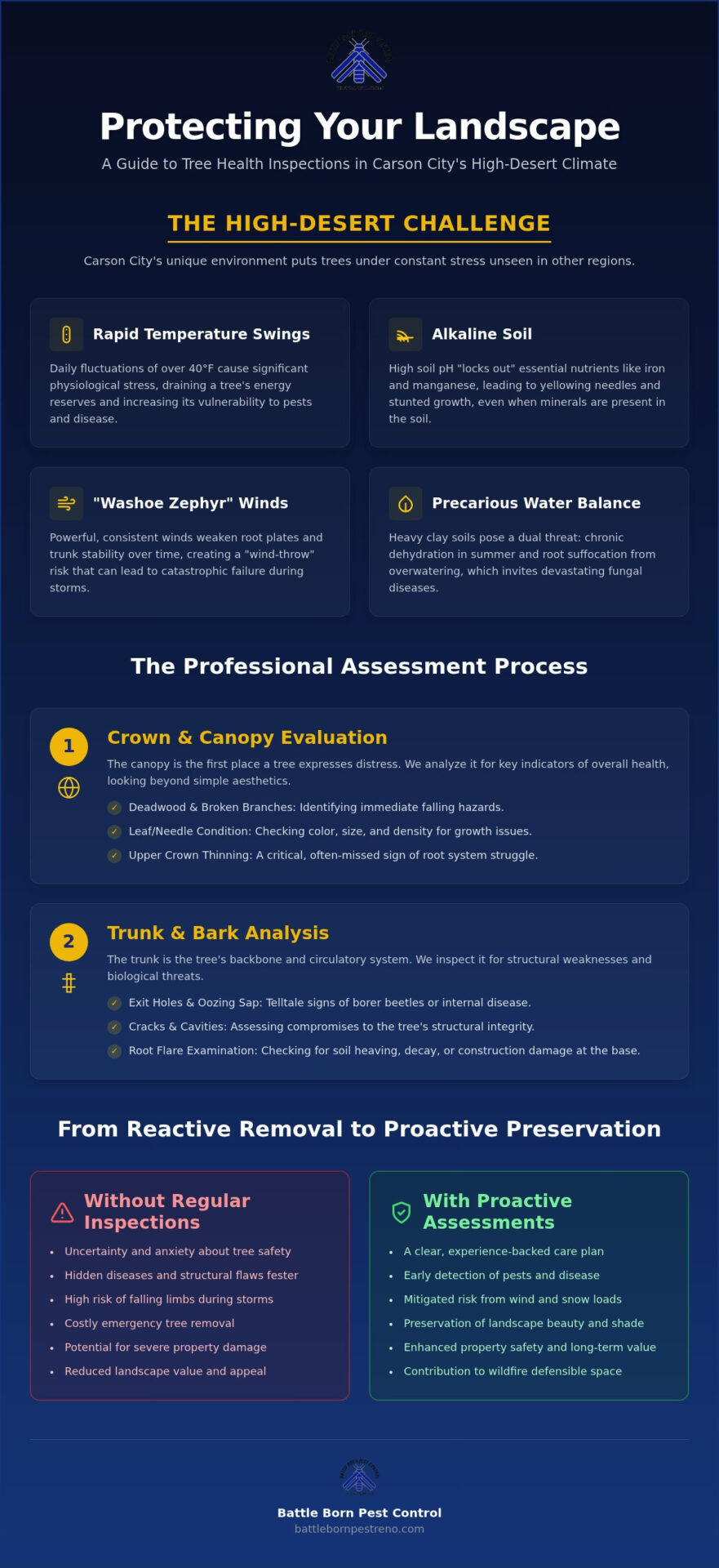
Carson City’s position within the Sierra Nevada rain shadow creates a unique set of environmental pressures that most standard gardening guides don’t address. Our high-desert landscape is defined by intense UV radiation and rapid temperature shifts that can fluctuate by forty degrees in a single afternoon. For local species like Ponderosa and Austrian Pines, these swings cause significant physiological stress as the trees struggle to regulate moisture and sap flow. Over time, this constant adaptation saps a tree’s energy reserves, making a professional tree health inspection carson city essential for identifying early signs of decline that aren’t visible to the untrained eye.
Beyond the air temperature, the ground itself presents a challenge. The soil in the Eagle Valley tends to be highly alkaline, which often leads to nutrient lockout. Even if the soil is rich in minerals, the high pH level prevents roots from absorbing essential elements like iron and manganese. This often manifests as yellowing needles or stunted growth, symptoms that many homeowners mistake for simple underwatering. Understanding the science of Arboriculture allows professionals to look past the surface and address these chemical imbalances before the tree’s structural integrity is compromised.
High Winds and the ‘Washoe Zephyr’ Factor
Living in the lee of the Sierras means contending with the “Washoe Zephyr,” the powerful afternoon winds that sweep through our valley. Consistent wind stress doesn’t just break branches; it can fundamentally weaken a tree’s root plate and trunk stability over many years. During a tree health inspection carson city, experts look for “wind-throw” indicators, such as soil heaving or subtle trunk lean, which suggest the tree may no longer be securely anchored. Managing crown density through strategic pruning is a key part of this process, as it reduces the “sail effect” and allows wind to pass through the canopy safely rather than pushing against it.
Drought Stress and Water Management
In our arid environment, water management is a delicate balance. While chronic dehydration is a common threat, our clay-heavy soils often lead to the opposite problem: root suffocation from overwatering. When water sits in heavy clay, it displaces oxygen, effectively drowning the roots and inviting fungal pathogens. A professional assessment helps calibrate your irrigation to match the specific needs of your soil type and tree species. This ensures your landscape receives enough moisture to survive the summer heat without the risks associated with saturated, anaerobic ground conditions.
What to Expect During a Professional Tree Health Assessment
A comprehensive tree health inspection carson city is far more than a quick glance at the leaves. While a homeowner might notice a few brown needles, a professional assessment involves a methodical examination of the tree’s entire biological system. Our arborists document the specific history of each specimen, acknowledging that a mature Ponderosa Pine has vastly different requirements than a young ornamental cherry. This process includes evaluating the environmental context, such as how nearby hardscaping or recent construction might have impacted the root zone. By understanding these variables, we can provide a customized management plan that prioritizes the tree’s longevity and your family’s safety.
Step 1: Crown and Canopy Evaluation
The canopy is often the first place where a tree expresses its distress. During an inspection, we look beyond simple aesthetics to identify deadwood and broken branches that could become hazards during a storm. We also examine the color and size of leaves or needles to ensure they match the expected growth patterns for the species. Thinning at the very top of the crown is a particularly important signal, as it often indicates that the root system is struggling to transport water and nutrients to the highest points of the tree. If you’re concerned about a specific tree, scheduling a professional tree health assessment can provide the clarity needed to protect your property.
Step 2: Trunk and Bark Analysis
The trunk serves as both the structural backbone and the transport highway for the tree. We search for small exit holes or oozing sap, which are common indicators of beetle activity or other Common Tree Pests and Diseases in Northern Nevada. Particular attention is paid to the root flare, the area where the trunk expands as it enters the ground. If this flare is buried or damaged, the tree’s stability is at risk. A canker is a localized area of dead tissue on a branch or trunk, often appearing as a sunken or discolored patch, which serves as a primary symptom of fungal infection in local hardwoods.
Step 3: Site and Soil Inspection
The health of a tree is inextricably linked to the ground it stands in. We test soil moisture levels to ensure the irrigation is reaching the active root zone without causing saturation. We also look for signs of soil compaction, which often happens in high-traffic areas or near driveways, as this prevents roots from receiving necessary oxygen. We also review the impact of recent landscaping changes, as even minor grading can sever critical feeder roots. This holistic view ensures that we don’t just treat the symptoms, but address the underlying causes of decline before they become irreversible.
Identifying Common Tree Pests and Diseases in Northern Nevada
Managing tree health in Carson City requires a specialized eye because the threats differ significantly from those found in a kitchen or crawlspace. While household pest control focuses on exclusion and eradication within a structure, pest and disease management for trees involves protecting a living organism from environmental stressors that invite infestation. A professional tree health inspection carson city is the most effective way to determine if your evergreens are being targeted by opportunistic local pests. This distinction is vital because treating a tree requires a deep understanding of its biology and its reaction to the local environment.
The resurgence of bark beetles, including the Mountain Pine Beetle, Jeffrey Pine Beetle, and the Fir Engraver, has become a primary concern for local property owners. These insects are naturally drawn to trees already weakened by drought or the alkaline soil conditions mentioned earlier in this guide. When a beetle attempts to bore into the bark, a healthy tree will produce “pitch tubes,” which are small, popcorn-like clumps of resin designed to push the invader out. However, in our arid climate, stressed trees often lack the internal sap pressure to mount this defense successfully. Identifying these tubes during an inspection is critical, as the early spring provides the most effective window for preventative treatments before the next generation of beetles emerges and spreads.
Bark Beetle Prevention and Management
Stressed trees are the primary targets for beetle attacks because they cannot produce the resin necessary to seal off entry points. Our arborists look for the tell-tale “frass,” a sawdust-like material, at the base of the trunk which indicates that beetles have successfully breached the bark. Because these pests can kill a mature tree in a single season, we emphasize a preventative approach that focuses on improving tree vigor through proper hydration and soil management. This proactive care is far more cost-effective than attempting to save a tree once the beetle larvae have already disrupted the vascular system.
Scale Insects and Aphids
Ornamental and shade trees in the Eagle Valley are also frequently targeted by sap-sucking insects like aphids and scale. These pests drain essential fluids from the foliage, often leaving behind a sticky substance known as “honeydew” that coats leaves and branches. This residue isn’t just a nuisance for your patio furniture; it actively attracts colonies of ants, creating a secondary pest issue that can eventually move toward your home. Applying dormant oil treatments in late winter or early spring can effectively disrupt the life cycles of these pests by smothering overwintering eggs and larvae.
Beyond insects, fungal pathogens like Cytospora Canker thrive in the Nevada climate, particularly on hardwoods that have suffered from winter injury or pruning wounds. These infections can girdle branches, cutting off the flow of nutrients and leading to localized dieback that slowly compromises the entire tree. A thorough tree health inspection carson city includes checking for these sunken, discolored lesions to ensure they are managed before the infection reaches the main trunk. By following established principles of high-desert tree care, homeowners can create a resilient landscape that stands up to these local biological pressures.
Mitigating Risk: How Health Inspections Prevent Property Damage
A proactive tree health inspection carson city serves as a vital safeguard for your home and family. In Northern Nevada, tree failures aren’t always caused by old age; often, they result from structural weaknesses that remain hidden until a significant weather event occurs. By identifying these issues early, you reduce the risk of limbs falling on roofs, power lines, or vehicles. Beyond physical safety, regular assessments help you manage your liability as a property owner. Legally, homeowners are often held responsible for damage caused by ‘foreseeable’ tree failures. If a tree showed visible signs of decay or structural instability that went unaddressed, the owner may be liable for the resulting damage.
Investing in regular check-ups also creates a more predictable budget for your landscape. It’s significantly more affordable to manage a tree’s health through targeted pruning and pest management than it is to deal with the aftermath of a catastrophic failure. When problems are caught in their infancy, the solutions are typically less invasive and less expensive. This long-term approach preserves the value of your property while providing the peace of mind that comes from knowing your landscape is stable and secure.
Winter Safety and Snow Load Management
Carson City winters frequently bring “Sierra cement,” a term locals use for the heavy, wet snow that clings to branches and creates immense physical pressure. A professional inspection identifies weak crotches or overly heavy limbs that are most likely to snap under this weight. Strategic pruning reduces the tree’s ‘sail area’ and total weight, allowing it to shed snow more effectively. In cases where a tree is beyond saving, an arborist can provide guidance on hazardous tree removal Carson City to prevent a dangerous situation before the first storm hits.
Fire Defensible Space and Tree Vigor
Living in the wildland-urban interface means fire safety is a constant priority. While many focus on clearing brush, the health of your trees plays a critical role in fire resistance. Healthy, well-hydrated trees are naturally more resistant to ignition than those suffering from drought stress or disease. Our arborists help you manage “ladder fuels,” which are lower branches that could allow a ground fire to climb into the canopy. We balance the need for a lush, beautiful landscape with local fire safety requirements, ensuring your property remains both attractive and defensible. To start protecting your home and landscape, you can schedule a professional tree health assessment today.
Expert Tree Care with Battle Born Pest Control
At Battle Born Pest Control, we view our work as a vital commitment to preserving the urban forest that makes Carson City a unique place to live. Our team of certified arborists brings decades of experience specifically tailored to the challenges of Northern Nevada. When you schedule a tree health inspection carson city, you’re partnering with local experts who live and work in the same environment as you. We understand that your trees are more than just landscaping; they are part of your home’s history and a significant factor in your property’s value and safety. By integrating professional pest management with advanced arboricultural science, we provide a level of care that looks beyond the immediate problem to ensure the long-term vitality of your entire landscape.
Your first consultation is designed to be an educational and transparent experience. We don’t just walk through your yard and hand you a bill; we take the time to discuss the history of your trees and your long-term goals for your property. Whether you’re concerned about a specific pine or want a general wellness check for your entire yard, our arborists provide a methodical assessment that covers every factor from the soil to the canopy. This steady, thorough approach ensures that no detail is overlooked and that every recommendation we make is grounded in honest, experience-backed science.
Tailored Solutions for Local Landscapes
We believe that every property in the Eagle Valley deserves a customized treatment plan that prioritizes the safety of your family and pets. Our focus remains on building long-term health rather than relying on quick-fix chemical applications that only mask underlying symptoms. By addressing soil quality and structural integrity, we help your trees develop the natural resilience needed to thrive in our high-desert climate. This philosophy of targeted, science-based care is also central to our work in tree disease management Sparks NV, where we adapt our strategies to meet the specific environmental pressures of the Truckee Meadows region.
Peace of Mind for Carson City Homeowners
Our honest, neighborly approach has made us a trusted name for homeowners who value clear communication and reliable results. Following your tree health inspection carson city, you’ll receive a transparent report that outlines our findings and offers a prioritized list of recommendations. We avoid high-pressure sales tactics, opting instead to provide you with the information you need to make informed decisions about your property’s safety. We’re here to act as your dedicated local guardian, ensuring that your trees remain a source of beauty and shade for years to come. Schedule your professional tree health inspection today to provide your landscape with the expert care it deserves.
Secure the Future of Your Carson City Landscape
Your trees are a vital investment that defines the character and safety of your property in the Eagle Valley. Understanding the unique pressures of our high-desert environment, from alkaline soil to the Washoe Zephyr, is the first step toward maintaining a resilient landscape. By prioritizing a professional tree health inspection carson city, you move away from reactive removals and toward a proactive strategy that preserves your trees for future generations. This approach doesn’t just save money on emergency services; it fosters a healthier, more vibrant environment for your home.
Battle Born Pest Control acts as your trusted local guardian, providing the expertise needed to navigate Northern Nevada’s specific climate challenges. With certified arborists on staff, we offer locally owned and licensed care that focuses on long-term environmental health. Our safe, family-friendly treatment plans ensure that your home remains a sanctuary for your loved ones. Protect your landscape with a professional tree health inspection from Battle Born Pest Control today. Taking these small, preventative steps provides the lasting peace of mind that your property is prepared for whatever the Sierra Nevada seasons may bring.
Frequently Asked Questions
How often should I have my trees inspected in Carson City?
You should schedule a tree health inspection carson city at least once every two years, though annual checks are better for mature or high-value specimens. Our local climate’s extreme temperature swings and high winds put constant pressure on your landscape. Regular visits allow an arborist to track subtle changes in vigor and catch pest infestations before they become unmanageable. If your property is in a high-wind area or has clay-heavy soil, more frequent monitoring ensures your family’s safety.
What are the signs that my pine tree has bark beetles?
The most common indicators of bark beetle activity in pines include small, popcorn-like clumps of resin called pitch tubes on the trunk. You might also notice “frass,” which looks like fine sawdust, collecting in the bark crevices or at the base of the tree. As the infestation progresses, the needles will transition from healthy green to yellow and eventually red. Because beetles move quickly in our region, identifying these signs early is critical for successful pest and disease management.
Can a sick tree be saved, or does it always have to be removed?
Many sick trees can be successfully treated if the underlying issue is caught during an early tree health inspection carson city. Whether a tree can be saved depends on the percentage of canopy loss and the specific type of pathogen or pest involved. While some fungal infections or nutrient deficiencies respond well to tailored treatment plans, others may compromise structural integrity. Our arborists prioritize preservation whenever possible, recommending removal only when a tree poses a significant safety risk to your property.
Does a tree health inspection include a risk assessment for storms?
Yes, a comprehensive assessment always includes an evaluation of structural risks related to local weather patterns. Our arborists look for weak branch attachments, heavy overhanging limbs, and root plate instability that could lead to failure during winter snow loads or the Washoe Zephyr winds. This process helps you identify which branches require pruning to reduce weight and wind resistance. Identifying these hazards proactively is the best way to prevent unexpected damage to your home or power lines.
How much does a typical tree health inspection cost?
The cost of a professional assessment varies based on the number of trees being evaluated and the complexity of the site. Factors such as tree height, accessibility, and the need for specialized soil or tissue testing will influence the final project fee. While industry averages exist, it’s best to speak with a local expert to get a quote tailored to your specific landscape needs. Investing in an assessment is often much cheaper than the high costs of emergency tree removal.
Do I need an arborist if my tree looks healthy but is very old?
An arborist is particularly important for older trees because they often have hidden structural issues that aren’t apparent on the surface. As trees age, they become less flexible and may develop internal decay or hollows that compromise their stability during storms. A professional assessment ensures that these legacy trees remain an asset rather than a liability. We focus on long-term health and stability, helping you preserve these mature specimens while protecting your family and home from potential limb failure.
What is the best time of year for a tree inspection in Northern Nevada?
Late winter and early spring are generally the best times for an inspection because we can identify overwintering pests before they emerge. This timing also allows for preventative treatments, such as dormant oil applications, to be most effective. However, summer is also a valuable time to assess how your trees are handling high-desert drought stress and heat. Regardless of the month, you should request a visit if you notice sudden changes in needle color or abnormal sap production on your evergreens.
How can I tell if my tree’s roots are damaging my home’s foundation?
You can often identify potential root issues by looking for cracks in nearby sidewalks, driveways, or your home’s foundation. Visible “heaving” of the soil near the trunk or roots that are physically pressing against hardscaping are also clear warning signs. During an assessment, our arborists evaluate the proximity of the root flare to your structures and check for soil compaction. While roots rarely “crack” a solid foundation, they will exploit existing gaps in search of moisture, potentially worsening structural problems over time.