Common Tree Diseases in Northern Nevada: A Homeowner’s Guide to Identification and Treatment
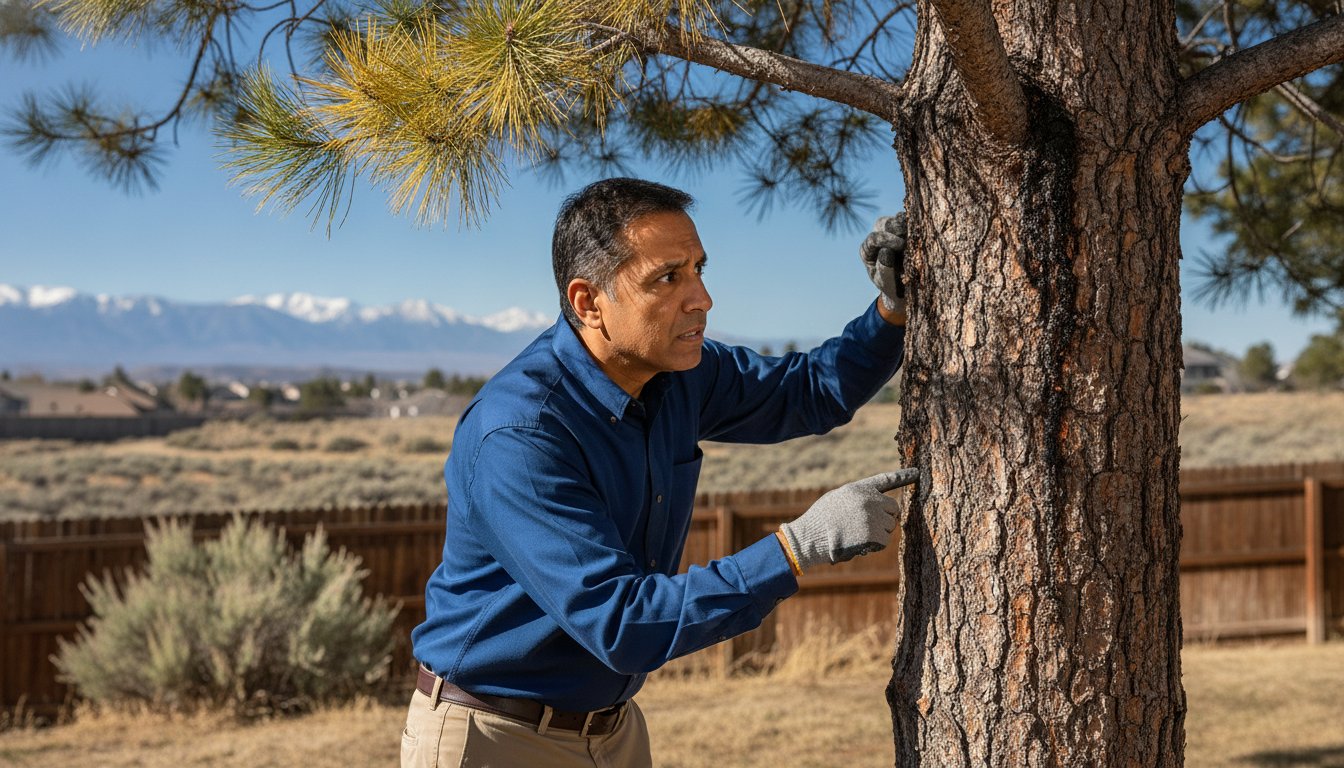
You might think the biggest threat to your landscape is the scorching high-desert sun, but for many local properties, drought is simply the invitation for a far more silent killer. It’s incredibly stressful to watch a mature pine or a favorite fruit tree begin to yellow or lose its vigor, especially when you aren’t sure if it just needs more water or a professional intervention. You’ve invested years into your trees, and the fear of a sudden failure during a high-wind afternoon is a concern many of our neighbors share.
This guide will help you differentiate between simple environmental stress and the actual common tree diseases Northern Nevada homeowners face every season. By understanding the unique pathogens that thrive in our Reno and Sparks climate, you can gain the clarity needed to protect your investment and your family’s safety. We’ll explore how to identify specific issues like Black Stain Root Disease and Dwarf Mistletoe, while outlining the practical, actionable steps you can take to stop the spread and restore your landscape’s health with confidence.
Key Takeaways
- Understand how the extreme temperature fluctuations and alkaline soils of the high desert weaken tree immunity and invite local pathogens.
- Learn to identify the specific visual symptoms of common tree diseases Northern Nevada homeowners encounter, such as Fire Blight and Cytospora Canker.
- Master simple diagnostic techniques like the “Scratch Test” to distinguish between infectious diseases and standard drought stress.
- Discover the importance of deep root watering and protecting the critical root zone to foster long-term resilience in your mature landscaping.
- Determine when to transition from DIY care to a professional tree health assessment to ensure the safety and longevity of your property.
Why Northern Nevada Trees are Vulnerable to Pathogens
Trees in Northern Nevada face a unique set of challenges that often leave them defenseless against infection. While we enjoy the clear skies and mountain views, our landscape is a high-stress environment for many species. The scientific study of plant diseases shows that environmental factors are just as critical as the pathogens themselves. In our region, these factors act as a gateway for common tree diseases Northern Nevada homeowners often struggle to manage. When a tree is already fighting to survive the climate, it has very little energy left to repel fungal spores or bacterial invaders.
Our “High Desert Paradox” involves extreme temperature swings where a 40-degree drop in a single day isn’t unusual. These fluctuations cause physiological stress, weakening the tree’s natural immune response. Compounding this is our soil. Most Reno and Sparks properties sit on alkaline, compacted earth that limits nutrient uptake and restricts root growth. When a tree can’t “breathe” through its roots, it lacks the resources to seal off wounds or produce defensive chemicals. Native species like Pinyon pines have evolved some resilience to these conditions, but non-native ornamental trees often lack these specialized defenses, making them the first to succumb to local pathogens.
The Impact of Reno’s Arid Climate
Reno’s notoriously low humidity levels create a harsh environment for foliage. While dry air can sometimes limit certain molds, it also leads to winter desiccation. This happens when the ground is frozen but the sun is warm, causing needles and leaves to lose moisture they can’t replace from the soil. By the time spring arrives, these weakened trees are prime targets for bark beetles and needle-cast diseases. Drought-stressed trees produce fewer defensive resins, which makes it much easier for pests to bore into the trunk and introduce lethal fungi that block the tree’s water-conducting tissues.
Urban Stressors in Sparks and Carson City
In developing areas like Sparks and Carson City, urban stressors play a major role in tree health. Construction damage to root systems is a silent issue; a tree might look fine today, but crown dieback often appears three to five years after the heavy machinery has left. Additionally, many homeowners over-water in an attempt to compensate for the high-desert heat. In the heavy clay soils common in the Truckee Meadows, this creates standing water around the roots, leading to fungal root rot. Planting trees too close to lush turf grass is another common mistake, as the high-frequency watering required for lawns often suffocates tree roots and encourages surface-level fungal infections.
Common Tree Diseases in Reno and Sparks Landscapes
Identifying the specific pathogen is the first step toward effective treatment. While environmental stress weakens the host, the presence of these common tree diseases Northern Nevada homeowners encounter requires a precise management plan. Using a reliable framework for diagnosing plant problems in Northern Nevada allows you to look past general wilting and find the specific markers of infection. This clarity is essential for protecting the long-term health of your landscape and avoiding unnecessary tree removals.
Identifying Fire Blight Symptoms
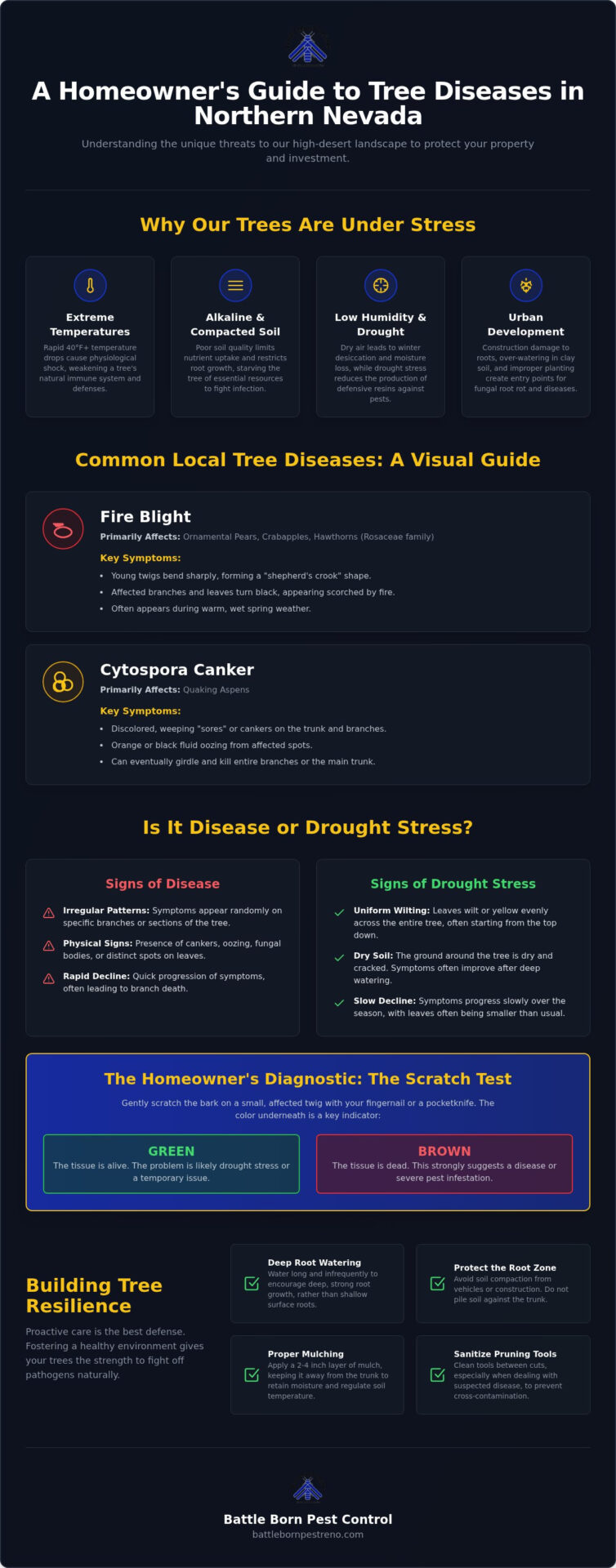
Fire Blight is a bacterial infection that strikes during our warm, wet spring windows. It primarily affects the Rosaceae family, including the ornamental pears, crabapples, and hawthorns found throughout Reno and Sparks. You’ll notice a distinct “shepherd’s crook” where young twigs bend sharply and turn black as if scorched by fire. Pruning during the growing season can accidentally spread the bacteria between branches, so it’s vital to sanitize tools between every cut to prevent cross-contamination.
The Aspen Crisis: Cytospora and Sooty Bark
Quaking aspens are iconic to our region but often struggle with the intense heat of the Truckee Meadows. This physiological stress makes them a primary target for Cytospora Canker, which creates weeping, discolored “sores” on the trunk. Identifying these common tree diseases Northern Nevada residents face early is the best way to prevent a total landscape loss. You might see orange or black oozing spots that eventually girdle the branch or trunk. While minor infections on limbs can be pruned away, deep trunk cankers often require a tree health assessment to ensure the tree doesn’t become a fall hazard.
Evergreen Diseases: Diplodia and Tip Blight
Evergreens like our local pines face unique threats from fungal pathogens that often hide in plain sight. Diplodia Tip Blight is a fungus that thrives on stressed Austrian and Ponderosa pines. This disease causes new growth to turn brown and stunted, often starting at the bottom of the canopy and moving upward. It is frequently seen alongside Western Pine Beetle activity, as these pests are drawn to the same weakened trees the fungus targets. Managing these combined threats requires a specialized approach to pest and disease management for trees.
In residential gardens, Verticillium Wilt acts as a soil-borne pathogen that blocks water flow in deciduous trees like maples and ash. This disease is particularly difficult because it lives in the earth for years. Managing it requires a focus on soil health and avoiding high-nitrogen fertilizers that can trigger a flush of vulnerable new growth, as these pathogens prioritize trees with rapid, succulent stems.
Disease vs. Drought Stress: How to Tell the Difference
Distinguishing between environmental hardship and common tree diseases Northern Nevada properties face is often the most difficult task for a homeowner. In our arid climate, trees are almost always under some level of water stress, making it easy to misidentify a thirsty tree as a sick one. The key to an accurate diagnosis lies in looking for patterns of symmetry versus randomness. Abiotic issues, like a lack of water or soil compaction, typically affect the entire tree or specific sides uniformly. In contrast, pathogenic infections usually appear as localized, irregular patches that don’t follow a logical pattern related to sun exposure or wind.
The speed of decline offers another vital clue. Drought stress can cause a tree to wilt or drop leaves surprisingly fast as a survival mechanism to conserve internal moisture. However, common tree diseases Northern Nevada trees encounter often move more methodically, slowly killing off one limb at a time or causing a gradual thinning of the canopy over several seasons. Before assuming a pathogen is at work, check your irrigation system for broken emitters or clogged lines. A single dry zone in your yard can mimic the symptoms of a root disease, making a physical inspection of your watering hardware a necessary first step.
If you’re still unsure, perform a simple DIY “scratch test” on a suspicious branch. Use your thumbnail or a small pocket knife to gently scrape a tiny sliver of bark off a twig. If the tissue underneath is moist and bright green, the branch is still alive and likely just stressed. If the tissue is brown, dry, or brittle, that section has died. This test helps you determine if the problem is a temporary wilt or a permanent loss of tissue that requires professional intervention.
Visual Indicators of Abiotic Stress
Abiotic stress often presents as uniform leaf scorching, where the edges of every leaf on a branch turn brown simultaneously while the veins remain green. You might also notice wilting during the peak heat of a Reno afternoon, only for the tree to appear recovered by the next morning. This cycle indicates the roots cannot keep up with the rate of evaporation. Premature fall color in late July or August is another common sign of root-zone heat stress, suggesting the soil temperature has become too high for the tree to process nutrients effectively.
Visual Indicators of Pathogenic Disease
Pathogenic diseases leave behind more irregular evidence than water stress. Look for spotty lesions, discolored blotches, or small holes in the leaves that appear randomly throughout the canopy. The presence of fungal fruiting bodies, such as mushrooms or shelf fungi growing at the base of the trunk or along major roots, is a definitive sign of an active infection. If you see one dead limb surrounded by perfectly healthy foliage, it’s a strong indicator of a localized pathogen that has successfully bypassed the tree’s natural defenses.
Preventative Care: Building Tree Resilience
A proactive approach to tree health is the most effective way to prevent the common tree diseases Northern Nevada homeowners often face. While treatment is possible, building a tree’s natural resilience ensures it can withstand environmental stressors before they become fatal. The foundation of this resilience lies in protecting the “Critical Root Zone,” which is the area of soil directly beneath the tree’s canopy. Keeping this zone free from heavy foot traffic, construction equipment, and excessive landscaping changes prevents the soil compaction that often invites fungal pathogens.
Watering Strategies for Northern Nevada
Many local landscapes rely on standard lawn sprinklers, but these systems rarely provide the deep saturation a mature tree requires. To encourage deep, stable root growth, you should water deeply and infrequently, allowing the moisture to penetrate at least 12 to 18 inches into the soil. Winter watering is another essential practice in our region; providing supplemental moisture during dry winter spells prevents the root desiccation that leads to major spring disease outbreaks. Deep root aeration is a specialized technique used to alleviate soil compaction and enhance the flow of oxygen and nutrients directly to a tree’s root system.
Proper mulching serves as a protective blanket for the root zone, but it must be applied correctly to avoid “mulch volcanoes.” Piling mulch directly against the trunk traps moisture against the bark, which can lead to rot and provide a protected highway for pests that girdle the tree. Aim for a layer 3 to 4 inches deep, keeping it several inches away from the base of the trunk. This setup retains moisture and suppresses weeds while allowing the bark to breathe and remain dry.
The Role of Professional Pruning
Strategic pruning is about more than just aesthetics; it’s a vital health intervention. By removing “The Three Ds”, dead, damaged, and diseased wood, you eliminate the primary entry points for pathogens and wood-boring insects. Professional Tree Pruning Services Reno: Enhancing Tree Longevity focus on thinning the canopy to improve internal airflow. Better airflow allows the foliage to dry more quickly after rain or morning dew, which significantly reduces the risk of fungal growth. It’s also critical to sanitize pruning tools with a 10 percent bleach solution or alcohol between every tree to prevent spreading infections across your property.
Maintaining a healthy landscape requires a consistent commitment to these preventative measures. If you’re concerned about the vitality of your mature trees, it’s wise to schedule a tree health assessment to identify potential vulnerabilities before they turn into costly problems.
Arborist-Led Disease Management in Northern Nevada
While the diagnostic steps and preventative measures we’ve discussed are excellent for routine care, certain situations require a more technical intervention. If you notice rapid canopy thinning, deep structural cracks, or if your tree fails to respond to improved watering schedules, it’s time to step back from DIY efforts. Managing common tree diseases Northern Nevada homeowners face often involves high-reaching branches or complex soil chemistry that requires specialized equipment. A professional arborist doesn’t just look at the leaves; they evaluate the entire ecosystem of your property to ensure a lasting solution rather than a temporary fix.
During a Tree Health Assessment Reno NV: Diagnosing Your Trees, we examine the root flare, trunk integrity, and soil density. This thorough process allows us to create a roadmap for recovery that considers the specific needs of your high-desert landscape. We’ll identify if the issue is a treatable pathogen or if the tree’s structural integrity has been compromised, providing you with the clarity needed to make an informed decision about your property’s safety.
The Battle Born Approach to Tree Health
Our team of certified arborists understands that your landscape is an extension of your home. We prioritize family and pet safety by selecting treatments that minimize environmental drift and target only the specific problem at hand. Because we live and work in the Reno and Sparks area, we’re deeply familiar with how local soil pH and extreme wind patterns influence the spread of common tree diseases Northern Nevada properties encounter. Our customized plans focus on restoring long-term stability, favoring preservation over aggressive, unnecessary removals whenever possible.
Safe and Effective Disease Management
Modern arborist technology allows us to deliver medicine directly where it’s needed most through systemic trunk injections. Unlike traditional sprays that can blow onto your neighbor’s lawn or affect local pollinators, injections stay contained within the tree’s vascular system. This method is highly effective for controlling both pathogens and wood-boring pests while keeping your yard safe for children and pets. We embrace Integrated Pest Management (IPM), a strategy that combines biological, cultural, and targeted chemical tools to reduce the overall environmental impact of our work.
Consistency is the key to protecting high-value mature trees. A long-term maintenance plan ensures that your landscape remains a safe, beautiful asset for decades to come. Protect your landscape today. Schedule a Tree Health Assessment with Battle Born Pest Control to receive an expert’s perspective on your trees’ well-being and secure the peace of mind you deserve.
Securing the Future of Your High-Desert Landscape
Maintaining a healthy canopy in the Truckee Meadows requires a balance of proper cultural practices and timely professional intervention. You’ve learned that identifying common tree diseases Northern Nevada homeowners face is often a matter of distinguishing between simple thirst and actual infection. By prioritizing deep root watering and strategic pruning, you can build the resilience your trees need to survive our extreme climate swings and soil challenges.
As a locally owned and licensed business in Nevada, we take pride in acting as guardians for our community’s natural beauty. Our safety-first approach ensures that all disease management treatments are secure for your pets and family members. If you’re concerned about the vitality of a mature pine or fruit tree, our ISA Certified Arborists are here to provide honest, experience-backed recommendations. Get a Professional Tree Health Assessment in Reno to protect your landscape investment and enjoy the peace of mind that comes with expert care. Your trees are a legacy on your property; let’s ensure they remain healthy for years to come.
Frequently Asked Questions
Is tree disease contagious to other plants in my Reno yard?
Pathogens can definitely spread between trees, though most common tree diseases Northern Nevada homeowners encounter are host-specific. Fungal spores and bacteria often travel through wind, rain, or even contaminated pruning tools. If you have multiple trees of the same species, like a row of Austrian pines, an infection in one can quickly move to the others. Early isolation through professional pruning and sanitation is the most effective way to protect your entire landscape.
Can a tree with Fire Blight be saved?
You can often save a tree infected with Fire Blight if you act while the infection is still in the outer branches. The primary treatment involves removing the infected limbs at least 12 inches below the visible damage during the dormant season. Because this bacteria spreads easily through open wounds, it’s vital to sanitize your tools with alcohol between every single cut. If the infection reaches the main trunk, the tree’s structural integrity may be compromised.
How much does a tree health assessment cost in Sparks?
While we don’t provide fixed pricing without seeing the property, general industry data suggests that arborist inspections typically range between $100 and $250. This fee covers a thorough diagnostic review of your tree’s health and a customized management plan. Investing in a professional assessment early can save you thousands of dollars in potential removal costs. Our team focuses on providing honest, transparent recommendations that prioritize the long-term safety and value of your Northern Nevada property.
Why are the needles on my pine tree turning brown from the inside out?
If your pine needles are browning from the trunk outward, it might actually be a natural process called seasonal needle drop. Most evergreens shed their oldest, innermost needles every few years to make room for new growth. However, if the browning is patchy or accompanied by pitch tubes on the bark, it could indicate a more serious issue like bark beetles or root disease. A professional health assessment can help you determine if this is a normal cycle or a threat.
What is the best time of year to treat tree diseases in Northern Nevada?
The ideal timing for treatment depends entirely on the specific pathogen targeting your landscape. Spring is the critical window for managing bacterial issues like Fire Blight before they spread during our wet periods. Conversely, many fungal treatments and preventative pruning are best handled during the dormant winter months when the tree isn’t actively growing. Our local arborists customize these schedules based on the unique weather patterns we see in Reno and Sparks each season.
Do I need a permit to remove a diseased tree in Carson City?
There is currently no statewide requirement for a tree removal permit on private property in Nevada. However, Carson City and Reno have specific ordinances regarding trees in the public right-of-way or those designated as “significant.” If your diseased tree is near a sidewalk or power line, it’s best to check with the city’s urban forestry department before beginning work. We can help you navigate these local regulations during our initial site visit to your property.
Can over-watering cause tree disease in our desert climate?
Over-watering is a leading cause of root rot and other common tree diseases Northern Nevada landscapes face. The heavy clay soils found in many Reno and Sparks neighborhoods trap moisture around the root flare, which suffocates the tree and invites soil-borne fungi. In our desert climate, it’s better to water deeply and infrequently rather than keeping the soil constantly saturated. Proper drainage is just as important as the amount of water your trees receive.
How do I know if my tree has bark beetles or a fungus?
Bark beetles typically leave behind physical evidence like small “shot holes” in the bark or “pitch tubes” that look like globs of popcorn resin. Fungal infections often present as discolored lesions on the leaves, weeping sores on the trunk, or mushrooms growing at the base. While both can cause canopy dieback, beetles usually move much faster than most fungal pathogens. Our arborists use these specific visual clues to identify the exact cause of your tree’s decline.