High Desert Tree Care in Nevada: The Homeowner’s Guide to Arid Climate Health
Imagine waking up to find your favorite backyard pine turning a brittle, rust-brown color despite your best watering efforts. In our high desert environment, where south-facing walls can hike temperatures by 20 degrees, the line between a thriving landscape and a fire hazard is often thinner than we realize. You want your property to be a safe, beautiful sanctuary for your family; however, navigating the tree disease management Northern Nevada requires can be a complex task for any homeowner. It’s frustrating to watch a mature tree struggle when you’re not sure if it needs a specific nutrient, a structural prune, or a more serious intervention.
This guide provides the expert arborist insights you need to keep your landscape resilient and your home protected. We’ll explore the updated 2026 defensible space standards for the Reno area, identify common local threats like Fire Blight, and clarify exactly when to prune for health versus when a removal is the safest choice for your property. By understanding these local nuances, you can ensure the long-term health and stability of your trees while maintaining peace of mind.
Key Takeaways
- Learn how to protect native species like Pinyon and Juniper from the extreme temperature fluctuations found in Nevada’s unique high desert climate.
- Understand the specialized techniques used for tree disease management Northern Nevada homeowners need to identify and treat common issues like Pine Wilt and Canker diseases.
- Discover the importance of structural pruning for wind resistance and how to recognize the clear signs of internal rot that indicate a tree has become a safety liability.
- Stay current with the 2026 defensible space guidelines to ensure your property is prepared for fire season through proper vegetation management.
- Learn why an integrated approach to pest and tree health provides a more stable, long-term solution for the safety and beauty of your landscape.
Understanding the Challenges of High Desert Tree Care in Nevada
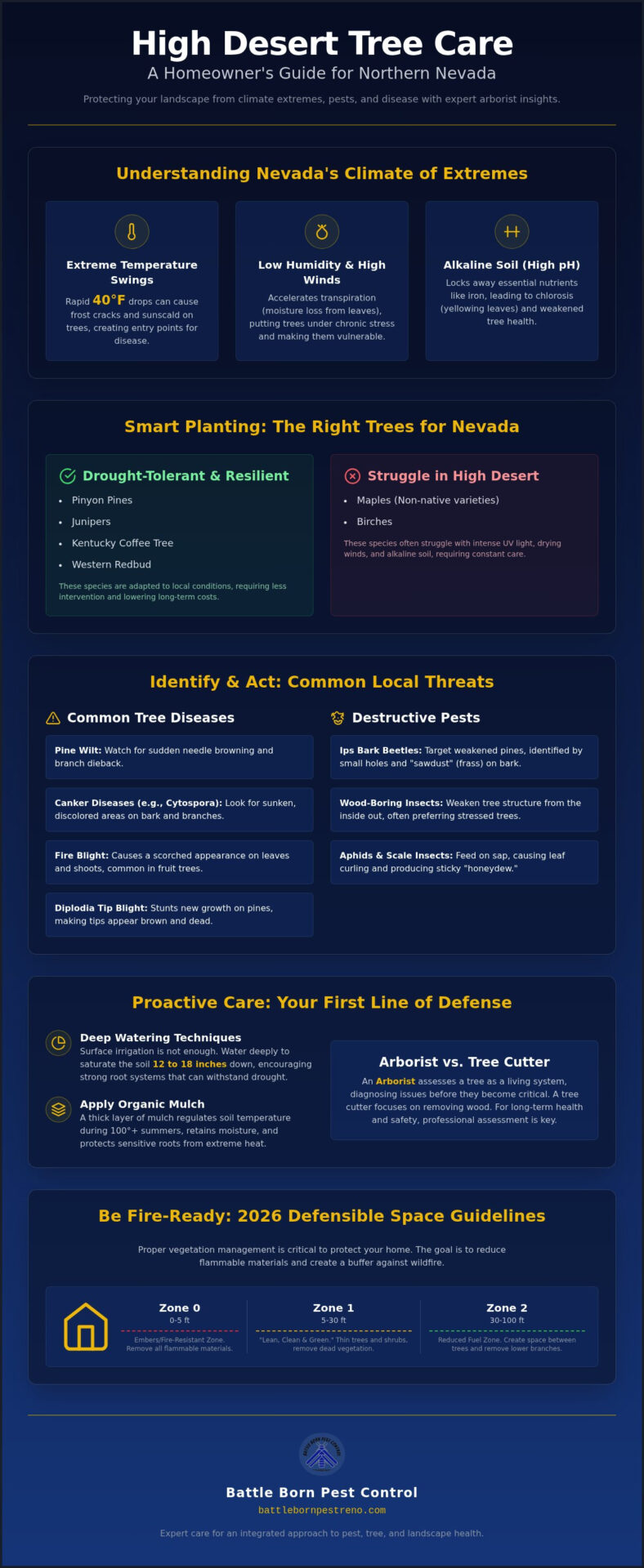
High desert tree care isn’t just about watering; it’s a specialized discipline focused on USDA Zones 6b to 7b. In Northern Nevada, trees face a climate of extremes that would wither species common in more temperate regions. The science of Arboriculture tells us that trees in arid climates must be managed through the lens of physiological stress. Extreme temperature swings, where a 40-degree drop occurs within hours, can cause frost cracks or sunscald, particularly in younger trees that haven’t yet developed thick, protective bark.
When trees are weakened by these rapid changes, they become significantly more susceptible to pests. Therefore, proactive tree disease management Northern Nevada homeowners invest in must begin with climate-specific stabilization. In Reno, the exceptionally low humidity accelerates transpiration, which is the process where moisture evaporates from leaves. If the root system cannot keep up with this atmospheric demand, the tree enters a state of chronic stress. This biological fatigue often invites fungal infections and wood-boring insects that prefer weakened hosts.
Soil Conditions and Moisture Management
Homeowners in Carson City and Dayton often deal with heavy, alkaline soils that have high pH levels. These conditions frequently lock away essential nutrients like iron, leading to yellowing leaves, a condition known as chlorosis. While surface irrigation might keep your lawn green, it often fails to reach the deep root systems of larger trees. Deep watering techniques, which focus on saturating the soil 12 to 18 inches down, are vital for high desert survival. Proper moisture control is the first line of defense in the tree disease management Northern Nevada properties require to stay healthy. Applying a thick layer of organic mulch helps regulate soil temperature during our 100-degree summers, protecting sensitive root hairs from the intense heat.
Native vs. Non-Native Species Resilience
Our local Pinyon Pines and Junipers have evolved over centuries to thrive in this rugged terrain, making them naturally more resilient than non-native alternatives. Many homeowners are tempted to plant lush maples or birches, but these species often struggle with our intense ultraviolet light and drying winds. For 2026 Nevada landscapes, selecting drought-tolerant species like the Kentucky Coffee Tree or Western Redbud offers a better long-term investment. Choosing climate-appropriate trees reduces the need for constant intervention and lowers your long-term maintenance costs. It also ensures your property remains a safe, stable environment for your family as the trees mature and provide much-needed shade.
The Arborist’s Approach to Tree Disease Management in Northern Nevada
While many property owners might hire a general tree cutter to handle basic maintenance, there is a fundamental difference between simple labor and the specialized care provided by a Certified Arborist. A general laborer typically focuses on the immediate task of removing wood, but an arborist looks at the tree as a living system. This distinction is critical for effective tree disease management Northern Nevada homeowners need to protect their long-term landscape investments. By understanding the biological needs of high desert species, a professional can identify early warning signs of stress that an untrained eye would likely miss.
In our region, the combination of high altitude and persistent drought makes trees particularly vulnerable to specific pathogens. Diseases like Pine Wilt, Cytospora Canker, and Diplodia Tip Blight can spread rapidly through a neighborhood if left unchecked. These issues are often exacerbated by local pests such as Ips bark beetles, aphids, and scale insects, which target trees already weakened by environmental factors. Expert guidance on maintaining healthy trees in Nevada emphasizes that a proactive health assessment is far more cost-effective than a reactive removal after a tree has structurally failed. Catching a canker or a beetle infestation early can often save a mature tree that would otherwise take decades to replace.
Pine Tree Disease Management in Northern Nevada
Pines are a staple of our local skyline, yet they face unique pressures in the high desert. Homeowners should watch for warning signs like localized needle browning, excessive sap oozing from the trunk, or sudden branch dieback. These symptoms often point to underlying health issues that require a structured management plan to resolve. For those living in specific local areas, you can find more detailed advice on tree disease management in Sparks, NV to help preserve your mature evergreens. Regular monitoring ensures that your pines remain a safe and vibrant part of your property for years to come.
Holistic Pest and Health Integration
The relationship between tree health and pest activity is a cyclical one; a stressed tree emits chemical signals that actually attract pests like bark beetles. Breaking this cycle requires a holistic approach that addresses both the immediate infestation and the underlying environmental stressors. Systemic treatment is a preventative measure where protective products are introduced directly into the tree’s vascular system to provide long-term defense against bark beetles. These targeted methods are designed to be safe for your family and pets while protecting beneficial insects that contribute to a healthy ecosystem. If you’re concerned about the vitality of your landscape, a professional tree health assessment can provide the clarity needed to make informed decisions for your home’s protection.
Pruning vs. Removal: Making Safe Decisions for Your Property
Deciding whether to save a tree or remove it is one of the most significant property management choices you’ll face as a homeowner. It’s about finding the right balance between preserving the shade you love and protecting your home from falling limbs. Professional Tree Pruning isn’t just about aesthetics; it’s a structural necessity in our region. Our local winds, often called the Washoe Zephyr, can put immense pressure on a dense canopy. By thinning the crown, we allow wind to pass through the tree more easily, which reduces the risk of a catastrophic failure during a storm.
Comprehensive tree disease management Northern Nevada homeowners trust involves more than just spraying for bugs. It’s about monitoring structural integrity. For example, issues like Bacterial Wetwood disease can lead to internal pressure and wood decay that isn’t always obvious from the ground. Regular maintenance doesn’t just extend the life of your tree; it increases the overall value of your property by ensuring your landscape is stable and well-kept. Investing in your trees now prevents the much higher costs associated with emergency removals or property repairs later.
Professional Tree Pruning Techniques
Crown cleaning involves removing dead or diseased wood to stop the spread of decay, while crown reduction lowers the height of the tree to reduce weight on heavy limbs. Both are essential tools for high desert health, but they must be applied with precision. One mistake we often see is “topping,” where the upper branches are simply lopped off. This practice is dangerous because it leads to rapid decline and weak, sprout-like regrowth that is prone to breaking. For most local species, winter is the ideal time for these structural adjustments because the tree is dormant and the framework is easy to evaluate without leaves in the way.
Safe Hazardous Tree Removal in Carson City
Sometimes, despite our best efforts, a tree becomes a liability that cannot be safely managed through pruning alone. We look for specific red flags like a sudden lean, root heave where the soil is lifting, or deep cracks that run vertically down the trunk. These are signs that the tree’s structural foundation has failed. In tight residential areas, safe removal requires specialized equipment to ensure limbs are lowered carefully without damaging fences or roofs. If you’re weighing your options, you can consult our detailed guide on safe hazardous tree removal in Carson City to understand the criteria we use for these important decisions.
Defensible Space and Storm Readiness in Northern Nevada
Living in Northern Nevada means balancing the beauty of our high desert landscape with the realities of fire season and winter storms. As of August 2026, homeowners are encouraged to follow updated defensible space guidelines that categorize property into specific safety zones to mitigate wildfire risk. Proper vegetation management isn’t just about clearing brush; it’s a vital part of the tree disease management Northern Nevada properties need to stay resilient and safe. When trees are healthy and well-spaced, they’re less likely to serve as fuel for a fire or succumb to the weight of a heavy Sierra snow.
The current standards emphasize three main areas of protection. Zone 0, the ember-resistant zone, covers the first five feet from your home and should be completely free of flammable plants like junipers or wood mulch. Zone 1 extends to 30 feet and requires a “lean, clean, and green” approach with minimal, well-irrigated vegetation. Finally, Zone 2 reaches out to 100 feet or more. Effective tree disease management Northern Nevada experts recommend also involves managing the depth of pine needles in this zone, ensuring they don’t exceed three inches. We also focus on removing ladder fuels, which are the low-hanging tree branches that allow a ground fire to climb into the canopy. By pruning these lower limbs, you create a vertical break that can save your mature trees during a wildfire.
Fire-Safe Landscaping Principles
In high-risk areas of Reno and Sparks, maintaining a distance of at least 10 feet between tree canopies is a recommended practice to prevent fire from jumping between trees. You should also ensure that deadwood and accumulated leaf litter are removed regularly, as these provide easy ignition points for stray embers. While you’re clearing out old debris piles, it’s a good idea to consult our black widow control guide since these pests often nest in undisturbed wood and leaf piles. Keeping these areas clean improves both your fire safety and your family’s protection from local pests that thrive in neglected landscape waste.
Storm Damage Prevention
Nevada’s heavy snow loads and high wind events can easily snap branches that have weak attachments or internal rot. We look for “v-crotches,” where two main stems grow closely together, creating a point of potential failure under pressure. For high-value historic trees, we might recommend cabling or bracing to provide extra support during the winter months. After a major storm, always assess your trees from a safe distance before approaching, as hanging limbs can be unpredictable and dangerous. If you’re unsure about the stability of your landscape after a weather event, scheduling a professional Tree Health Assessment is the best way to identify hidden risks before the next storm arrives.
The Battle Born Difference: Expert Care for Nevada’s Landscapes
Choosing a partner for your property’s health is a decision that impacts your home’s safety and long-term value. At Battle Born Pest Control, we provide science-based arborist care that goes beyond simple maintenance. Our team understands that the tree disease management Northern Nevada requires is deeply connected to the local ecosystem, including the pests that thrive in our high desert climate. By integrating pest control with professional tree health assessments, we address the root causes of decline rather than just treating the symptoms. This holistic approach ensures that your landscape remains resilient against the unique pressures of the Reno and Carson City areas.
Our commitment to the community is built on a foundation of quiet confidence and local reliability. We don’t rely on flashy marketing or aggressive sales tactics; instead, we focus on providing honest, service-oriented solutions that prioritize the well-being of your family. Because we’re rooted in this geographic area, we have decades of experience navigating the specific challenges of high desert climates. We believe in providing peace of mind through transparent communication and methodical care that protects your investment for years to come.
Customized Health Assessment Plans
When you schedule your first professional audit, our staff evaluates everything from soil moisture levels to the structural integrity of your canopy. We provide transparent reporting for 2026 that outlines the current state of your trees and offers a clear roadmap for long-term care. Every recommendation we make is grounded in science and experience-backed data rather than a desire for a quick fix. We are deeply committed to adhering to all current Nevada safety and environmental standards to protect your property and the local ecosystem. This methodical process allows us to create a tailored plan that respects your budget while ensuring your trees receive the precise nutrients and care they need to flourish.
Protecting Your Home and Family
Safety is the cornerstone of everything we do, especially when it comes to technical pruning or large-scale removals. We treat your property with the same care we’d use for our own, prioritizing the protection of your loved ones and your home’s structural integrity. As a locally licensed and insured business, we take pride in acting as a dedicated guardian for the Northern Nevada community. Whether you’re worried about a leaning pine after a storm or want to optimize your landscape for fire safety, our seasoned experts are here to provide lasting, tailored solutions. Schedule your professional tree health assessment today to give your landscape the expert care it deserves.
Protecting the Future of Your Nevada Landscape
Maintaining a vibrant landscape in our high desert climate is a rewarding commitment that requires more than just seasonal watering. Your property deserves specialized care. By understanding the specific needs of native species and the updated 2026 defensible space requirements, you’re taking an active role as a guardian of your home’s safety. Effective tree disease management Northern Nevada homeowners implement today ensures that mature pines and junipers remain stable and healthy for the next generation to enjoy. This proactive approach prevents the stress of unexpected tree loss and helps your environment stay resilient against our region’s unique weather extremes.
At Battle Born Pest Control, we bring localized expertise to every property we serve in Reno, Sparks, and Carson City. Our arborist-led services focus on science-backed solutions and family-safe protocols that prioritize the well-being of your loved ones and pets. We’re here to help you navigate the complexities of arid climate health with honest, transparent recommendations that are tailored to your specific goals. Secure your property’s health with a professional arborist assessment from Battle Born Pest Control and gain the peace of mind that comes with expert, dedicated care. Your trees are a vital part of your home’s legacy, and we’re honored to help them thrive in the rugged beauty of the Nevada desert.
Common Questions About High Desert Tree Care
When is the best time of year for tree pruning in Northern Nevada?
Late winter is generally the best time for tree pruning in our region because the trees are dormant and less susceptible to stress. When the leaves are gone, it’s easier for our specialists to evaluate the structural framework and make precise cuts that promote healthy spring growth. This timing also helps prevent the spread of certain pathogens that are less active during the colder months.
How can I tell if my pine tree is sick or just thirsty?
You can often tell the difference by checking the soil moisture and looking for localized rather than uniform symptoms. A thirsty tree typically shows a general wilting or drooping across the entire canopy, while a tree needing tree disease management Northern Nevada might show specific red flags like oozing sap, localized branch dieback, or fungal spotting. Digging a few inches into the soil can confirm if the root zone is truly dry or if an underlying health issue is present.
What is defensible space and is it required by law in Reno?
Defensible space is a buffer zone created between a building and the surrounding vegetation to slow the spread of wildfire, and it is a legal requirement under local fire codes in Reno and Sparks. Current 2026 guidelines require homeowners to manage three distinct zones, starting with an ember-resistant area within five feet of the home. Maintaining these zones is a critical responsibility for every homeowner to protect their family and the wider community from fire hazards.
Can bark beetles be treated, or do I have to remove the tree?
Bark beetles can often be managed through systemic treatments if the infestation is caught in its early stages or used as a preventative measure. However, if a tree has already suffered extensive vascular damage, it may become a structural liability that requires safe removal. We prioritize a proactive approach that strengthens the tree’s natural defenses to break the cycle of pest attraction before a removal becomes necessary.
Is it safe to remove a large tree near my house myself?
It is not safe to remove a large tree yourself because the process involves complex physics and significant weight loads that can easily cause catastrophic damage. Professional removal requires specialized equipment and rigging techniques to lower limbs piece by piece without risking your roof or power lines. Our team uses methodical, safety-first protocols to ensure that even the most hazardous trees are handled with complete protection for your property.
How much does a professional arborist assessment cost in Sparks?
The cost of a professional arborist assessment depends on the size of your property and the number of trees that require a health audit. While we don’t offer a single flat rate, we provide customized health assessment plans that offer a transparent look at your landscape’s needs without high-pressure sales tactics. You can contact us for an honest estimate that reflects the specific requirements of your Sparks home and landscape.
What are the most drought-tolerant trees for Nevada high desert landscapes?
The Pinyon Pine, Utah Juniper, and Western Redbud are among the most drought-tolerant species for our unique high desert environment. These trees are naturally adapted to our alkaline soils and intense UV light, making them much easier to maintain than non-native alternatives. Choosing these species simplifies tree disease management Northern Nevada homeowners must perform, as the trees are inherently more resilient to our local climate extremes.
Does Battle Born Pest Control offer emergency tree services?
Battle Born Pest Control does not offer 24/7 emergency tree services, as we focus our expertise on scheduled maintenance and long-term health assessments. We believe that regular pruning and structural audits are the best way to prevent emergencies from occurring during storms or high wind events. If you’re concerned about a tree’s stability, we recommend scheduling a professional assessment during our regular business hours to evaluate the situation with a thorough, methodical approach.