Identifying Tree Pests in Northern Nevada: A Homeowner’s Diagnostic Guide
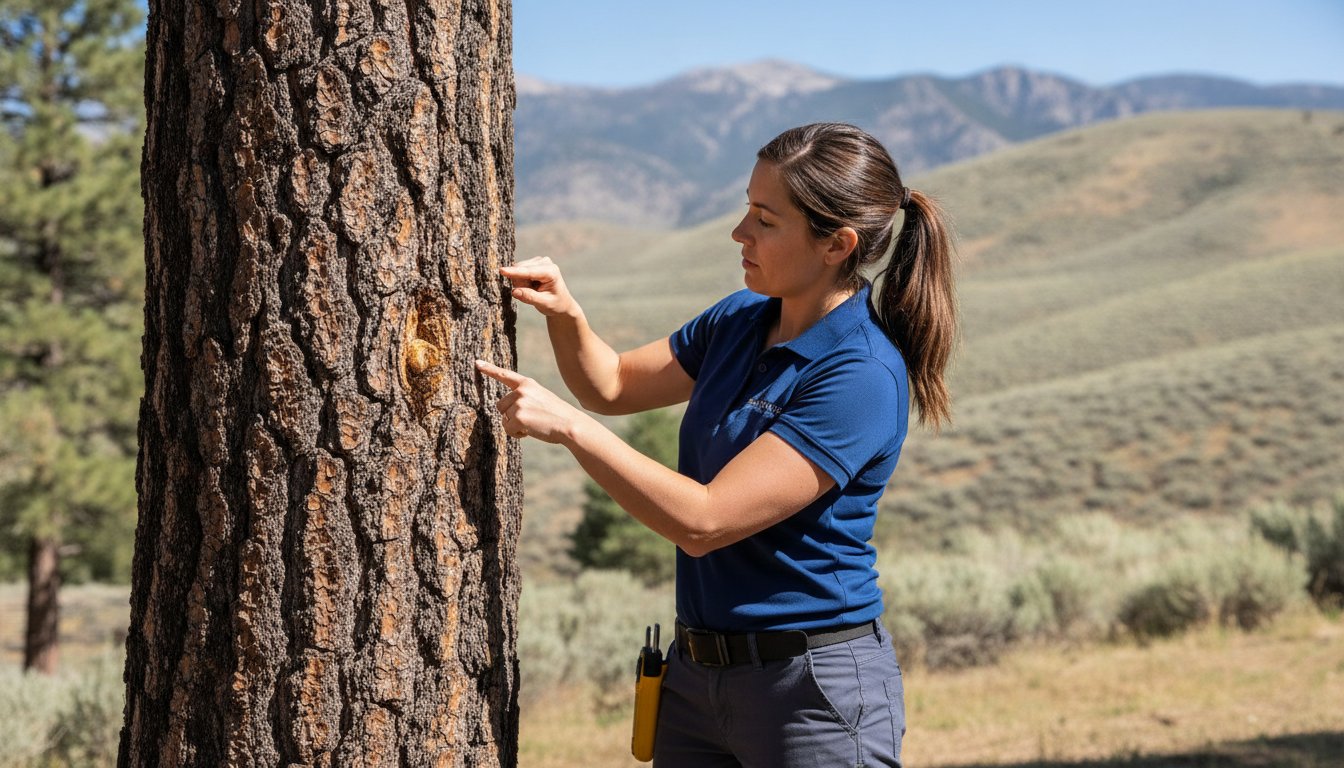
Did you know that Mountain Pine Beetle damage in Nevada increased by more than 600 percent between 2024 and 2025, affecting over 3,600 acres of our local landscape? For many homeowners in the Reno-Tahoe area, seeing a favorite tree begin to fade creates an immediate sense of worry about expensive removal costs or the risk of pests spreading to healthy neighbors. It’s often difficult to tell if a tree is struggling with the intense high-desert heat or if it’s under attack by silent invaders. Mastery of identifying tree pests northern nevada is the first step in acting as a guardian for your property’s long-term health.
We understand that your trees are more than just landscaping; they’re vital parts of your home’s environment and safety. This diagnostic guide will help you distinguish between environmental stress and active infestations like bark beetles, aphids, or scale insects. You’ll learn the specific signs to look for on your trunks and leaves, along with practical steps you can take today to bolster your trees’ natural defenses. We’ll also clarify exactly when a professional arborist is needed to provide the specialized care required to save a legacy tree from a high-desert threat.
Key Takeaways
- Learn why Northern Nevada’s high-desert climate creates unique vulnerabilities in your trees and how drought stress often serves as an invitation for local pests.
- Master the visual signs for identifying tree pests northern nevada, including the distinctive pitch tubes of bark beetles and the sticky honeydew produced by aphids.
- Distinguish between insect infestations and fungal diseases like Fire Blight or Cytospora Canker to avoid misdiagnosis and ensure your landscape receives the correct care.
- Utilize a seasonal inspection checklist to monitor your property’s health and catch early warning signs before they escalate into costly tree removal projects.
- Understand how professional health assessments and tailored treatment plans provide long-term stability for your trees and peace of mind for your family.
Understanding Tree Pests in the Northern Nevada High-Desert
Living in the high desert of Northern Nevada means our landscapes face environmental pressures that differ significantly from more temperate regions. In these conditions, tree pests are opportunistic organisms that exploit weakened vascular systems in arid environments. When we focus on Understanding Tree Pests, we see that the health of a tree is inextricably linked to the moisture levels in our soil. A tree that is well-hydrated can often fight off an attack, while a drought-stressed specimen becomes a beacon for local insects.
Our native species, such as the hardy Pinyon Pine, have developed natural resistances to the high-desert climate, but they currently face intense pressure from bark beetles. Ornamental trees found in residential neighborhoods often face even greater hurdles. These non-native species may struggle with Reno’s alkaline soil or the lack of ambient humidity, which lowers their overall vigor. This vulnerability makes identifying tree pests northern nevada a critical skill for anyone hoping to preserve their property’s value and shade.
Signs vs. Symptoms: How to Read Your Tree
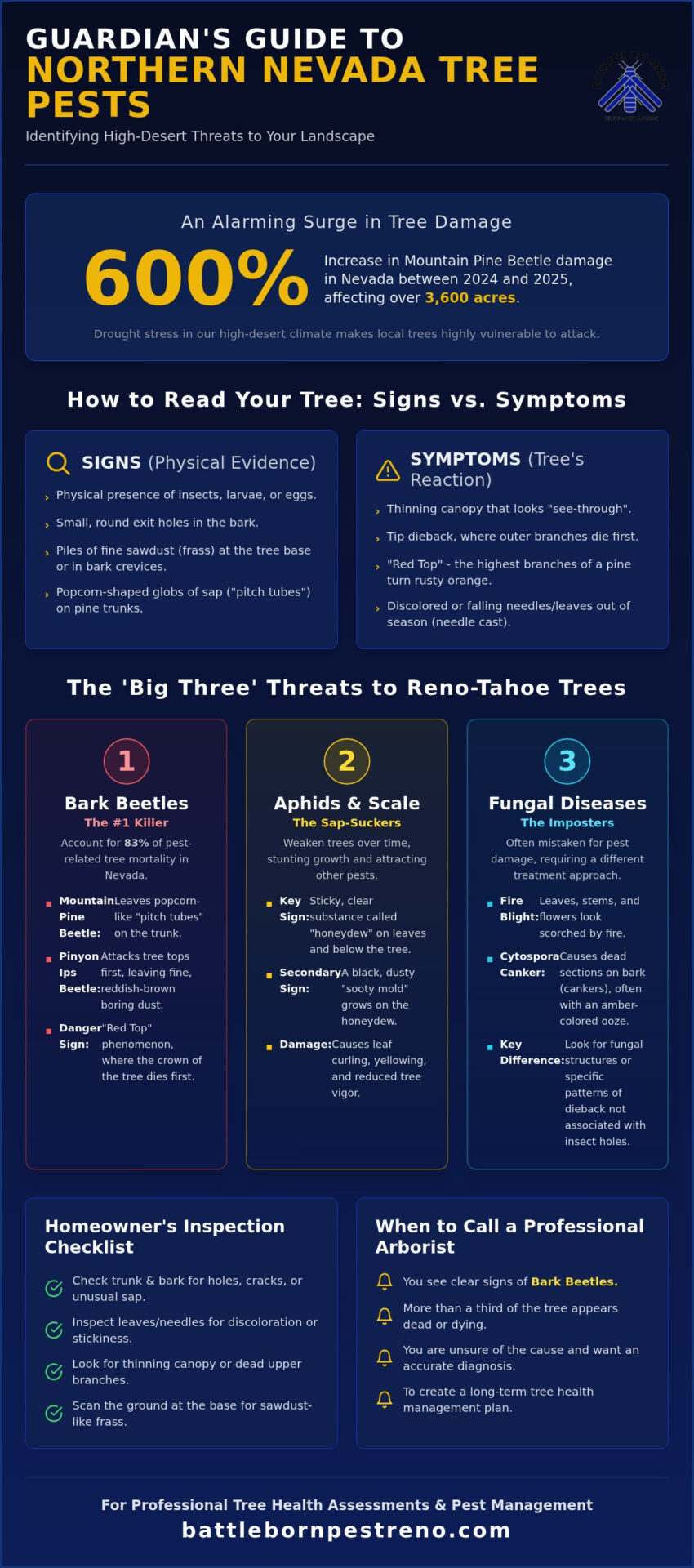
Learning the language of your landscape starts with a simple framework: signs versus symptoms. Signs are the literal physical evidence left behind by an insect. You might find perfectly round exit holes, piles of sawdust known as frass, or the insects themselves. Symptoms, however, are the tree’s internal reactions to the stress. This includes tip dieback, needle cast, or a thinning canopy that looks “see-through” against the sky. It’s a common misconception that a tree shows damage immediately. In many cases, the physiological symptoms don’t manifest until months after the initial infestation, making regular observation essential for early intervention.
The Role of Climate Stress in Reno and Sparks
The climate in Reno and Sparks acts as a catalyst for pest activity. Erratic winter watering is a major culprit. When trees don’t receive moisture during dry winter spells, they enter spring in a weakened state. A healthy tree’s primary defense is its sap. When a boring insect attempts to enter the bark, a vigorous tree will use sap pressure to “pitch out” the invader. Without enough water, that pressure vanishes. Additionally, the urban heat islands in more developed parts of our community can actually increase the reproductive cycles of certain pests. This allows them to multiply faster than they would in the cooler, outlying canyons. Consistent care remains the best way to keep these opportunistic threats at bay.
The ‘Big Three’ Pests Threatening Northern Nevada Trees
While many insects inhabit our local ecosystem, three specific groups cause the vast majority of damage to residential landscapes in the Reno-Tahoe area. Mastery of identifying tree pests northern nevada involves recognizing these primary offenders before they compromise the structural integrity of your property. In 2025, the U.S. Forest Service detected pest damage on over 4,300 acres in Nevada, with the Mountain Pine Beetle alone accounting for 83 percent of that mortality. Understanding whether you are looking at a bark beetle, an aphid colony, or a scale infestation is the first step toward a successful recovery plan.
Bark Beetles: Identification and Danger Signs
Bark beetles represent the most significant threat to our local pine canopy. The Mountain Pine Beetle and the Pinyon Ips are particularly active in Washoe County, though they leave different clues. Mountain Pine Beetles typically create “pitch tubes,” which look like small, popcorn-shaped globs of sap on the trunk where the tree attempted to push the beetle out. In contrast, Ips beetles often attack the tops of trees first, leaving fine, reddish-brown boring dust in the bark crevices rather than large sap tubes.
A common warning sign is the “red top” phenomenon, where the highest branches of a pine turn a distinct rusty orange while the lower branches remain green. This usually indicates the tree’s vascular system is failing. Because these beetles are often a death sentence if they reach the later stages of infestation, catching them during the “pioneer” stage is vital. If you notice unusual sap activity or thinning at the crown, a professional tree health assessment can determine if the tree can still be saved through targeted management.
Aphids and Scale: More Than Just a Nuisance
Aphids and scale insects are sap-suckers that weaken trees over time rather than killing them instantly. If you find a sticky, clear residue on your car or patio furniture, you’re likely dealing with “honeydew,” a byproduct of aphid feeding. This substance often attracts ants, which actually protect aphid colonies from natural predators to ensure a steady food supply. In the Siberian Elms common throughout Reno, you might also see Elm Leaf Beetles, which “skeletonize” leaves by eating everything except the veins, leaving a lacy, brown appearance.
Scale insects are more deceptive because they don’t look like bugs at all; they appear as small, stationary bumps on branches or needles. Residents in Reno’s Old Southwest neighborhood reported a significant increase in these pests during the spring of 2026. We categorize them into two groups:
- Soft Scale: These produce large amounts of honeydew and have a waxy, cotton-like covering.
- Armored Scale: These create a hard, shield-like cover and do not produce honeydew, making them harder to detect until branch dieback begins.
The distinction is important because armored scales are more resistant to certain topical sprays, often requiring systemic treatments to reach the pest beneath its protective shell.
Pests vs. Disease: Distinguishing Infestations from Infections
In our high-desert climate, a tree’s decline isn’t always caused by a living invader. While identifying tree pests northern nevada is essential for protecting your landscape, it’s equally important to recognize when the problem is actually a fungal infection or environmental stress. Misidentifying a disease as a pest infestation can lead to ineffective treatments, wasting both time and resources while the tree’s health continues to fail. Distinguishing between these issues requires a close look at the physical evidence on the bark and foliage.
Pest damage is usually characterized by the removal of plant tissue or the presence of specific waste products. In contrast, diseases often involve the disruption of the tree’s internal systems, manifesting as growths, discolorations, or oozing sores. The following table provides a simple framework for your initial inspection:
| Feature | Pest Damage (Biotic) | Tree Disease (Biotic/Fungal) |
|---|---|---|
| Physical Evidence | Exit holes, sawdust (frass), or sticky honeydew. | Cankers, fungal spores, or oozing “bleeding” sores. |
| Foliage Changes | Skeletonized leaves or chewed edges. | Irregular spotting, powdery coatings, or “scorched” tips. |
| Insect Presence | Visible bugs, egg galleries, or silk webbing. | No visible insects; symptoms often spread from the inside out. |
Common Tree Diseases in Reno and Carson City
Fire Blight is one of the most visible diseases in our region, specifically targeting apple, pear, and hawthorn trees. It creates a “scorched” appearance that looks as if the branches were burned by fire. A key diagnostic sign is the “shepherd’s crook,” where the very tips of the branches wilt and hook downward. Cytospora Canker is another common issue that homeowners often mistake for boring insect damage. This fungal infection creates sunken areas or “cankers” on the bark that may ooze a gummy, orange-tinted resin, mimicking the pitch tubes left by bark beetles.
We also see Needle Cast in our local pines, which causes needles to turn brown and drop prematurely. Unlike the rapid, top-down mortality caused by beetles, Needle Cast often starts on the lower, inner branches where airflow is restricted. In areas with heavy clay soils, overwatering can lead to root rot, which weakens the tree’s foundation and invites secondary pests to finish the job.
Abiotic Stress: The Non-Living Threats
Sometimes the “pest” isn’t an organism at all. Abiotic stress refers to non-living factors that damage tree health. In the Tahoe basin, salt spray from winter road treatments often causes “salt burn” on roadside conifers. In Reno’s urban areas, young trees with thin bark frequently suffer from sunscald, where the intense high-desert sun kills the cambium layer on the south-facing side of the trunk. Finally, many local residents notice yellowing leaves with green veins; this is iron chlorosis, a nutrient deficiency caused by our highly alkaline soils rather than an active infestation.
The Homeowner’s Seasonal Tree Inspection Checklist
Maintaining a healthy landscape in our region requires more than just occasional watering. Because our high-desert environment shifts so dramatically between seasons, your approach to identifying tree pests northern nevada must also adapt. By following a structured schedule, you can catch issues while they are still manageable, protecting both your property’s value and your family’s safety. Consistent observation is the hallmark of a responsible local guardian.
- Spring: As the ground thaws, focus on early aphid emergence. This is the ideal window for dormant oil applications, which can smother overwintering eggs before they hatch and colonize your new spring growth.
- Summer: During the peak heat of July and August, trees are most vulnerable to bark beetles. Monitor your pines closely for fresh pitch tubes or boring dust, especially if you notice any signs of wilting despite regular watering.
- Fall: Before your trees enter winter dormancy, assess their overall vigor. Look for late-season scale infestations and ensure your trees have received enough deep-root moisture to survive the coming freeze.
- Winter: With leaves gone from deciduous species, it’s much easier to spot the small bumps of scale insects on branches. This is also the time to plan structural pruning to remove weak or infested wood before heavy snow arrives.
How to Conduct a Monthly Walkthrough
A thorough inspection doesn’t require professional tools, just a methodical eye. Start with a 360-degree trunk inspection at eye level, looking for the exit holes or sap weeping discussed in previous sections. Use a pair of binoculars to scan the upper canopy; often, the first signs of thinning or discoloration occur at the very top, where they are invisible from the ground. Finally, perform the “screwdriver test” by pushing a long screwdriver into the soil. If it won’t penetrate at least six to eight inches, your tree is likely thirsty and lacks the sap pressure needed to repel boring insects.
When to Link Tree Health to Home Safety
Pest damage isn’t just an aesthetic concern; it can quickly turn a beautiful tree into a significant hazard. When insects compromise the vascular system or structural wood, branches become brittle and prone to falling during our frequent high-wind events. In Northern Nevada’s wildland-urban interface, dead or dying trees also represent a serious fire safety risk, as they provide dry fuel for potential wildfires.
If you identify a tree that has lost more than a third of its canopy or shows extensive bark beetle galleries, it may no longer be stable. In these cases, understanding your options for Hazardous Tree Removal in Carson City is essential for protecting your home and loved ones. Catching these structural failures early through a professional tree health assessment is the most effective way to prevent an emergency removal later.
Professional Tree Health Management and Solutions
While the previous sections of this guide empower you with the tools for identifying tree pests northern nevada, the transition from diagnosis to effective treatment often requires a professional touch. The high-desert environment is unforgiving, and a misstep in application or timing can lead to further stress for an already weakened tree. Partnering with a Certified Arborist ensures that your landscape receives care based on scientific health assessments rather than guesswork. At Battle Born Pest Control, we act as local guardians for your property, drawing on decades of experience to provide stability and longevity for your trees.
Our approach centers on the belief that a tree is a long-term investment in your home’s value and your family’s comfort. We don’t rely on aggressive, high-pressure sales tactics; instead, we focus on providing honest, experience-backed recommendations that prioritize the safety of your loved ones and the surrounding environment. By catching infestations early, we can often implement management strategies that prevent the need for more drastic measures like tree removal.
Arborist-Led Health Assessments
A professional health assessment is a comprehensive deep-dive into the biological and environmental factors affecting your landscape. During this process, we evaluate everything from soil quality and irrigation efficiency to the presence of secondary pathogens that often follow a pest invasion. This methodical approach allows us to create a customized “Prescription for Health” tailored specifically to the unique needs of Reno, Sparks, and Carson City properties. If you’re concerned about fungal issues alongside insect activity, our guide on Tree Disease Management in Sparks, NV explains how arborist-led care addresses these complex, overlapping threats.
Safe and Effective Treatment Methods
Modern pest and disease management for trees has evolved significantly, moving toward methods that are both more effective and environmentally responsible. We favor trunk injections for many of our treatments because they deliver the necessary product directly into the tree’s vascular system. This precise application eliminates the concern of chemical drift in our frequent Nevada winds, keeping your yard safe for children and pets.
For pests that require a different approach, we utilize systemic soil drenches that provide season-long protection by allowing the tree to take up the treatment through its roots. These methods ensure that the application is steady and thorough, mirroring the consistent care required to maintain a thriving high-desert landscape. If you’ve noticed signs of decline or simply want to ensure your trees are prepared for the next season, you can Schedule a Tree Health Assessment with Battle Born Pest Control to receive a clear, professional path forward.
Securing the Future of Your Northern Nevada Trees
Your landscape provides more than just shade; it’s a living legacy that adds value and safety to your home environment. We’ve explored how the unique pressures of our high-desert climate can weaken even the heartiest species, making identifying tree pests northern nevada a vital skill for every local homeowner. By understanding the difference between simple drought stress and active infestations like bark beetles or scale, you can take proactive steps to protect your property before damage becomes irreversible.
Maintaining long-term health requires a blend of consistent seasonal observation and expert intervention when challenges arise. As a locally licensed and insured team with Certified Arborists on staff, Battle Born Pest Control is committed to providing customized, pet-safe treatment options that respect your family’s well-being. We believe that a thorough health assessment is the most effective way to avoid the high costs and safety risks of tree removal.
Protect your landscape—Schedule a Professional Tree Health Assessment today to ensure your trees remain a vibrant, stable part of your home for decades to come. We’re here to help you navigate these high-desert threats with peace of mind and professional care.
Frequently Asked Questions
How do I know if my pine tree has bark beetles?
You can identify a bark beetle infestation by looking for small, popcorn-shaped globs of sap called pitch tubes on the trunk. These tubes indicate where the tree tried to push out the invading beetles. You should also check for fine, reddish-brown boring dust in the bark crevices or at the base of the tree. If the needles at the very top of the tree are turning orange or red, it is a strong sign the infestation is advanced.
What are the little holes in my tree’s trunk?
Small, perfectly round holes in a tree’s trunk are typically exit holes where adult beetles have emerged after completing their life cycle. If the holes are arranged in neat, horizontal or vertical rows, they are likely caused by sapsuckers, which are birds that drill into the bark to feed on sap. Identifying tree pests northern nevada requires distinguishing between these bird-related marks and the irregular, scattered holes left by wood-boring insects.
Why is my tree dripping sticky liquid on my car?
The sticky liquid dripping from your tree is known as honeydew, which is a sugary waste product excreted by sap-sucking insects like aphids and soft scale. These pests feed on the tree’s vascular fluids and leave behind a residue that often coats leaves, cars, and patios. If left untreated, this sticky substance can lead to the growth of black sooty mold, which further stresses the tree and creates an aesthetic nuisance for homeowners.
Can a tree recover from a pest infestation?
A tree can often recover from a pest infestation if the problem is caught during the early stages and its overall health is supported. Recovery depends on the species of pest and the tree’s current vigor; for instance, a tree with minor aphid damage recovers quickly with proper care. However, once a bark beetle infestation reaches the later stages where the canopy is turning red, the vascular damage is usually too severe for the tree to survive.
Is it better to spray or inject a tree for pests?
Trunk injections are generally considered the superior method for treating pests because they deliver the product directly into the tree’s vascular system without environmental drift. This method is particularly effective in our windy high-desert climate where topical sprays might blow onto neighboring properties or sensitive areas. While sprays are useful for certain foliar issues, injections provide a more targeted, long-lasting solution that protects the surrounding family environment and beneficial insects.
When is the best time of year to treat trees for pests in Reno?
The best time for pest treatment in Reno is typically in the early spring before the local insect population becomes fully active. Applying dormant oils in late winter or early spring helps control overwintering eggs, while systemic treatments are most effective when the tree is actively taking up water in the spring. Because our high-desert seasons can be unpredictable, we recommend a professional evaluation to ensure the timing matches the specific life cycle of the target pest.
How much does a tree health assessment cost in Northern Nevada?
The cost of a professional tree health assessment in Northern Nevada depends on the size of your property and the number of trees that require a detailed inspection. Each landscape presents unique challenges, from urban lots in Reno to larger forested properties in the Tahoe basin. We recommend contacting a local professional to discuss your specific needs, as an accurate assessment is the first step toward a tailored management plan that avoids the high cost of tree removal.
Can I treat tree pests myself or do I need a professional?
While homeowners can manage minor issues like small aphid colonies with a strong stream of water or insecticidal soap, serious infestations require professional expertise. Managing wood-boring insects or large-scale infestations involves specialized equipment and products that must be applied with precision to be effective. A professional arborist understands the complexities of identifying tree pests northern nevada and can apply treatments safely while ensuring the long-term health of your entire landscape.