Mice in House Reno NV: 2026 Rodent Control Guide
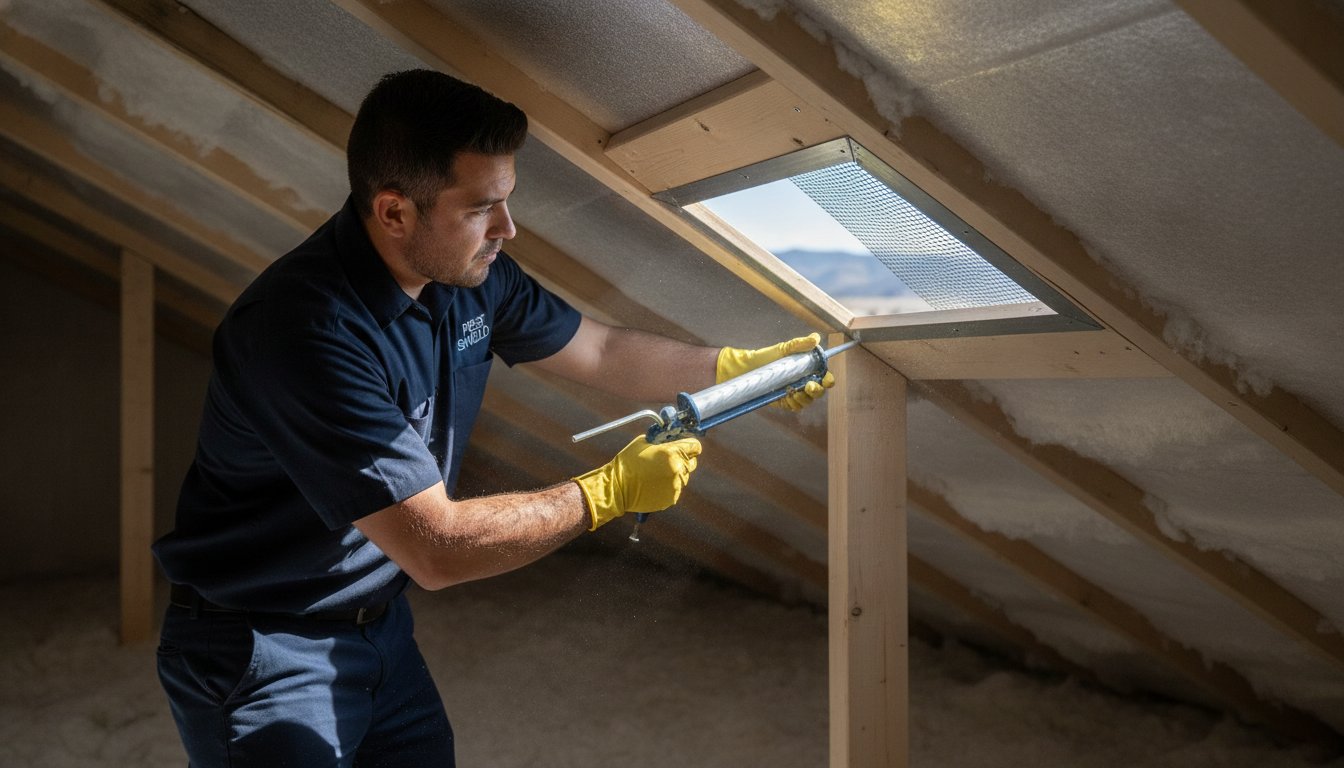
Could the very trees providing shade to your backyard be serving as a private highway for rodents to enter your attic? It’s a common concern for many of our neighbors in Northern Nevada, especially as the high desert temperatures drop and pests seek the warmth of our living spaces. Finding evidence of mice in house Reno NV is more than just a nuisance; it often leads to genuine anxiety about property damage to wiring and the health risks associated with Hantavirus. You want to protect your family, but the cycle of setting DIY traps only to find new activity a week later can feel incredibly frustrating.
This 2026 guide will help you understand exactly why these pests target local properties and show you the professional exclusion strategies that keep your home rodent-free for the long term. We will explore the specific behaviors of Reno’s rodent population, identify the exterior vulnerabilities common in our high desert climate, and explain how a specialized approach to pest management can restore your peace of mind. By focusing on home integrity rather than temporary fixes, you can ensure your property remains a safe, secure sanctuary for your loved ones.
Key Takeaways
- Understand how Reno’s unique high desert climate and drastic temperature shifts drive rodents to seek shelter in residential crawlspaces and attics.
- Learn the critical differences between House Mice and Deer Mice to ensure your management strategy is tailored to the specific habits of the pests you’re facing.
- Discover why finding mice in house Reno NV requires shifting from reactive trapping to proactive structural exclusion for permanent protection.
- Follow a comprehensive checklist to eliminate attractants and identify exterior vulnerabilities, such as tree-to-roof access points that provide easy entry.
- Explore how customized, site-specific treatment plans prioritize your family’s safety while providing a long-term solution for a rodent-free home.
Why Mice Invade Reno Homes: The High Desert Climate Factor
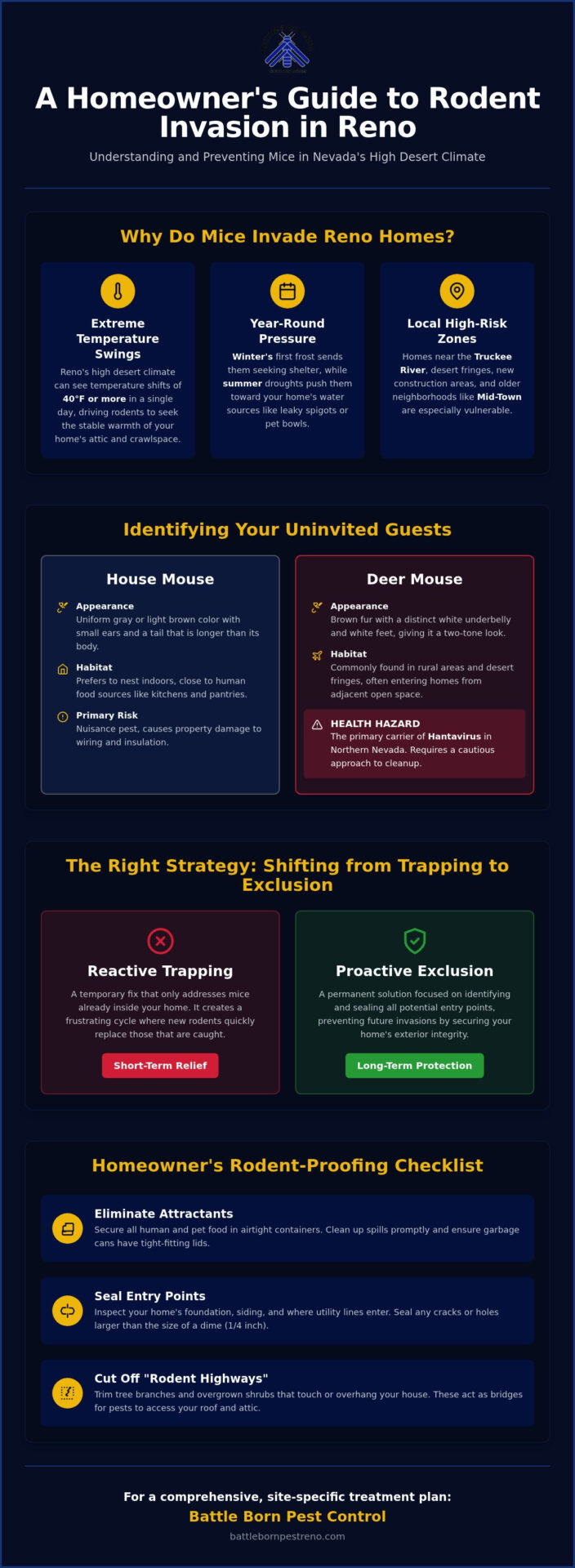
Reno’s high desert environment is beautiful, but it presents specific challenges for homeowners that differ significantly from other regions. One of the most influential factors in local pest activity is our extreme diurnal temperature shift. It isn’t uncommon for temperatures to swing 40 degrees or more between noon and midnight. These rapid changes trigger immediate movement in local wildlife, often leading to sightings of mice in house Reno NV as rodents seek the stable, regulated temperatures of a residential attic or crawlspace.
We define rodent pressure in Northern Nevada as the seasonal surge of mice seeking stable microclimates inside human structures. While a House mouse (Mus musculus) can survive outdoors during milder months, the harsh winter cold snaps common in our region drive them toward the thermal mass of your home. The concrete foundations and insulated walls of a house retain heat far better than the surrounding sagebrush, making your property an irresistible target when the thermometer drops below freezing.
Summer brings its own set of pressures that many residents don’t expect. During our frequent drought periods, rodents are forced away from drying natural habitats toward domestic water sources and irrigated landscaping. Pet water bowls, leaky outdoor spigots, and even the condensation on air conditioning units become vital resources. This means that whether it’s the dead of winter or the height of a dry July, your home acts as a beacon for rodents searching for the basic necessities of survival.
The ‘Fall Rush’ in Northern Nevada
October and November represent the busiest months for rodent activity in the Truckee Meadows. As local vegetation cycles end and food sources in the wild become scarce, populations that boomed during the spring begin to migrate. The first hard frost of the season often acts as a starting gun for this migration. Once that freeze hits, any existing gaps in your home’s exterior become high-traffic entry points for rodents looking for a warm place to overwinter safely.
Reno Neighborhoods at Higher Risk
Certain areas in our community face higher levels of rodent activity due to their specific geography and age. Homes located near the Truckee River or along desert fringes sit directly on natural wildlife corridors where water and cover are naturally abundant. In South Reno, rapid new construction often displaces large populations of field mice, pushing them directly into established residential yards nearby. Meanwhile, the charming, older architecture in Mid-Town and the Old Southwest frequently features “legacy” entry points, such as settling foundations or original wood siding, which provide easy access for mice in house Reno NV.
Identifying Your Uninvited Guests: House Mice vs. Deer Mice
Correctly identifying your uninvited guests is the essential first step in a successful Integrated Pest Management (IPM) program. When you suspect there are mice in house Reno NV, the species involved determines everything from the choice of bait to the specific placement of traps. In our region, we primarily encounter two distinct types: the common House Mouse and the Deer Mouse. The House Mouse is typically uniform gray with small ears and a tail that is longer than its body. These rodents have lived alongside humans for centuries; they prefer to nest in close proximity to food sources like pantries and kitchens.
The Deer Mouse presents a different set of challenges. These rodents are brown with a distinct white underbelly and white feet, often appearing more “natural” or “field-like” than their gray counterparts. They are particularly common in rural parts of Reno, Carson City, and the desert fringes where homes meet open space. While they might look harmless, the real reason identification matters is health. Deer mice are the primary carriers of Hantavirus in Northern Nevada. This distinction requires a much more cautious approach to cleanup and removal than a standard infestation. To help homeowners Prevent Rodent Infestations, the EPA suggests maintaining a clean environment and sealing entry points, but these steps must be performed with an understanding of which species you are facing.
Signs of an Active Infestation
You’ll often find evidence of an infestation long before you see a physical mouse. Droppings are the most common indicator. House mouse droppings are small with pointed ends, whereas Deer mouse droppings are slightly larger and darker. You should also look for gnaw marks on food packaging, especially on cardboard and plastic bags. If you hear a distinct scratching in the walls or ceiling during the quiet evening hours, it’s a clear sign that rodents are establishing nesting locations within your home’s structural voids. These sounds often intensify as the colony grows and begins to explore new areas of the property.
Health Risks Specific to Northern Nevada
We take a calm but serious view of the health risks associated with rodents in our community. Hantavirus Pulmonary Syndrome (HPS) is a severe respiratory disease transmitted through the droppings, urine, and saliva of infected Deer mice. The greatest danger often occurs during DIY cleaning attempts. Sweeping or vacuuming old nests can stir up airborne particulates that are easily inhaled, potentially leading to infection. This is why professional-grade PPE, including respirators and gloves, is essential for any rodent cleanup in Reno. To ensure your family’s safety during this process, it’s often best to seek tailored rodent management from local experts who understand these specific high-desert risks and can handle the situation with the necessary technical care.
Traps vs. Exclusion: Choosing the Best Rodent Control Strategy
When homeowners discover mice in house Reno NV, the immediate reaction is often to head to the hardware store for a bulk pack of snap traps. While this approach might capture a few individuals, it remains a reactive measure that addresses the symptoms rather than the root cause. True rodent management requires a shift from simply reacting to the presence of pests to proactively securing the structure. At Battle Born Pest Control, we advocate for a strategy that prioritizes mechanical exclusion over a heavy reliance on chemical dependency.
Many traditional services rely on broadcast baiting, which involves placing toxic rodenticides around the property. This method carries a significant risk for our local Northern Nevada ecosystem. When a mouse consumes bait and then leaves the home, it becomes easy prey for local owls, hawks, and even family pets. This secondary poisoning is a serious concern for the environmental health of our community. According to the UC IPM Pest Notes, understanding the biology and behavior of the species is far more effective than scattering chemicals. By focusing on structural repairs, we provide a solution that protects your family without endangering the wildlife that makes our region unique.
The Limits of DIY Mouse Traps
Mice are surprisingly intelligent and can become “trap shy” after seeing their peers caught. They learn to avoid standard snap traps or even find ways to remove bait without triggering the mechanism. Additionally, many residents invest in ultrasonic repellents, but these devices often fail in high desert environments where large, open attics and crawlspaces absorb the sound waves. A common mistake we see is placing traps in the middle of a room; mice naturally prefer to travel along walls where they feel more secure. Without a professional understanding of these movement patterns, DIY efforts often lead to a cycle of temporary relief followed by a inevitable return of the infestation.
What is Professional Rodent Exclusion?
Exclusion is the process of physically sealing your home so that rodents cannot enter in the first place. This requires a meticulous, 360 degree inspection because a mouse can squeeze through an opening as small as a dime, or roughly one quarter inch. We use professional grade materials that rodents cannot chew through, such as heavy duty steel wool, copper mesh, and specialized industrial sealants. Unlike standard expanding foam, which mice can easily destroy, these materials provide a permanent barrier. This structural approach ensures that once the current population is removed, your home remains a fortress against future invasions, providing the long term peace of mind that simple trapping cannot offer.
A Homeowner’s Checklist for Rodent-Proofing in Reno and Sparks
Effective rodent control begins with a meticulous 360-degree evaluation of your property. By identifying and removing the “welcome mat,” you can significantly reduce the likelihood of seeing mice in house Reno NV during the colder months. Start with basic sanitation; mice require very little sustenance to thrive. Secure pet food in airtight containers and ensure your trash bins have locking lids that prevent easy access. Even a small amount of birdseed spilled near a porch can attract a colony that will eventually look for a way inside.
Structural integrity is your next line of defense. Pay close attention to garage door seals and crawlspace vents. In our experience, the gap beneath a garage door is one of the most common entry points for rodents in the Truckee Meadows. If you can slide a pencil through a gap or see daylight under the seal, it’s large enough for a mouse. Similarly, ensure that foundation vents are covered with heavy-duty hardware cloth rather than flimsy plastic screening that can be easily chewed through.
The Arborist Advantage: Managing Tree Access
Rooflines are often overlooked during a standard inspection, but they are a primary highway for agile climbers. Overhanging branches act as a bridge, allowing rodents to bypass ground-level defenses and enter through attic vents or chimney flashing. We recommend utilizing professional Tree Pruning Services Reno to maintain at least a 6 to 10 foot clearance between your foliage and the roof. This simple distance makes it nearly impossible for a mouse to leap onto your home, effectively cutting off their elevated access route.
Exterior Maintenance for the High Desert
Reno’s specific landscaping styles, such as large river rock mulch, often provide perfect subterranean voids where mice love to hide and nest. Keep these areas clear of leaf litter and debris to minimize cover. Additionally, check your “weep holes” in brick siding and any foundation cracks that may have developed due to our region’s expansive clay soils. Store firewood piles at least 20 feet away from the home’s perimeter; these piles are ideal winter hotels for rodents and shouldn’t be right next to your foundation. If you’ve noticed signs of activity, a tailored rodent control plan can address these specific vulnerabilities before they become a larger issue.
Professional Rodent Management: The Battle Born Pest Control Approach
At Battle Born Pest Control, we believe that effective rodent management isn’t found in a box of generic traps from a big-box retailer. Every property in Northern Nevada has a unique story, from the age of its foundation to the specific species of trees in the backyard. Finding evidence of mice in house Reno NV requires a methodical response that begins with a comprehensive, site-specific inspection. We don’t just look for where the rodents are today; we investigate the structural “why” behind their arrival to ensure they don’t return tomorrow. This diagnostic phase allows us to develop a tailored treatment plan that respects the integrity of your home and the health of the local environment.
Our approach is built on the foundation of being a local guardian for our community. We understand that a home is a sanctuary for your family, which is why we emphasize long-term stability over temporary fixes. By integrating our specialized rodent control with our arborist expertise, we create a total home shield. This dual-layered strategy addresses both the ground-level entry points and the elevated access routes provided by overhanging foliage. For those seeking consistent protection throughout our region’s drastic seasonal shifts, we offer Quarterly Pest Maintenance Sparks to maintain your property’s defenses year-round.
Family and Pet Safe Solutions
We are deeply committed to using the least invasive methods possible to resolve infestations. Many homeowners worry about the risks associated with open-access poisons, especially those with curious pets or young children. We share that concern. Our team prioritizes mechanical exclusion and the use of tamper-resistant stations that keep treatments completely inaccessible to non-target animals. This focus on safety ensures that we solve the problem of mice in house Reno NV without introducing new anxieties into your living space. We choose professional-grade materials that provide lasting results, focusing on physical barriers that rodents simply cannot bypass.
Why Local Expertise Matters in Northern Nevada
Navigating the unique pest cycles of the high desert requires decades of local experience. As a locally owned and licensed team, we’ve spent years studying how Reno’s weather patterns influence rodent behavior. We aren’t a national franchise using a script; we’re your neighbors who understand exactly how a dry summer or a heavy winter snowpack changes the pressure on your foundation. If you are looking for more information on selecting the right partner for your property, our Rodent Control Services in Carson City guide provides a detailed look at what to expect from a professional partnership. Choosing a local expert means choosing a professional who values their reputation and your peace of mind above all else.
Securing Your Reno Home for the Seasons Ahead
Managing a rodent infestation in Northern Nevada requires more than just a handful of traps; it demands a deep understanding of our high desert ecology and a commitment to structural integrity. By focusing on professional exclusion rather than reactive baiting, you address the environmental factors that invite pests into your living space. We’ve seen how the combination of seasonal temperature shifts and accessible rooflines can lead to persistent issues with mice in house Reno NV, but these challenges are manageable with the right local guidance. Integrating landscaping maintenance with meticulous structural sealing provides a comprehensive shield that protects your property from the ground up.
As a locally licensed and owned team, we prioritize the well-being of our community through customized, pet-safe treatment plans. Having a Certified Arborist on staff allows us to identify and resolve unique vulnerabilities that others might miss, such as tree-to-roof bridges. You deserve a home that feels safe and secure throughout every winter cold snap and summer drought. To take the first step toward a rodent-free environment, protect your home from rodents—contact Battle Born Pest Control today. We look forward to helping you achieve lasting peace of mind and protecting what matters most.
Frequently Asked Questions
How do mice get into Reno houses so easily?
Rodents can enter a structure through any opening larger than a quarter inch, which is roughly the size of a dime. In our region, common entry points include gaps under garage doors, poorly sealed crawlspace vents, and foundation cracks caused by our expansive desert soils. Because mice are excellent climbers, they also utilize overhanging tree branches to reach rooflines and attic vents that aren’t properly screened.
Can mice in Reno carry Hantavirus?
Yes, Deer Mice are the primary carriers of Hantavirus in Northern Nevada and are frequently found near the desert fringes of Reno and Sparks. This virus is transmitted through contact with infected droppings, urine, or saliva. It’s vital to avoid sweeping or vacuuming dry mouse waste, as this can release airborne particulates that are dangerous to inhale. Professional cleanup is always recommended for safety.
What is the best bait for mouse traps in Northern Nevada?
High-protein attractants like peanut butter or hazelnut spread are generally more effective than cheese because they are difficult for the mouse to remove without triggering the trap. In our arid high desert climate, water-rich baits like a small piece of apple or melon can also be highly effective during the dry summer months. Proper placement along walls is often more important than the specific bait you choose.
How much does professional rodent exclusion cost in Reno?
The cost of professional exclusion depends on the size of your home and the number of structural vulnerabilities that need to be sealed. Every property is unique, so factors like the age of the home and the specific materials required for repairs will influence the final investment. Investing in exclusion is a long-term solution that prevents the recurring costs of temporary trapping and baiting cycles.
Are the ‘plug-in’ ultrasonic pest repellers effective for mice?
Most research and field experience suggest that ultrasonic devices are not an effective solution for mice in house Reno NV. These sound waves do not penetrate through walls, furniture, or insulation where mice typically nest and travel. Furthermore, rodents often become habituated to the noise very quickly, rendering the device useless as a long-term deterrent for a determined colony.
How long does it take to get rid of a mouse infestation professionally?
A professional program typically takes between two and four weeks to fully resolve an active infestation. This timeframe allows us to perform thorough exclusion work to stop new entry while simultaneously trapping the population currently inside the home. The exact duration may vary based on the size of the colony and how quickly the rodents respond to the localized treatment plan.
Do I need to leave my house during a rodent treatment?
You do not need to vacate your home during a standard rodent treatment or exclusion service. Our methods focus on structural repairs and the use of tamper-resistant stations that are designed to be safe for families and pets. We prioritize non-invasive strategies that allow you to go about your daily routine while we secure your property’s perimeter and interior voids.
Why do I have mice even though my house is clean?
Mice often enter homes seeking a stable microclimate and protection from predators rather than just a food source. Even the cleanest home in Reno provides a warm sanctuary from our drastic nightly temperature shifts. While sanitation is important for long-term management, a mouse only needs a tiny amount of crumbs or pet food to survive once they’ve found a warm place to nest.