Rodent Control Reno NV: Reliable Home Protection
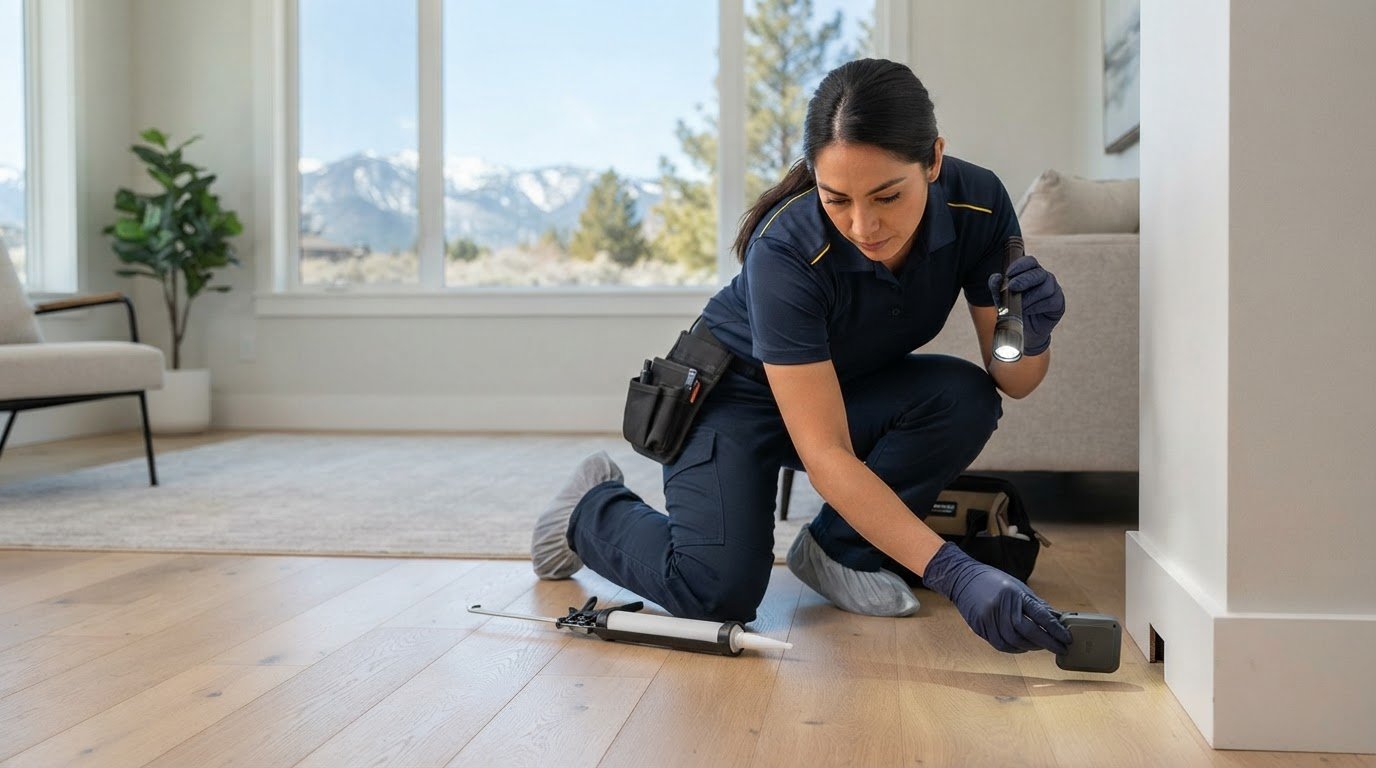
Eco-conscious rodent control starts by identifying how rodents are getting inside, not just treating visible signs. In Reno, mice and rats may enter buildings seeking food, water, and shelter from temperature changes. Effective rodent control in Reno, NV, addresses both rodent activity and the conditions attracting pests.
It’s reasonable to want an approach that considers your family, pets, property, and the surrounding environment. This guide explains practical prevention and treatment options, which rodents and related pests may be covered, what inspections can reveal, and how entry-point concerns are assessed. You’ll also learn what to expect when arranging service for a home or business in Reno, and how a tailored plan can combine monitoring, sanitation, and targeted treatment where appropriate.
Key Takeaways
- Learn how inspection, sanitation, monitoring, and targeted treatment can support a more environmentally considerate rodent management plan.
- Understand why identifying the animal matters, especially when distinguishing mice and rats from voles, moles, and gophers.
- See how seasonal temperature changes and building conditions can influence rodent activity around Reno properties.
- Find out what to look for during an inspection and how addressing potential entry points can help reduce access indoors.
- Explore considerations for rodent prevention at both homes and commercial properties, including when professional support may be useful.
Do you offer eco-friendly pest control solutions in Reno?
Eco-conscious pest control in Reno focuses on prevention and targeted action, rather than treating every area by default. A practical plan identifies the rodent, locates signs of activity, and assesses access to food, water, and shelter. Monitoring, sanitation, habitat changes, and carefully selected treatments can address the conditions found at a home or business. “Eco-conscious” doesn’t mean risk-free: treatment choices still need to account for people, pets, property, and product directions.
Local knowledge matters because buildings and surrounding landscapes create different pest pressures. Battle Born Pest Control serves Reno, Sparks, Carson City, Dayton, and surrounding areas. In Reno’s high-desert setting, temperature changes, dry conditions, irrigation, and nearby vegetation can affect where rodents find resources. An assessment should connect observations to the property: droppings near stored food point to sanitation concerns, while activity near a wall may warrant checking nearby openings and shelter. The pest and property conditions guide recommendations.
- Inspect: Note droppings, gnawing, damaged packaging, and areas where activity appears.
- Reduce attractants: Secure food, manage waste, and address accessible water or clutter.
- Target carefully: Base monitoring or treatment on the identified pest and site conditions.
Reviews, service scope, and written terms offer different ways to compare pest control services. Read reviews for specific examples, such as clear communication or follow-up, rather than relying only on a rating. Compare whether an inspection, monitoring, prevention advice, and treatment are described. A warranty plan should state what work it covers, its limits, and any follow-up conditions; don’t assume every estimate includes one. An estimate should explain the proposed work and its scope. Don’t assume inspections or estimates are free.
Rodenticide use should follow product labeling and applicable state and local requirements. Wildlife trapping is separate from managing mice or rats inside a building, so the pest and situation matter when selecting a control method. Responsible treatment considers product placement and how people, pets, and non-target animals could be exposed.
Consider professional help when you notice recurring droppings, gnawing, food contamination, or noises inside walls, especially after basic sanitation steps. A professional inspection can help distinguish rodent activity from other signs and identify likely access points. For scheduling, provide the property location, whether it’s a home or business, and the signs you’ve observed. Response times depend on appointment availability and service needs; no fixed arrival window or guarantee should be assumed. Clear notes help the inspection focus on the affected areas.
Mice, rats, voles, moles, and gophers
Correct identification matters: a mouse in a pantry and a burrowing animal outdoors call for different responses. In Reno, Sparks, Carson City, and Dayton, the signs, their location, and any damage help identify the pest and guide the next step.
Rodent Types and Control
Mice and rats may enter buildings seeking food, water, and shelter from temperature changes. Look for droppings, gnaw marks, disturbed food packaging, or activity along walls. Voles are small rodents often associated with vegetation, while gophers create burrows and soil mounds. Moles are not rodents; they are mammals that feed mainly on insects and other small invertebrates.
These differences matter when choosing a control method. Mouse control in Sparks, NV starts with identifying where the animals travel, what attracts them, and how they may be getting inside. Outdoor tunnels or damaged plants raise a different identification question. Don’t assume every mound or surface trail indicates the same animal. A useful inspection connects the sign to its location and pattern.
Rodent control can involve inspection, monitoring, trapping, bait stations, sanitation recommendations, and assessment of possible entry points. The right steps depend on the identified pest and property. An indoor rat sighting near stored food, for example, raises different concerns from vole activity in a landscaped area. Treatment should suit the situation, not be selected simply because rodents are common pests.
Cockroaches and bed bugs also require accurate identification, but they aren’t rodents and need different pest management approaches. If you notice signs in more than one area, record where they appear and what you observe. Those details can help distinguish an indoor rodent issue from outdoor activity and keep the assessment focused.
Health Risks and Droppings Cleanup
Mice and rats can carry viruses or bacteria that may affect people or pets, and their droppings can contaminate nearby surfaces. Avoid touching droppings directly or disturbing them in a way that spreads dust. Keep children and pets away, use appropriate protective equipment, and follow the directions on any cleaning or disinfecting product. Dispose of cleanup materials according to product directions, then wash your hands.
After cleanup, inspect the surrounding area for further signs. Droppings near food storage, gnawed packaging, or repeated activity may indicate the issue extends beyond one visible spot. Secure accessible food and note where you found evidence. If signs recur or appear in multiple rooms, a professional assessment can help identify the rodent and determine a suitable control plan for the property.
Free estimates and appointment requests
A clear appointment request helps match the visit to the property’s needs. Include the Reno-area property type, whether it’s a home or business, and the main concern. For a business, mention operating hours or access procedures; for a residence, note any rooms that require special arrangements. These details help technicians prepare for a visit without assuming a particular appointment time.
Before requesting service, organize the information you already have. Note when you first noticed the concern, whether it has changed, and which areas are affected. If you manage a commercial property, identify who can provide access and share any site procedures. A concise description gives the appointment a clear purpose and keeps communication focused.
- Describe the property: Share its location, type, and the areas involved.
- Explain access needs: Mention gates, restricted rooms, business procedures, or an on-site contact.
- Share relevant conditions: Note pets, sensitive work areas, or other details that could affect the visit.
- Keep records together: Save observations and appointment details for easy reference.
Battle Born Pest Control offers free estimates, giving you an opportunity to review proposed work before deciding on next steps. Look for a clear description of the recommended service, the areas it covers, and any monitoring or prevention measures included. If a concern is limited to one section of a property, for example, the estimate should clarify whether the proposed scope addresses only that area or related spaces as well.
Scheduling depends on the requested service, access requirements, and appointment availability. Share any constraints early, such as a business schedule or a need to coordinate entry with a property manager. If pets will be present, mention that when arranging the visit so the appointment can account for household conditions. No fixed arrival time or response window should be assumed.
An estimate describes proposed work; a service guarantee is a separate matter with its own terms. Review the written scope and any stated conditions so you understand what the estimate covers. Keep the document with your appointment notes, and compare the proposed work with the concern you described. Clear records help you make an informed decision and keep communication straightforward as the request moves forward.
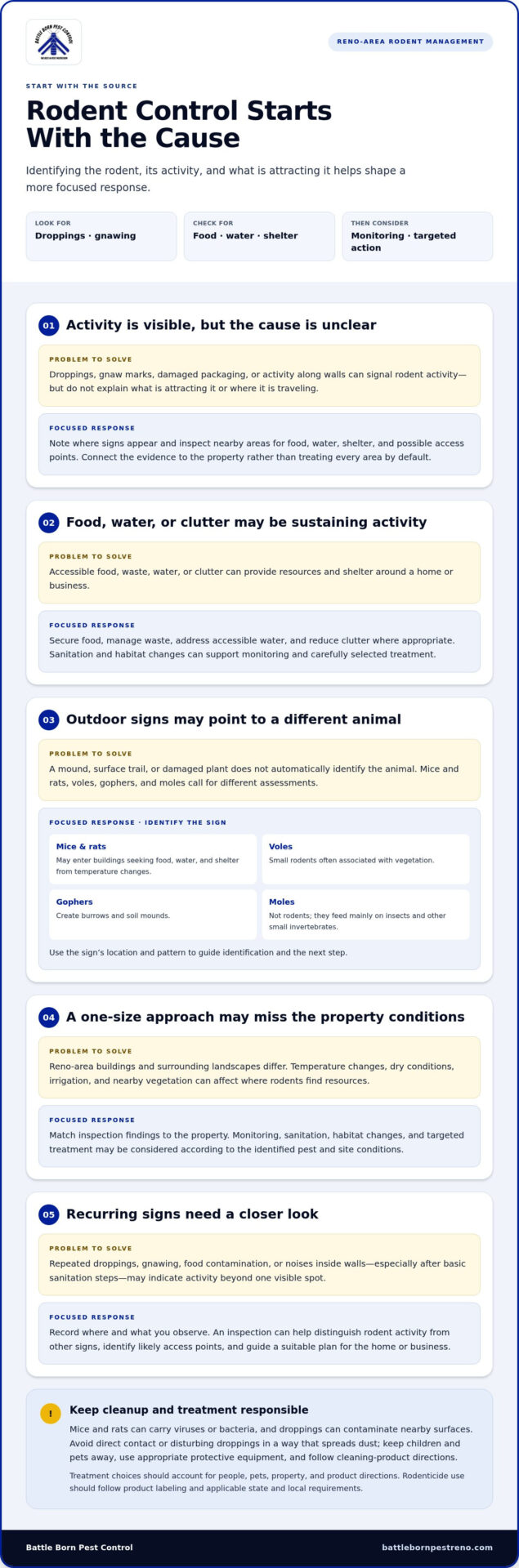
Inspections and sealing entry points
A careful inspection connects rodent signs with possible access, food, water, and shelter. In Reno, early detection and exclusion can help reduce infestation risk, especially as seasonal temperatures change. The goal is to identify likely routes and conditions, then match prevention and treatment recommendations to the property.
Start where indoor and outdoor conditions meet. An inspection may include the foundation, door edges, utility lines, vents, garage, attic, and areas around stored materials. Look for droppings, gnawing, rub marks, damaged packaging, or disturbed insulation. A gap beside a pipe and fresh signs near a pantry, for example, can point to a likely route.
Assessing entry points involves more than spotting an opening. The inspector considers whether its location fits the signs and whether nearby conditions attract rodents. Irrigation, dense vegetation, accessible refuse, and stored items can create shelter or resources near a building. In Carson City, Dayton, and surrounding areas, the property layout and landscaping also shape which exterior areas deserve attention.
- Document evidence: Record the room, exterior wall, or storage area where signs appear.
- Check transitions: Note openings around pipes, doors, vents, and utility lines.
- Review attractants: Look for accessible food, water, refuse, and sheltered clutter.
- Track changes: Compare new signs with earlier observations after prevention steps.
Sealing suitable openings can limit access, but the right repair depends on the opening, building material, and pest activity. Avoid covering a suspected route before determining whether rodents are still active inside, or the underlying problem may remain. A professional inspection can identify likely entry points and outline appropriate exclusion steps. Property owners can also address routine attractants, such as unsecured food or clutter.
Seasonal conditions make follow-up useful. As temperatures drop, mice and rats may seek indoor shelter; during warmer periods, exterior food and water sources can still support activity near buildings. Recheck areas where signs appeared, especially garages, utility spaces, and storage rooms. If new droppings appear after an opening has been addressed, note their location and share that observation during the next assessment.
A focused inspection should explain what was observed, which areas need attention, and how monitoring or targeted treatment fits the findings. For a home with signs near a garage, that may mean reviewing the door perimeter and nearby storage. For a business, access around service doors and stock areas may also matter. Clear findings help distinguish an active pest problem from an isolated sign and guide practical next steps.
Rodent control for homes and businesses
Rodent management should fit how each property is used. For rodent control in Reno, NV, activity inside a home pantry calls for attention to food storage and household access. A business may have signs near a receiving area, where deliveries, waste handling, or stockrooms affect prevention. The shared goal is to identify the source, reduce attractants, and choose control steps suited to the building.
Homes and businesses have different daily routines. A household can focus on pantry goods, pet food, garage storage, and openings around utility lines. A restaurant or warehouse also needs staff practices for waste and deliveries, as well as clean food-contact surfaces. Rodents can contaminate surfaces, chew wiring, and damage insulation, so the location of signs helps prioritize affected areas.
A practical plan combines methods rather than relying on one treatment. Inspection helps identify the pest and areas of activity; monitoring can show where rodents travel. Sanitation reduces accessible food and waste, while assessing possible entry points addresses access. Trapping or bait stations may be considered as targeted measures, based on the pest, property conditions, and product directions.
- For a home: Secure pantry goods, remove accessible pet food, and watch for signs near garages or storage.
- For a business: Record activity by room, review waste and delivery routines, and protect food-handling areas.
- For both: Keep observations for follow-up and report new signs promptly.
Commercial properties benefit from consistent records. A facility manager can log sightings, sanitation actions, monitoring findings, and recurring activity. Those notes help connect observations across shifts or departments. At home, a simple record can show whether signs remain in one area or appear elsewhere. This information supports a focused response and helps assess progress without assuming a particular outcome.
Cold winter temperatures in Northern Nevada can lead rodents to seek indoor shelter. In Reno, homes with attached garages and businesses with loading areas can monitor activity near indoor-outdoor transitions. Termites are a separate pest concern, not a rodent-control target, so accurate identification matters before selecting treatment. A rodent control plan in Reno, NV, should address the specific pest and site conditions rather than apply a one-size-fits-all approach.
Effective pest management aims to reduce rodent activity and the conditions that support it, not merely hide visible signs. Satisfaction depends on a plan that explains the recommended steps and accounts for prevention or monitoring. To discuss a rodent concern at your home or commercial property, request rodent control service.
Battle Born Pest Control: Ant Control
Battle Born Pest Control provides ant control for Reno homes and businesses dealing with ant activity indoors or around the property. If you notice trails near pantry shelves, entryways, or outdoor areas, identifying where ants appear can help guide a targeted response. Recommendations depend on pest activity and property conditions, with careful attention to the people and pets using the space.
Other concerns may call for a different service, including spider or wasp control. Tree pruning is a separate tree-care service, not a rodent treatment. For ant activity or another covered pest concern, contact Battle Born Pest Control to discuss the property and appropriate next steps.
Contact Battle Born Pest Control or visit battlebornpestreno.com.
Choose a Practical Next Step for Your Property
Base your next move on what you’ve observed, not guesswork. Note where rodent signs appear, whether they return, and what has changed around the property. These details give a pest professional a clearer starting point for assessing the issue and discussing suitable steps for your home or business. A plan for rodent control in Reno, NV, should reflect the property’s conditions and the activity found there.
Battle Born Pest Control also provides ant control, wasp control, and tree pruning, with tree work handled separately from structural pest management. If rodent activity is affecting your property, share your observations with Battle Born Pest Control to discuss the next step for your situation.
Contact Battle Born Pest Control about rodent control, and take a steady, informed step toward protecting your property.
Frequently Asked Questions
How does the climate in Reno affect pest activity?
Reno’s high-desert climate brings hot, dry summers and cold winters, so pest activity shifts with conditions. As temperatures drop, mice and rats may seek indoor shelter; during dry periods, irrigation and landscaping can create water and cover near buildings. Check garages, storage areas, and utility spaces when weather changes, and manage outdoor food sources. Seasonal observations help distinguish a temporary outdoor sighting from recurring indoor activity.
How often will pest control service be done, and why?
Service frequency depends on pest activity, property conditions, and the plan selected. A recurring maintenance plan can include regular inspections and preventative treatments tailored to the property, while an active rodent issue calls for recommendations based on inspection findings. Repeated signs around a business’s receiving area, for example, may call for ongoing monitoring. The purpose and scope of each visit should be clear in the service plan.
What pest control methods are recommended for Reno properties?
Recommended methods combine prevention with measures suited to the identified pest. For rodents, these may include inspection, monitoring, sanitation guidance, attention to possible access points, trapping, bait stations, and targeted treatment where appropriate. A home with activity near pet food needs different prevention steps from a warehouse with signs near deliveries. Treatment choices should account for property conditions, pest identification, product labeling, and the people or pets using the space.
What rodent species are common in Reno, Nevada homes and businesses?
Mice and rats are the main rodents to consider when signs appear inside Reno buildings. Voles and gophers are more often associated with outdoor vegetation or soil activity, while moles are not rodents and should not be identified as one based only on mounds. A mouse in a pantry, a rat near stored goods, and outdoor burrows indicate different situations. Identifying the animal and where its signs occur helps guide appropriate control.
How much does rodent control cost in Reno, NV?
The cost depends on the property, the extent and location of activity, and the work recommended after assessment. A contained concern differs from activity across several rooms or a commercial storage area. Battle Born Pest Control offers free estimates, so you can review the proposed scope instead of relying on a generic price range. Ask for the estimate to describe the recommended work and the areas it addresses.
Which licensed rodent control companies serve Reno and nearby areas?
Battle Born Pest Control is a locally licensed company serving Reno, Sparks, Carson City, Dayton, and surrounding areas. Its rodent control service is relevant for homeowners and commercial properties seeking inspection, monitoring, prevention, or treatment. When reviewing the proposed plan, focus on whether it addresses the pest signs and property conditions you’ve reported, and whether the scope is explained clearly.
What are effective steps to prevent rodents from entering a Reno home?
Reduce food and shelter around the house: store pantry goods in secure containers, clean crumbs beneath appliances, and avoid leaving pet food out overnight. Keep refuse contained, clear clutter from garage edges, and trim vegetation touching the structure. In a Reno home with irrigation, check for leaks or persistently damp spots near exterior walls. These routine steps make the property less inviting while you monitor for new signs.
How can homeowners safely identify and seal rodent entry points?
Look for likely openings near pipes, doors, vents, and utility lines, then compare their locations with droppings or gnaw marks. Take a photo from a safe distance and note the room or exterior wall. Don’t touch droppings or disturb suspected nesting material. Before sealing an opening, consider whether rodents remain inside and whether the gap serves ventilation or drainage. A pest professional can assess uncertain or hard-to-reach areas.