Spider Control in Reno, NV: Safe Home Solutions
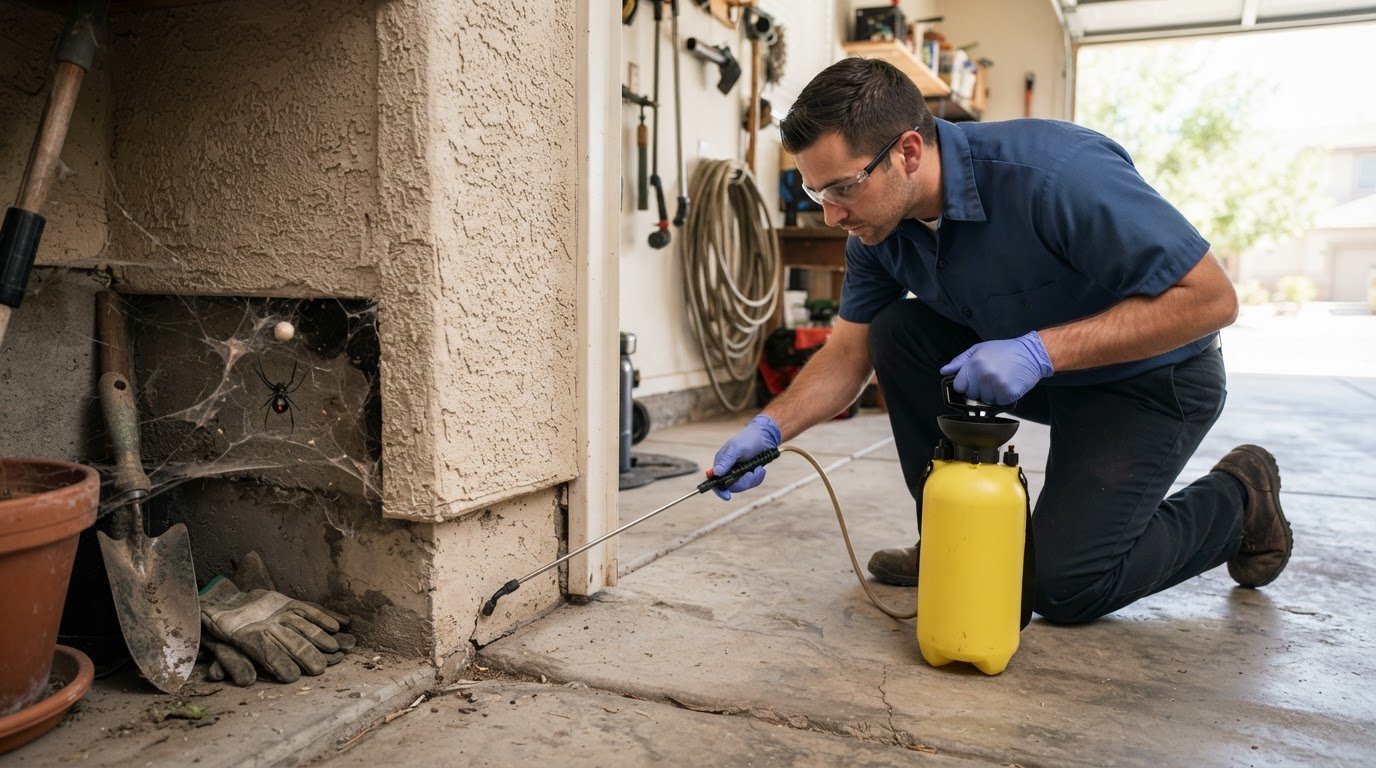
A web is a clue, not the whole spider problem. Effective spider control in Reno, NV addresses where spiders shelter and what attracts them, rather than focusing only on visible webs. The black widow is the Nevada spider most likely to cause health problems, and its active season in Reno runs from May through October.
It’s understandable to want spiders out of your living spaces, especially when you’re unsure what kind you’ve found. Around Reno homes, spiders may gather where insects are available as prey and in quiet, sheltered areas. As nights cool, some may also move indoors seeking warmth. This article explains how professional spider control can help with recurring activity, which conditions around a property may attract spiders, and practical ways to reduce hiding places. You’ll also learn what to consider when dealing with potentially harmful spiders and how local residential and commercial pest management can address the problem with a tailored, careful approach.
Key Takeaways
- Frequent webs, egg sacs, or repeated sightings can signal activity that needs more than occasional web removal.
- Clearing clutter, storing seasonal items in sealed containers, and keeping firewood away from the house can reduce sheltered spider habitat.
- Wear gloves when handling outdoor materials, and use a vacuum to remove spiders in accessible areas.
- Professional treatment recommendations depend on identifying the spider, assessing the property, and choosing careful, targeted measures.
- Local spider control is available for residential and commercial properties in Reno and surrounding service areas.
Black widow and other potentially harmful spiders
In Reno, black widows warrant caution because they are the Nevada spiders most likely to cause health problems. Knowing where they shelter and how to respond to a sighting can help limit close encounters.
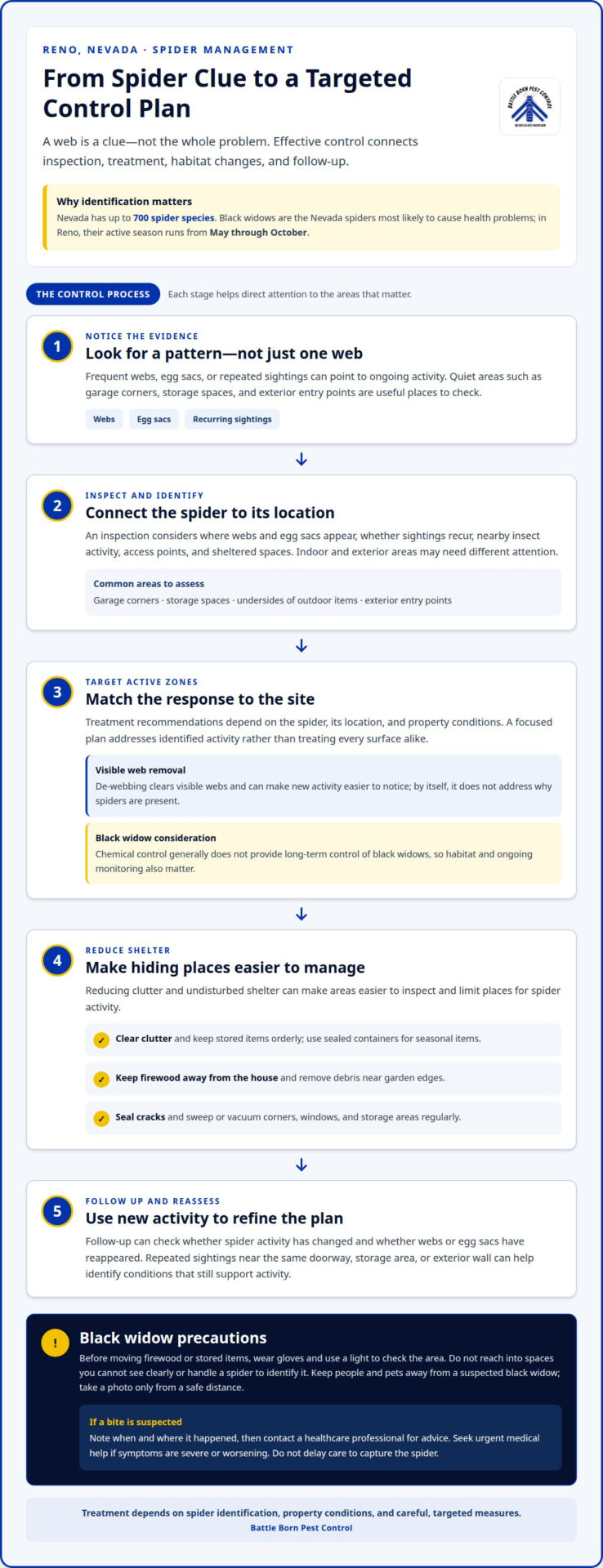
Black widows are active in Reno from May through October. Check quiet, sheltered areas such as garage corners, storage spaces, and the undersides of outdoor items. Look for irregular webs before moving stored materials, and avoid reaching into dark spaces without checking first. A spider’s appearance can be difficult to identify at a glance, so don’t handle one to confirm its species.
Nevada has up to 700 spider species, and not every spider found near a home presents the same concern. Brown recluse spiders are not established in northern Nevada. A photo from a safe distance may help with identification, but getting close to capture an image isn’t worth the risk. Keep people and pets away from a spider you suspect may be a black widow.
Black Widow Habitats and Safety
Black widows favor sheltered spots with little disturbance, including garages, storage spaces, and areas around structures. Before moving firewood or reaching behind stored items, wear gloves and use a light to check the area. Don’t put bare hands into spaces you can’t see clearly. These precautions are especially useful during outdoor work or when clearing a seldom-used corner.
Preventing Black Widow Encounters
Reduce potential hiding places by clearing clutter and sealing cracks around the home. Store seasonal items in sealed containers, and sweep or vacuum corners, windows, and storage areas regularly. Keep woodpiles away from the house, and remove debris near garden edges. These steps make sheltered locations easier to inspect and reduce opportunities for undisturbed spider activity.
When handling outdoor materials, pick up wood carefully and check the space beneath it before reaching further. Keep stored items orderly so you can see corners and surfaces during routine cleaning. If you find a web, avoid putting your hand into it or probing the area blindly. Use a tool to keep your distance while assessing the spot.
Responding to a Black Widow Sighting
If you spot a suspected black widow, keep people and pets away, and don’t touch the spider or its web. Take a photo only if you can do so without approaching it. If a black widow is killed, check nearby for egg sacs and remove them without direct contact.
After a suspected spider bite, note when and where it happened, and contact a healthcare professional for advice about your situation. Seek urgent medical help if symptoms are severe or worsening. Don’t delay care to capture the spider. A photo taken safely may help with identification.
How does professional spider control make a difference?
Professional care connects spider identification with inspection, targeted treatment, and steps that address conditions supporting activity. That matters because a quick application alone may not provide lasting control.
Targeted Treatment of Active Spider Zones
A focused inspection looks for evidence such as webs, egg sacs, and recurring sightings, then identifies where spiders are active. A garage corner, storage room, or exterior entry point may call for a different response than a web in a living space. Mapping these locations helps direct attention to the areas that matter, rather than treating every surface alike.
Professionals also consider nearby insect activity, access points, and undisturbed shelter. Since spiders remain where prey and cover are available, addressing those conditions can support treatment. In Nevada, seasonal changes may influence where activity appears, so an inspection considers both indoor and exterior areas. This context helps distinguish an isolated sighting from a pattern across the property.
De-Webbing and Treatment Methods
Removing visible webs can clear corners and make new activity easier to notice, but it doesn’t resolve why spiders are present. De-webbing is most useful alongside inspection of the surrounding area, including quiet storage spaces and spots where insects may gather. Repeated webs in the same location can signal that the underlying conditions remain.
Treatment choices depend on the spider, its location, and the property. Chemical control generally does not provide long-term control of black widows, so a professional plan should consider habitat and ongoing monitoring, not just pesticide application. Any pesticide use must follow its label and suit the site. Avoid applying household products broadly or combining products. These steps can create exposure without addressing spider activity.
Eco-Friendly Treatments and Household Safety
“Eco-friendly” should not be taken to mean harmless or risk-free. A responsible approach considers the treatment site, product label, and presence of children or pets before selecting an application. For example, a service plan may distinguish an exterior target area from a room used by a family, rather than treating both in the same way.
Before treatment, share practical details about household routines, pet access, and areas children use. Follow the technician’s product-specific instructions about access and re-entry. Keep pets and children away from treated locations until the label and service directions allow access. Careful placement and clear instructions help reduce unnecessary contact while addressing the identified pest.
Follow-Up Visits and Re-Treatment
Follow-up can assess whether spider activity has changed and whether webs or egg sacs have appeared again. A recurring sighting near the same doorway, storage space, or exterior wall gives useful information about where conditions may still support spiders. Notes about location and timing help make the next inspection more focused.
Re-treatment decisions should reflect what the follow-up inspection finds, the original treatment, and current property conditions. Repeated chemical applications alone aren’t a substitute for addressing shelter and insect prey. A professional can adjust the plan when evidence shows continued activity, while avoiding unnecessary treatment where no signs remain.
Professional help is especially useful when webs or egg sacs recur, spiders appear inside repeatedly, or activity occurs in areas that are difficult to inspect safely. A targeted spider control assessment can connect those signs to a practical treatment and prevention plan.
Why are spiders common around Reno homes?
Spider activity around Reno properties often follows food and seasonal conditions. Spiders commonly remain where insects are available as prey, so their presence can reflect what is happening around the property as much as the structure itself. Looking at nearby insect activity can help explain why spiders appear in particular outdoor or indoor areas.
Reno’s high-desert climate brings seasonal temperature changes, and spiders may move indoors as nights start getting cool, seeking warmer places for winter. The fall spider surge in Reno runs from September through November. During this period, homeowners may notice more activity near places where outdoor conditions meet a warmer interior, even if those spaces were quiet earlier in the season.
Landscaping and irrigation can shape insect activity around a building. Watered garden beds, shrubs, and planted areas provide a different environment from dry, exposed ground. Insects near those spots can become prey for spiders. Consider where irrigation runs and where insects are most noticeable. A cluster of spiders near a landscaped area may be connected to prey there, rather than a problem spread throughout the property.
Outdoor lighting can also affect where insects gather. A light near a frequently used entrance may draw insects toward that area, creating a potential food source for spiders nearby. Observe whether spider activity is concentrated around illuminated sections of the property or appears elsewhere too. This pattern helps identify whether one feature may be contributing to sightings.
Web removal alone doesn’t address why spiders are present. If insects remain available or a quiet area continues to provide undisturbed shelter, spiders may return after visible webs are cleared. A useful inspection considers the pattern: where sightings occur, whether they follow seasonal changes, and whether insects are active nearby. Those clues help distinguish a seasonal increase from activity tied to one particular spot.
Prevention can focus on the conditions that support prey and seasonal movement. Adjust irrigation so it serves planted areas without leaving unnecessary damp patches beside the building. Consider whether exterior lighting is needed throughout the night, especially near entrances where insects gather. Keep landscaping managed so it doesn’t create a direct bridge into the structure, and pay attention to changes as nighttime temperatures cool.
For property owners, a simple observation record can make the pattern clearer. Note the location, time of year, nearby lighting, and whether insects are present when spiders appear. For example, recurring sightings near a lit entry during fall may point to a different attractant pattern than isolated activity elsewhere. This information can guide a focused inspection and help determine which conditions deserve attention first.
Spider services in Reno and surrounding areas
Spider concerns can differ between a Reno home, a Sparks business, and a Carson City rental property. A useful service plan considers the building, reported activity, and surrounding spaces rather than treating every address alike. For spider control in Reno, NV, property-specific details help clarify which areas need attention.
Service Coverage and Reno ZIP Codes
Battle Born Pest Control serves Reno, Sparks, Carson City, Dayton, and surrounding Northern Nevada communities. For Reno residents, a ZIP code can help describe a property’s location, but it doesn’t explain spider activity at that address. A garage with recurring webs and a home with occasional sightings near windows have different conditions to assess, even within the same postal area.
When describing a concern, share the property’s city and street address, along with the spaces where spiders appear. A nearby landmark can help clarify a location when an address sits near a city boundary. This information helps establish whether the property is in the service area and gives an inspection a practical starting point.
Specific Reno ZIP codes are not a reliable substitute for considering the property itself. Postal boundaries and municipal boundaries serve different purposes, and neither identifies whether a spider problem is present. For a home near Reno’s edge, describe the full address instead of relying on a ZIP code alone. This helps clarify the property’s location.
Spider Control Services in Reno
Professional spider control in Reno, NV can address visible activity and the conditions supporting it. The process begins by identifying where webs, egg sacs, or repeated sightings occur, then examining nearby shelter and insect activity. For example, a web beside an exterior door may call for attention to that entry area, while recurring activity in a storage room calls for inspecting its corners and stored materials.
Residential properties may need attention in garages, window areas, storage spaces, or around foundations. In commercial spaces, recurring sightings near entrances, loading areas, or stored goods can concern staff and visitors. Clear notes about location and timing help distinguish a single sighting from a pattern that warrants broader attention.
Service recommendations should reflect the spider identified, property conditions, and the difference between indoor and outdoor activity. Treatment is not simply a matter of applying product throughout every room. Targeted measures, habitat changes, and monitoring can each play a role, with pesticide choices guided by the site and product labeling.
Across Northern Nevada, seasonal changes can affect where spiders are noticed, while landscaping, insects, and undisturbed spaces shape activity around structures. A local assessment connects those conditions to the property instead of assuming every address has the same problem. Whether the concern involves one noticeable web or repeated sightings, sharing exact locations helps focus the response on relevant spaces.
What are effective DIY spider control methods, and what do they cost?
For a single spider in an accessible spot, a household vacuum can be a practical option. A household vacuum can be one option for removing a spider in an accessible spot. Keep the nozzle steady, avoid reaching into a hidden corner, and inspect the surrounding area from a safe distance before resuming normal use.
DIY control works best when it combines removal with observation. Note where you found the spider, then check nearby surfaces for webs or additional activity. For example, a spider beside a basement window may point to a sheltered area worth including in your regular cleaning routine. A sighting by itself doesn’t establish that the entire home has an infestation.
Cleaning tools already used for routine household care can help remove visible webs. Sweep or vacuum accessible window corners, storage shelves, and garage edges, then look for fresh webs during later cleaning. Removing webs makes new activity easier to notice, but it doesn’t remove insects or quiet hiding places. If the same spot keeps showing signs, consider what conditions remain there.
For black widow precautions, wear gloves when handling outdoor materials or reaching into unseen spaces. Move stored items carefully, and avoid putting bare hands behind boxes or under shelving. Keep children and pets away from a spider while deciding how to respond. If safe removal isn’t straightforward, leave the area undisturbed and seek professional guidance.
Prevention supplies should address the property, not simply the spider. Sealed containers can protect seasonal belongings in storage, while clearing debris reduces undisturbed shelter outdoors. Inspect window edges and door gaps for places insects may enter. Since spiders remain where prey is available, reducing insect access and clutter can support a cleaner space over time.
Use caution with over-the-counter pesticides. Read and follow the product label, and don’t apply a product in an area or manner the label doesn’t allow. Avoid mixing products or spraying broadly without identifying the pest and treatment site. A pesticide is not automatically a better choice than removal and habitat cleanup, especially when the spider is isolated.
DIY measures are most suitable for isolated sightings in accessible locations. Frequent webs, daytime sightings, egg sacs, or repeated activity can point to a persistent problem that simple cleanup isn’t resolving. Keep a brief record of where and when activity appears. Those details help clarify whether it’s isolated or recurring. A professional assessment can then consider identification, property conditions, and an appropriate response.
Battle Born Pest Control: Spider Control
Battle Born Pest Control provides spider control for Reno-area homes and businesses dealing with recurring sightings, webs, or concerns about black widows. A professional assessment considers where activity appears, the property’s conditions, and whether insects or sheltered spaces may be contributing. Treatment recommendations are tailored to the situation, with pesticide use guided by the product label and household safety needs.
Professional help can be useful when spider activity keeps returning after routine cleaning, appears in several areas, or involves a space that’s difficult to inspect safely. Sharing where and when you’ve noticed spiders helps focus the assessment. If you’re concerned about spider activity at your property, contact Battle Born Pest Control to discuss spider control.
Choose a Practical Next Step for Your Property
Let the pattern you’ve noticed guide what happens next. A spider in one isolated spot may call for simple monitoring, while repeated activity can make a professional assessment worthwhile. Keep track of the locations that concern you and share those details when discussing spider control in Reno, NV. This gives the conversation a useful starting point without assuming every property needs the same response.
Battle Born Pest Control can help with spider concerns and other relevant property needs, including ant control and wasp control. For outdoor care, tree pruning is also available as a distinct service. Choose the support that fits the issue at hand, and keep the next step straightforward.
Contact Battle Born Pest Control to discuss spider activity at your home or business. A clear plan can help you move forward with confidence and care.
Frequently Asked Questions
Are spiders inside a home a bigger concern than outside?
Not automatically. The main concern is the spider’s identity and how close it is to people. A spider inside a frequently used room may be more likely to surprise someone than one outdoors, but exterior activity near a doorway or play area can also merit attention. Avoid handling an unknown spider, and consider whether it is in a space people or pets regularly use.
Do you only handle spiders, or can you help with other pests too?
Battle Born Pest Control handles other common pest concerns in addition to spiders. Available services include ant control, wasp control, and rodent control, as well as residential and commercial pest control. The appropriate response depends on the pest and property conditions. For example, recurring ant activity in a kitchen calls for a different assessment than spider sightings in a garage.
Spooked by an Unknown Spider?
Keep your distance and avoid touching or trapping an unidentified spider by hand. If it’s safe, take a clear photo from a distance, including the spider’s shape and markings, then note where you saw it. Approach a spider in a shoe or folded fabric carefully. Don’t reach inside before checking. If a bite occurs and symptoms concern you, seek medical care promptly.
Why are spiders helpful?
Spiders help control insect populations, including pests that affect gardens and agricultural settings. Their presence outdoors can be part of a functioning local ecosystem, so finding one outside doesn’t always call for removal. Around a home, the practical question is whether spider activity creates a safety or comfort concern. You can focus prevention on entry points and sheltered areas while leaving spiders undisturbed in suitable outdoor spaces.
Why do spiders keep coming back after cleaning?
Cleaning removes webs, but it may leave the conditions that drew spiders there. Insects can provide prey, while quiet corners or stored items continue to offer shelter. For example, a cleaned garage may develop new webs if insects still gather near a light or objects remain undisturbed along a wall. Look at what is nearby, including lighting, stored materials, and insect activity, not just the web itself.
What spider species are common in Reno, Nevada homes?
Nevada has up to 700 spider species, so sightings can involve different kinds of spiders. The black widow is the species in Nevada most likely to cause health problems, but a spider’s location or web alone may not identify it. Avoid relying on a quick guess from color or size. A photo taken from a safe distance can help with identification without requiring you to handle it.
Are black widows or brown recluse spiders found in Reno, NV?
Black widows are found in Nevada, and they’re the state’s spiders most likely to cause health problems. Brown recluse spiders are not established in northern Nevada. If you see a spider you suspect is a black widow, keep people and pets away rather than trying to pick it up. A safe photo can help distinguish a suspected spider from other local species.
Which pest control companies offer spider treatment in Reno, NV?
Battle Born Pest Control provides spider control for residential and commercial customers in the Reno area. Treatment recommendations can be tailored to the spider activity and conditions at the property, rather than relying on a broad approach for every situation. If sightings keep recurring, share the locations and circumstances with the team. That information can help focus an assessment on the spaces causing concern.