The Cost of Tree Removal in Reno NV: A Guide to Safety and Fire Prevention
When the Washoe Zephyr begins to howl across the Truckee Meadows, many homeowners in Northern Nevada look at an aging pine or a brittle cottonwood with a growing sense of unease. It’s a familiar feeling for those of us who understand that our high-desert climate can be as harsh as it is beautiful. You likely want to ensure your home remains a safe sanctuary, yet it’s common to feel uncertain about whether a tree is truly dead or simply dormant during the dry season. Balancing the need for a clear, fire-safe perimeter with the practicalities of property maintenance is a challenge every local neighbor faces.
This guide provides a thorough look at the cost of tree removal Reno NV property owners should consider when prioritizing safety and fire prevention. We’ll help you understand the specific factors that influence these services, from the complexity of working near structures to the latest 2026 wildfire mitigation standards. By the end of this article, you’ll have a clear understanding of how to assess your trees’ health and how to maintain a defensible space that protects your family while avoiding potential fines. We will also examine how proactive health assessments can provide long-term peace of mind before the next major wind event arrives.
Key Takeaways
- Learn how to perform a simple “scratch test” to accurately distinguish between dormant high-desert trees and those that pose a genuine safety risk to your home.
- Understand how tree height and proximity to structures influence the cost of tree removal Reno NV homeowners should budget for to ensure a safe, professional result.
- Discover why the brittle nature of dead wood in our climate requires specialized rigging and aerial lifts to prevent property damage during the removal process.
- Ensure your property remains compliant with 2026 fire safety regulations by identifying ladder fuels and maintaining a clear Home Ignition Zone within five feet of your structure.
- Protect your landscape’s long-term health by choosing an arborist-led approach that focuses on safety and integrated pest management tailored specifically for Northern Nevada.
Identifying Dead Trees and Assessing Immediate Safety Risks
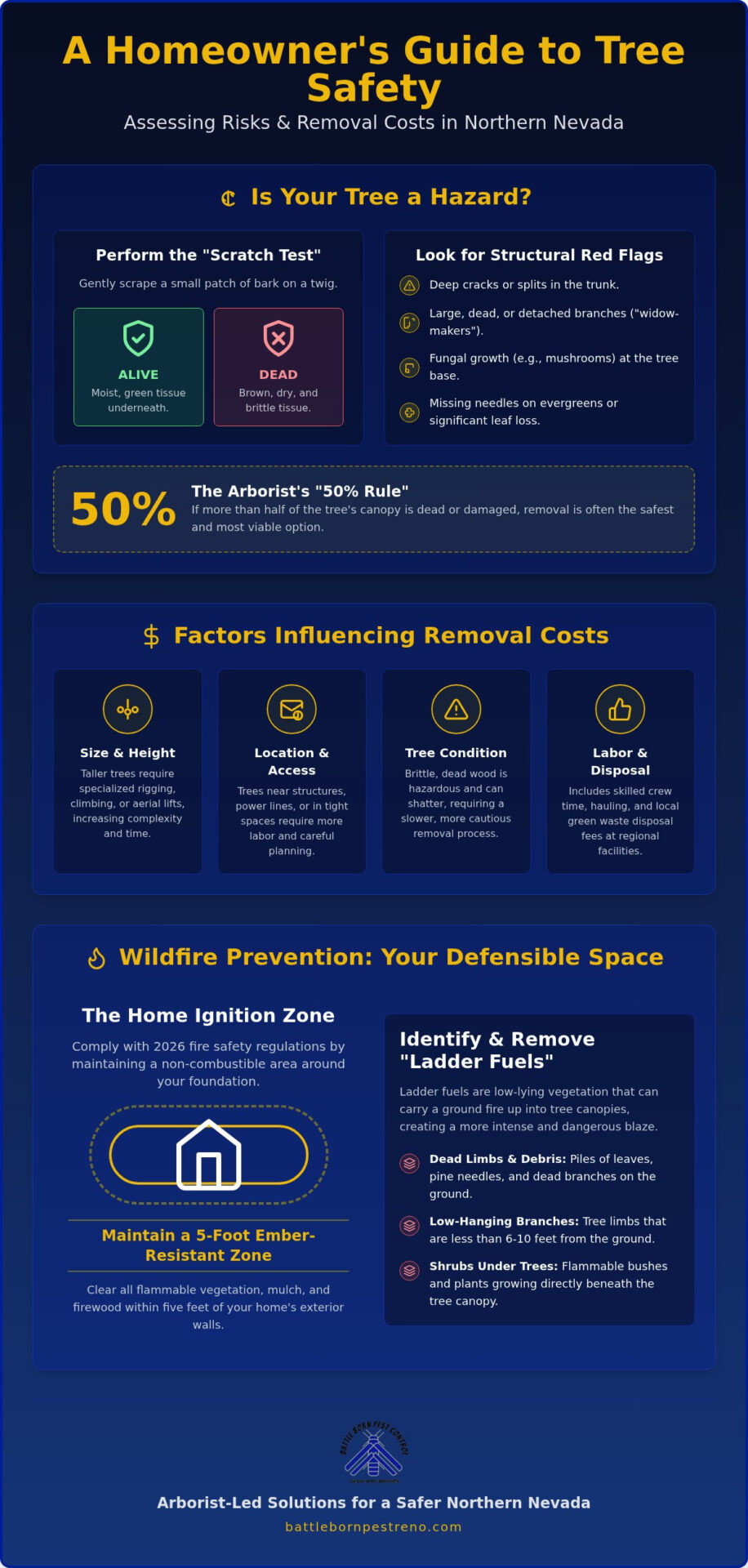
Distinguishing between a tree that is simply resting and one that has reached its end can be difficult in Northern Nevada. Our local species, such as the Desert Willow or various high-desert pines, often enter a deep dormancy to survive our arid winters and intensely hot summers. To verify if a tree is still alive, you can perform a simple “scratch test” by using a pocketknife or your fingernail to gently scrape away a tiny patch of the outer bark on a small branch. If you find moist, green cambium tissue underneath, the tree is still transporting nutrients; if it is brown and brittle throughout, that section is likely dead. You should also look for visual cues like fungal growth at the base, missing needles on evergreens, or branches that snap cleanly without any bending.
Structural red flags are equally important for property safety. Deep cracks that penetrate the trunk or “widow-makers,” which are large, detached branches hanging precariously in the canopy, require immediate attention. While assessing these factors, homeowners often begin to weigh the potential cost of tree removal Reno NV professionals provide against the risk of significant property damage. Identifying these issues early allows for planned maintenance rather than an expensive emergency response after a failure occurs.
The Hazards of Dead Trees in the High Desert
The infamous Washoe Zephyr wind events create significant wind loading on weakened trees, often pushing them beyond their structural limits during sudden afternoon gusts. Because our soil is frequently sandy and dry, it lacks the cohesive strength found in wetter climates, making root systems more prone to failure when the ground is unstable. Removing dead timber is a critical part of maintaining Defensible space (fire control) around your home to reduce fuel for wildfires. Beyond the physical danger, property owners may face liability if a known dead hazard falls onto a neighbor’s house or a public sidewalk, making removal a matter of both safety and community responsibility.
When to Call a Certified Arborist
A general rule of thumb used by professionals is the “50% rule,” which suggests that if more than half of the tree’s canopy is dead or missing, it is often past the point of recovery. Trees located within striking distance of power lines, roofs, or neighboring fences present a much higher level of complexity. In these cases, the cost of tree removal Reno NV reflects the specialized equipment and rigging needed to lower heavy wood safely without impacting your home. Before making a final decision, scheduling a professional tree health assessment Reno NV can clarify whether the tree can be saved through targeted pruning or if removal is the only safe path forward.
Factors Influencing the Cost of Tree Removal Reno NV
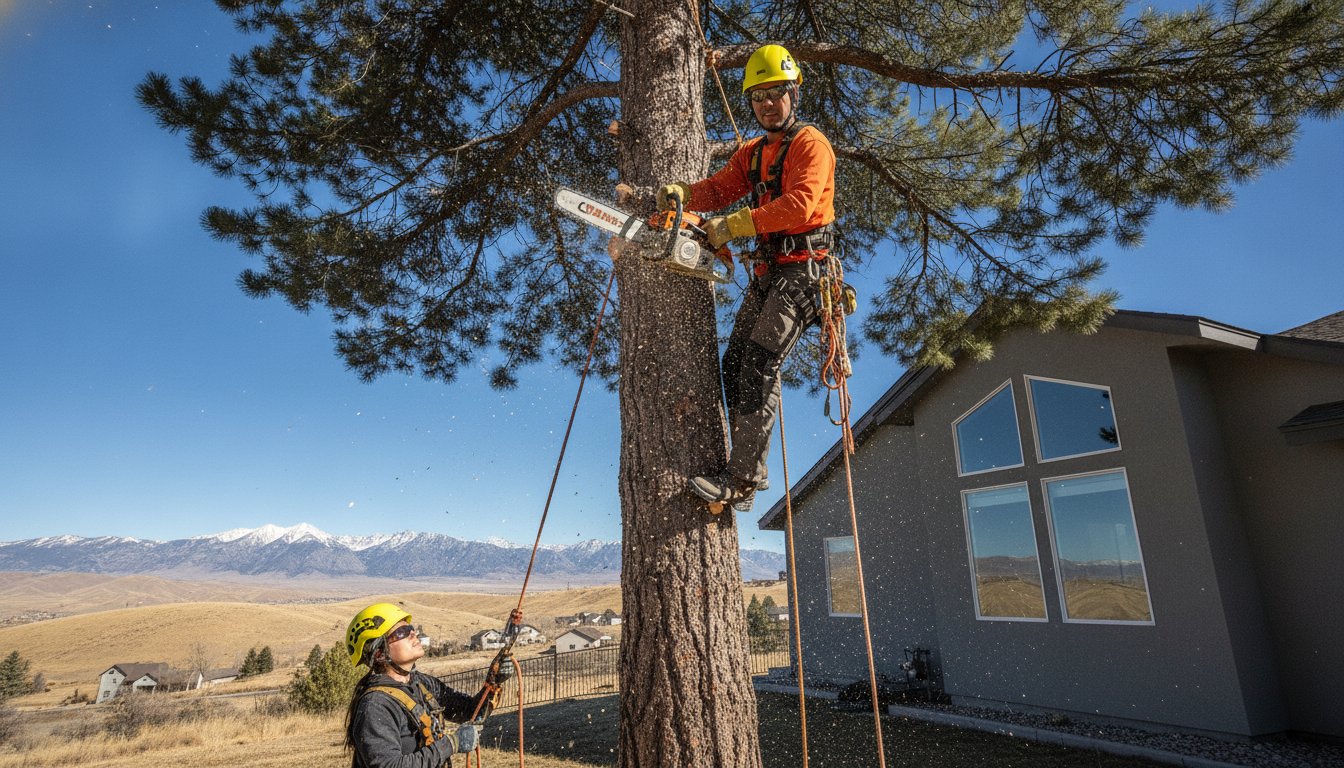
The cost of tree removal Reno NV homeowners encounter is shaped by several distinct variables that determine the complexity and duration of the project. Size is the most obvious factor. Taller pines, such as the mature Ponderosas found throughout the Truckee Meadows, often require specialized rigging and climbing techniques to lower sections of the trunk individually. This careful, piece-by-piece approach is necessary to prevent heavy timber from damaging your property or neighboring structures. When a tree’s height exceeds the reach of standard equipment, the need for advanced aerial lifts or cranes can influence the final estimate.
Accessibility also plays a major role in determining the overall investment. A tree located in an open field in Spanish Springs is much simpler to manage than one tucked into a narrow side yard in Midtown Reno. If a crew cannot bring heavy equipment like a chipper or a bucket truck close to the site, they must move the debris manually. This increases labor hours significantly. Additionally, the physical state of the wood dictates the safety protocols used. Brittle, dead wood is often more dangerous than green wood because it can shatter unexpectedly under tension, requiring a slower, more cautious pace from the crew.
Local disposal fees at regional landfills and current labor rates for skilled crews in Northern Nevada are also factored into every estimate. Professionals must account for the time spent hauling heavy debris to designated green waste facilities, which maintain their own fee structures for commercial disposal.
Why Trees Die in Northern Nevada
Urban forests in Reno and Sparks face constant pressure from prolonged drought cycles that weaken even the heartiest species. When trees are stressed by lack of water, they become highly susceptible to bark beetle infestations. These pests tunnel under the bark and disrupt the tree’s ability to transport essential nutrients, often leading to a rapid decline. You can find detailed information on protecting your landscape in our guide on tree disease management Sparks NV.
Environmental Cost Drivers
Heat island effects in densely developed neighborhoods can cause temperatures to stay higher overnight, preventing mature trees from entering their natural recovery state. In areas like Carson City, winter road treatments can lead to salt damage that slowly poisons the root zone of curbside trees. Following established Nevada defensible space guidelines is a critical part of property ownership here. Removing a diseased tree before it infects its neighbors is often the most cost-effective strategy for long-term property value. If you are concerned about a leaning or dying tree, reaching out for a professional assessment is a wise first step for your peace of mind.
Professional Removal vs. DIY: Safety and Complexity
While it may be tempting to handle a small project personally, the cost of tree removal Reno NV homeowners pay for professional service covers more than just labor. It provides a level of safety that is nearly impossible to replicate without specialized training and heavy-duty equipment. The physics of dead wood in our high-desert climate differs significantly from live timber. While healthy wood often bends under tension, dead or diseased wood is incredibly brittle and tends to shatter without warning. This unpredictability makes felling even a medium-sized tree a high-risk endeavor for an amateur.
Hazardous trees often contain “tension wood,” which is a build-up of internal energy caused by a severe lean or an unbalanced canopy. When an inexperienced person makes a cut into a tree under tension, the wood can split violently upward in an event known as a “barber chair.” These incidents can be fatal and happen in a fraction of a second. Professional crews use advanced rigging, high-strength ropes, and aerial lifts to manage these forces safely. Additionally, most homeowners insurance policies include specific clauses that may deny coverage for property damage or personal injury resulting from DIY tree work, leaving the resident fully liable for any accidents that occur on their property.
The Professional Removal Process
A methodical approach ensures that your home and landscaping remain protected throughout the project. We utilize sectional removal, where the tree is dismantled from the top down in small, manageable pieces. This controlled lowering technique prevents heavy logs from impacting the ground with enough force to damage underground utilities, irrigation lines, or nearby garden beds. Once the tree is safely on the ground, the site is cleared of all limbs and debris to leave your yard in excellent condition. Please keep in mind that while we provide thorough site cleanup and wood disposal, we do not offer stump grinding services as part of our standard removal package.
Evaluating Arborist Credentials
Choosing the right professional requires more than just comparing prices. An ISA Certification is vital for hazardous tree removal Carson City projects because it confirms the arborist has met rigorous international standards for safety and tree biology. In Nevada, you should always verify that a company holds a valid contractor’s license and carries specific insurance for tree work, which is distinct from general landscaping coverage. A trustworthy professional will always provide a written estimate with a clear scope of work, ensuring there are no surprises regarding the final cost of tree removal Reno NV.
Fire Safety and Defensible Space Regulations in 2026
Living in the high desert means accepting that wildfire is a natural part of our ecosystem, but it doesn’t mean your home has to be vulnerable. On February 11, 2026, the Reno City Council approved an updated Community Wildfire Protection Plan, the first major revision in over two decades. This plan emphasizes the critical importance of the Home Ignition Zone, which is the immediate 0 to 5 foot area surrounding your structure. In this zone, removing dead trees and combustible vegetation is mandatory to prevent embers from igniting the home itself. When you evaluate the cost of tree removal Reno NV homeowners often weigh, it’s helpful to view it as a necessary investment in your property’s survivability during the peak fire months.
A primary concern for local fire marshals is the presence of “ladder fuels.” These are dead or low-hanging branches that allow a ground fire to climb into the tree canopy, where it can spread rapidly between structures. Under Nevada law (NRS 472.040), property owners in wildland-urban interface areas are required to maintain 100 feet of defensible space. Ensuring that dead trees are removed before they become a dry fuel source significantly increases the likelihood that your home will be standing after a fire passes. Compliance isn’t just about safety; it’s also a legal requirement that protects your entire neighborhood.
Defensible Space Zones (0-100 Feet)
Zone 1 extends from 5 to 30 feet from your home and requires a “lean, clean, and green” approach. All dead leaves, branches, and trees must be cleared, and remaining tree canopies should be spaced at least 10 feet apart. Zone 2, which covers the 30 to 100 foot range, focuses on thinning out heavy clusters of vegetation to break up the continuous path of fire. For those living on the sloped terrain of West Reno or Caughlin Ranch, these distances may need to be even greater because fire travels much faster uphill. Properly managing these zones helps you avoid the steep fines for non-compliance, which can range from $500 to over $10,000 in some jurisdictions.
Local Resources and Compliance
Residents in Sparks and Carson City can take advantage of community chipping days and the Reno Fire Department’s green waste dumpster program, which has confirmed dates in May, August, and September 2026. Requesting a formal safety inspection from Truckee Meadows Fire & Rescue is an excellent way to identify specific risks on your lot. If you’re unsure which trees need to be removed to meet these 2026 standards, you can schedule a professional assessment to ensure your property remains both beautiful and compliant with local ordinances.
Safe Tree Removal Services with Battle Born Pest Control
At Battle Born Pest Control, we view ourselves as a dedicated local guardian for your property. Our approach is rooted in quiet confidence and a deep commitment to the well-being of the Northern Nevada community. We understand that removing a mature tree is a significant decision. Our arborist-led teams prioritize property respect and professional reliability throughout every project. Whether you live in Reno, Sparks, Carson City, or Dayton, we bring decades of regional experience to ensure your landscape remains safe and healthy for years to come.
Many homeowners don’t realize that tree death is often the result of underlying pest issues or environmental disease. By utilizing an integrated approach, we look beyond the surface to identify the specific cause of a tree’s decline. This expertise allows us to provide a more tailored solution than a standard landscaping company might offer. When considering the cost of tree removal Reno NV, it’s essential to work with professionals who understand how high-desert stressors and local pests interact to compromise structural integrity.
Our Health-First Assessment Approach
We believe that removal should be a last resort rather than a first step. Our process begins with a thorough health assessment to determine if a tree can be saved through strategic pruning or targeted management. For instance, addressing a nested infestation through wasp control for homes reno or managing bark beetles can sometimes restore a tree’s vigor. We provide transparent pricing and honest recommendations regarding the cost of tree removal Reno NV for every local client, ensuring you never pay for unnecessary services.
Booking Your Removal or Assessment
Getting a customized quote for your property is a simple, straightforward process designed to give you peace of mind. On the day of your service, our team establishes clear safety barriers to protect your family and neighbors while we work. We handle the entire removal with a steady, methodical pace that prioritizes safety over speed. Once the job is finished, we perform a complete site cleanup to remove all limbs and debris, though we don’t offer stump grinding. You can take the first step toward a safer landscape today; protect your property and family-schedule your tree assessment today.
Securing Your Property for the Seasons Ahead
Maintaining a safe and compliant landscape in Northern Nevada requires a proactive approach to tree health and fire fuel reduction. It’s important to understand the specific needs of our high-desert species and stay ahead of the 2026 fire safety regulations to protect your home from the unpredictable nature of the Washoe Zephyr. While the cost of tree removal Reno NV is a practical consideration for any homeowner, the long-term peace of mind that comes from a secure, well-managed property is truly invaluable.
Our team of ISA Certified Arborists is locally owned and licensed, specializing in the unique challenges of high-desert tree care. We prioritize thorough health assessments to ensure every recommendation is tailored to your specific landscape and safety needs. Get a Professional Tree Health Assessment and Removal Quote to ensure your property remains a safe haven for your family. We’re here to serve as your trusted local guardian for all your tree care needs.
Frequently Asked Questions
How much does dead tree removal cost in Northern Nevada?
The average tree removal in Reno ranges from $543 to $735 as of 2026. Factors like height and location significantly impact the final estimate. For example, a small tree under 30 feet might average around $390, while a large specimen over 60 feet can reach $1,640. Understanding the cost of tree removal Reno NV homeowners face helps you budget for necessary safety improvements before winter storms or fire season arrive.
Do I need a permit to remove a dead tree in Reno or Sparks?
Yes, many jurisdictions in Northern Nevada require permits for removing certain tree species or sizes. In Reno, removing a protected tree without a permit can result in fines ranging from $500 to $10,000 or more. It’s always best to check with your local planning department or consult with a certified arborist who understands the specific ordinances in Sparks or Washoe County before beginning any work on your property.
Can I leave a dead tree standing for local wildlife?
While standing dead trees, known as snags, provide nesting sites for birds and insects, they present significant risks in residential areas. In the high desert, these trees become brittle and are prone to falling during high wind events like the Washoe Zephyr. They also serve as heavy fuel loads for wildfires. If a tree is within striking distance of a home or power line, the safety of your family should remain the priority.
What is the best time of year for tree removal in Nevada?
Winter is widely considered the best time for tree removal in Northern Nevada. Between December and February, arborists often have more availability and may offer savings between 10% and 25% compared to peak summer months. Additionally, removing trees while they are dormant is often easier on the surrounding landscape. Scheduling your service during this window ensures your property is prepared for the upcoming spring and summer fire seasons with minimal delay.
Will my homeowners insurance pay for dead tree removal?
Homeowners insurance in Nevada generally only covers the cost of removal if the tree has already fallen on a covered structure, such as your house or garage. Coverage limits for these claims often range between $500 and $1,000 per tree. Insurance companies typically view standing dead trees as a maintenance responsibility. They may deny a claim if they determine the damage was caused by a known hazard that was neglected by the property owner.
Is a dead tree a fire hazard if it is far from my house?
Yes, a dead tree remains a significant fire hazard even if it is located away from your immediate structure. Nevada law requires 100 feet of defensible space around structures to slow the spread of wildfires. Dead timber acts as a primary fuel source that can loft embers into the air, potentially igniting your roof or surrounding vegetation. Removing these hazards is a vital step in protecting your community and complying with local safety codes.
What should I do if my neighbor has a hazardous dead tree?
Start by having a polite conversation with your neighbor to share your observations about the tree’s health. Many people aren’t aware of the structural risks or fire hazards a dead tree poses to the neighborhood. If the tree is a clear danger and the neighbor refuses to take action, you can contact local code enforcement in Reno or Sparks. They can perform an inspection to determine if the tree violates municipal safety ordinances.
Does Battle Born Pest Control offer stump grinding after removal?
No, Battle Born Pest Control does not offer stump grinding services as part of our tree care packages. We focus our expertise on arborist-led health assessments, pruning, and the safe removal of hazardous trees. Our goal is to manage the cost of tree removal Reno NV residents encounter by providing specialized care that addresses both the tree’s structural integrity and the pests, like bark beetles or wasps, that often contribute to its decline.