Tree Pruning for Safety in Sparks: The Essential Homeowner Checklist
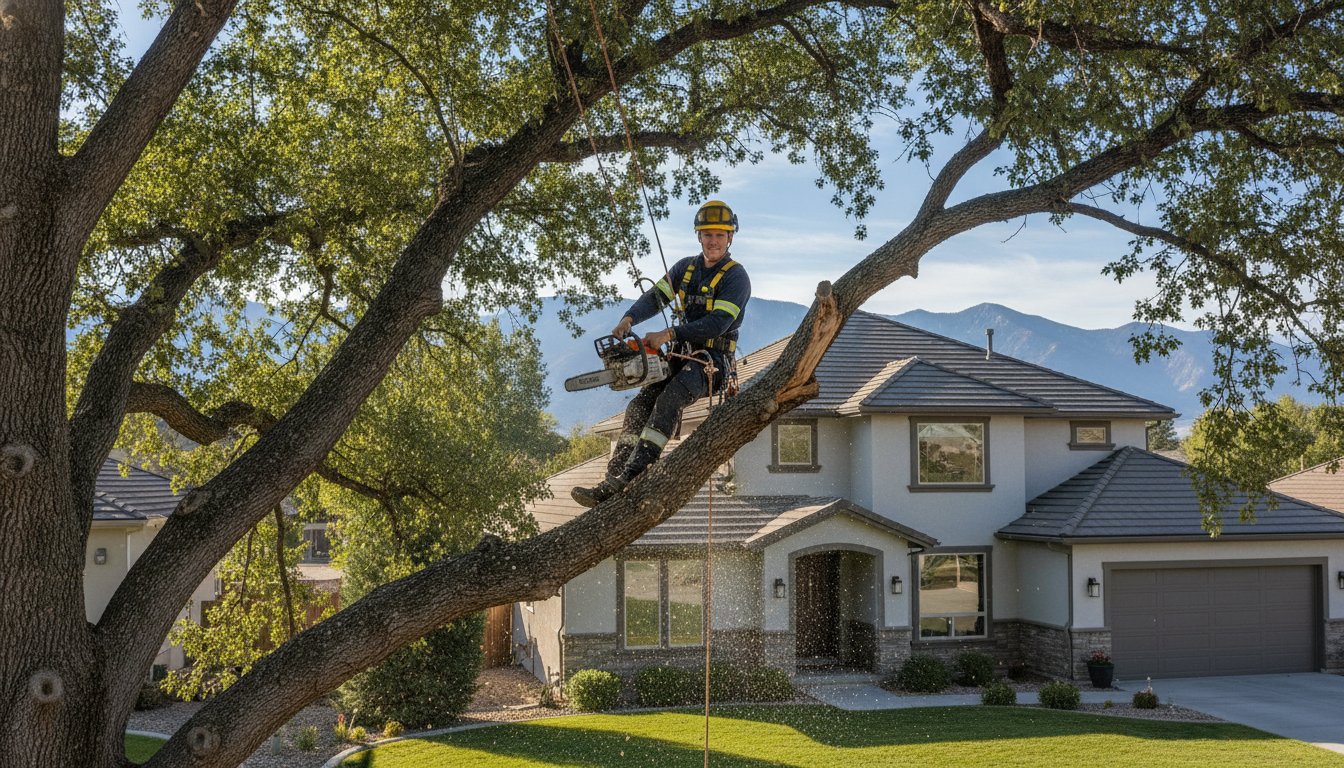
When the Washoe Zephyr begins to howl across the Truckee Meadows, many Sparks homeowners find themselves glancing nervously at the heavy branches overhanging their rooflines. It’s a natural reaction to our local climate, especially since Washoe County has faced 19 FEMA disaster declarations and nearly 2,000 high wind events over the last decade. You want to protect your home and family, but the line between a healthy tree and a potential hazard isn’t always obvious. Prioritizing tree pruning for safety sparks is one of the most effective ways to mitigate risk before the next major storm rolls through the valley.
We understand that balancing the cost of maintenance against the risk of property damage can feel like a source of anxiety. You deserve the peace of mind that comes from a stable, well-managed landscape that enhances your home’s value. This guide provides a professional arborist-backed checklist to help you identify tree hazards and protect your property from storm damage. We’ll walk you through spotting structural weaknesses, prioritizing your pruning needs, and knowing when it’s time to consult a certified expert for high-risk work.
Key Takeaways
- Understand how dense canopies act as sails during the Washoe Zephyr and why reducing this pressure is vital for long-term tree stability.
- Learn to use our 7-point visual inspection checklist to prioritize tree pruning for safety sparks before the next high-wind or heavy snow event.
- Discover how Sparks’ high-desert environment contributes to brittle wood and how to identify structural weaknesses caused by local climate stressors.
- Gain a clear framework for deciding between preservation and removal, including the 50% Rule for assessing severely damaged trees.
- Recognize why a professional health assessment is safer than DIY methods for spotting hidden decay and mitigating high-risk property hazards.
Understanding the Risks: Why Safety Pruning is Critical in Sparks
Living in the Truckee Meadows means appreciating the beauty of our high-desert landscape, but it also requires a realistic understanding of our local weather patterns. Safety pruning is a specialized approach to tree care that focuses on the selective removal of specific branches to reduce the risk of harm to people and property. Unlike general maintenance, tree pruning for safety sparks is a defensive strategy designed to prepare your landscape for the unique environmental pressures found in Washoe County. When you prioritize the structural integrity of your trees, you’re investing in the long-term protection of your home, vehicles, and loved ones.
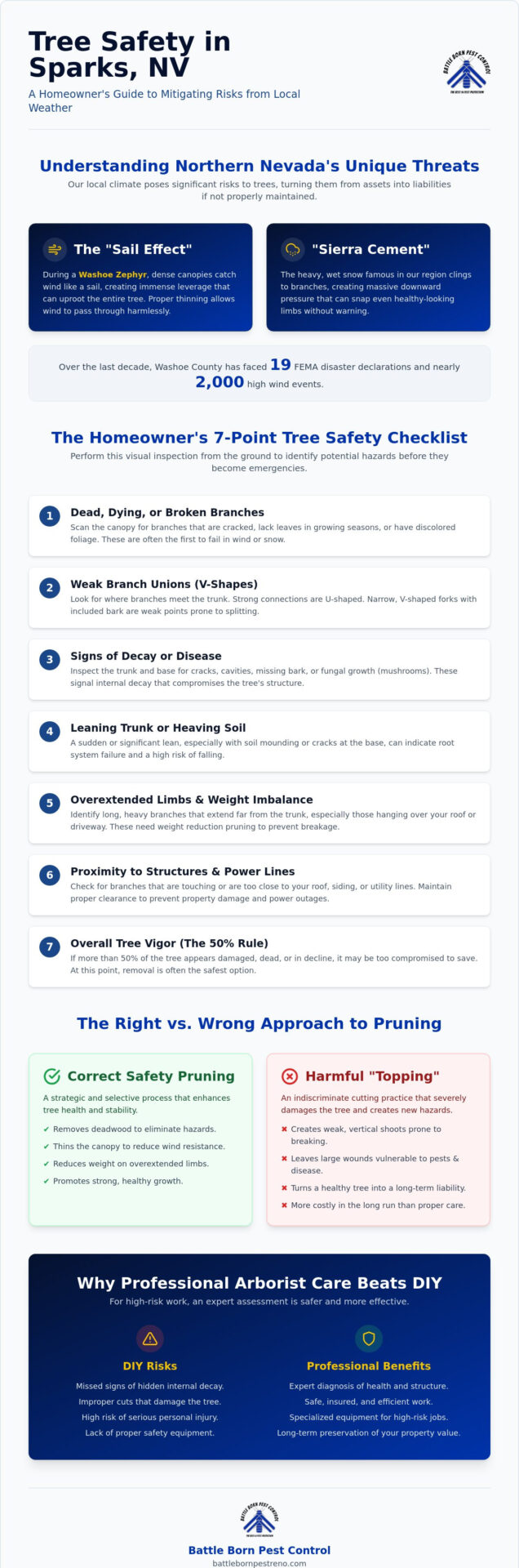
One of the most significant risks for local trees is known as the “Sail Effect.” During a typical Washoe Zephyr wind event, a dense, unpruned canopy acts exactly like a sail on a boat, catching the wind and creating immense leverage against the trunk and root system. In many cases, the tree doesn’t snap; instead, the entire root ball is pried out of the ground, leading to a total failure that could have been prevented by thinning the canopy to allow wind to pass through. By utilizing proper pruning techniques, an arborist can reduce this wind resistance without compromising the tree’s health.
It’s vital to distinguish safety pruning from “topping,” a practice where the top of a tree is indiscriminately cut off. Topping creates “hazard trees” by triggering the growth of weak, vertical shoots that are prone to breaking and leaves the tree vulnerable to disease. Proactive, expert care is always more cost-effective than an emergency removal after a limb has already failed. A well-maintained tree is a resilient asset, while a neglected one becomes a liability that grows more dangerous with every passing season.
Safety Pruning vs. Aesthetic Trimming
While aesthetic trimming aims to create a pleasing shape or “curb appeal,” safety pruning is driven by engineering and biology. The primary goals include deadwood removal, weight reduction on overextended limbs, and maintaining proper clearance from rooflines or power lines. Safety pruning is the strategic removal of compromised limbs to ensure the tree can withstand local environmental stressors. It’s about identifying which branches are structurally sound and which ones are likely to fail under pressure, ensuring that the tree’s weight is distributed evenly across its frame.
The Consequences of Neglect in Northern Nevada
Neglecting your trees in Sparks carries specific risks, particularly regarding liability. If a poorly maintained branch falls onto a neighbor’s property during a storm, the homeowner may be held responsible for the resulting damage. Our region is also famous for “Sierra Cement,” the heavy, wet snow that clings to branches and creates massive downward pressure. Without regular pruning to remove weak wood, even a healthy-looking evergreen can buckle under this weight. Furthermore, neglected trees with internal decay often become breeding grounds for pests like carpenter ants or rodents, which can eventually migrate from the tree to your home’s foundation.
The Sparks Homeowner’s 7-Point Tree Safety Checklist
Conducting a regular walk-through of your property is the best way to catch potential hazards before they escalate into costly repairs. This visual inspection should be performed from the safety of the ground, focusing specifically on high-traffic areas such as your driveway, walkways, and the sections of the canopy overhanging your roofline. By keeping a watchful eye on these zones, you can identify the primary indicators that suggest a need for tree pruning for safety sparks to maintain a secure environment for your family and neighbors.
A systematic approach ensures you don’t overlook subtle signs of distress. Start by looking at the overall shape of the tree from a distance, then move closer to inspect the trunk and the ground around the base. If you notice any of these red flags, a professional tree health assessment can provide the clarity you need to move forward with confidence.
Visual Indicators of Structural Weakness
The canopy often tells the story of a tree’s internal health. Begin your checklist by examining the branch unions. You want to see strong, U-shaped connections between the trunk and main limbs. Narrow, V-shaped crotches often indicate “included bark,” where the tree grows against itself rather than fusing together, creating a natural fracture point that is likely to split during a heavy snow load. Another common issue in our area is “Lion’s Tailing,” which occurs when a tree has been over-pruned in the center, leaving foliage only at the very ends of the branches. These top-heavy limbs act like long levers, making them highly susceptible to snapping under the pressure of the Washoe Zephyr.
Don’t forget to look up for “widow-makers,” which are large, dead branches that have already broken but remain snagged in the upper canopy. These can fall without warning even on a calm day. Finally, inspect the main trunk for deep cracks or cavities. While small scars are normal, a crack that extends through the bark into the wood, or a cavity that shows signs of internal rot, suggests that the tree’s core stability has been compromised.
Root Zone and Ground-Level Warnings
The health of a tree is deeply rooted in what happens below the surface. Check the ground at the base of the trunk for “heaving” soil, which looks like the earth is being lifted on one side. This is a primary sign that the root ball is shifting and the tree may be at risk of toppling. Similarly, the presence of fungi or mushrooms growing directly from the base or the root flares often indicates internal decay that has reached the structural roots.
In many Sparks neighborhoods, recent landscaping or construction can inadvertently damage a tree’s foundation. Look for severed roots or compacted soil near the dripline, as these injuries can take years to manifest as visible canopy dieback. Lastly, perform a “Leaning Tree” test. A tree that has always had a slight tilt and has curved its trunk to grow toward the sun is generally stable. However, a tree that has suddenly developed a lean, or one where the soil is cracking on the opposite side of the tilt, requires immediate professional attention to prevent a total failure.
Northern Nevada Climate Factors: Wind, Snow, and Integrity
Northern Nevada’s high-desert climate presents challenges that go beyond typical seasonal maintenance. The intense sun and low humidity in Sparks often lead to “brittle wood,” especially in species like Siberian Elms or Cottonwoods that grow quickly but lack the density to withstand sudden stress. This environmental factor, combined with our unique weather events, makes tree pruning for safety sparks a year-round necessity for property protection. When wood becomes dry and inflexible, it loses its ability to bend with the wind, making it far more likely to snap during a sudden storm. It’s a reality of living here that we don’t always have the luxury of waiting until a tree looks “overgrown” to take action.
Our most famous local weather phenomenon, the Washoe Zephyr, creates consistent pressure primarily from the West and Southwest. While the “Sail Effect” mentioned earlier is a major concern, managing this wind stress requires a more nuanced approach than simple thinning. Directional pruning allows an arborist to shape the canopy so it filters the wind rather than acting as a solid barrier. By focusing on the windward side of the tree, we can strategically remove weight where the pressure is greatest, helping the structure remain upright when the gusts pick up.
Managing the Washoe Zephyr Wind Stress
Effective wind management often involves “crown reduction” rather than just thinning the interior. Crown reduction shortens the height and spread of specific limbs, which is often better for wind resistance because it reduces the length of the “lever” that the wind can push against. When we reduce the overall profile of the canopy, we decrease the force applied to the trunk during those 80 mph gusts often recorded in our valley. This method maintains the tree’s natural shape while significantly lowering the risk of uprooting or trunk failure. It doesn’t just save the tree; it protects everything underneath it.
Preparing for Heavy Snow Loads
Winter brings its own set of hazards, primarily in the form of “Sierra Cement,” the heavy, moisture-laden snow that is notorious for its weight. It clings to needles and branches with incredible tenacity, especially on local evergreens like Ponderosa and Jeffrey Pines. These species are particularly vulnerable during early-season storms when the snow is wettest and the trees haven’t yet entered full dormancy. By prioritizing tree pruning for safety sparks, you ensure that your evergreens can shed this weight before it causes structural damage. We utilize “end-weight reduction,” which involves removing foliage from the very tips of long, horizontal branches. This subtle change shifts the center of gravity closer to the trunk, preventing the catastrophic limb failures that occur when branches are forced beyond their breaking point.
Pruning vs. Removal: Making the Right Call for Your Sparks Property
Choosing between saving a mature tree and removing it is a significant decision that impacts your property’s safety, value, and aesthetic appeal. While we always aim to preserve the local canopy, there are times when a tree’s structural or biological health has declined beyond the point of safe recovery. A helpful framework for this decision is the “50% Rule.” If more than half of the tree’s canopy is dead, severely damaged, or missing, the tree is unlikely to regain its vigor or structural stability. In these cases, even extensive tree pruning for safety sparks may only provide a temporary fix for a permanent problem.
The presence of certain pests also shifts the balance toward removal. In Northern Nevada, Bark Beetles can quickly devastate local pines. Once these insects have successfully colonized a tree, the internal vascular damage is often so extensive that the tree becomes a brittle fire hazard. If you’re unsure about the extent of an infestation or the depth of structural decay, scheduling a professional tree health assessment is the most reliable way to determine if a tree remains a viable asset or has become a liability.
When Pruning is the Solution
Pruning is the ideal choice for trees that are generally healthy but suffer from localized issues. This includes limbs that have grown too close to power lines, dead branches caused by minor storm damage, or weight imbalances that can be corrected through selective thinning. Regular tree pruning for safety sparks is a recurring maintenance task that extends the life of mature trees by preventing small issues from turning into catastrophic failures. It’s a proactive investment that preserves the shade and privacy your landscape provides while keeping your home protected from seasonal wind and snow loads. Homeowners who want to better understand what this ongoing investment involves can explore our detailed breakdown of the cost of tree pruning in Reno to see how local pricing factors are determined.
When Removal is the Only Safe Option
There are specific, unmitigatable risks where removal is the only responsible course of action. Massive trunk splits that extend into the heartwood, advanced root rot, or trees that have become “Standing Dead” specimens in residential neighborhoods pose a constant threat to surrounding structures. Tree removal is a last resort, typically reserved for specimens where the cost of safety mitigation exceeds the tree’s biological or aesthetic value. Leaving a dead or dying tree standing in a high-wind area like Sparks is a gamble that risks both property damage and personal safety during the next major weather event. Homeowners throughout the region can learn more about this process in our guide to hazardous tree removal Carson City residents rely on for navigating the full removal process safely.
Why Professional Arborist Care Beats DIY for Safety Pruning
It is often tempting for homeowners to tackle yard work themselves, but tree maintenance is one area where the “ladder and chainsaw” approach presents significant dangers. Safety pruning is a high-stakes task that involves managing thousands of pounds of wood, often in close proximity to power lines or fragile roof structures. Without the proper training in physics and wood biology, a well-intentioned homeowner can easily cause a limb to “kick back” or fall in an unintended direction. Professional tree pruning for safety sparks relies on calculated rigging systems and specialized equipment, such as bucket trucks, to ensure that every branch is lowered to the ground with total control.
Beyond the immediate physical risks, a professional eye is essential for identifying hidden decay that might not be visible from the ground. A Certified Arborist understands how to read the “body language” of a tree, spotting subtle bulges, fungal growth, or weeping wounds that indicate internal rot. When you choose an expert team, you aren’t just paying for the cutting; you are investing in a comprehensive safety diagnostic. This level of precision is the only way to ensure that your tree pruning for safety sparks actually addresses the root cause of the hazard rather than just removing the most obvious branches.
The Battle Born Difference: Health and Safety Combined
Our team provides a unique, integrated approach that bridges the gap between traditional arboriculture and modern pest management. We recognize that structural weakness is frequently caused by underlying health issues, such as wood-boring beetles or carpenter ant infestations that hollow out limbs from the inside. By assessing the biological health of the tree alongside its physical structure, we can identify these hidden threats before they lead to a failure. Our local Sparks and Reno expertise allows us to create tailored treatment plans that prioritize the long-term stability of your landscape. We focus on providing lasting solutions that protect your family and your home, moving beyond quick fixes to ensure environmental health.
Peace of Mind for Your Home and Landscape
Hiring a licensed and insured professional team is a critical step in protecting yourself from liability. In the event of an accident, an uninsured worker can leave a homeowner legally and financially responsible for injuries or property damage. Choosing a reputable service provides the peace of mind that comes from knowing the job will be done safely and correctly the first time. Additionally, professional pruning does more than just mitigate risk; it enhances the natural beauty of your trees and increases your home’s curb appeal. A well-maintained landscape is a clear indicator of a cared-for property, adding tangible value to your investment. To ensure your landscape is prepared for the next season, Schedule a professional tree health and safety assessment with Battle Born Pest Control today!
Securing Your Landscape for the Seasons Ahead
Understanding how local winds and heavy snow loads stress our high-desert trees is the first step toward a safer property. By using a systematic checklist to spot structural red flags and recognizing when a tree’s integrity has been compromised by pests, you can take meaningful control of your landscape’s future. Prioritizing tree pruning for safety sparks ensures that your mature trees remain resilient assets rather than becoming storm-related liabilities during the next major weather event.
As a locally owned and licensed team in Northern Nevada, we provide the expert perspective needed to protect your home and family. Our ISA Certified Arborists specialize in the intersection of high-desert tree health and pest management, offering tailored solutions that prioritize long-term stability. We are committed to helping you maintain a beautiful, secure environment for years to come.
Request Your Professional Tree Safety Assessment in Sparks
Taking proactive steps today means you can rest easy the next time the Washoe Zephyr begins to howl across the valley.
Frequently Asked Questions
Is tree pruning really necessary every year in Sparks?
Not every tree requires annual pruning, but an annual visual inspection is highly recommended to catch potential hazards early. The frequency of maintenance depends on the species, age, and proximity to your home or power lines. Fast-growing trees with brittle wood may need more frequent attention, while established hardwoods might only require a safety check every few years. Regular tree pruning for safety sparks ensures that structural weaknesses are addressed before they are tested by heavy snow or high winds.
How much does it cost to prune a large tree for safety?
The cost of pruning a large tree depends on several factors, including the height of the canopy, the complexity of the labor, and the tree’s accessibility. A tree overhanging a roofline requires more careful rigging and time than one in an open field. Prices are also influenced by the volume of debris that needs to be hauled away. Because every property in Washoe County is different, a professional health and safety assessment is the most reliable way to receive an accurate estimate for your specific needs. For a deeper look at how these variables translate into real pricing across the region, our guide to the cost of tree pruning in Reno for 2026 breaks down what homeowners can expect to pay and why.
Can I prune my own trees if I have the right tools?
Homeowners can safely handle light, ground-level trimming of small ornamental trees, but anything requiring a ladder or a chainsaw should be left to professionals. Safety pruning involves the removal of heavy limbs that require specialized rigging to lower them without damaging your property. DIY attempts on mature trees carry significant risk of personal injury and can lead to improper cuts that leave the tree vulnerable to disease or future structural failure.
What is the best time of year for safety pruning in Northern Nevada?
Late winter and early spring are often the best times for pruning because trees are dormant and their structural frame is clearly visible without leaves. This timing allows for precise cuts that heal quickly as the tree enters its spring growth cycle. However, safety pruning should be performed the moment a hazard is identified. Removing dead or broken branches before the arrival of heavy “Sierra Cement” snow or the spring Washoe Zephyr winds is a vital protective measure for any homeowner.
How do I know if a leaning tree is about to fall?
A leaning tree is a major concern if the lean is new or if you notice “heaving” soil and cracked earth on the side opposite the lean. If the tree has always grown at an angle and the trunk curves back toward the sky, it has likely compensated for the lean. However, a sudden change in tilt or the presence of mushrooms at the base suggests root rot or a shifting root ball. These signs indicate that the tree’s foundation is failing and it requires an immediate professional evaluation.
Will pruning my tree help prevent pest infestations?
Yes, pruning is an effective way to remove dead or decaying wood that serves as a primary breeding ground for pests like Bark Beetles and carpenter ants. By thinning the canopy and removing compromised limbs, you improve airflow and light penetration, which reduces the moisture and stress that attract wood-boring insects. Maintaining a healthy, well-pruned tree is one of the best defenses against the diseases and pests that are common in our high-desert environment.
Do I need a permit to prune or remove a tree in Sparks, NV?
No, the City of Sparks does not currently require permits for pruning or removing trees on private residential property. The city’s Urban Forestry Program was eliminated in 2008, which means the responsibility for tree safety and maintenance rests entirely with the property owner. While no city permit is needed, it’s vital to verify that any hired professional is properly insured. In Washoe County, homeowners can be held liable if an uninsured worker is injured on their property during tree work.
What is the difference between a “certified arborist” and a “tree trimmer”?
A “tree trimmer” is a general term for anyone who cuts branches, while an ISA Certified Arborist has passed comprehensive exams covering tree biology, health, and safe work practices. In Nevada, where there is no state-mandated licensing for tree work, ISA certification is the industry standard for professional expertise. Hiring a certified expert ensures that your tree pruning for safety sparks is performed with a deep understanding of structural integrity and long-term environmental health.