Backyard Tree Health in Reno: A Homeowner’s Guide to High Desert Care
Last Tuesday, as the Washoe Zephyr winds began to howl through the valley, Sarah looked out her window at the swaying silver maple in her yard with a sense of dread rather than peace. Like many local homeowners, she wondered if her trees were strong enough to withstand the gusts or if the intense high desert sun had already compromised her backyard tree health in Reno. It’s a common worry in our community, where our unique climate and geography demand a much more specialized approach than typical gardening guides suggest.
You likely already know that keeping a landscape thriving in Northern Nevada requires more than just a garden hose and good intentions. Between the alkaline soil and the strict watering schedules managed by the Truckee Meadows Water Authority, it’s easy to feel overwhelmed by conflicting advice. This guide will provide you with a clear roadmap to identify, protect, and maintain your trees so they can flourish despite the heat. We’ll cover actionable steps for improving soil moisture, explain how to spot local pests like bark beetles or scale insects, and help you gain the confidence to know when your trees need a professional health assessment to stay safe and healthy for years to come.
Key Takeaways
- Discover how Reno’s high-pH alkaline soil affects nutrient uptake and why understanding your specific USDA Zone is the first step toward a thriving landscape.
- Learn to identify the “Big Three” local pests, including bark beetles, aphids, and scale, along with the environmental triggers that attract them to your yard.
- Master the art of deep-root irrigation to support long-term backyard tree health in Reno, ensuring your trees receive proper hydration beyond standard lawn sprinkler cycles.
- Follow a structured seasonal maintenance checklist to proactively manage winter damage and summer heat stress before they lead to significant branch failure.
- Recognize the critical “red flag” symptoms that signal a need for professional intervention, helping you protect your property through timely assessments.
Understanding the Reno High Desert Tree Struggle
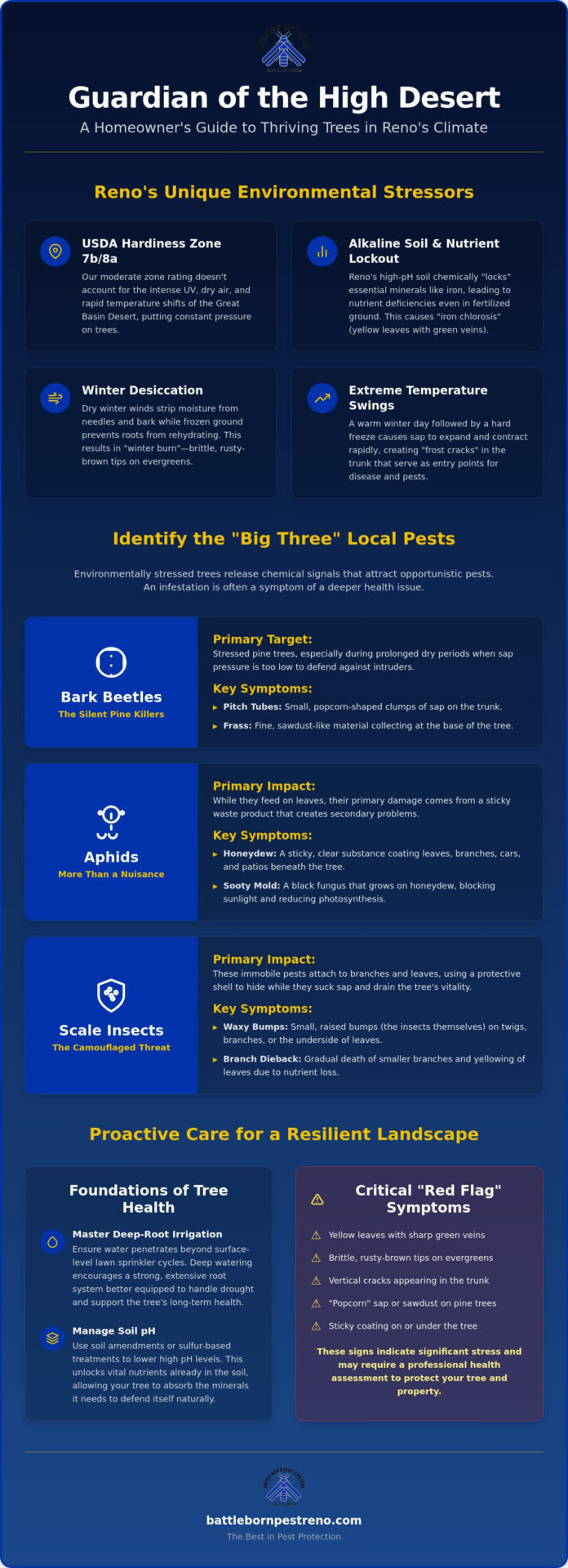
Reno sits in a unique transition zone, categorized primarily as USDA Hardiness Zone 7b or 8a. While these numbers suggest a moderate climate, they don’t account for the reality of the Great Basin Desert climate, which brings intense UV radiation and rapid temperature shifts. True backyard tree health in Reno isn’t just about survival; it’s about helping a tree manage these constant environmental pressures. When a tree spends all its energy fighting the elements, it has nothing left to defend against pests. Environmental stress is almost always the silent precursor to more visible diseases and infestations.
Extreme temperature swings, which are common in our high desert home, also disrupt the natural rhythm of sap flow. When a warm February afternoon is followed by a sudden hard freeze at night, the rapid expansion and contraction of fluids can cause frost cracks in the trunk. These physical openings act as doorways for pathogens, turning a simple weather event into a long-term health crisis. Understanding these foundational struggles is the first step in becoming a better guardian for your landscape.
The Threat of Winter Desiccation
Many homeowners assume that once the ground freezes, their trees enter a state of total dormancy that requires no attention. In reality, our dry winter winds continue to pull moisture from evergreen needles and deciduous bark through a process called desiccation. Because the roots are often locked in frozen soil, they can’t replace the water lost to the wind. You’ll see this as winter burn, where the tips of your junipers or pines turn a brittle, rusty brown. Providing supplemental water during dry winter spells when the ground isn’t frozen is a simple yet vital step for maintaining backyard tree health in Reno.
Alkaline Soil and Nutrient Lockout
Reno’s soil is notoriously alkaline, often registering a high pH that creates a chemical lockout of essential minerals. Even if you’ve applied standard fertilizers, your tree might be starving because the high pH prevents the roots from absorbing iron and manganese. This often manifests as iron chlorosis, where leaves turn a sickly yellow while the veins remain a sharp green. Correcting this involves more than just adding more food; it requires specific soil amendments or sulfur-based treatments to lower the pH and unlock the nutrients already present in the earth. This customized approach ensures your trees have the stability they need to thrive for decades.
Common Pests and Diseases in Northern Nevada Backyards
When a tree struggles with the high desert climate, it doesn’t suffer in silence. It releases specific chemical signals called pheromones that act as a beacon for local insects, signaling that the tree’s natural defenses are low. This biological response is often the primary driver behind a sudden decline in backyard tree health in Reno. Because these pests are opportunistic, most infestations are actually symptoms of underlying environmental stress or improper care rather than just bad luck.
In Northern Nevada, we focus on managing the “Big Three”: Bark Beetles, Aphids, and Scale. These pests are a natural part of our landscape, but they only become destructive when our backyard environments are out of balance. Consulting a tree planting guide for Northern Nevada is an excellent way to ensure your landscape is established correctly, which remains the best long-term defense against pest activity and backyard tree health in Reno issues.
Bark Beetles: The Silent Pine Killers
Bark beetles are particularly devastating to our local pines, especially during extended dry periods. You can recognize their presence by “pitch tubes,” which look like small clumps of popcorn-shaped sap on the trunk, or by finding “frass,” a fine sawdust-like material at the base of the tree. Stressed pines in Reno and Sparks are the primary targets because they lack the sap pressure needed to push the beetles out. If you notice these symptoms, reviewing a guide on bark beetle treatment reno can help you understand the necessary steps to save your trees. For a broader look at the full range of threats facing your conifers, a dedicated resource on pine tree disease management reno can help you identify and address issues like White Pine Blister Rust and Pinyon Ips beetle infestations before they become irreversible.
Aphids and Honeydew: More Than a Nuisance
Aphids are common, but their impact goes beyond just eating leaves. They excrete a sticky substance called honeydew that coats leaves, cars, and patios. This honeydew often attracts ants, which actually “farm” the aphids and protect them from natural predators like ladybugs. Over time, this sticky layer can develop sooty mold, a black fungus that blocks sunlight and prevents the tree from photosynthesizing. Managing aphids early protects the tree’s energy reserves and keeps your outdoor living space clean.
Beyond insects, fruit trees in our area frequently face Fire Blight, a bacterial disease that makes branches look scorched as if by a flame. Fungal infections in the root zone are another hidden danger, often caused by overwatering in our heavy clay soils. These pathogens rot the foundation of the tree, sometimes going unnoticed until a branch fails. A professional tree health assessment can identify these hidden risks early, providing you with a tailored plan to protect your family’s landscape.
The Foundation of Health: Irrigation and Soil Management
A tree growing in the Sierra foothills enjoys a thick layer of natural leaf litter that keeps roots cool and moist. In contrast, a Reno backyard often forces trees to compete with aggressive turf-grass for every drop of water. This turf-grass environment is one of the biggest hurdles for backyard tree health in Reno, as standard lawn irrigation rarely reaches the depths required for a mature tree’s root system. While grass thrives on frequent, shallow watering, trees require a different strategy to build the resilience needed for our high desert climate.
While your lawn might look green with three short watering cycles a week, those shallow bursts only penetrate the top few inches of soil. Tree roots typically reside 12 to 18 inches below the surface. Without deep moisture, trees become susceptible to the pests and environmental stresses we discussed earlier. Applying a three-inch layer of wood chip mulch around the base of your tree, while keeping it away from the actual trunk, provides a vital buffer that prevents evaporation and regulates soil temperature during our 100-degree summer days.
Deep Root Watering Strategies
Watering the trunk of a tree is a common mistake that can lead to bark rot and fungal issues. Instead, focus your efforts on the drip line, which is the area directly under the outermost circumference of the tree branches. This is where the most active feeder roots are located. Utilizing proper tree irrigation techniques ensures that water moves vertically through the soil profile rather than just running off the surface. You can easily check your progress with a simple soil probe or a long screwdriver. If you can’t push the probe at least 12 inches into the ground with moderate pressure, your tree is likely thirsty. Remember to adjust these schedules as we transition from the intense summer sun into our milder autumn months, as overwatering in cool weather can be just as damaging as underwatering in July.
Combatting Soil Compaction
Soil compaction is a silent threat that often follows backyard construction, heavy foot traffic, or even years of lawn mower use. When soil particles are pressed together, they create a hard pan layer that physically blocks oxygen and water from reaching the roots. While DIY core aeration is great for lawns, it rarely goes deep enough to help a struggling tree. Professional solutions like vertical mulching use specialized equipment to fracture this compacted earth without damaging the delicate root system. If you notice your soil feels like concrete or water pools on the surface rather than soaking in, it might be time for a professional tree health assessment reno nv to evaluate the hidden conditions beneath the surface. Taking these steps protects the structural integrity of your trees and ensures they remain a safe, beautiful part of your home for years.
Seasonal Maintenance Checklist for Reno Homeowners
Reno’s distinct seasonal shifts require a proactive approach to maintenance. By breaking down care into manageable quarterly tasks, you can maintain backyard tree health in Reno without it becoming a full-time chore. Our local environment moves quickly from freezing winters to intense summer heat, so timing your interventions is just as important as the tasks themselves.
- Spring: As the ground thaws, focus on inspecting the structure of your trees. Look for broken limbs from heavy snow or signs of the winter desiccation we discussed earlier. This is also the ideal time to watch for the first emergence of aphids or scale insects as temperatures rise.
- Summer: During July and August, watch for “flagging” branches, where leaves on a single limb turn brown while the rest of the canopy remains green. This is often an early warning sign of heat stress or localized pest activity that requires immediate attention.
- Fall: Autumn is the window for deep-root fertilization. This helps trees store essential nutrients before the ground freezes. It is also the time to refresh your mulch layers to protect roots from the coming cold.
- Winter: Once trees are dormant, you can perform protective pruning and supplemental watering. If we experience a dry spell with no snow cover for more than three weeks, giving your trees a deep soak on a warm afternoon can prevent root death.
The 5-Minute Monthly Tree Walk
A quick monthly walk is your best defense against unexpected issues. Start by checking the trunk for new cracks or small exit holes that might indicate beetle activity. Test the flexibility of lower branches; if a small twig snaps cleanly like a dry cracker, that section has likely experienced dieback. You should also look for “suckers” or water sprouts. These are thin, vertical shoots that grow rapidly from the base or main limbs. They drain energy from the tree and should be removed to keep the main canopy strong and focused on healthy growth.
Pruning for Health vs. Aesthetics
Pruning should always prioritize the tree’s structural integrity over a specific look. In high-wind areas like Reno and Carson City, “topping” a tree is particularly dangerous. This practice involves cutting the top of the main trunk, which leads to weak, vertical regrowth that is highly prone to snapping during a Washoe Zephyr. Instead, focus on removing the “three Ds”: dead, damaged, or diseased wood. If you aren’t sure where to make a cut or if a branch is too large to handle safely, it is best to rely on professional tree pruning to ensure the tree heals correctly and remains a safe part of your landscape. Making the right cuts now ensures the longevity of your trees and the safety of your home for years to come.
When to Call a Certified Arborist in Reno
While your monthly walk-throughs are the first line of defense, certain symptoms signal that a tree’s internal systems are failing. Identifying these red flags early is often the difference between a simple treatment and a total tree removal. If you notice deep, vertical cracks in the bark, fungal mushrooms growing around the root flare, or a sudden, significant lean in the trunk, these are clear indicators that your backyard tree health in Reno is at risk. Large trees in residential areas pose a significant liability if they fail. Attempting to prune or treat large specimens yourself can lead to severe injury or property damage, especially during the unpredictable winds of the Washoe Zephyr.
Professional arborists utilize specialized tools that go beyond the reach of a typical homeowner. For instance, systemic injectors allow for the direct application of nutrients or pest treatments into the tree’s vascular system. This method is highly effective for tree disease management sparks nv, as it delivers the solution exactly where it’s needed without the drift associated with traditional sprays. This precision is vital in a backyard setting where drift could impact other plants or outdoor living areas.
The Value of a Professional Health Assessment
A certified arborist possesses a trained eye that can detect internal decay long before it manifests as a fallen limb. While a tree might look green on the outside, hollow pockets or root rot can compromise its structural stability from the inside out. Moving from a reactionary approach, where you only call for help after a branch has already fallen, to a proactive preservation strategy is the best way to protect your investment. A professional assessment provides a clear, experience-backed roadmap for your trees. This ensures that high-value backyard specimens receive the customized care they need to survive the high desert for decades to come.
Battle Born’s Approach to Backyard Vitality
At Battle Born Pest Control, we act as the local guardians of your backyard ecosystem. Our approach integrates deep pest control expertise with arborist-led tree care to provide a complete health solution for your landscape. We understand that your yard is more than just a collection of plants; it’s a place where your family and pets spend their time. Because of this, we prioritize safety and use precise application methods that protect your loved ones while effectively managing local threats like bark beetles. By focusing on long-term stability rather than quick fixes, we ensure the safety and beauty of your Northern Nevada property remains intact through every season. We value our reputation for providing clear, honest recommendations that help your trees flourish in our challenging backyard tree health reno environment.
Building a Resilient Landscape for the Future
Your trees are more than just part of your property; they’re a living investment that provides shade, beauty, and memories for your family. By mastering deep root irrigation and staying vigilant with your seasonal checklists, you take the most important steps toward maintaining backyard tree health in Reno. A tree’s best defense against local pests like bark beetles is its own natural vigor. This is why consistent soil management and proper hydration are so critical in our challenging high desert climate.
When the signs of stress go beyond what a garden hose can fix, having a trusted local partner makes all the difference. Battle Born Pest Control brings decades of Northern Nevada experience and has certified arborists on staff to help you navigate complex health challenges. We prioritize safe, family-friendly treatment plans that protect your home and loved ones while restoring the vitality of your landscape. If you’re concerned about a specific tree or simply want a baseline for your yard’s well-being, protect your backyard investment with a professional Tree Health Assessment. We’re here to help your trees stand tall and strong for many years to come.
Frequently Asked Questions
How often should I water my trees in Reno during the summer?
You should generally provide a deep soak once or twice a week for established trees during the peak of summer. While the Truckee Meadows Water Authority has specific assigned-day schedules for sprinklers, drip systems and hand watering are permitted any day. The goal is to reach a soil depth of 12 to 18 inches to ensure long-term backyard tree health in Reno. Newly planted trees may require more frequent attention until their root systems are fully established.
What are the signs that a pine tree is dying in Northern Nevada?
A dying pine tree often shows “red flagging,” where needles turn from yellow to a rusty brown, usually starting at the top or on specific branches. You may also notice popcorn-shaped pitch tubes on the trunk or fine sawdust at the base. If more than half the needles have turned brown, the tree may be beyond saving and could pose a safety risk to your home. Early intervention is key to preventing a total loss. Understanding the full spectrum of threats covered in a comprehensive guide to pine tree disease management in Reno can help you distinguish between drought stress and an active infestation before it’s too late.
Can I save a tree that has bark beetles?
You can often save a tree infested with bark beetles if the damage is caught before the canopy has completely turned brown. Professional treatments, such as systemic injections, can kill the beetles within the vascular system. Success depends on simultaneously reducing the tree’s stress through proper watering and soil management to help it regain its natural defenses. Once a tree has lost its entire canopy, removal is usually the only safe option.
Do I really need to water my trees in the winter?
You need to water your trees in the winter if Northern Nevada experiences a dry spell lasting more than three weeks without significant snow cover. Dry winter winds pull moisture from the bark and needles while the roots are unable to pull water from frozen ground. Applying water on a warm afternoon when the soil is permeable prevents root death and winter burn. This simple step is one of the most effective ways to protect your landscape investment.
Why are the leaves on my backyard maple turning yellow in July?
Yellow leaves with green veins in July usually indicate iron chlorosis, a common condition caused by Reno’s alkaline soil. High pH levels lock out essential nutrients like iron, making them unavailable to the tree even if they’re present in the dirt. This environmental stress can be corrected with specific soil amendments that lower the pH and restore the tree’s vibrant green color. It’s a chemistry issue rather than a lack of water or fertilizer.
How do I know if a leaning tree in my backyard is dangerous?
A leaning tree is considered dangerous if you notice “heaving” soil or cracked roots on the side opposite the lean, which suggests the root plate is lifting. If the lean has developed suddenly after a storm or high winds, it’s a critical safety concern. A professional assessment is necessary to determine if the tree is structurally sound or if removal is required to protect your property. Natural leans that have existed for years are often less concerning than sudden changes.
What is the best time of year to prune trees in Reno?
The best time to prune most trees in Reno is during late winter or early spring while they’re still dormant. This timing allows the tree to heal quickly as it enters the spring growth flush and makes it easier to see the structure without leaves. However, dead or diseased wood should be removed immediately regardless of the season to prevent further decay or safety hazards. Avoid heavy pruning in late autumn, as it can stimulate new growth that won’t survive the first freeze.
Is it worth hiring an arborist for just one or two backyard trees?
It’s definitely worth hiring an arborist even for a single high-value tree in your yard. A professional health assessment can identify hidden issues like internal rot or early pest activity that could lead to an expensive removal later. Investing in proactive care for backyard tree health in Reno protects your home’s equity and ensures the safety of your family. Professional guidance provides peace of mind that your landscape is being managed with local expertise and care.