Bark Beetle Treatment Reno: How to Identify and Save Infested Pine Trees
What if the secret to saving your Reno pine trees isn’t just about what you spray on the bark, but how you help the tree fight back from the inside? For many homeowners in Northern Nevada, seeing needles turn brown triggers an immediate sense of dread about fire hazards and the high cost of tree removal. You might find yourself wondering if that change in color is just a natural seasonal cycle or the first sign of a terminal infestation. It’s a stressful situation, especially when you value the shade and stability these pines provide to your property. Finding the right bark beetle treatment reno residents can trust involves moving beyond quick fixes to understand the specific biology of our high desert ecosystem.
We’re here to help you regain peace of mind by providing a clear path toward protecting your landscape. This guide will show you how to accurately diagnose your tree health and explain why restoring a pine’s natural “pitch-out” defense is often more effective than topical sprays alone. You’ll discover expert-backed strategies for prevention, including the use of systemic injections that can be up to 95% effective when applied correctly to healthy trees. By the end of this article, you’ll have a cost-effective plan to safeguard your home and ensure your trees remain a vibrant, healthy part of the community for years to come.
Key Takeaways
- Learn to distinguish between natural seasonal needle drop and the early warning signs of a beetle attack, ensuring you don’t mistake normal cycles for a terminal threat.
- Compare the benefits of topical sprays and systemic injections to determine which bark beetle treatment reno specialists recommend for your property’s unique needs.
- Discover how specific high desert watering protocols can strengthen your pine trees’ natural defenses, making them much less attractive to opportunistic pests.
- Understand why an arborist-led health assessment is essential for identifying hidden vulnerabilities and protecting the structural safety of your home.
- Gain a clear roadmap for long-term tree management that focuses on proactive care and environmental stability rather than reactive, high-cost removals.
Understanding the Bark Beetle Threat in Northern Nevada
The high desert of Northern Nevada presents a unique set of challenges for our local pine trees. While many residents enjoy the lush canopy of the Truckee Meadows, these trees face constant pressure from native pests that thrive in our specific climate. The primary culprits in our region are the Jeffrey pine beetle and various species of Ips beetles. For a comprehensive overview of bark beetles and their biology, it helps to understand that these insects are a natural part of the ecosystem. However, the proximity of residential areas to the Humboldt-Toiyabe National Forest means that die-offs in the wild can quickly transition into a significant threat for your property. When looking for bark beetle treatment reno homeowners often realize that what happens in the surrounding wilderness acts as a precursor to what happens in their own backyards.
Healthy trees are remarkably resilient. They use a natural defense mechanism called “pitching out,” where they produce sticky resin to physically push invading beetles out of the bark. A tree with high internal pressure can effectively drown a beetle in sap before it can lay eggs. The problem arises when environmental stressors weaken these defenses. In Reno and Sparks, the combination of arid air and erratic precipitation creates a “perfect storm” where beetles can reproduce rapidly while trees are too weak to fight back.
The Role of Drought and the Washoe Zephyr
Persistent drought is the biggest factor in tree vulnerability. Without adequate water, a pine cannot produce the resin necessary to defend itself. The famous Washoe Zephyr winds add another layer of stress; these high-velocity afternoon winds pull moisture from the needles and strain the tree’s vascular system. This metabolic exhaustion sends out chemical signals that act like a beacon for scout beetles. Properties in higher-elevation neighborhoods like Galena and Montreux are particularly vulnerable because they sit right at the interface where forest pressure meets residential landscaping.
Why Bark Beetles are More Than an Aesthetic Issue
An infested tree isn’t just a visual problem. It’s a serious safety concern. As beetles tunnel through the cambium layer, they disrupt the flow of nutrients, effectively girdling the tree. This process turns a living pine into a brittle, standing fire hazard in a matter of months. In our high-risk fire environment, a dead tree near a home is a liability that can’t be ignored. Additionally, as the tree dies, it loses its structural integrity, making it more likely to fall during a winter storm. Choosing a proactive bark beetle treatment reno plan is much more affordable than the alternative. The cost of professional tree removal is significantly higher than the price of preventative health assessments and targeted management.
Signs of Infestation: Is Your Reno Pine Tree Saveable?
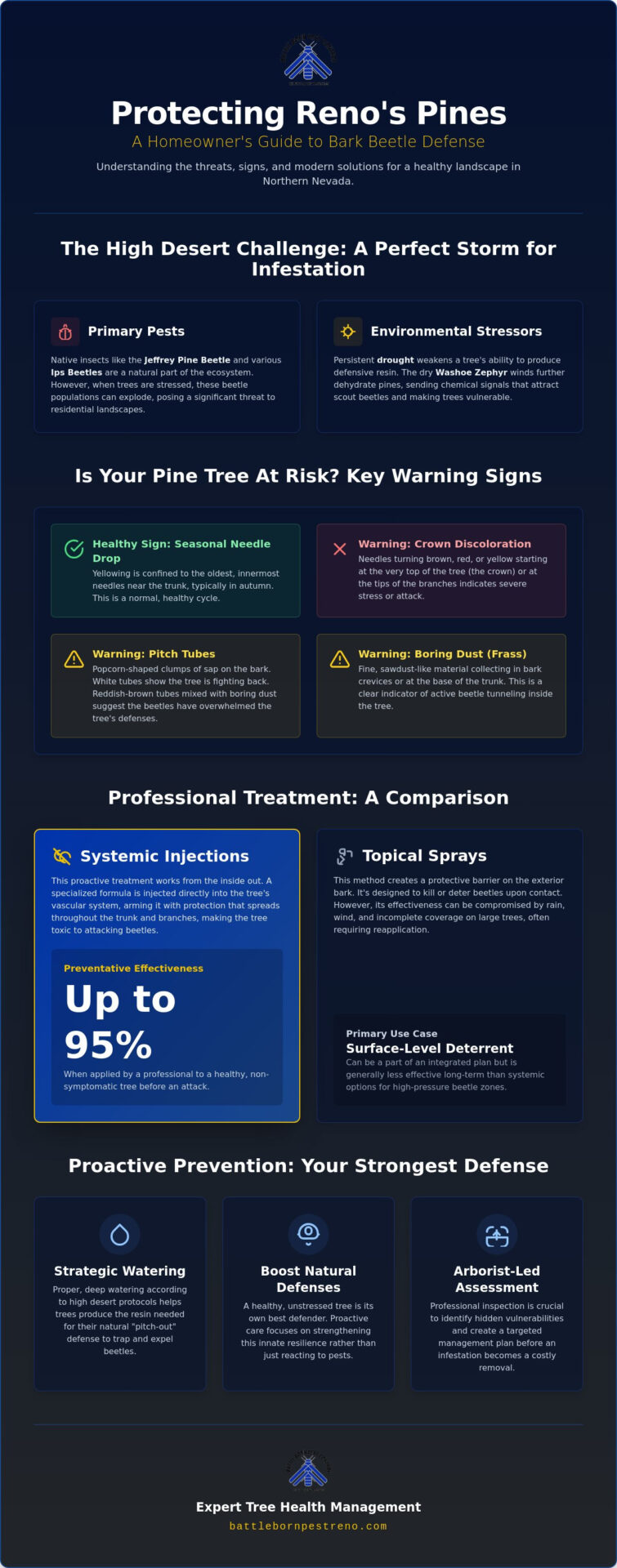
When you first notice a change in your pine tree’s appearance, it’s natural to feel a sense of urgency. However, not every yellow needle signifies a disaster. To accurately identify and manage bark beetles, you need a systematic approach to inspection that doesn’t involve climbing or damaging the bark. In our region, bark beetle treatment reno experts look for specific biological markers that tell the story of the tree’s internal health. Before you assume the worst, start by looking at the inner branches. Ponderosa and Jeffrey pines naturally shed their oldest, innermost needles every autumn. If the yellowing is confined to the center of the tree near the trunk, your tree is likely just going through its seasonal cycle. If the discoloration starts at the tips of the branches or the very top of the crown, it’s time to look closer.
Successful management starts with a ground-level inspection of the trunk and canopy. By understanding what these pests leave behind, you can catch an infestation before it spreads to neighboring trees. If you suspect your pines are under stress, a professional tree health assessment reno nv can provide the diagnostic clarity needed to choose the right path forward.
Visual Warning Signs to Look For
- Pitch tubes: These look like small, popcorn-shaped clumps of sap clinging to the bark. If the tubes are white and clear, the tree is successfully “pitching out” the invaders. If they are reddish-brown, the beetle has successfully tunneled through, mixing its boring dust with the sap.
- Boring dust: Known as frass, this fine, reddish powder accumulates in the deep crevices of the bark or at the base of the tree. It looks similar to coffee grounds and is a definitive sign of active tunneling.
- Crown thinning: Many bark beetle species attack the top of the tree first. If the very top, or the leader, is turning brown while the rest of the tree remains green, the vascular system is being compromised from the top down.
The Diagnostic “Save vs. Remove” Test
Deciding whether to invest in treatment or prepare for removal requires a realistic look at the damage. The “50% rule” is a helpful guideline for Reno homeowners: if more than half of the canopy has already turned brown or red, the tree’s vascular system is likely too damaged to recover. You should also check for exit holes. These tiny, BB-sized holes indicate that a generation of beetles has already matured and left the tree to find a new host nearby. If you see these holes in conjunction with a red crown, the tree has already become a “brood tree” that poses a risk to every other pine on your property. Once a tree’s crown is entirely red, treatment is no longer viable. Catching the problem while the pitch tubes are still white or the yellowing is limited to a few branches is the key to saving your landscape.
Professional Bark Beetle Treatment Options: Injections vs. Sprays
Choosing the right bark beetle treatment reno homeowners need involves understanding how a tree actually moves nutrients and water. Unlike topical applications that sit on the surface, systemic treatments work from the inside out. They utilize the tree’s own vascular system to distribute protection to the very areas where beetles feed. This internal approach is particularly vital in Northern Nevada, where our sandy, fast-draining soils can sometimes make soil-drench methods less reliable. By delivering the treatment directly into the cambium layer, we ensure the tree is fortified against attack regardless of surface conditions or soil moisture levels. It’s a precise method that respects the tree’s biology while providing a formidable defense.
Systemic Trunk Injections: The “Vaccine” for Your Tree
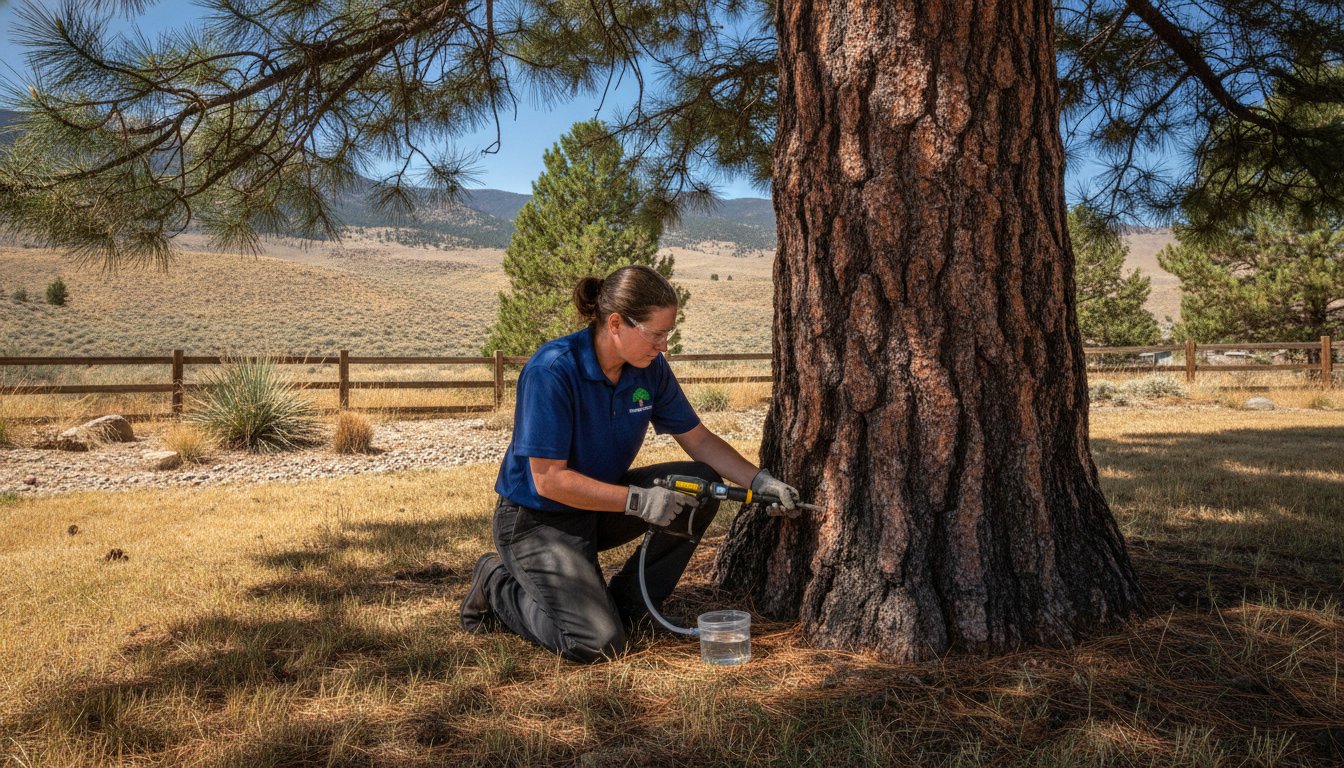
Trunk injections represent the most advanced form of protection available for local pines. Think of it as a vaccine that provides long-term immunity against wood-boring pests. We use emamectin benzoate, a compound that specifically targets beetle larvae as they attempt to feed on the tree’s inner tissues. According to University of Nevada, Reno research, understanding the biological vulnerabilities of these pests is essential for effective control in our state. Injections offer several advantages for the Reno climate. Because the product is sealed inside the tree, there is zero risk of chemical drift during our frequent high-wind events. This makes it a responsible choice for properties with pets, children, or proximity to sensitive gardens. A single application can offer protection for up to two years, providing lasting peace of mind.
Topical Bark Sprays and Pheromone Patches
While injections are a primary tool for long-term health, topical bark sprays still play a role in preventative care. These are applied to the main trunk and larger branches before the spring flight season begins, usually in early April. They create a chemical barrier that discourages scout beetles from landing. However, the intense high-desert sun and persistent winds in Reno can break down these surface treatments quickly. This is why we often view sprays as a short-term, supplemental option rather than a standalone solution for bark beetle treatment reno landscapes require.
Another eco-friendly option involves the use of MCH pheromone patches. These small pouches are attached to the tree and release a “no vacancy” scent. This tricks incoming beetles into believing the tree is already overpopulated, prompting them to fly elsewhere. While these patches are a helpful part of integrated pest management, they are most effective when used as part of a broader strategy that includes maintaining overall tree vigor. Timing is everything; preventative measures are ten times more effective than trying to cure a tree that is already heavily infested. Taking action before the first pitch tube appears is the most reliable way to protect your property’s value.
Prevention Strategies for the High Desert Climate
The most effective bark beetle treatment reno residents can employ starts long before a pest ever lands on a trunk. Maintaining a tree’s natural vigor is the primary deterrent against infestation. When a pine is healthy and hydrated, it possesses the internal pressure needed to “pitch out” invaders. In our high desert climate, this requires a proactive approach that accounts for our unique environmental stressors, such as the intense summer heat and the heavy, wet snow often referred to as “Sierra Cement.” This heavy snow can cause significant structural damage, leaving open wounds that leak the very pheromones that attract scout beetles. Addressing these wounds through proper care is essential for long-term stability. Homeowners in nearby Sparks face similar challenges, and understanding tree disease management Sparks NV arborists recommend can help you recognize when a weakened tree is vulnerable to both pathogens and beetle attack.
Proper Watering and Mulching for Reno Trees
Watering is the cornerstone of tree health in Northern Nevada. Many homeowners make the mistake of watering near the trunk, but the most effective method is the “slow and deep” approach focused on the drip line. This is the area directly beneath the outermost circumference of the tree’s branches where the most active roots are located. During our frequent drought cycles, trees need deep soakings that penetrate at least 12 to 18 inches into the soil. This encourages deep root growth and ensures the tree has the resources to produce defensive resin. For a broader look at how alkaline soil, watering schedules, and wind exposure affect all the trees on your property, our guide to backyard tree health reno homeowners rely on covers the full spectrum of high desert care strategies.
Winter watering is equally vital. Because Reno often experiences dry, sunny spells in January and February, your trees can suffer from desiccation if the ground isn’t frozen. Providing a deep soak once a month during these dry winter periods can be the difference between a resilient tree and a vulnerable one come spring. To help our sandy soil retain this moisture, apply a three to four inch layer of organic wood chips around the base. This mulch acts as a thermal blanket, regulating soil temperature and preventing the rapid evaporation caused by the Washoe Zephyr winds.
Sanitation: Handling Infested Wood Safely
If you’ve already lost a tree or are thinning your landscape for defensible space, how you handle that wood matters. Never stack fresh, unseasoned pine firewood near healthy, living trees. Infested wood can act as a nursery, allowing larvae to mature and emerge right next to your remaining landscape. If you must keep the wood, you can “solarize” it by wrapping the pile tightly in clear, heavy-duty plastic and placing it in a sunny spot. This creates a greenhouse effect that kills the larvae inside the bark before they can spread.
Managing your property’s fire safety doesn’t have to mean clear-cutting your favorite pines. By focusing on selective thinning and proper sanitation, you can maintain a beautiful, beetle-resistant yard that protects your home. If you’re concerned about the health of your pines or need help identifying high-risk limbs, schedule a tree health assessment reno nv homeowners trust with our arborist-led team to ensure your property remains a safe, green sanctuary.
Expert Tree Health Management with Battle Born Pest Control
Battle Born Pest Control operates with a deep sense of responsibility toward the Northern Nevada community. As a locally owned business, we see ourselves as the “Local Guardian” of the landscapes in Reno, Sparks, and Carson City. Our approach to bark beetle treatment reno properties require is rooted in the belief that a tree is a long-term asset to your home and family. While standard pest companies might focus solely on the insects, our arborist-led team looks at the entire biological system. We understand that effective pest management and structural tree safety are inseparable, especially in an environment as demanding as ours. For properties across the valley, comprehensive tree disease management Sparks NV homeowners rely on works hand in hand with beetle prevention to keep landscapes healthy from the roots up.
Looking ahead, 2026 is shaping up to be a critical year for preventative care. Following recent drought cycles that have left many local pines in a weakened state, the window for proactive intervention is narrowing. We utilize Integrated Pest Management (IPM) to address these vulnerabilities. This strategy combines targeted systemic protection with efforts to improve soil health, ensuring your trees have the resources they need to thrive in our challenging high-desert environment. It’s a methodical, structured approach that builds trust through transparency and clear, experience-backed recommendations.
Our Customized Tree Protection Plans
Every landscape is unique, which is why we don’t believe in one-size-fits-all solutions. Our process begins with a thorough tree health assessment to identify any hidden signs of stress or early-stage infestation. By catching problems early, we help homeowners avoid the heartbreak of losing 50-year-old pines that provide essential shade and property value. For those living in managed communities, we provide detailed documentation and reporting to assist with insurance requirements or HOA compliance. This transparency ensures you have a clear record of the care your property has received and peace of mind regarding its future.
The Battle Born Advantage: Pest Control Meets Arboriculture
Treating the beetles is only half the battle; restoring the tree’s health is what prevents the next attack. Our team bridges the gap between traditional pest control and professional arboriculture to provide a lasting, tailored solution. We prioritize family-safe and pet-safe methods, ensuring that our applications protect your trees without compromising the safety of your loved ones or local pollinators. It’s an honest, service-oriented approach that values stability and longevity over quick fixes or aggressive marketing tactics.
If you’ve noticed changes in your pines or simply want to ensure your property is prepared for the coming season, don’t wait for the damage to become irreversible. You can Schedule a professional bark beetle assessment with Battle Born today to get a clear diagnosis and a tailored plan for your landscape’s health and safety.
Securing the Future of Your Northern Nevada Landscape
Protecting your property from the devastating effects of bark beetles requires a blend of constant vigilance and professional expertise. By understanding the difference between natural needle drop and active infestation signs like reddish-brown boring dust, you can take action before the damage becomes irreversible. Effective bark beetle treatment reno homeowners rely on often involves a combination of deep, seasonal watering and advanced systemic injections that provide multi-year protection. These proactive steps are far more cost-effective than the high price of removing a mature, 50-year-old pine that has lost its structural integrity.
Our team includes an ISA Certified Arborist on staff who understands the specific environmental stressors of our high-desert climate. As a locally owned and licensed business in Northern Nevada, we take pride in creating customized treatment plans that prioritize the safety of your home and family. We’re committed to being a reliable guardian for your landscape, ensuring your trees remain healthy and vibrant for years to come.
With the right care and a dedicated local partner, you can enjoy the peace of mind that comes from knowing your property is protected against the region’s most persistent pests.
Frequently Asked Questions
How do I know if my tree has bark beetles?
You can identify an infestation by looking for small, popcorn-like clumps of sap called pitch tubes on the trunk. You might also see reddish-brown boring dust that looks like coffee grounds accumulating in the bark’s deep crevices or at the base of the tree. If you notice these signs along with thinning needles at the very top of the crown, it’s a strong indicator that beetles are actively tunneling into your pine.
Can a tree recover from a bark beetle attack?
A tree can recover if the infestation is caught in its earliest stages and the pine still has enough internal pressure to “pitch out” the invaders. Once a pine tree’s crown turns entirely red or more than half the needles have browned, the vascular system is usually too damaged for survival. Early intervention through a professional bark beetle treatment reno plan is the most reliable way to facilitate a full recovery.
When is the best time for bark beetle treatment in Reno?
The ideal time for preventative treatment is in early spring, typically by the beginning of April before the adult beetles begin their annual flight season. For existing infestations, you should apply treatment as soon as you identify active pitch tubes. Fall and winter are also effective times for removing infested wood to prevent the next generation of beetles from emerging and spreading to your healthy trees in the spring.
Do bark beetles spread to healthy trees?
Yes, bark beetles use chemical signals called pheromones to attract other beetles to a specific host, which often leads to “group kills” in a landscape. A single infested tree quickly becomes a brood tree, producing thousands of new beetles that will seek out the nearest healthy pines on your property. This is why managing a single infested tree is essential for the safety of your entire neighborhood’s canopy.
What is the difference between systemic injections and bark sprays?
Systemic injections are delivered directly into the tree’s vascular system, while bark sprays are applied to the exterior of the trunk to create a barrier. Injections act like a vaccine, providing internal protection for up to two years without the risk of chemical drift in Reno’s windy weather. While sprays can be effective, they require more frequent applications because they break down quickly in the intense high-desert sun. This makes injections a more stable bark beetle treatment reno homeowners often prefer for long-term care.
How does drought affect bark beetle infestations in Nevada?
Drought is the primary driver of beetle outbreaks because it prevents trees from producing the resin needed to defend themselves. When a tree is water-stressed, it can’t create enough internal pressure to physically push beetles out of the bark. This metabolic exhaustion sends out chemical distress signals that scout beetles can detect from a distance, making drought-stricken landscapes a primary target for new infestations.
Should I remove a beetle-infested tree immediately?
You should prioritize removal if the tree has become a brood tree with a completely red crown or visible, tiny exit holes. Keeping a dead, infested tree on your property allows the beetles to complete their life cycle and move directly to your healthy pines. Removing these trees also eliminates a significant fire hazard and prevents brittle, dead wood from falling during a heavy winter storm.
Are bark beetle treatments safe for my pets and family?
Most modern treatments are designed with safety in mind, especially systemic injections which are sealed entirely within the tree’s trunk. This method eliminates the risk of contact for children, pets, and local pollinators like bees. When we use topical sprays, we follow strict application protocols to ensure the product is used only when weather conditions are calm to prevent any unintended exposure to your family or the surrounding environment.