Certified Arborist for Tree Removal in Reno: Safe, Expert Solutions
When the Washoe Zephyr begins to howl across the Truckee Meadows, every homeowner with a leaning cottonwood or a brittle pine feels a familiar sense of unease. You shouldn’t have to spend every windstorm wondering if a heavy branch will find its way onto your roof or power lines. Hiring a certified arborist for tree removal in Reno is the most reliable way to address these concerns before they become emergencies. It’s about more than just cutting wood; it’s about a professional health assessment that determines if a tree can be saved or if it poses a genuine risk to your family and property.
We understand that you value the shade and beauty your trees provide, especially since Reno is currently ranked as the fastest-warming city in the United States. This article will show you how to protect your home while navigating the latest 2026 local ordinance updates and avoiding the dangers of uncertified contractors. We’ll walk through the essential steps of a safe removal process, ensuring you have a clear verdict on your tree’s health and total peace of mind regarding local liability and long-term landscape safety.
Key Takeaways
- Understand how Reno’s extreme high desert climate and heavy wind loads necessitate the specialized engineering skills of an ISA-certified professional.
- Learn to identify the subtle visual warning signs, such as bark beetle infestations and deep structural cracks, that indicate a tree has become a safety liability.
- Discover why hiring a certified arborist for tree removal in Reno is essential for protecting your property from the financial and physical risks associated with uncertified labor.
- Gain a clear understanding of the professional removal process, including how expert crews prepare your site to safeguard your lawn, fences, and existing foliage.
- Find out how to implement preventative pest and disease management to ensure the health of your remaining trees after a hazardous removal is complete.
Why Hire a Certified Arborist for Tree Removal in Reno?
Removing a tree in Northern Nevada isn’t a simple weekend project that anyone with a chainsaw can handle safely. It requires a deep understanding of both plant biology and the physics of falling timber. A certified arborist is a trained professional who has demonstrated a high level of competency through the International Society of Arboriculture (ISA). Choosing a certified arborist for tree removal Reno is the first step in ensuring your property remains safe during our unpredictable weather cycles. These experts don’t just cut wood; they evaluate the structural integrity of the entire tree to determine the safest possible way to bring it down.
The ISA Certification Advantage
Certification serves as a badge of professional reliability that separates true experts from “tree loppers” who may lack proper insurance or training. While some contractors might mention decades of experience, that doesn’t always translate to modern safety standards or an understanding of tree diseases. ISA-certified professionals must pass a comprehensive exam and complete ongoing education to maintain their credentials. This rigorous process ensures they stay current on the latest rigging techniques and safety protocols. For homeowners in Reno, Sparks, and Carson City, verifying these credentials provides peace of mind that the job will be done without unnecessary risks to your home or family.
Reno’s High Desert Tree Stressors
Trees in Washoe County face environmental challenges that are rare in other parts of the country. Our high desert climate features extreme temperature swings and persistent drought, which can make wood brittle and prone to sudden failure. The “Washoe Zephyr” winds add another layer of danger, as they can easily topple trees with compromised root systems or heavy, unbalanced canopies. Reno’s unique combination of high-altitude sun, alkaline soil, and violent wind patterns makes professional risk assessment mandatory for any homeowner concerned about property safety.
When you hire a certified arborist for tree removal Reno, you’re also protecting the rest of your landscape. A professional approach involves carefully planning the removal to avoid damaging surrounding plants or compacting the soil. They use specialized equipment to lower heavy limbs controlledly rather than letting them drop and crater your lawn. This methodical pace ensures that your property value is maintained and your remaining trees aren’t accidentally injured during the process. It’s an honest, service-oriented approach that prioritizes the long-term health of your yard over a quick, potentially destructive fix.
When is Tree Removal Necessary? A Professional Assessment
Deciding whether to remove a tree is rarely a simple choice. While some signs of decline are obvious, others require the trained eye of a certified arborist for tree removal Reno to detect. A tree that still looks green on the outside can be completely hollow or structurally compromised on the inside. Our goal is always to preserve the canopy whenever possible, but safety must come first. We look for specific indicators that suggest a tree has become a liability rather than an asset to your property.
Visual warning signs often start with the bark and the crown. Deep, vertical cracks that extend through the bark and into the wood are a major concern because they suggest the trunk is splitting under its own weight. Similarly, the presence of fungi or “conks” at the base of the trunk usually indicates internal root rot. If you notice “dieback,” where the very top branches of the tree are bare while the rest is green, the tree is likely struggling to transport nutrients. If you aren’t sure about the severity of these signs, scheduling a professional tree health assessment can provide the clarity you need.
Pest-Induced Tree Failure
In Reno and Sparks, the Pine Bark Beetle is a significant threat to our local pines. These pests tunnel beneath the bark, disrupting the tree’s ability to circulate water and nutrients. Over time, this creates brittle “snap points” where the trunk can fail without warning during a storm. Wood-boring insects can also compromise the structural integrity of hardwoods, making them susceptible to the Washoe Zephyr winds we discussed earlier. Understanding tree disease management Sparks NV is vital for homeowners who want to catch these infestations before they lead to a total removal.
Structural Hazards and Proximity
We also evaluate the “target zone,” which refers to anything a tree might hit if it falls. This includes your roof, power lines, and public sidewalks. A tree with a natural lean is often safe, but if you see mounded soil or exposed roots on the opposite side of the lean, it’s a sign of active upheaval. Co-dominant stems; where two large trunks grow from the same point; are particularly dangerous in Nevada winters because heavy snow can easily wedge them apart. When you’re researching how to hire a tree care professional, look for experts who prioritize these structural risk factors. Sometimes pruning can mitigate the danger, but if the internal decay is too advanced, a safe removal is the only responsible path forward.
The Risks of Uncertified Tree Removal
It’s tempting to hire a general laborer or a “handyman with a chainsaw” when you’re looking to save money on property maintenance. However, tree removal is one of the most dangerous jobs in the country, and the risks of using uncertified labor extend far beyond the quality of the cut. When you hire a certified arborist for tree removal in Reno, you are hiring a professional who understands the specific legal and physical liabilities involved in Northern Nevada. Choosing an uncertified contractor often shifts the entire burden of safety and financial risk onto the homeowner.
One of the most significant dangers is the use of incorrect techniques like “topping.” This practice involves cutting the top of a tree off to reduce its height, which actually triggers a stress response in the tree. It creates weak, vertical sprouts called epicormic shoots that are much more likely to break during a Washoe Zephyr windstorm. A professional arborist knows that topping is a short-term “fix” that creates a long-term hazard for your home and neighborhood. Proper removal or structural pruning is always the safer, more sustainable choice.
Certified Arborist vs. General Laborer
The difference between a professional crew and general labor often comes down to the equipment and training they bring to your yard. Certified teams use specialized rigging, aerial lifts, and safety harnesses to control every piece of wood as it comes down. In contrast, uncertified workers often rely on ladders and ropes, which significantly increases the chance of a limb swinging into your siding or windows. Beyond immediate damage, heavy equipment used improperly can compact your soil, damaging the root systems of nearby healthy trees and leading to more removals in the future.
Insurance and Liability in Northern Nevada
Liability is perhaps the most overlooked risk of hiring uncertified workers. In the state of Nevada, if an uninsured worker is injured on your property, you may be considered their “statutory employer,” making you responsible for their medical expenses and lost wages. Most homeowners insurance policies include clauses that deny claims if the damage was caused by an unlicensed or uncertified contractor. It’s essential to request a written contract and current proof of both general liability and workers’ compensation insurance before any work begins. In Reno, “cheap” tree work often leads to expensive litigation that far exceeds the cost of a professional service. Ensuring your contractor is a certified arborist for tree removal Reno protects your financial future and your peace of mind.
What to Expect During the Tree Removal Process
A professional tree removal project begins long before the first chainsaw starts. When you engage a certified arborist for tree removal Reno, the process is defined by transparency and careful planning. This methodical approach ensures that your property remains a safe environment for your family throughout the entire operation. It starts with a detailed health assessment where we explain exactly why the tree needs to come down and what the specific risks are. Once you have a clear quote and a plan, site preparation begins. We take great care to protect your flower beds, fences, and lawn by laying down protective mats and establishing clear work zones to keep pets and children at a safe distance.
Safe Removal Techniques
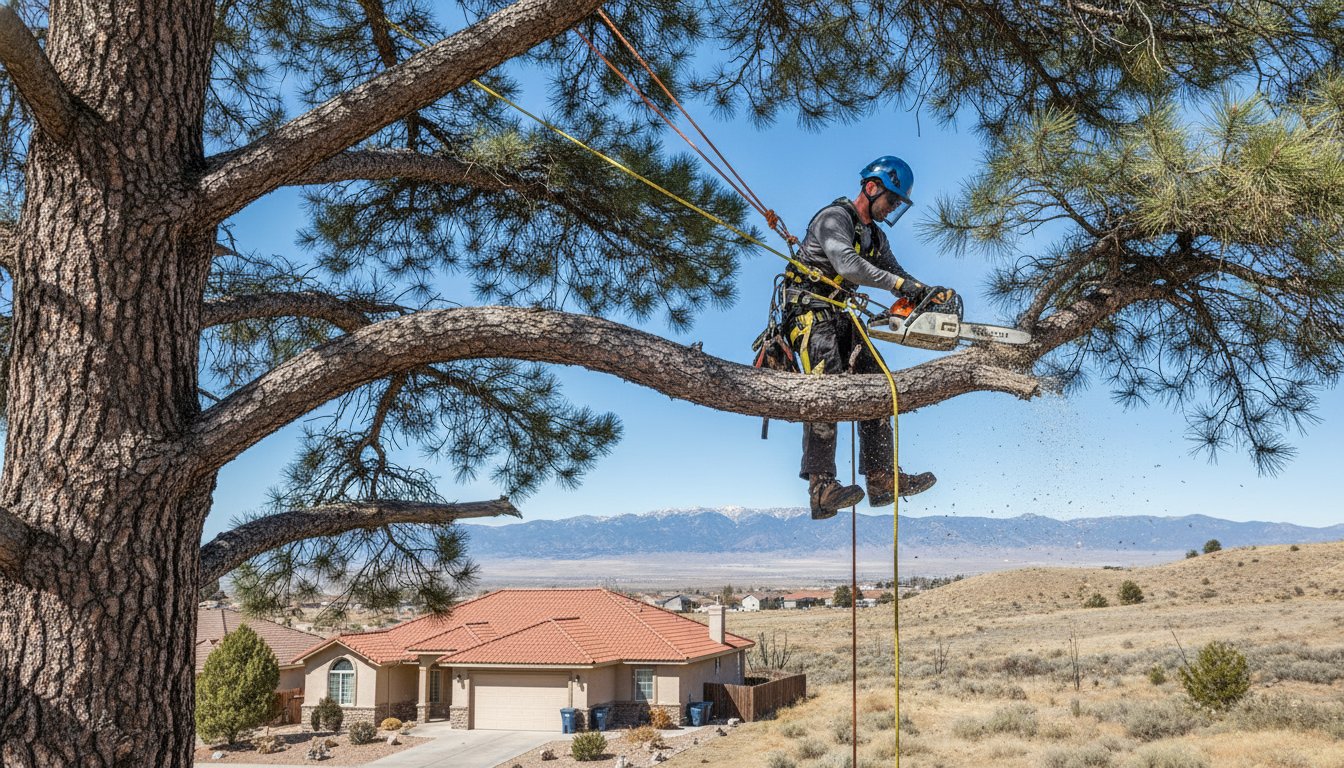
In many of Reno’s historic neighborhoods, such as Midtown or the Old Southwest, trees often grow in very tight spaces between houses. We use sectional dismantling, which involves climbing the tree and removing it piece by piece from the top down. Lowering lines and specialized rigging allow us to guide each limb safely to the ground, preventing any impact on roofs or power lines. This level of precision is also a key part of our hazardous tree removal Carson City services, where we manage complex removals in similar high-density residential areas. We don’t just drop the tree and hope for the best; we engineer its descent to protect your home’s structural integrity.
Post-Removal Site Management
We prioritize managing the “footprint” left behind by our equipment. While some large-scale operations can leave deep ruts in your grass, we use techniques designed to distribute weight and minimize soil compaction. We also handle debris hauling and ensure that the wood is recycled properly within Washoe County whenever possible. Once the main structure is down, we clear the smaller twigs and sawdust that can be a nuisance for pets or children. Please note that while we provide a clean and safe finish, our team does not offer stump grinding services. Our focus remains on the professional removal of the vertical hazard and leaving your yard in a tidy, manageable state.
If you’re ready to secure your property and protect your loved ones, you can schedule a tree health assessment today to get a professional, experience-backed recommendation for your landscape.
Beyond Removal: Protecting Your Remaining Landscape
Removing a hazardous tree is a vital safety measure, but it’s rarely an isolated event in a healthy landscape. When you work with a certified arborist for tree removal Reno, you aren’t just getting rid of a problem; you’re gaining a partner who can help safeguard your remaining foliage. Often, a single dead tree is a warning signal that your other plants are under stress from the same pests or environmental conditions. In Reno’s high desert environment, where the tree canopy is limited to roughly 5 percent of the city area, every remaining tree is a precious resource for cooling your home and maintaining property value. Since shade can lower local temperatures by as much as ten degrees, keeping your surviving trees healthy is a practical investment in your comfort.
Preventative care is especially important when the removal was caused by infestations like the Pine Bark Beetle or aggressive aphids. These pests don’t simply disappear when the host tree is gone; they often migrate to the next available healthy pine or hardwood. We focus on stabilizing the health of your yard through customized treatment plans that address these threats before they cause structural failure. This includes deep root fertilization to strengthen a tree’s natural defenses and specific watering strategies to mitigate the effects of our increasingly hot, dry summers. A healthy tree is much more resilient against the brittle wood and limb failure that we often see in drought-stressed landscapes.
Integrated Tree and Pest Care
One of the greatest advantages of our approach is the seamless integration of arborist expertise with comprehensive pest management. We understand that the health of your trees is directly linked to the broader ecosystem of your property. For example, managing moisture and pest populations near your home can prevent issues that affect both your landscape and your living space. While we’re assessing your trees, we often look for other signs of infestation, such as those discussed in our guide on effective ant control reno. Protecting your healthy pines from the same wood-boring insects that killed a neighbor’s tree is a proactive way to avoid the need for another certified arborist for tree removal Reno in the future.
Scheduling Regular Maintenance
The most effective way to prevent future removals is through an annual health assessment. In Northern Nevada, the best times for these checks and supplemental pruning are typically during the dormant winter months or early spring before the Washoe Zephyr winds reach their peak. These assessments allow us to catch structural cracks, nutrient deficiencies, or early-stage infestations before they become irreversible. By creating a long-term care plan, you ensure the stability and longevity of your landscape while providing maximum safety for your family and pets. If you’re concerned about the health of your trees or need a professional assessment, contact Battle Born for a professional arborist consultation to begin your property’s customized care plan.
Secure Your Home and Landscape with Professional Care
Protecting your property from the unpredictable Washoe Zephyr and the hidden dangers of internal decay requires a methodical, expert approach. By prioritizing professional intervention, you ensure that every cut is planned with precision while avoiding the legal and physical risks associated with uncertified labor. Working with a certified arborist for tree removal Reno means you aren’t just removing a hazard; you’re investing in the long-term stability and safety of your entire landscape.
Our team at Battle Born Pest Control is locally owned and licensed in Reno, featuring an ISA Certified Arborist on staff to guide your property’s care. We combine comprehensive pest management with specialized tree health expertise to provide solutions that are both effective and environmentally responsible. Schedule Your Professional Tree Health Assessment Today to receive a clear, honest recommendation tailored to your specific needs. We look forward to helping you maintain a safe and thriving outdoor space for your family and pets.
Frequently Asked Questions
Do I need a permit for tree removal in Reno or Sparks?
You don’t need a permit for tree removal on private property within the City of Reno as of July 2026. However, a Tree Work Permit is mandatory if the tree is located within a public right-of-way or on other city-owned property. It’s important to verify your property boundaries before starting work, as any tree work on city property requires a professional with specific certifications.
How much does it cost to hire a certified arborist for tree removal?
The cost of hiring a certified arborist for tree removal Reno depends on the tree’s height, its structural health, and its proximity to your home or power lines. Larger trees or those in tight urban spaces require more specialized rigging and labor to ensure a controlled descent. We provide detailed, transparent assessments to give you an accurate understanding of the resources required for your specific landscape.
What is the difference between a tree trimmer and a certified arborist?
A certified arborist for tree removal Reno has passed a rigorous examination through the International Society of Arboriculture and maintains ongoing education in tree biology and safety. While a general tree trimmer may focus only on the physical act of cutting, an arborist evaluates the tree’s health and the physics of the removal. This expertise ensures the job is done with a focus on long-term property safety and liability protection.
Can a sick tree be saved, or does it always have to be removed?
Many trees can be saved through customized pest and disease management if the internal decay hasn’t compromised their structural integrity. We prioritize health assessments to determine if treatments like deep root fertilization or targeted pest control can restore the tree’s vigor. Removal is typically a last resort reserved for trees that pose an active, unmitigable risk to your home or family.
How do I know if my tree is a hazard to my house?
Look for visual warning signs such as deep vertical cracks in the trunk, fungi growing at the base, or a sudden lean accompanied by soil upheaval. Dead limbs in the upper canopy or “dieback” are also indicators that a tree may be brittle and prone to failure during Washoe Zephyr winds. If a tree’s height exceeds its distance from your roof and it shows these signs, a professional assessment is necessary.
Does Battle Born Pest Control offer emergency tree removal?
We provide scheduled arborist-led tree removals during our standard business hours and don’t offer 24/7 emergency services. Our approach is methodical and planned to ensure the highest level of safety for our crew and your property. We recommend addressing potential hazards during regular health checks to prevent the need for urgent, after-hours calls following a major storm.
What happens to the wood and debris after a tree is removed?
Our team handles the complete cleanup and hauling of all wood and organic debris to ensure your yard is left tidy and safe for your pets. We recycle the material within Washoe County whenever possible, removing everything from large trunk sections to smaller twigs and sawdust. While we don’t offer stump grinding, we make sure the remaining site is clear and manageable for our clients.
How long does a typical tree removal take?
Most residential tree removals are completed within a single day, though the complexity of the rigging can extend this timeline. Factors such as the tree’s size, its overall health, and its proximity to structures in neighborhoods like Midtown or the Old Southwest influence the pace of work. We provide a projected schedule during your initial consultation so you know exactly what to expect for your property.