Residential Tree Care in Carson City: A Complete Homeowner’s Guide
In the high desert of Carson City, a tree is far more than just a piece of landscaping; it’s a vital investment that must endure some of the most demanding environmental conditions in Nevada. Maintaining a healthy canopy requires more than just occasional watering, especially when local factors like intense sun and unpredictable wind gusts come into play. This is why specialized residential tree care carson city services are so essential for homeowners who want to balance aesthetic beauty with long-term property safety.
It’s understandable to feel a bit of unease when you notice a prize evergreen turning brown or worry about heavy branches during our famous wind events. You deserve the peace of mind that comes from a resilient landscape, but the specific needs of high-desert species can often feel like a mystery. This guide will show you how to protect your property’s value and safety through expert-backed maintenance tailored specifically for our local climate.
We’ll walk through the essentials of tree health assessments, effective pest management for common threats like bark beetles, and the proper pruning techniques that help your trees stand strong against the elements. By the end, you’ll have a clear roadmap for cultivating a vibrant, healthy outdoor space that enhances your home for years to come.
Key Takeaways
- Learn how Carson City’s high-desert climate and alkaline soil create unique challenges for tree health and nutrient absorption.
- Discover why proactive residential tree care carson city relies on regular health assessments to identify structural weaknesses and disease early.
- Identify the primary environmental threats to Northern Nevada’s canopy, including the relationship between drought stress and Pine Bark Beetle infestations.
- Implement a seasonal maintenance strategy that focuses on precise irrigation and soil management to maintain landscape resilience.
- Understand the safety criteria and professional protocols for tree removal when preservation is no longer a viable option for property safety.
The High Desert Landscape: Why Residential Tree Care in Carson City is Unique
Living in the shadow of the Sierra Nevada mountains creates a distinct set of challenges for local landscapes that most national gardening guides simply don’t address. The rain shadow effect means our valley receives significantly less precipitation than the peaks just a few miles west, leaving our soil chronically thirsty. Because we reside in an arid environment, residential tree care carson city requires a deep understanding of how moisture moves through our specific terrain. Without this local context, even well-intentioned homeowners might find their trees struggling despite regular effort.
The soil chemistry in our region is another factor that sets us apart. Carson City’s soil is predominantly alkaline, which can often hinder a tree’s ability to absorb essential nutrients like iron and manganese. While a blog written for the East Coast might suggest general fertilizers, those products often fail here because the high pH levels lock nutrients away from the root system. Common species found in our neighborhoods, such as the Ponderosa Pine, Cottonwood, and Ornamental Pear, each have different tolerances for these conditions. A Ponderosa Pine might thrive in the drier outskirts, while a Cottonwood requires significantly more management to stay healthy near residential structures.
Carson City’s Microclimates
Our city isn’t a uniform environment; it’s a collection of microclimates that dictate tree health. The historic West Side enjoys the protection of mature canopies and slightly more established soil organic matter, providing a buffer against the elements. In contrast, newer developments near Empire Ranch are often more exposed to the “Washoe Zephyrs,” those powerful downslope winds that can compromise the structural integrity of younger trees. In these wind-prone areas, deep watering is essential. By encouraging roots to grow deeper into the earth rather than staying near the surface, you provide your trees with the physical stability they need to withstand Nevada’s high-wind events.
The Role of the Residential Tree Canopy
A healthy residential canopy does more than just look beautiful; it serves as a functional tool for home management. During our intense Nevada summers, strategically placed trees can significantly reduce home cooling costs by providing natural shade. They also act as vital windbreaks, protecting your siding and roof from the brunt of seasonal storms. Because of these complex environmental factors, Arboriculture in our region has evolved into a specialized field. High Desert Tree Care is a dedicated arborist discipline that focuses on the science and practice of managing woody plants within our specific arid, high-elevation ecosystem.
Essential Maintenance Services for Healthy Carson City Trees
Effective residential tree care carson city starts with a clear understanding of what each individual tree needs to thrive in our specific environment. Rather than reacting to problems as they arise, a proactive maintenance plan focuses on building resilience from the roots up. This includes specialized techniques like deep root fertilization, which is designed to deliver essential nutrients directly into the root zone by penetrating the hard-packed Nevada clay that often blocks traditional surface applications. For our older, historic trees, cabling and bracing provide the supplemental support needed to protect heavy limbs from the weight of our winter snows, ensuring these local landmarks stay safe and intact.
Professional Pruning vs. DIY Trimming
Many homeowners use the terms ‘pruning’ and ‘trimming’ interchangeably, but in the world of professional tree care, they serve very different purposes. Professional pruning is a methodical process focused on the long-term health and structural integrity of the tree. One of the most damaging mistakes we see is ‘topping,’ where the upper branches are cut back indiscriminately to reduce height. This practice stresses the tree and leads to weak, vertical regrowth that is more likely to fail in the future. Instead, we use structural pruning for younger trees to encourage a strong central branch pattern, which helps prevent property damage during high-wind events. If you live in the broader Truckee Meadows region, reviewing a dedicated guide on tree pruning for safety in Sparks can help you identify the specific hazard indicators that apply across Northern Nevada. Removing deadwood is also a key part of this process; it eliminates potential nesting sites for common pests and diseases in Nevada and keeps your canopy looking its best.
Comprehensive Health Assessments
A thorough health assessment is the foundation of any reliable maintenance plan because it identifies issues before they become expensive emergencies. When a professional conducts a residential walkthrough, they aren’t just looking at the color of the leaves. They scan for a variety of health indicators, including:
- The structural integrity of the main trunk and primary limbs
- Early signs of pest activity or fungal growth
- Soil moisture levels and root zone drainage efficiency
- Internal decay or root rot that isn’t obvious to the untrained eye
These assessments provide you with a clear priority list, allowing you to manage your budget effectively by focusing on the most critical needs first. Whether you’re concerned about a specific tree or just want a baseline for your property, scheduling a professional tree health assessment is a simple way to gain peace of mind and protect your home. Investing in these core services ensures that your landscape remains a safe, vibrant asset for years to come.
Identifying Common Threats: Disease and Pests in Northern Nevada
In Carson City, the relationship between environmental stress and pest infestation is direct and often unforgiving. When our local trees suffer from prolonged drought, their natural defense mechanisms begin to fail. For example, a healthy pine tree uses sap to “pitch out” invading insects, but a dehydrated tree lacks the fluid pressure to mount this defense. This makes residential tree care carson city as much about pest prevention as it is about hydration. Achieving a resilient canopy begins with successful landscape tree planting, as a well-placed tree is much less likely to suffer from environmental stress later in life.
The Pine Bark Beetle remains the most significant threat to our local evergreen canopy. These tiny invaders tunnel into the bark to lay eggs, effectively cutting off the tree’s nutrient supply. For deciduous trees, aphids and scale are the primary culprits. While they rarely kill a tree outright, they create a “sticky mess” of honeydew that coats driveways and cars, often attracting ants and wasps. On the other end of the spectrum, over-watering in our alkaline soil can trigger fungal infections like root rot, which can be just as deadly as a lack of water. Balancing moisture levels is essential for keeping these pathogens at bay.
Pest and Disease Management for Trees
Battle Born takes a holistic approach by integrating pest expertise directly into every tree health plan. We often prefer systemic treatments over topical sprays because they are significantly safer for pets and families. Systemic products are absorbed through the roots or trunk, delivering protection from the inside out without the risk of chemical drift in our frequent Nevada winds. This methodical application ensures that the treatment stays where it belongs. It is a simple fact that a pest-free tree is a structurally stronger tree.
Warning Signs Every Homeowner Should Know
Early detection is the key to saving a compromised tree. Look for “pitch tubes,” which are small, popcorn-shaped clumps of sap on the trunk of evergreens. These are clear signs that beetles are trying to bore inside. For other species, watch for premature leaf drop or discolored needles that turn brittle and brown. Small, perfectly round exit holes in the bark are another red flag; they reveal that an infestation has already progressed significantly. If you notice these symptoms, a professional intervention is necessary before the tree becomes a structural hazard to your home or family.
The Homeowner’s Seasonal Checklist for Tree Longevity
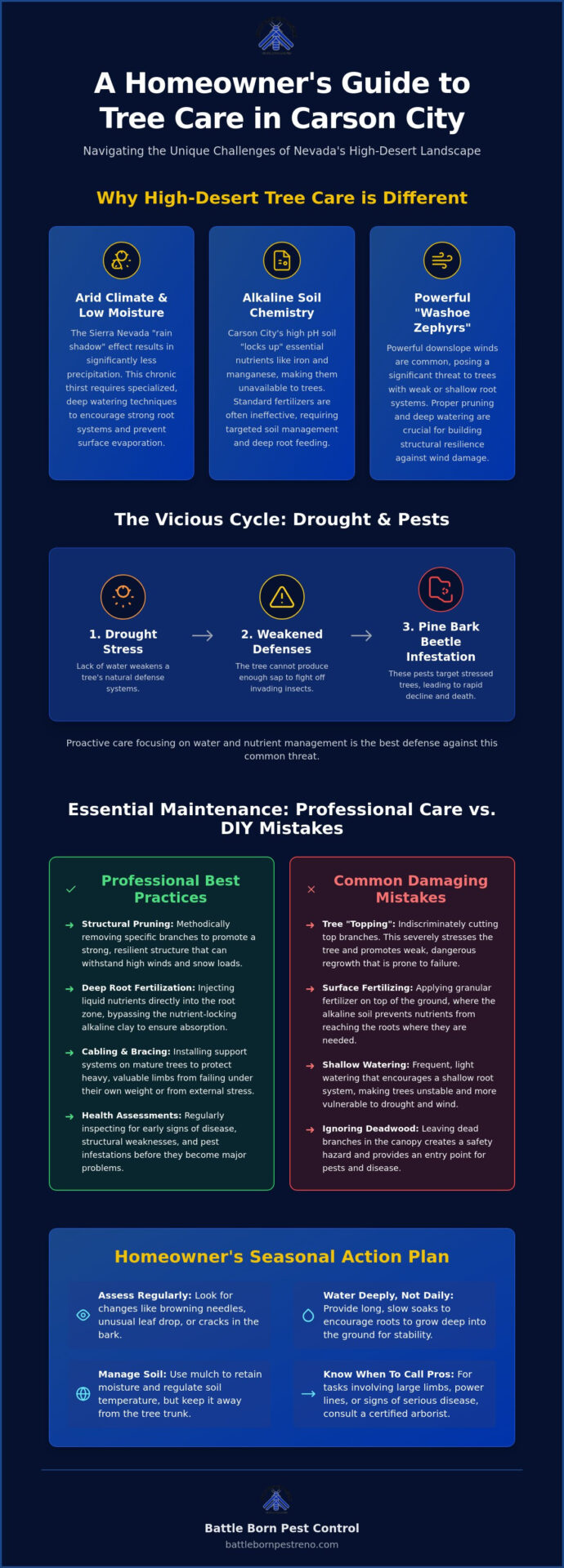
In Carson City, our “shoulder seasons” are often brief and unpredictable, making a structured maintenance calendar essential for a thriving landscape. Effective residential tree care carson city relies on a strategy that respects these rapid environmental shifts rather than fighting against them. Spring is the ideal time for soil testing to address our local alkaline levels and applying dormant oils to neutralize pests before they become active. As the heat intensifies in summer, your focus should shift to monitoring irrigation systems and replenishing mulch layers to keep the root zone cool and moisture locked in.
Fall serves as the primary window for structural pruning once the growth cycle slows down. This proactive step prepares the canopy for the weight of upcoming snow and helps prevent branch failure during autumn wind events. Homeowners across Northern Nevada can benefit from following an essential homeowner checklist for tree pruning safety to ensure no critical steps are missed before storm season arrives. Winterizing the root zone with a final deep soak and a fresh layer of organic wood chips helps stabilize soil temperatures against the coming frost. Each of these steps builds a layer of protection that ensures your trees don’t just survive the season, but actually gain strength for the next year.
Carson City Winter Tree Care
It’s a common misconception that trees don’t need water once the ground freezes or the leaves have fallen. Nevada winters are notoriously dry, and if we haven’t seen significant snow or rain for several weeks, your trees are likely suffering from winter desiccation. Bright winter sun can also cause “sunscald” on young, thin-barked species like maples or fruit trees. Wrapping these vulnerable trunks or providing a mid-winter soak when temperatures rise above 40 degrees can prevent permanent bark damage. Additionally, ensuring your fall pruning was thorough will help your trees withstand heavy Sierra snow loads without catastrophic branch breakage.
Optimizing Your Irrigation
As your trees grow, their “drip line”—the area directly under the outer edge of the branches—expands further away from the trunk. If you don’t move your drip emitters to match this growth, you risk leaving the active root tips dry while over-saturating the trunk base, which can lead to rot. You can easily check your soil moisture depth using the “towel test.” Simply try to push a long screwdriver or thin metal rod into the ground after a watering cycle. It should slide in easily to a depth of 12 to 18 inches. If it stops short, your irrigation isn’t reaching the deep roots where it is needed most.
Keeping track of these seasonal requirements can be a challenge for even the most dedicated homeowner. For a professional perspective on your property’s specific needs, you can schedule a full landscape health audit with Battle Born Pest Control to ensure your trees remain a safe and vibrant asset to your home.
Safe Tree Removal: When Preservation is No Longer an Option
While the primary goal of any residential tree care carson city plan is to preserve the health and longevity of your landscape, there are times when a tree becomes a liability rather than an asset. This decision is never made lightly, but it’s often necessary when a tree has suffered extensive internal decay, significant storm damage, or has become structurally unsound. In our high-desert environment, a dead or dying tree can quickly become a fire hazard or a target for pests like the bark beetles discussed earlier. Removing a compromised tree before it fails ensures the safety of your home, your family, and the surrounding structures on your property.
Safety is the highest priority during any removal, particularly in the established residential neighborhoods of Carson City where homes and fences are often in close proximity to mature trees. This process requires a methodical approach that prioritizes property protection and uses specialized equipment to manage heavy limbs in confined spaces. It’s also vital to work with a team that is fully licensed and insured for work in Northern Nevada. This provides you with peace of mind, knowing that the complex logistics of your removal are being handled by professionals who understand the specific risks associated with our local terrain and weather patterns.
The Removal Process
In tight residential quarters, we often utilize rigging and sectioning techniques to dismantle a tree from the top down. By carefully lowering each branch with high-strength ropes and pulleys, we can protect your roof, landscaping, and fences from impact. Once the main structure is removed, homeowners should consider stump grinding as an essential final step. While Battle Born does not provide stump grinding services directly, it remains a critical recommendation for pest prevention, as old stumps can become breeding grounds for termites or ants. Before starting any work, it’s also wise to check with the Carson City Planning Division or Code Enforcement to see if your specific project requires a local permit, as regulations can vary depending on the tree’s size and location.
Why Choose Battle Born for Your Tree Care?
Choosing a partner for your landscape means finding someone who acts as a dedicated guardian for your property. Our commitment to neighborly service is backed by a deep understanding of how pest cycles and environmental stress interact in our unique climate. Having a team that recognizes the subtle signs of a failing tree can save you from the stress of an unexpected failure during a Nevada wind storm. We focus on providing lasting, tailored solutions that prioritize the long-term health of your entire outdoor space. If you’re concerned about the stability or health of a tree on your property, schedule your tree health assessment with Battle Born today to ensure your landscape remains safe and vibrant.
Cultivating a Resilient Landscape for Your Home
Maintaining a vibrant landscape in Northern Nevada requires a steady commitment to understanding our unique high-desert challenges. From managing alkaline soil to staying ahead of Sierra wind gusts, proactive care is the only way to ensure your trees remain a safe and valuable part of your property. By prioritizing regular health assessments and seasonal maintenance, you move from reacting to problems to actively fostering a resilient outdoor environment. Reliable residential tree care carson city is not just about aesthetics; it’s about the long-term stability and protection of your home and family.
Battle Born brings decades of experience in high-desert plant health to every project, providing locally owned and licensed services led by a Certified Arborist. We focus on transparent, honest recommendations that prioritize the well-being of our community and the safety of your property. Protect your landscape—Book a Certified Arborist Assessment with Battle Born. You don’t have to manage these climate challenges alone. With the right care and a bit of local expertise, your trees will stand strong as a lasting legacy for your home.
Frequently Asked Questions
Do I need a permit to remove a tree on my property in Carson City?
In most cases, homeowners don’t need a municipal permit to remove a tree on private residential property in Carson City, but you should always check with your Homeowners Association (HOA) first. While the city typically doesn’t regulate removals on private land, certain historic districts or protected areas may have specific requirements. It’s best to verify current local codes with the Carson City Planning Division before beginning any major residential tree care carson city project to avoid potential fines.
How often should I have my trees professionally pruned?
Most mature trees benefit from a professional pruning every three to five years to maintain their structural integrity and health. Younger trees may require more frequent attention, often every two to three years, to establish a strong branch architecture. The specific frequency depends on the species and its growth rate. Regular maintenance prevents overgrowth that can become hazardous during Nevada’s frequent high-wind events and heavy winter snow loads.
What are the signs that my pine tree has bark beetles?
The most recognizable signs of a bark beetle infestation are “pitch tubes,” which look like small clumps of popcorn-shaped sap on the trunk. You might also notice the needles turning a brittle reddish-brown, starting from the top of the canopy and moving downward. If you see tiny, perfectly round exit holes in the bark, the beetles have likely already completed a life cycle. Early detection is vital for saving the tree before the damage becomes irreversible.
Can a sick tree be saved, or does it always have to be removed?
A sick tree can often be saved if the issue is identified and treated before significant structural decay occurs. Many health problems stem from manageable issues like nutrient deficiencies, improper irrigation, or localized pest infestations. A professional health assessment can determine if the tree is a candidate for preservation through targeted treatments or pruning. However, if a tree has lost more than half of its canopy or has a hollow trunk, removal might be the safest option.
Is it safe to water my trees during a Carson City winter?
Watering your trees during a dry Carson City winter is safe and often necessary for their long-term survival. Our high-desert climate can experience long stretches without snow or rain, leading to root desiccation even in cold temperatures. You should apply water when the air temperature is above 40 degrees Fahrenheit and the ground isn’t frozen. Focus on watering in the late morning so the moisture has time to soak in before the ground freezes again at night.
What is the best time of year to prune trees in Northern Nevada?
The ideal window for pruning most local tree species is during the late winter or early spring while the tree is still dormant. Pruning during this time minimizes stress on the tree and reduces the risk of attracting pests that are active in warmer months. It also allows you to see the structural framework of the branches clearly without leaves in the way. Avoid pruning in the late summer, as this can encourage new growth that won’t have time to harden off before the first frost.
Why is my tree dripping a sticky substance on my car?
That sticky substance is known as honeydew, which is a waste product produced by sap-sucking insects like aphids or scale. These pests congregate on the undersides of leaves and excrete the sugary liquid as they feed on the tree’s nutrients. While honeydew itself isn’t toxic, it can lead to the growth of black sooty mold and often attracts ants or wasps to your property. Managing the underlying pest population is the only way to stop the dripping and protect your tree’s health.
How much does residential tree care typically cost in Carson City?
The cost for residential tree care carson city depends on several factors, including the height of the tree, its proximity to power lines, and the complexity of the work required. Simple pruning for a small ornamental tree is significantly less expensive than the technical removal of a large, mature pine in a tight space. Because every property has unique challenges, most professionals provide a customized estimate after a physical walkthrough. Investing in recurring maintenance is generally more cost-effective than waiting for an emergency failure.