Tree Health Assessment Reno NV: A Homeowner’s Guide to Diagnosing Sick Trees
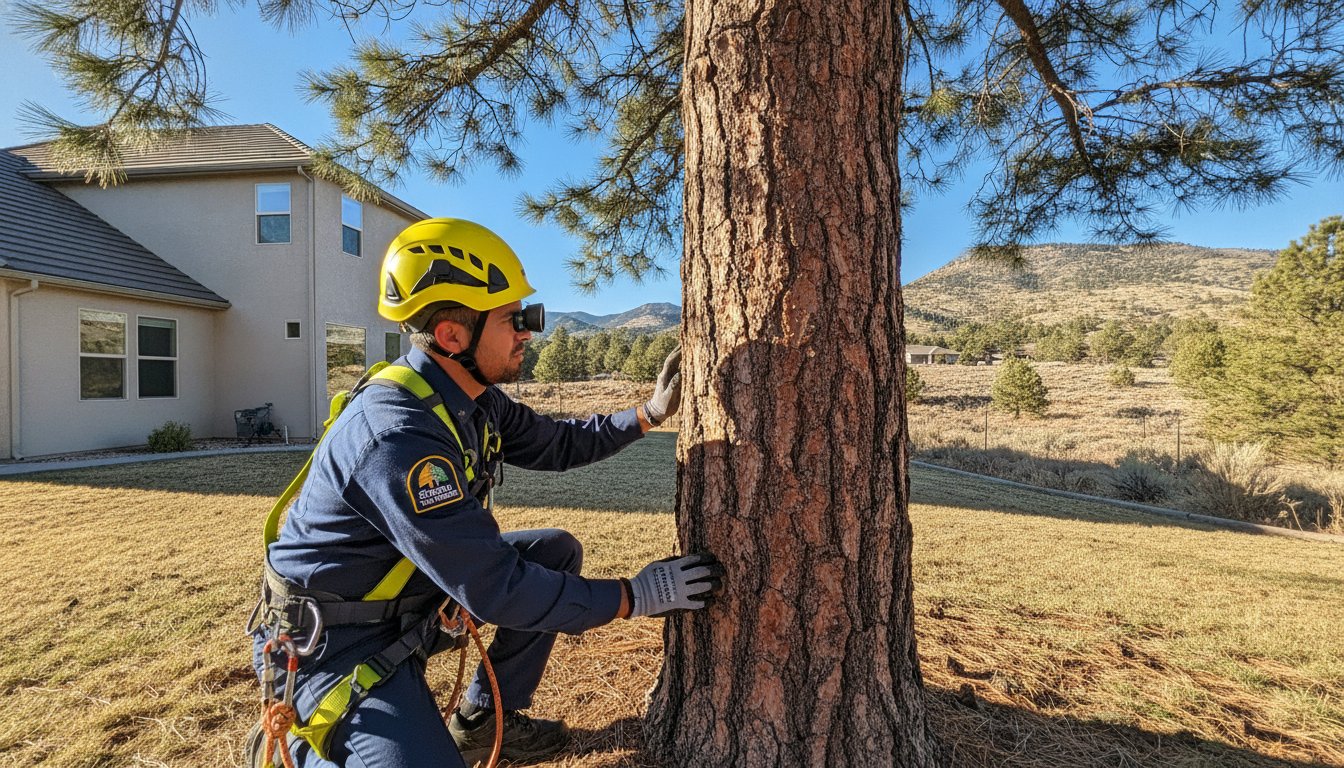
You are lying in bed listening to the howl of a Washoe Zephyr, and every loud gust makes you wonder if the large tree overhanging your roof is as sturdy as it looks. In Northern Nevada, our extreme temperature swings and high winds put immense pressure on the local landscape, making a regular tree health assessment Reno a vital part of home maintenance. It’s perfectly natural to feel uncertain about whether a yellowing canopy simply needs more water or if it’s signaling a deeper, more dangerous structural failure.
We believe that your home should be a place of safety, and understanding the health of your trees is the first step toward that peace of mind. This guide will teach you how to spot the subtle signs of tree stress before they turn into costly removals. We’ll explore what a certified arborist looks for during a professional evaluation, from pest infestations to soil compaction. By the end of this article, you’ll have a clear diagnostic plan to restore your trees’ vigor and ensure your property remains protected for years to come.
Key Takeaways
- Understand that a professional tree health assessment in Reno is a comprehensive diagnostic audit that evaluates structural stability and environmental stressors to ensure your property’s safety.
- Learn about the “ground-to-canopy” inspection process used by certified arborists, including how specialized tools detect internal decay that isn’t visible to the naked eye.
- Identify the specific regional threats facing Northern Nevada landscapes, such as the critical link between chronic drought stress and the rise in Pine Bark Beetle activity.
- Discover how to conduct a seasonal “walk-around” of your property to distinguish between minor leaf changes and serious health patterns that require immediate intervention.
- See how an integrated approach to pest management and arborist expertise provides a tailored, long-term solution for tree longevity in the unique climate of the Truckee Meadows.
What is a Professional Tree Health Assessment in Reno?
A professional tree health assessment Reno is a comprehensive diagnostic audit performed by a certified arborist to identify structural, biological, and environmental stressors. In our local area, this goes far beyond a simple visual check to include detailed soil analysis and pest vulnerability mapping. This assessment serves as a proactive measure to ensure property safety and tree longevity in the high desert climate. It’s vital to distinguish between a free estimate for tree removal and a formal health assessment; the former is a price quote for a service, while the latter is a scientific evaluation aimed at preservation and risk mitigation.
Why Reno’s High Desert Climate Demands Regular Checks
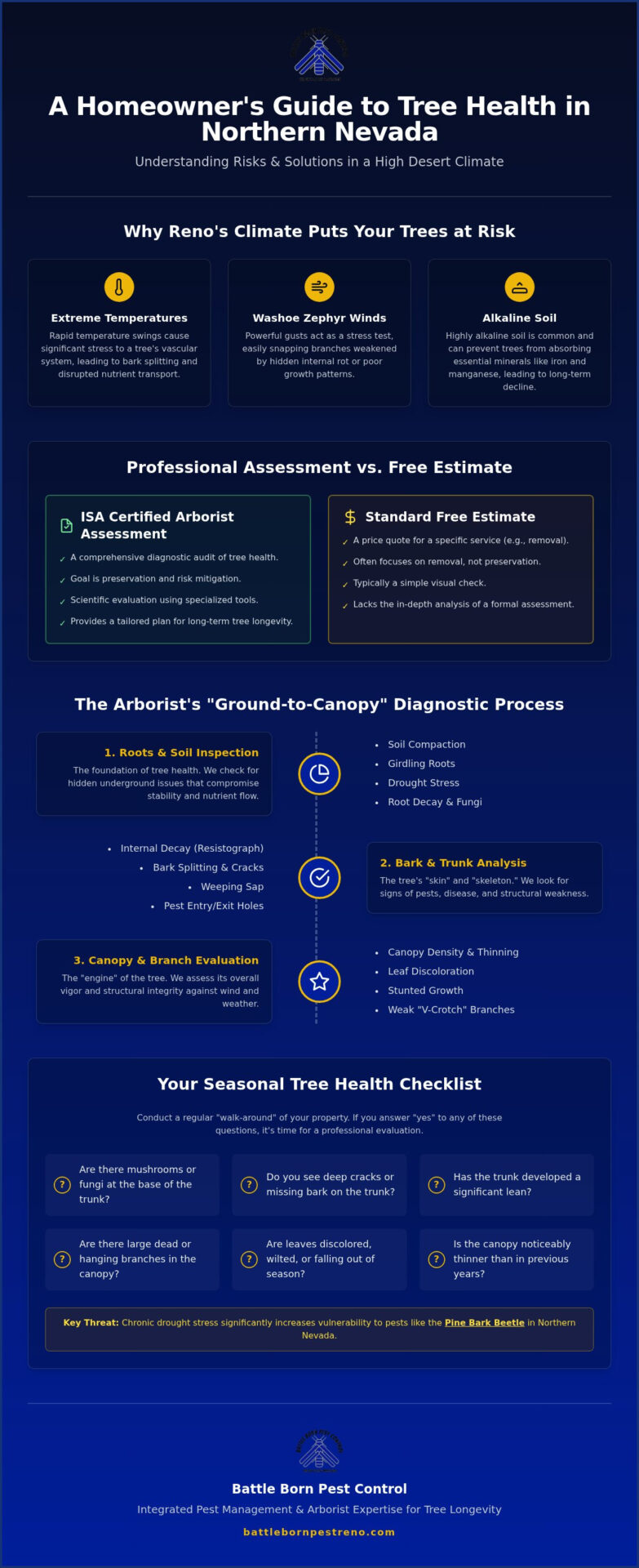
Reno’s high desert environment presents a unique set of challenges that demand regular professional oversight. The extreme temperature fluctuations common in the Truckee Meadows can cause significant stress to a tree’s vascular system, often leading to bark splitting or disrupted nutrient transport. These swings are often followed by the powerful Washoe Zephyr winds, which act as a stress test for every limb on your property. These winds easily snap branches that have been weakened by hidden internal rot or poor growth patterns. Our local soil also tends to be highly alkaline, which prevents trees from absorbing essential minerals like iron and manganese. A professional tree health assessment Reno provides the specific data needed to identify these environmental pressures early, allowing for soil amendments that prevent long-term decline.
The Role of an ISA Certified Arborist
The International Society of Arboriculture (ISA) provides a certification that ensures your arborist is well-versed in the science of arboriculture. This distinction is important because trees are complex organisms that require more than just water and occasional trimming. A specialized arborist is trained to recognize the symptoms of “silent” killers such as Armillaria root rot or specialized wood-boring beetles that a general landscaper might overlook. While a landscaper focuses on the aesthetic appearance of your yard, an arborist acts as a dedicated guardian for your trees’ structural integrity. This level of expertise is the best way to protect your home from the liability of a falling tree while maintaining the beauty of your outdoor space. Investing in a formal assessment means you’re getting a tailored plan based on years of local experience and scientific standards.
The Arborist’s Diagnostic Process: What to Expect
A formal tree health assessment Reno follows a methodical path from the soil up to the highest branches. It’s a scientific inquiry that combines years of local experience with precision technology. Our team uses specialized tools like resistographs to measure internal density, which helps us identify pockets of decay that aren’t yet visible on the surface. We also utilize soil probes to check moisture levels and compaction around the root zone. The primary goal is to uncover hidden stressors before they manifest as irreversible dieback or structural failure. Once the field work is complete, you receive a detailed report that acts as a roadmap for treatment, pruning, or safe removal if the tree poses an immediate risk.
Roots and Soil: The Foundation of Health
The diagnostic process often starts underground. In many Reno new-build developments, soil compaction from heavy machinery can suffocate root systems years after the home is finished. We check for girdling roots, which are roots that circle the trunk and slowly “strangle” the tree’s nutrient flow. Given our arid environment, we also evaluate irrigation efficiency to ensure your trees aren’t suffering from chronic drought stress. If we find fungi or mushrooms at the base of the trunk, it’s often a signal of advanced root decay that requires immediate attention to prevent the tree from becoming a safety hazard during high winds.
Bark and Canopy Analysis
Moving upward, we evaluate the canopy’s overall density and color. Yellowing needles or stunted leaf growth often point to nutrient deficiencies caused by our local soil chemistry. We pay close attention to branch attachments, looking for “V-crotch” shapes that are prone to splitting compared to the more resilient “U-crotch” connections. When evaluating bark, we look for exit holes or weeping sap that may indicate common tree threats in Nevada, such as bark beetles or wood borers that thrive in stressed trees. If you’ve noticed unusual changes in your landscape, it may be time to schedule a professional evaluation to protect your property’s long-term value.
Common Tree Threats in the Reno and Sparks Area
Reno’s unique position at the base of the Sierra Nevada creates a beautiful but demanding landscape for our urban forest. While the Washoe Zephyr and high-desert sun are constant factors, drought remains the primary precursor to almost every local tree disease we encounter. When a tree lacks adequate moisture, its natural defenses drop, leaving it vulnerable to invaders that would otherwise be manageable. A regular tree health assessment Reno helps identify these environmental stressors before they compromise the tree’s survival. Understanding environmental threats to urban trees is the first step in creating a resilient landscape that can withstand our region’s intense seasonal shifts.
Pine Bark Beetles and Wood Borers
Northern Nevada pines are currently facing significant pressure from Pine Bark Beetles, which can decimate a stand of trees in just a few seasons. These pests look for weakened hosts that lack the sap pressure to “pitch out” the invading insects. You might notice small, popcorn-like “pitch tubes” on the trunk, sawdust-like frass at the base, or a characteristic “red-topping” where the crown begins to die back. Early detection of these pests can save a tree from needing hazardous tree removal Carson City, which is often the only option once an infestation is fully established. Proper pest management is directly linked to tree longevity, as it allows the tree to focus its energy on growth rather than constant defense.
Local Fungal Diseases and Blights
Fungal issues are equally prevalent, especially among the aspens and poplars that many homeowners use for quick shade and privacy. Cytospora canker is a common sight in Reno, appearing as sunken, orange-hued areas on the bark that eventually girdle and kill branches. Spruce and fir trees often struggle with needle cast diseases, where older needles turn brown and fall off prematurely, leaving the tree looking sparse and ragged. Implementing professional tree disease management Sparks NV can halt the spread of these pathogens to neighboring trees on your property. It’s especially important to identify these “hazard trees” before the heavy winter snow load hits, as the added weight often causes diseased limbs to fail without warning. Taking action during the milder months ensures your landscape remains a safe haven for your family through every season.
Homeowner’s Checklist: When to Book a Professional Evaluation
Homeowners in Northern Nevada are the first line of defense for their landscapes. By performing a simple seasonal walk-around, you can often spot the subtle shifts in a tree’s appearance that signal a need for professional intervention. While a few yellow leaves in late summer don’t always mean a crisis, specific patterns of decline demand immediate attention. Utilizing a structured checklist helps you decide when it’s time to book a professional tree health assessment Reno. Taking action early is significantly more cost-effective than waiting until the tree becomes a hazard that requires expensive late-stage removal.
Step 1: Check the Trunk and Base
The trunk is the structural anchor of your tree. You should look for deep vertical cracks that penetrate the bark or areas where bark is peeling away in large, unusual sheets. While some species naturally shed bark as they grow, a sudden loss often indicates underlying stress. Be particularly mindful of mushroom growth or “conks,” which are shelf-like fungi attached to the trunk or growing at the soil line. These are clear indicators of internal wood decay. If you notice new leaning or soil that appears to be lifting on one side of the base, the root system may be failing, which creates a significant safety risk during high-wind events.
Step 2: Inspect the Canopy and Branches
A healthy canopy should be dense and vibrant during the growing season. Identify any “deadwood,” which are branches that fail to produce buds or leaves when the rest of the tree is flourishing. You should also watch for “witch’s broom,” an abnormal, dense cluster of twiggy growth that often signals a viral or fungal issue. If you notice the foliage is thinning in areas that were previously lush, the tree is likely struggling to transport nutrients. These canopy changes are often the first visible signs of the stressors discussed in previous sections, such as root compaction or pest pressure.
Step 3: Evaluate the Environment
Tree health isn’t just about the tree itself; it’s about the surrounding conditions. Has there been recent construction, trenching, or new paving within the root zone? Such activities often sever critical feeder roots that the tree relies on for hydration. You should also consider if the tree is receiving significantly more or less water than in previous years, as irrigation malfunctions are a leading cause of decline in our arid climate. Finally, observe your neighbors’ properties. If neighboring trees are showing similar signs of distress, you might be dealing with a localized pest outbreak that requires a coordinated response. If your checklist has flagged any of these concerns, it’s time to book a professional tree health assessment to safeguard your property.
Why Battle Born Pest Control is Reno’s Choice for Tree Longevity
Choosing a partner for your landscape means finding someone who understands that Northern Nevada trees are more than just decoration; they’re valuable assets that protect your home and provide vital shade in our high-desert environment. At Battle Born Pest Control, we provide a unique perspective by combining arborist expertise with professional pest management for a truly holistic health approach. This integrated strategy ensures that we aren’t just looking at a single branch or a specific insect, but rather the entire ecosystem of your property. Our team lives and works in the Truckee Meadows, meaning we have firsthand experience with the specific soil alkalinity and climate challenges that define our region. Every tree health assessment Reno we conduct is designed to prioritize the long-term preservation of your landscape while ensuring the safety of your family and pets.
Integrated Pest and Tree Management
Many homeowners don’t realize that a tree’s health is often the first line of defense against broader property infestations. When we address the root cause of a pest issue rather than just treating the visible symptoms, we create a more stable and resilient environment for your entire home. For instance, unhealthy or stressed trees can often attract wood-boring insects or provide a natural bridge for pests to enter your structure. By linking our arborist-led evaluations to our effective ant control reno and other pest services, we offer a comprehensive shield for your property. We use safe, targeted treatments that protect the local environment while eliminating the stressors that lead to tree decline. This means you receive a customized health plan designed to help your landscape thrive despite the harsh high-desert conditions.
Schedule Your Reno Tree Health Assessment Today
We believe in clear, honest communication about the state of your trees, providing you with professional recommendations backed by decades of Northern Nevada experience. Our goal isn’t to push for unnecessary removals, but to act as a local guardian that helps you make informed decisions about your property. Whether your tree needs specialized pruning to withstand the next heavy snow or a targeted disease management plan to restore its vigor, we provide a steady, transparent path forward. Taking the first step toward a safer, healthier landscape is as simple as reaching out for an expert evaluation. Let us provide the peace of mind that comes from knowing your trees are being cared for by professionals who are deeply committed to the well-being of our community.
Secure Your Property’s Natural Legacy
Maintaining a vibrant landscape in Northern Nevada requires a vigilant eye. By learning to recognize the subtle warning signs of drought stress and pest activity, you take the first step toward preventing costly structural failures. A professional tree health assessment Reno provides the scientific clarity needed to distinguish between minor seasonal changes and serious biological threats. Our ISA Certified Arborists use their decades of local experience to create tailored preservation plans. These plans address the unique challenges of our high-desert environment while prioritizing your family’s safety.
As a locally owned and licensed business, we’re committed to the long-term vigor of your trees. We combine deep horticultural knowledge with integrated pest management to provide a holistic solution. This approach stands up to the Washoe Zephyr and heavy winter snow loads alike. Don’t wait for a storm to test the integrity of your canopy. You can Protect Your Landscape—Schedule a Tree Health Assessment with Battle Born Today and ensure your outdoor space remains a safe, beautiful sanctuary for years to come.
Frequently Asked Questions
How much does a tree health assessment cost in Reno?
Costs for a professional evaluation in Northern Nevada typically vary based on the number of trees and the depth of diagnostic testing required. While basic visual inspections might fall on the lower end of the regional spectrum, comprehensive reports involving specialized tools or soil analysis represent a more significant investment. It’s best to check with a local expert to understand the specific scope of work needed for your property’s unique landscape and safety requirements.
Can a sick pine tree be saved if it has bark beetles?
Saving a pine tree from bark beetles depends entirely on the extent of the infestation at the time of discovery. If the beetle has only affected a small portion of the tree and the sap pressure remains high, targeted treatments and improved irrigation may help the tree recover. However, if the crown has turned red, the vascular system is likely too compromised for survival. Early detection through a regular tree health assessment Reno is the most effective way to prevent total loss.
How often should I have my trees inspected by an arborist in Northern Nevada?
We generally recommend a professional inspection every one to two years for mature trees in the Truckee Meadows. Our extreme climate shifts and high winds put constant stress on local vegetation, so a bi-annual check ensures that minor issues don’t escalate into safety hazards. You should also consider an unscheduled evaluation following major weather events, such as heavy spring snows or particularly intense windstorms, to check for new structural weaknesses or root instability.
Do I need a permit from the City of Reno for a tree health assessment?
No, you don’t need a permit from the City of Reno to have a private arborist assess the trees on your own property. Permits are typically only required when you’re performing work on publicly owned trees or digging within ten feet of a city-managed tree. However, understanding current city ordinances is helpful, as property owners are legally responsible for ensuring their trees don’t obstruct traffic signals or pose a danger to public safety.
What is the difference between a tree estimate and a tree health assessment?
A tree estimate is a simple price quote for a specific service, such as pruning or removal, whereas a tree health assessment is a formal diagnostic audit. During an assessment, a certified arborist evaluates the biological health and structural stability of the tree using scientific methods. The goal of an assessment is to identify the root cause of decline and provide a preservation plan, while an estimate focuses on the logistical cost of a pre-determined task.
Why are the needles on my pine trees turning brown in the spring?
Brown needles in the spring are often caused by winter desiccation, which occurs when our dry Reno winds pull moisture from the needles while the ground is still frozen. This prevents the tree from replenishing its water supply. However, this browning can also signal the presence of needle cast diseases or the early stages of a bark beetle infestation. A professional evaluation can help determine if the issue is a temporary environmental stressor or a serious health threat requiring intervention.
Is tree health assessment covered by homeowners insurance?
Most homeowners insurance policies don’t cover the cost of preventative maintenance or health assessments. Coverage is typically reserved for damage that has already occurred, such as a tree falling on a structure during a storm. Investing in a regular tree health assessment Reno is considered a proactive maintenance step, similar to servicing your roof, which can actually help you avoid the high deductibles and stress associated with major property damage claims in the future.
Can soil compaction in new Reno developments kill my mature trees?
Yes, soil compaction is a leading cause of death for mature trees in new residential developments across Reno and Sparks. Heavy construction machinery crushes the delicate pore spaces in the soil, which prevents oxygen and water from reaching the root system. This damage often takes several years to manifest as visible canopy dieback, making it difficult for homeowners to link the decline to the initial construction. Specialized soil aeration is often required to mitigate these long-term effects.