The Ultimate Reno Pest Prevention Checklist: Protect Your Home Year-Round

What if the most effective way to protect your Northern Nevada home isn’t a reactive treatment, but a proactive shield built on local expertise? Living in the high desert means we face unique challenges, from the recent dramatic increase in local roof rat populations reported in late 2025 to the persistent threat of venomous spiders seeking moisture during our hot summers. Most homeowners understand the frustration of seasonal ant invasions, yet many aren’t sure how to transition from temporary fixes to long-term security. You deserve the peace of mind that comes from knowing your property is sealed against the elements and the pests that follow them. Utilizing professional pest prevention services reno residents trust ensures your home remains a sanctuary regardless of the season.
This article provides a comprehensive, high-desert specific checklist tailored to the specific needs of our community. We agree that your home should be a sanctuary for your family and pets, not a highway for rodents or insects. You will learn how to identify vulnerable entry points, manage your landscape to discourage nesting, and implement professional-grade exclusion techniques. We will preview the essential maintenance tasks for every season, moving from the perimeter of your yard to the canopy of your trees, ensuring a thorough approach that preserves your property’s value and your family’s comfort.
Key Takeaways
- Learn why the high-desert climate requires a specialized Integrated Pest Management strategy to handle Northern Nevada’s extreme temperature swings.
- Discover how simple kitchen sanitation and proactive moisture control act as your primary internal defense against seasonal infestations.
- Master the “12-inch rule” for foundation clearance and proper waste management to create a formidable defensive barrier around your home’s perimeter.
- Understand how professional tree health assessments prevent overhanging branches from becoming direct highways for pests to access your attic.
- Identify the right time to transition from DIY efforts to the professional pest prevention services reno homeowners rely on for long-term property protection.
Why Pest Prevention Services in Reno Require a High-Desert Strategy
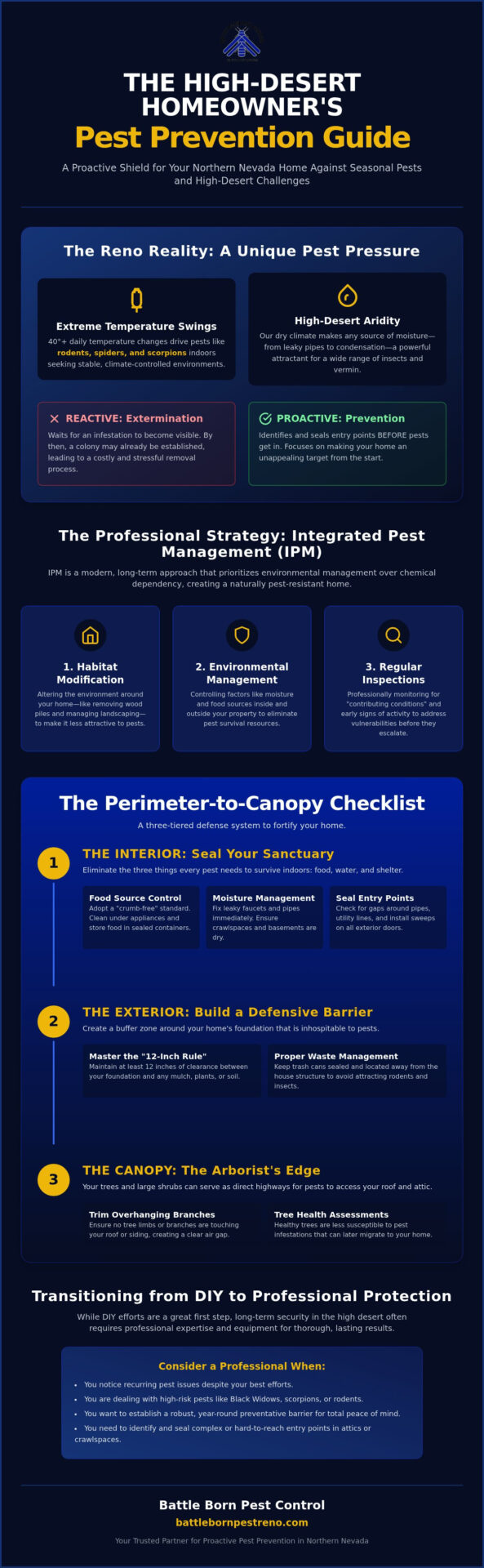
Reno isn’t just a city; it’s a high-desert ecosystem that demands a specific approach to home maintenance. The “Reno Reality” involves extreme temperature swings that can see a forty-degree difference between noon and midnight. These fluctuations act as a powerful catalyst for local wildlife. When the scorching summer sun bakes the sagebrush or the winter frost settles over the Truckee Meadows, pests don’t simply disappear. Instead, they seek the stable, climate-controlled environments we build for ourselves. Choosing professional pest prevention services reno homeowners trust means moving beyond the old model of waiting for a problem to appear before acting.
A reactive approach, often called “extermination,” focuses on killing pests that have already established a foothold. However, in Northern Nevada, this is often a losing game. By the time you spot a Black Widow in the garage or a line of Pavement Ants in the kitchen, a colony may already be thriving in your crawlspace. Proactive prevention focuses on the “Perimeter-to-Canopy” strategy, identifying why pests want to enter and sealing those pathways before they are utilized. This is especially vital given the 2025 reports of increased Norway Rat populations in the region, which require robust exclusion methods to keep out of attics and basements.
The Role of the High Desert Climate
Our low humidity is a defining factor in pest behavior. Most insects and rodents are constantly searching for moisture, which makes your leaky irrigation heads or condensation-heavy pipes incredibly attractive. Seasonal migration patterns are also distinct here. During the height of summer, scorpions and spiders move indoors to escape the heat. In the winter, rodents seek the warmth of your insulation. Localized knowledge is essential because Reno’s micro-climates vary significantly. A home nestled in the mature trees of Caughlin Ranch faces different pressures, such as pests traveling through high branches, compared to a property in the open, wind-swept plains of Spanish Springs where ground-dwelling insects are the primary concern.
Integrated Pest Management (IPM) Explained
We utilize a sophisticated framework known as Integrated Pest Management (IPM) to protect your home. This strategy shifts the focus from heavy chemical applications to habitat modification and careful environmental management. In the 2026 pest landscape, regular inspections are the most valuable tool in your arsenal. We look for “contributing conditions,” such as wood piles against the siding or gaps in door sweeps, that invite trouble. Integrated Pest Management is a combination of common-sense practices and professional monitoring that prioritizes long-term prevention over temporary chemical fixes. By managing the environment around your home, we create a space that is naturally unappealing to pests, ensuring your family’s safety and your property’s integrity.
The Interior Prevention Checklist: Sealing Your Sanctuary
Maintaining a secure interior starts with the realization that your home is an oasis in an arid environment. While we previously discussed the external pressures of the high desert, the interior of your property requires a specific level of vigilance. Professional pest prevention services reno residents trust often begin with a thorough internal audit to identify hidden vulnerabilities that might go unnoticed. Your goal is to eliminate the three things every pest needs: food, water, and a safe place to hide.
Kitchen sanitation is your primary shield. Crumbs and spills are more than just a mess; they are an invitation for scouts. Implementing effective ant control reno homeowners can manage themselves starts with a “crumb-free” standard. This involves cleaning behind the toaster and under the refrigerator where debris accumulates over time. According to the University of Nevada, Reno Extension, managing food sources is a critical step in high-desert pest management because resources are scarce in the surrounding wildlands.
In our dry climate, water is a precious commodity. A single dripping faucet or a damp spot under the sink acts as a watering hole for desert pests like cockroaches and silverfish. Regularly checking your plumbing and ensuring your crawlspace remains dry will significantly reduce the attractiveness of your interior. Additionally, take a close look at your storage. Cardboard boxes are a liability because they provide both a food source and nesting material for rodents. Moving your seasonal decorations and dry goods into heavy-duty plastic bins with locking lids is a simple way to deter nesting and keep your belongings safe.
Kitchen and Pantry Protocols
Keep all dry goods in airtight containers rather than original packaging. Avoid leaving pet food bowls out overnight, as the scent of kibble is a powerful attractant for nocturnal pests. A clean pantry is a secure pantry. Wiping down shelves once a month ensures that spilled grains or sugars don’t become a permanent food source for foraging insects.
Sealing the Envelope
Mice can squeeze through a gap as small as a quarter-inch, which is roughly the width of a standard pencil. Conduct an audit of your utility penetration points. Use a combination of high-quality caulk and stainless steel wool to plug holes around pipes and wires. Check the weather stripping on your doors and windows. If you can see daylight through a crack, a pest can get in. Pay special attention to the garage, as it is the most common “soft entry” point for rodents in Northern Nevada. Ensuring your garage door seal is tight to the pavement can prevent a winter invasion before it even starts.
The Exterior Perimeter Checklist: Building a Defensive Barrier
While sealing the interior of your home provides a final layer of security, the true battle for a pest-free environment is won or lost at the property line. Establishing a robust exterior barrier is essential for long-term protection, especially when navigating the unique ecological pressures of Northern Nevada. Many homeowners find that professional pest prevention services reno residents depend on focus heavily on this outer envelope because it’s much easier to stop an invasion before it reaches your foundation. By managing the immediate environment around your structure, you reduce the likelihood of pests ever discovering those tiny interior gaps we discussed in the previous section.
A fundamental step in this process is the “12-inch rule” for foundation clearance. You should maintain at least a foot of clear space between your home’s siding and any organic landscaping materials like mulch, wood chips, or dense shrubbery. These materials often retain moisture and provide a bridge for insects to bypass your home’s protective treatments. Similarly, waste management plays a pivotal role in neighborhood safety. Securing your trash bins with tight-fitting lids is the first step in effective wasp control for homes reno families utilize to keep their outdoor spaces enjoyable. When bins are left open, the scent of food waste attracts foragers that can quickly establish nests in nearby eaves or fences.
Lighting and water management are two often-overlooked components of a defensive perimeter. Standard white outdoor bulbs act as a beacon for nocturnal insects, which in turn attracts predatory spiders like Black Widows. Swapping these for yellow “bug lights” reduces nighttime attraction and breaks the food chain that leads pests to your door. Additionally, even in our high-desert climate, standing water can accumulate in saucers, clogged drains, or low spots in the yard. Eliminating these moisture pockets is vital for preventing mosquito breeding and discouraging wasps from congregating on your property.
Landscaping for Pest Resistance
Thoughtful landscaping is a cornerstone of the pest prevention services reno professionals recommend for high-desert properties. Choose desert-hardy plants that are naturally resistant to common pests like aphids. Ants often “farm” aphids for their honeydew, so a plant that attracts one will inevitably attract the other. Ensure your yard has proper drainage so that irrigation water doesn’t pool against the foundation, as this creates the perfect “watering hole” for foraging rodents and insects alike.
Exterior Structure Maintenance
Regularly clear your gutters of leaves and debris to prevent earwigs and cockroaches from nesting in the damp organic matter. It’s also wise to inspect your eaves monthly for early-stage nests, as prompt wasp nest removal sparks homeowners can trust ensures these stinging insects don’t become a permanent hazard. Finally, keep firewood piles at least 20 feet away from your home and elevated off the ground to prevent them from serving as a luxury hotel for spiders and rodents.
The Arborist’s Edge: Why Tree Health is Part of Pest Prevention
While many property owners focus their efforts on the ground level, a truly comprehensive approach to home security looks upward. In Northern Nevada, trees are more than just landscape features; they are biological bridges that can lead pests directly into your living space. Comprehensive pest prevention services reno residents rely on must account for the canopy to be truly effective. When branches touch your roof or eaves, they act as high-speed highways for roof rats, ants, and spiders, allowing them to bypass the protective barriers you’ve established at the foundation.
The health of your trees is inextricably linked to the pest pressure your home faces. Sick or stressed trees emit chemical signals that attract wood-boring insects, which can eventually migrate to the structural timber of your house. Investing in professional tree disease management Sparks NV ensures that your landscape remains a defensive asset rather than a liability. Furthermore, fruit and nut trees common in our area provide a “free buffet” for Reno’s growing rodent population. If fallen fruit isn’t managed promptly, it creates a reliable food source that encourages pests to nest nearby, increasing the likelihood of an eventual interior invasion.
Canopy Management for Pest Control
Maintaining a “6-foot clearance” rule is a standard best practice for any tree near a structure. By ensuring that no branch comes within six feet of your roofline, you significantly reduce the ability of rodents and crawling insects to leap or climb onto your home. Proper pruning also thins out dense foliage, which reduces attractive nesting sites for squirrels and birds that can carry mites or fleas. A certified arborist can identify subtle signs of pest vulnerability within your landscape that a standard exterminator might miss, such as internal decay that provides a perfect nesting cavity for rodents.
Managing Tree-Borne Pests
Many common infestations start in the leaves. Aphids and scale insects produce a sticky substance called honeydew, which serves as the primary food source for many ant colonies. When these pests thrive in your trees, ant populations explode and eventually find their way into your kitchen in search of more variety. Regular tree health assessments help identify these issues before they escalate. For a deeper understanding of the specific invaders that may be targeting your landscape, our guide to identifying tree pests in Northern Nevada can help you recognize the early warning signs of bark beetles, aphids, and scale insects before they spread. By managing the health of your trees, you are essentially managing the “source” of many common household pests. To ensure your landscape is working for you rather than against you, we recommend that you schedule a professional tree health assessment to identify potential risks before they reach your front door.
Professional Prevention: When to Call Battle Born Pest Control
While the DIY steps outlined in this checklist provide a vital foundation for your home’s security, there comes a point where professional intervention is necessary to maintain long-term stability. The high-desert environment is relentless, and pests are highly adaptable creatures that constantly look for weaknesses in your defenses. Utilizing professional pest prevention services reno homeowners trust offers a level of protection that generic, over-the-counter solutions simply cannot match. We act as a “Quiet Guardian” for your property, focusing on recurring maintenance that prevents infestations before they ever disrupt your peace of mind.
National chains often rely on “one-size-fits-all” applications that don’t account for the unique desert ecology or the specific micro-climates of Northern Nevada. Our approach is different because we develop customized treatment plans based on the specific vulnerabilities of your home and its surrounding landscape. This tailored strategy is particularly important when you require the specialized rodent control services carson city residents need to combat the recent surge in regional rat populations reported in late 2025. We prioritize the safety of your family by using carefully applied, targeted treatments that protect your children, pets, and the local environment while effectively managing pest pressure.
What to Expect from a Prevention Inspection
Our process begins with a detailed property walk-through where we map out every potential entry point and nesting site. We don’t just apply a barrier and leave; we provide a thorough vulnerability assessment that includes professional recommendations for habitat modification. As the seasons shift from the heat of summer to the freezing winter nights, we adjust your treatment barriers to address the specific pests active at that time of year. You can expect transparent communication and arborist-backed insights that provide a holistic view of your home’s health and security.
The Battle Born Difference in Reno
Our deep roots in the community mean we understand the specific challenges of living in the Truckee Meadows and the surrounding high-desert areas. We offer a unique advantage by employing certified arborists who work alongside our pest management experts to secure your home from the soil to the treetops. This integrated expertise ensures that no detail is overlooked in your defensive strategy, from the crawlspace to the highest branches of your trees. If you’re ready to secure your sanctuary with a plan built on local experience and honest service, schedule your professional pest prevention assessment today and experience the confidence of expert, neighborly care.
Securing Your Sanctuary for the Seasons Ahead
Protecting your home in our unique climate requires a shift from reactive fixes to a steady, proactive rhythm. By combining internal sanitation with a robust exterior barrier and a healthy tree canopy, you create an environment that is naturally unappealing to seasonal pests. This methodical approach ensures your property remains a safe haven for your family and pets throughout the extreme temperature swings we experience in the Truckee Meadows. We believe that long-term environmental health is the foundation of a comfortable home, and a well-maintained property is your best defense against the pressures of the high desert.
While the steps in this checklist empower you to manage many risks, the most reliable protection comes from a partner who understands our local ecology. As a locally owned and licensed business in Northern Nevada, we take pride in our role as a dedicated guardian for your household. Our certified arborist-led team provides customized, pet-friendly protection plans that address the root causes of infestations from the soil to the treetops. When you are ready to transition to professional pest prevention services reno residents depend on for stability, we are here to provide an honest, expert assessment.
Secure Your Home with Battle Born’s Professional Prevention Services
Taking these steps today builds a lasting legacy of safety and comfort for your loved ones. We look forward to helping you maintain a pest-free home through every season of the year.
Frequently Asked Questions
What are the most common pests needing prevention in Reno?
The most frequent intruders in Northern Nevada homes include pavement ants, Black Widow spiders, and various rodents, including the recently increased population of roof rats. These species thrive in our high-desert environment because they are constantly searching for the stable moisture and shelter provided by residential properties. Identifying these common pests early allows for more effective management before they establish a significant foothold in your home or landscape.
Is professional pest prevention safe for my pets and children?
Professional prevention is designed with the safety of your children and pets as the highest priority. We utilize targeted application methods and low-impact products that focus on specific pest vulnerabilities while minimizing environmental exposure. By choosing professional pest prevention services reno families can trust, you ensure that your home sanctuary remains protected without compromising the health or well-being of your loved ones or the local ecosystem.
How often should I have my home inspected for pests in Northern Nevada?
We recommend having your Northern Nevada home inspected at least once every quarter to address the distinct pest pressures that arrive with each seasonal transition. These regular check-ups allow us to adjust protective barriers and identify new entry points created by the extreme temperature swings common in our region. Consistent monitoring ensures that small vulnerabilities are addressed before they develop into more challenging infestations during the peak activity months of summer and fall.
Can landscaping really attract bugs to my house?
Landscaping is one of the most common factors that attract insects and rodents to a property. Overhanging tree branches, thick mulch beds against the foundation, and certain ornamental plants can provide both a food source and a physical bridge for pests to enter your home. Managing these elements through proper tree health assessments and strategic plant selection is a vital component of a comprehensive, arborist-backed prevention strategy that protects your structure from the canopy down.
Do I need pest prevention if I don’t see any bugs right now?
Proactive prevention is actually most effective when you don’t see any active pests, as it focuses on maintaining a defensive barrier that stops scouts from ever entering. By the time you notice insects or rodents inside your home, a colony or nest has likely already been established in a hidden area like a crawlspace or attic. Maintaining year-round protection ensures that your property remains unappealing to pests, saving you from the stress of reactive treatments.
How do I keep scorpions out of my Reno home?
Keeping scorpions out of your Reno home requires a combination of meticulous exclusion work and the elimination of their preferred hiding spots. You should seal all gaps in your foundation, ensure door sweeps are tight, and remove piles of rocks or wood near the structure where they seek shelter from the heat. Since scorpions are predatory, reducing the general insect population around your home through professional pest prevention services reno experts provide will also remove their primary food source.
What is the difference between pest control and pest prevention?
The primary difference lies in the timing and intent of the service. Pest control is typically a reactive measure used to eliminate an existing infestation that has already taken hold inside your home. In contrast, pest prevention is a proactive strategy that uses habitat modification, sealing entry points, and regular monitoring to ensure that pests never establish a presence in the first place. This approach offers a more sustainable and long-term solution for homeowners.
Why should I choose a local Reno pest control company over a national chain?
Choosing a local Reno company ensures that your technician possesses a deep understanding of our unique high-desert ecology and the specific micro-climates of Northern Nevada neighborhoods. National chains often use generalized treatment protocols that may not account for the specific behaviors of local species like our high-desert scorpions or roof rats. Local experts provide tailored care and honest, experience-backed recommendations that reflect a genuine commitment to the long-term well-being of our community and its residents.